
🔍 Read the full analysis: 12 Helpful Guides On AI Voice Cloning Software For 2027 on ThorstenMeyerAI.com

Get business pricing on office and shipping supplies
- Business-only prices and quantity discounts
- Tax-exempt purchasing
- Multiple users, one account, clear invoices
TL;DR
A comparison from ThorstenMeyerAI.com names 12 books and guides for learning about AI voice cloning, with Mastering ElevenLabs ranked as its broadest learning pick. The titles are instructional resources, not voice-cloning software; their current contents, tool compatibility and practical results are not independently established in the supplied material.
ThorstenMeyerAI.com has presented its original analysis, a list of 12 books and guides for people learning AI voice-cloning workflows, ranking Mastering ElevenLabs as its broadest overall learning pick. The list is not a review of 12 software applications: the resources teach approaches, while readers must separately choose and verify a hosted service or local model.
The comparison groups resources by learning goal, including operating ElevenLabs, building a workflow with Python, making a first clone without studio equipment, and exploring broader audio or music production. The source favors guides that connect cloning with related tasks such as dubbing, narration, editing and deployment, rather than focusing only on generating a sample. For another roundup in this topic, see five AI voice-cloning software guides.
Its top recommendation, Mastering ElevenLabs, is described as covering cloning alongside generation, dubbing and audio production. AI Voice Cloning with Python is presented as a better match for readers who want implementation skills and a local workflow. Clone Your Voice: Easy, No Studio and ElevenLabs for Beginners 2026 are characterized as more accessible starting points.
The source says its ordering reflects topic fit, technical depth and apparent usefulness for different skill levels. It does not supply evidence that the listed guides were tested against one another, nor does it establish that every title has a 2027 edition. The available material identifies several titles and selection criteria, but does not provide the complete title-by-title details needed to verify all 12 picks.
The 12 picks
- 1
 Clone Your Voice: Easy, No Studio: The Weekend Guide to AI Voice CloningView on Amazon →
- 2
 Mastering ElevenLabs: A Practical Guide to AI Voice Generation, Voice Cloning…View on Amazon →
- 3
 Suno AI Music Bible: A Guide to Prompt Engineering, Suno Studio, Voice Clonin…View on Amazon →
- 4
 The Complete Guide to ElevenLabs: AI Voice and Audio CreationView on Amazon →
- 5
 AI for Caveman: Build Your Own Forge to Run LLMs, Stable Diffusion, and Voice…View on Amazon →
- 6
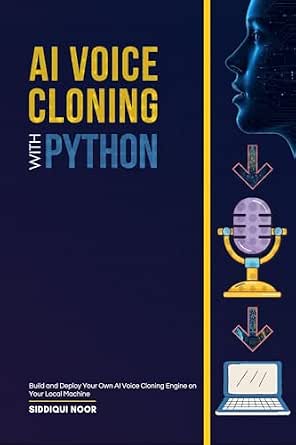 AI Voice Cloning with Python: Build and Deploy a Local Voice Cloning EngineView on Amazon →
- 7
 ElevenLabs: A Complete Guide to AI Voice Generation and CloningView on Amazon →
- 8
 The AI Voice Creator’s Handbook: A Practical Guide to Voice Generation, Cloni…View on Amazon →
- 9
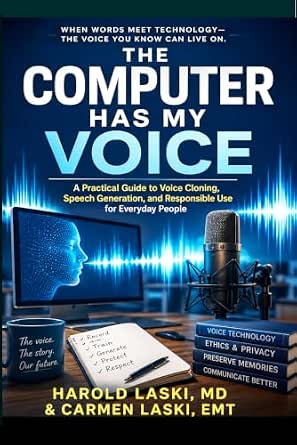 The Computer Has My Voice: An Independent Guide to Voice Cloning, Speech Gene…View on Amazon →
- 10
 AI Voice Cloning: The Complete Guide to ElevenLabs and BeyondView on Amazon →
- 11
 Audio AI for Beginners: Generative AI for Voice Recognition, Text-to-Speech,…View on Amazon →
- 12
 ElevenLabs for Beginners 2026: A Step-by-Step Guide to AI Voice GenerationView on Amazon →
Choosing a Guide Before a Tool
The distinction matters because a book recommendation is not a software recommendation. A guide can explain a workflow, but it cannot confirm a platform’s current features, pricing, licensing, security or voice quality. Those details can change and depend on the service or model a reader actually selects.
The comparison also highlights a practical choice: a hosted service may require less setup, while a local Python workflow can offer more control at the cost of configuration and troubleshooting. Readers can use the list to match instruction to a goal, but should check current software documentation and requirements before committing to a workflow.
Voice recordings raise consent and privacy questions beyond technical setup. The source advises readers to obtain permission and review providers’ rules and data practices before uploading recordings. Choosing local deployment does not remove the need for permission or responsible use.
Popular right now

TCL 85-Inch QM6K Series QLED Mini LED 4K HDR Smart Google TV

KitchenAid Artisan 5-Qt Tilt-Head Stand Mixer, Cardamom

iRobot Roomba 105 Vac Robot Vacuum
As an affiliate, we earn on qualifying purchases.
How the List Was Ranked
ThorstenMeyerAI.com says it ranked the titles according to how directly they teach voice-cloning workflows, how clearly their scope suits a skill level, and whether they cover work beyond producing a sample. It gives value to resources connecting cloning with narration, dubbing, editing or production, while recognizing that a focused title may better serve a specific task.
The source explicitly excludes software-performance measures such as fidelity, latency, licensing, security and subscription features because the products being compared are books and guides. It also cautions that platform-specific examples can become dated, while broader handbooks may be less direct as step-by-step instruction. The supplied material is a partial account of the comparison: it names several recommendations and criteria but does not enumerate every title.
“The main tradeoff is between a guided path through a hosted service and the extra control—and setup work—of a local workflow.”
— ThorstenMeyerAI.com
What the Source Does Not Confirm
The supplied source material does not include the full set of 12 titles, publication details for each guide, or a verifiable 2027 edition list. It is consequently not possible to confirm from this material alone that every title remains available or that its instructions match current software versions.
The comparison also does not report hands-on tests of the tools described in the guides. It provides no confirmed performance results for voice similarity, processing speed, data handling or commercial-use rights. Those points remain specific to the software a reader selects and should be checked with its current provider documentation.
Verify Editions and Tool Details
Readers considering a title can check its contents, edition date and examples against the task they want to complete. Before following a platform-specific workflow, they should confirm that the service and instructions are still current. Anyone planning to use a real person’s voice should review permission, data storage, deletion and usage terms before recording or uploading audio.
The source material does not announce a follow-up review or a date for further updates. Whether the recommendations will be revised for changing tools or new editions remains unknown.
Key Questions
Are the 12 picks voice-cloning software?
No. The source describes them as books and guides for learning workflows. Readers need to select a separate hosted service or local model.
Which guide does the source rank as its broadest pick?
It identifies Mastering ElevenLabs as its leading learning resource, citing coverage of cloning, generation, dubbing and audio production.
Who might prefer AI Voice Cloning with Python?
The source presents it as a fit for readers seeking implementation skills and a local workflow. A coding-focused guide may be less suitable for someone who wants a simple hosted process.
Does the comparison establish which software is best?
No. The source says it did not rank software on voice fidelity, speed, licensing, security or subscription features. Those details must be checked for the chosen tool.
What should readers check before cloning a voice?
Get the speaker’s permission and review the selected provider’s consent rules, data practices and permitted uses. The source advises checking these points before uploading recordings.
Source: ThorstenMeyerAI.com