TL;DR

Get business pricing on office and shipping supplies
- Business-only prices and quantity discounts
- Tax-exempt purchasing
- Multiple users, one account, clear invoices
Siemens announced a new initiative to develop an AI-powered factory platform, called the ‘Factory of the Future,’ in partnership with NVIDIA. This effort focuses on physical AI for manufacturing, leveraging proprietary data and domain expertise to reshape industrial processes.
Siemens has announced a comprehensive plan to develop the ‘Factory of the Future,’ an AI-driven manufacturing platform supported by its expanded partnership with NVIDIA, aiming for deployment in 2026. This initiative marks a shift toward physical AI applications in industrial settings, emphasizing the importance of domain-specific models over general-purpose AI.
The core of Siemens’ strategy is the development of the Industrial Foundation Model (IFM), designed to process and contextualize 3D models, 2D drawings, and operational data to optimize engineering and automation. Siemens first announced this at Hannover Messe 2025 and now aims to embed AI across the entire industrial lifecycle, from design to supply chain management.
Central to this effort is the expanded partnership with NVIDIA, which will provide GPU-accelerated simulation, physics-based AI models, and generative digital twins. Siemens plans to launch the first fully AI-driven, adaptive manufacturing site at its Electronics Factory in Erlangen, Germany, in 2026, serving as a blueprint for global replication. Early applications include digital twin tools like Digital Twin Composer, with companies like PepsiCo already testing simulations for facility upgrades.
Siemens emphasizes that its proprietary data—spanning decades of operational telemetry, engineering models, and automation logic—gives it a competitive advantage. The company claims that domain expertise is a significant barrier to entry for competitors and that existing customer relationships with firms like PepsiCo, Audi, and others will facilitate the adoption of AI-native manufacturing tools.
Why Siemens’ Physical AI Approach Matters for Industry
This initiative signals a major shift in industrial AI, moving focus from chatbots and language models toward physical AI tailored for manufacturing and infrastructure. Siemens’ emphasis on proprietary data and domain expertise could lead to more precise, efficient, and autonomous factories, potentially transforming global manufacturing practices. The partnership with NVIDIA accelerates this transition but also raises questions about dependency on American technology and the pace of adoption given the long sales cycles typical of industrial clients.
As an affiliate, we earn on qualifying purchases.
Background on Siemens’ Industrial AI Strategy
Siemens has historically been a leader in industrial automation and digitalization, with decades of experience in automation logic, engineering software, and operational telemetry. Its announcement at Hannover Messe 2025 of the Industrial Foundation Model marked its entry into domain-specific AI for manufacturing. The broader industry has seen increasing interest in digital twins, simulation, and AI-driven automation, with competitors like Palantir, Qualcomm, and others also moving into industrial AI sectors. Siemens’ recent CES 2026 reveal underscores its commitment to integrating AI deeply into its industrial ecosystem, aiming to establish a physical AI moat.
“Industrial AI is no longer a feature; it’s a force that will reshape the next century.”
— Roland Busch, Siemens CEO
As an affiliate, we earn on qualifying purchases.
Uncertainties Around Deployment and Performance Validation
Many specifics about the deployment timelines, hardware configurations, and validated performance metrics for Siemens’ AI platform remain undisclosed. While the Erlangen factory is slated for 2026, detailed results from pilot projects like Digital Twin Composer and the nine industrial copilots are not yet available, making it unclear how quickly and effectively these tools will scale across different industries.
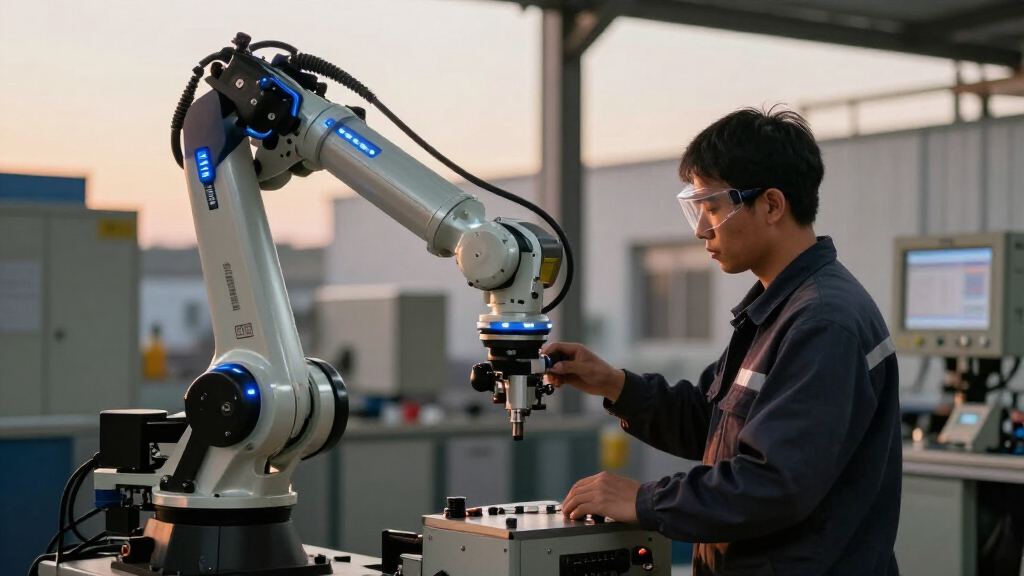
industrial robot automation system
As an affiliate, we earn on qualifying purchases.
As an affiliate, we earn on qualifying purchases.
Next Steps Toward Factory Implementation and Industry Adoption
Siemens plans to launch its fully AI-driven factory in Erlangen in 2026, serving as a model for global expansion. The company will also roll out Digital Twin Composer and expand its portfolio of industrial copilots, with ongoing customer collaborations like PepsiCo. Monitoring performance data, customer feedback, and technological developments over the coming months will clarify how rapidly Siemens’ physical AI vision materializes into widespread industrial practice.
GPU-accelerated simulation software
As an affiliate, we earn on qualifying purchases.
As an affiliate, we earn on qualifying purchases.
Key Questions
What is the Industrial Foundation Model?
The Industrial Foundation Model (IFM) is Siemens’ domain-specific AI designed to process 3D models, engineering drawings, and operational data to optimize manufacturing and automation processes.
How does Siemens’ partnership with NVIDIA support this initiative?
NVIDIA provides GPU-accelerated simulation, physics-based AI models, and generative digital twin technology, enabling Siemens to build an integrated AI platform for industrial applications.
When will the first AI-driven factory be operational?
The first fully AI-driven, adaptive manufacturing site at Siemens’ Erlangen factory is targeted for launch in 2026.
What are the main challenges Siemens might face?
Key challenges include validating performance in real-world settings, managing dependency on NVIDIA’s infrastructure, and overcoming the long sales cycles typical of industrial clients.
Why is this development significant for manufacturing?
This marks a shift toward physical AI in industry, promising more autonomous, efficient factories, and a new competitive landscape driven by domain expertise and proprietary data.
Source: ThorstenMeyerAI.com
Halloween Picks
halloween
As an affiliate, we earn on qualifying purchases.