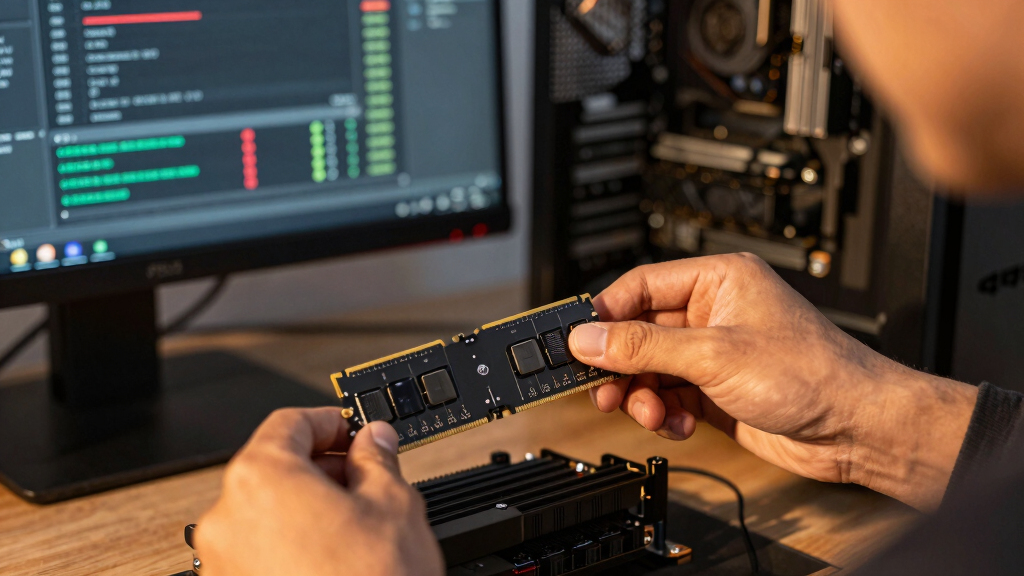

📊 Full opportunity report: DDR5 Now, DDR6 Soon: A Buyer’s Field Guide on ThorstenMeyerAI.com — validation score, market gap, and execution plan.

Get business pricing on office and shipping supplies
- Business-only prices and quantity discounts
- Tax-exempt purchasing
- Multiple users, one account, clear invoices
TL;DR
Memory prices remain high through 2026, making waiting for DDR6 impractical. Experts advise buying DDR5 now for current builds, as DDR6 won’t be mainstream until 2027 and will be more expensive initially.
Despite ongoing speculation about DDR6’s imminent release, industry analysis confirms that DDR5 remains the recommended memory standard for 2026. Experts warn that waiting for DDR6 is likely to be costly and unnecessary, as the new standard will not be widely available until 2027 and will come with a significant price premium.
Memory prices are unlikely to decrease before 2028, according to industry forecasts, making waiting for DDR6 an unwise choice for most consumers. DDR5-6000 with CL30 timings remains the sweet spot for mainstream builds, offering optimal performance at a reasonable cost, while higher-speed kits like DDR5-8000 are considered a waste of money for typical workloads.
Manufacturers are already preparing for DDR6’s phased rollout, which will start with enterprise and AI servers in 2026–27, followed by mainstream desktops and laptops in 2027. DDR6 introduces a new physical form factor, CAMM2, and offers substantially higher bandwidth but requires entirely new platforms, including compatible CPUs and motherboards, with no backward compatibility.
Building on DDR4 in 2026 is discouraged, as DDR4 is nearing end-of-life, and its cost per gigabyte now rivals DDR5, with no future upgrade path. Instead, consumers should focus on well-balanced DDR5 systems that meet their current needs, avoiding overcapacity and unnecessary expenses.
DDR5 now, DDR6 soon
A buyer’s field guide. The 20-year instinct — wait for prices to drop, or wait for the next generation — is broken this cycle. Buy the DDR5 you actually need now; don’t wait for DDR6. Here’s the reasoning.
Driven to end-of-life, production slashed. Same money, dead-end socket. Leave a working DDR4 box alone — but never start a new build on DDR4 to “save.”
A framework, not a gamble. Buy the DDR5 you need now, at the sweet spot, in the capacity you’ll actually use — don’t buy DDR4, don’t wait for DDR6. The two costliest mistakes in this market are the ones that feel prudent: waiting for a price drop that isn’t coming, and waiting for a next-gen part that launches dearer than what’s on the shelf. Next: The SSD Squeeze.
Why Buying DDR5 Now Is the Smart Choice
For most buyers in 2026, purchasing DDR5 now offers better value and performance than waiting for DDR6, which is still in development and will be more expensive at launch. Delaying upgrades to wait for DDR6 could result in missing out on platform improvements and increased costs, as DDR6’s advanced features are mainly relevant for specialized workloads like AI and scientific computing, not gaming or typical productivity.
As an affiliate, we earn on qualifying purchases.
Market Trends and Future Memory Developments
The current memory market is characterized by high prices, limited supply, and a slow decline in costs, with forecasts indicating that significant price relief will only occur around 2028. DDR5 was introduced in 2021, with mainstream adoption expected to continue through 2028. DDR6, still in standardization and early testing phases, is not expected to reach broad adoption until 2027–30, with initial applications limited to enterprise and high-performance computing.
The physical and technical differences between DDR5 and DDR6 are substantial, requiring new motherboards and CPUs, which further delays mainstream adoption. This staged rollout mirrors previous memory generations, which took several years to become widely available and affordable.
“DDR6 will be a game-changer, but it’s not ready for mainstream use until at least 2027, and early adopters should expect higher prices and limited capacities.”
— Memory manufacturing executive
As an affiliate, we earn on qualifying purchases.
Uncertainties Around DDR6 Adoption and Pricing
While DDR6 is expected to launch in 2027, the exact pricing, capacity options, and platform compatibility remain uncertain. Early modules may be expensive, and widespread adoption could be delayed by technical issues, supply chain constraints, or market demand shifts. Additionally, the impact of DDR6 on workloads outside of enterprise and scientific computing is still unclear.
As an affiliate, we earn on qualifying purchases.
Next Steps for Consumers and Builders in 2026
Consumers should focus on selecting well-balanced DDR5 systems that meet their immediate needs, avoiding over-specification or premature upgrades. Industry developments will continue to unfold, with DDR6 modules gradually appearing on compatibility lists from late 2026 onward. Buyers interested in future-proofing for specialized workloads should monitor JEDEC standards and motherboard announcements for early DDR6 support, but mainstream adoption is not expected before 2027.
As an affiliate, we earn on qualifying purchases.
Key Questions
Should I wait for DDR6 before building a new PC in 2026?
No. Current forecasts indicate DDR6 will not be widely available or cost-effective until 2027. Building now with DDR5 offers better value and performance for most users.
Will DDR6 be significantly faster than DDR5?
Yes. DDR6 is expected to double or triple effective bandwidth compared to DDR5, but this advantage is mainly relevant for high-performance computing and AI workloads, not gaming or general use.
Is DDR4 still a viable option in 2026?
No. DDR4 is nearing end-of-life, and building on DDR4 now could limit future upgrade options. It is better to invest in DDR5 for new builds.
What should I look for when buying DDR5 in 2026?
Focus on DDR5-6000 modules with CL30 timings, and buy capacity suited to your workload—32GB for gaming and general use, 64GB for content creation. Avoid overly expensive or high-speed kits that offer little real-world benefit.
Source: ThorstenMeyerAI.com
Halloween Picks
halloween
As an affiliate, we earn on qualifying purchases.