
TL;DR

Get business pricing on office and shipping supplies
- Business-only prices and quantity discounts
- Tax-exempt purchasing
- Multiple users, one account, clear invoices
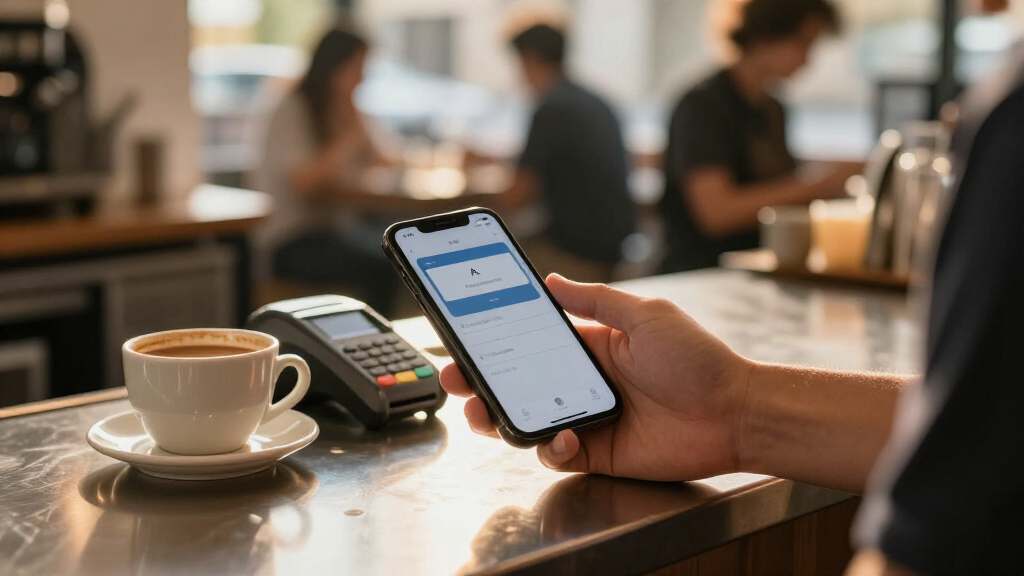
Federal Reserve Governor Christopher Waller said AI could help improve cross-border payment screening, cybersecurity and routing, while AI agents could eventually shop and pay on consumers’ behalf. He described agentic commerce as early-stage and said delegated purchasing will need stronger trust mechanisms and guardrails.
Federal Reserve Governor Christopher Waller said artificial intelligence could improve cross-border payment security and efficiency, while AI agents may eventually make purchases and payments for consumers. In a speech at Sibos 2026 in Miami on September 29, he described agentic commerce as an early-stage development whose broader use will depend on building trust and safeguards around autonomous transactions.
Waller pointed to sanctions screening and anti-money-laundering work as areas where large language models could help. He cited research indicating that these systems can reduce false-positive alerts, potentially freeing staff to review higher-risk cases and allowing legitimate payments to face less friction. He said AI is more likely to augment faster, traditional anomaly-detection systems than replace them.
He also addressed the cybersecurity risks and potential defenses associated with AI. Waller said AI could help identify threats, manage exposure and catch software vulnerabilities, but warned that a successful attack on interconnected payment infrastructure could disrupt international commerce. He described the defensive challenge as uneven: attackers may need to exploit one vulnerability, while operators must protect a broad attack surface.
For cross-border transfers, Waller said AI could assist with complex choices around payment routing, foreign-exchange conversion and liquidity. He also outlined two forms of agentic commerce: agent-assisted shopping, where a consumer makes the final decisions and payment, and agent-delegated shopping, where an agent purchases within limits set by the consumer. He gave the example of an agent using a pre-funded virtual card to order groceries based on past purchases.
AI’s Role in Payment Security and Shopping
AI could affect both the behind-the-scenes systems that move money and the way consumers decide what to buy. Better screening could reduce unnecessary delays in legitimate cross-border payments, while improved routing and currency decisions may help providers balance cost, speed and reliability. Waller presented these as potential uses, not as results already established across payment networks.
Agent-delegated purchases raise a different issue: consumers would be giving software authority to spend. That shifts payment design beyond processing a transaction to defining what an agent can buy, how much it can spend and how a buyer can review or stop its actions. Waller said such use carries a higher risk of unintended purchases and requires more extensive trust mechanisms and guardrails.
The stakes extend to payment providers, merchants and consumers. Systems that rely on AI could gain new ways to detect threats, but they could also face new vulnerabilities and disputes over transactions an agent initiated. The speed at which agent-led payments develop may depend not only on the technology, but on whether users and businesses can set clear limits and verify activity.
Popular right now

Samsung 42-Inch Class OLED S90F 4K Smart TV (2025)

Roborock Robot Vacuum and Mop with LiDAR Navigation and 10,000 Pa Suction

Shark Rocket Pet Plus Corded Stick Vacuum, Bordeaux, HV322
As an affiliate, we earn on qualifying purchases.
From Payment AI to Agent-Led Purchases
Waller placed agentic commerce within a longer history of AI use in payments. He said the sector has used machine learning to combat fraud and adopted large language models for tasks such as payment reconciliation. His speech focused on how those uses could extend from operational support to systems that plan and carry out multistep actions.
At an industry roundtable hosted at the Federal Reserve earlier in the summer, participants broadly agreed that agentic commerce remains at an early stage, Waller said. He described consumer-to-business purchases as the likely first wave, with agent-assisted shopping preceding more autonomous delegated purchases. Consumers may encounter agents offered by general-purpose AI firms, merchant-specific services or personal assistants.
Waller’s remarks were a discussion of possible applications and risks, not an announcement of a new Federal Reserve payment system or a timetable for deployment. The speech was delivered at a payments industry conference and published by the Bank for International Settlements on October 5.
“I expect LLMs to augment, rather than replace, faster, more traditional anomaly detection methods.”
— Christopher Waller, Federal Reserve governor
Safeguards and Adoption Remain Open
Waller did not specify a timetable for broader adoption of agent-delegated commerce, nor did he set out a common technical or regulatory framework for authorizing, monitoring and reversing agent-made purchases. The speech also did not identify particular products or payment networks already operating at scale in this way.
His comments on reducing false positives referred to research, but the speech excerpt does not provide the studies’ methods, performance figures or deployment conditions. It is therefore unclear how well those findings would carry over to different payment systems. The extent to which AI improves routing, liquidity decisions or cyber defenses in live operations also remains unspecified.
Consumer protections will need to address how spending limits are applied, how an agent’s authority is verified and who bears responsibility when a purchase falls within an agent’s instructions but conflicts with what a consumer intended. Waller raised the need for guardrails but did not resolve those questions.
Building Rules for Agent Payments
The next steps will depend on payment companies, merchants, AI providers and policymakers developing practical ways to control agent authority and give consumers visibility into transactions. Waller’s speech does not announce a specific Federal Reserve initiative or deadline, so no formal implementation milestone was set out.
As agent-assisted shopping develops, attention is likely to turn to how systems authenticate the buyer, communicate spending constraints and handle disputed or unintended purchases. For payment operators, another near-term task is testing AI’s security benefits against the risks of new attack methods and vulnerabilities. Waller’s central message was that the technology could support more efficient payments, but its use—especially autonomous purchasing—will require deliberate development of defenses and consumer safeguards.
Key Questions
What did Christopher Waller say about AI and payments?
Waller said AI could support fraud and illicit-finance screening, cybersecurity and cross-border payment routing. He also discussed agents that can search for products and, with permission, make purchases for consumers.
What is agentic commerce?
It is the use of AI agents to help or act on a consumer’s behalf when shopping. In an agent-assisted model, the consumer chooses and pays; in a delegated model, the agent can make purchases within set limits.
Are AI agents already making most online purchases?
No such claim was made in Waller’s speech. He said market participants see agentic commerce as being in an early phase, with assisted uses expected to precede more autonomous purchasing.
What risks did Waller identify?
He warned that AI may increase the sophistication of cyberattacks and said attacks on interconnected payment infrastructure could disrupt commerce. Delegated shopping also creates a risk of unintended purchases, making trust mechanisms and spending guardrails necessary.
Did Waller announce a rollout or new Federal Reserve policy?
No. The speech discussed potential uses, risks and open questions. It did not announce a deployment schedule, new payment system or specific Federal Reserve policy for agent-led purchases.
Source: primary