
The metric that predicts revenue better than open rate is the click-through rate (CTR). Unlike open rate, CTR shows actual engagement by indicating how many recipients clicked on links or offers, revealing genuine customer interest. Higher CTRs often lead to conversions and sales, making them a more reliable indicator of revenue potential. To discover how combining CTR with other metrics can improve your results, keep exploring the strategies that boost engagement and revenue.
Key Takeaways
- Click-through Rate (CTR) reflects genuine customer interest and correlates more directly with conversions and revenue.
- Conversion Rate measures how effectively emails turn recipients into paying customers, predicting revenue more reliably.
- Engagement duration indicates ongoing recipient interest, which aligns closely with higher revenue potential.
- Combining CTR, conversion rate, and engagement metrics offers a comprehensive view of revenue forecasts.
- Segmentation and personalization enhance engagement metrics, leading to more accurate revenue predictions than open rates alone.
Why Open Rate Isn’t the Best Metric to Predict Revenue

While open rate has traditionally been viewed as a key indicator of email campaign success, it doesn’t reliably predict revenue. One reason is that spam triggers can cause your emails to land in spam folders, decreasing open rates but not necessarily reflecting the true engagement or potential revenue. Additionally, subject line tactics aimed solely at boosting open rates often focus on curiosity or sensationalism, which may attract opens but don’t guarantee conversions. A high open rate can be misleading if recipients don’t take further action. Instead, focusing on how your subject lines resonate with your audience and avoid spam filters will better align your efforts with revenue outcomes. Moreover, understanding the impact of email deliverability on viewer engagement can be a more meaningful measure of success. A comprehensive understanding of engagement metrics can help you evaluate the true effectiveness of your campaigns beyond just open rates. For example, tracking visitor interactions and conversion actions provides clearer insights into campaign profitability. Net worth of individuals and other personal success metrics are also important indicators of influence but do not directly translate to campaign profitability. Open rates alone don’t tell the full story about your campaign’s profitability or customer engagement.
Key Email Engagement Metrics That Help Forecast Revenue

Understanding how your audience engages with your emails is vital for forecasting revenue. Conversion rate shows how many recipients take action, while engagement duration reveals how long they stay interested. Together, these metrics give you a clearer picture of your campaigns’ true impact. Monitoring email engagement metrics can help you identify which content resonates most with your audience. Additionally, analyzing performance indicators such as click-through rates and bounce rates can provide deeper insights into campaign effectiveness, especially when considering how different audience behaviors influence overall revenue. Recognizing the impact of electric bike performance on consumer interest can also inform your marketing strategies and predict sales trends. Paying attention to content engagement metrics helps marketers refine their messaging to boost conversions and revenue.
Conversion Rate Significance
Conversion rate is a crucial metric that directly indicates how effectively your email campaigns turn recipients into customers. A higher conversion rate boosts customer loyalty, showing your audience that your offerings meet their needs and expectations. It also positively impacts brand perception, reinforcing trust and credibility. When your emails lead to actions like purchases or sign-ups, it signals that your messaging resonates well. This engagement fosters ongoing relationships, driving repeat business and referrals. Tracking conversion rate helps you identify which campaigns are truly effective at generating revenue. Unlike open rates, it reflects actual interest and intent, providing a clearer picture of your campaign’s ROI. Prioritizing conversion rate ensures you focus on strategies that convert interest into tangible results, ultimately maximizing your revenue potential. Additionally, understanding customer journey helps tailor your messaging for higher conversions.
Engagement Duration Impact
Engagement duration reveals how long recipients stay connected with your emails, offering valuable insights into their level of interest. When recipients spend more time reading your messages, it indicates higher engagement, which can boost customer loyalty. Longer engagement also reinforces brand awareness, making your brand more memorable and trusted. If your emails maintain attention over extended periods, it suggests your content resonates and encourages recipients to take action. This sustained interest often correlates with increased revenue, as engaged customers are more likely to convert and remain loyal. Monitoring engagement duration helps you identify how effectively your emails foster ongoing connections, ultimately predicting revenue growth better than open rates alone. Content relevance plays a crucial role in keeping your audience engaged longer to maximize these benefits. Additionally, understanding how sound dynamics influence listener engagement can provide insights into crafting more compelling email content that resonates deeply. Recognizing the importance of audience behavior can further refine your email strategies to enhance overall engagement and conversion rates.
How Email Click-Through Rate Shows True Customer Interest
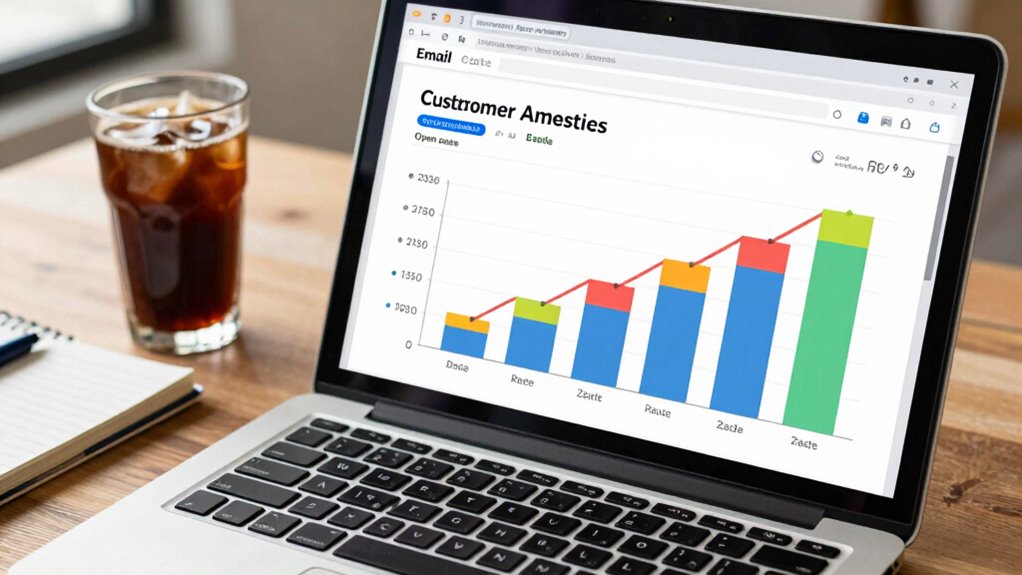
When customers click on your emails, it reveals their genuine interest and intent. Those clicks aren’t just actions—they drive conversions and show which offers truly resonate. Understanding this behavior helps you focus on what matters most to your audience. Moreover, analyzing user engagement through click-through rates provides valuable insights into the effectiveness of your campaigns, especially when considering the importance of measuring meaningful interactions. Recognizing customer preferences through click data enables more personalized marketing strategies and improves overall campaign performance. Additionally, observing patterns in behavioral signals can help predict future purchasing decisions.
Engagement Indicates Intent
Even if a customer opens your email, it doesn’t always mean they’re genuinely interested in your offer. Engagement, especially through click-throughs, reveals true intent. When you analyze click data, you gain insights into what genuinely interests your audience. This approach aligns with media literacy principles that emphasize understanding the context and intent behind online interactions. Recognizing content engagement as a key metric helps refine customer segmentation and improves email personalization, making your campaigns more targeted. Additionally, understanding security zone info can help tailor messaging to specific customer segments based on their behavior and preferences. Incorporating financial terminology into your analysis can further clarify customer motivations and enhance segmentation strategies. By focusing on behavioral signals, marketers can better predict future actions and optimize their outreach strategies. Consider the following example:
| Customer Segment | Clicks on Promotions | Clicks on Content | Purchase Likelihood |
|---|---|---|---|
| Segment A | 70% | 30% | High |
| Segment B | 40% | 60% | Moderate |
| Segment C | 20% | 80% | Low |
| Segment D | 90% | 10% | Very High |
| Segment E | 10% | 90% | Low |
This data highlights how engagement signals intent more clearly than open rates alone.
Clicks Drive Conversions
Click-through rates (CTR) are a powerful indicator of genuine customer interest because they show who is actively engaging with your content. When you optimize your subject lines, you increase the likelihood that recipients will open and click your emails. List segmentation plays a critical role here, allowing you to send targeted messages that resonate with specific audience segments. By tailoring content, you make it easier for subscribers to find relevant links, boosting click-throughs. Higher CTRs translate into more website visits and, ultimately, conversions. Focusing on these metrics helps you identify what truly interests your audience, rather than relying solely on open rates. Ultimately, optimizing subject lines and segmenting your list unveil the full potential of your email campaigns to drive meaningful customer actions.
Action Reflects Interest
Because a high click-through rate (CTR) indicates genuine customer interest, it serves as a more reliable measure of engagement than open rates alone. When customers actively click on links, it shows they’re interested enough to take action, reinforcing their loyalty to your brand. This behavior signals a deeper connection, boosting customer loyalty over time. Additionally, high CTRs contribute to stronger brand recognition, as engaged customers are more likely to remember and trust your brand. Unlike open rates, which can be inflated by curiosity or spam filters, clicks reveal true intent. By focusing on actions that reflect interest, you gain clearer insights into what truly resonates with your audience, enabling you to refine your strategy for better revenue outcomes.
Why Conversion Rate Is Critical for Revenue Predictions

Conversion rate is crucial for predicting revenue because it directly measures how effectively your marketing efforts turn prospects into paying customers. By analyzing this metric, you can identify which strategies work best. To improve conversion rates, focus on:
Conversion rate directly shows how effectively your marketing turns prospects into paying customers, crucial for accurate revenue prediction.
- Audience segmentation – dividing your audience helps tailor messages.
- Personalization tactics – customizing content boosts engagement.
- Optimizing landing pages – making them clear and compelling.
- Testing offers and calls-to-action – refining what motivates purchases.
These steps help you target the right people with the right message, increasing the likelihood of conversions. A higher conversion rate means more revenue from the same traffic, making it a indispensable metric for accurate revenue predictions. You can better allocate resources and refine your marketing to maximize ROI.
Combining Engagement Metrics for Accurate Revenue Forecasting

While a strong conversion rate indicates how well your marketing persuades prospects to buy, relying on it alone can give an incomplete picture of your revenue potential. To improve accuracy, combine multiple engagement metrics like click-through rates, time spent, and content personalization success. These metrics, when integrated with segmentation strategies, reveal deeper insights into customer behavior. Use the table below to see how different metrics contribute:
| Engagement Metric | What It Reveals |
|---|---|
| Click-through Rate (CTR) | Interest level in your content |
| Time Spent on Content | Engagement depth and relevance |
| Content Personalization Effectiveness | Impact of segmentation strategies on engagement |
Practical Tips to Track and Improve Your Engagement Metrics

Tracking and improving your engagement metrics starts with establishing clear, measurable goals for each one. Once set, use these strategies to enhance your efforts:
Setting measurable goals is key to boosting your engagement metrics effectively.
- Conduct A/B testing on subject lines, content, and send times to identify what drives engagement.
- Personalization strategies, like using recipient names or tailored recommendations, boost interaction.
- Monitor open rates, click-throughs, and conversions regularly to spot trends and areas for improvement.
- Segment your audience to target specific groups with relevant content, increasing overall engagement.
Real-World Examples of Revenue Growth Through Engagement Data

Real-world examples clearly show how leveraging engagement data can lead to significant revenue growth. Companies that focus on engagement metrics often see improved customer loyalty by tailoring their messaging with personalization strategies. For instance, a retailer used engagement data to identify high-interaction customers and delivered personalized offers, resulting in a 20% increase in repeat purchases. Another brand analyzed engagement patterns to refine their email content, boosting click-through rates and revenue. By understanding which customers actively engage, you can nurture loyalty and deliver targeted experiences that drive sales. These examples demonstrate that tracking engagement isn’t just about open rates; it’s about using data to foster stronger relationships and maximize revenue through smarter personalization.
How to Shift Your Email Strategy for Better ROI Using Engagement Metrics

To improve your email ROI, start by shifting your focus from just open rates to meaningful engagement metrics like click-throughs, time spent, and conversion actions. This approach helps you identify what truly resonates with your audience. Use these strategies:
- Conduct A/B testing on subject line strategies to boost engagement.
- Track click-through rates to see which links generate interest.
- Measure time spent on your content to gauge deeper engagement.
- Monitor conversion actions to understand actual revenue impact.
Frequently Asked Questions
Can Engagement Metrics Predict Long-Term Customer Lifetime Value?
Yes, engagement metrics can predict long-term customer lifetime value. When you track how customers interact with your brand, you gain insights into customer loyalty and can identify churn prediction signals early. Engaged customers tend to stay longer and spend more over time. By analyzing these metrics, you can tailor your marketing efforts, strengthen loyalty, and ultimately improve your customer lifetime value, making your strategies more effective in the long run.
How Do Engagement Metrics Vary Across Different Industries?
You’ll notice engagement metrics vary widely across industries, influenced by industry benchmarks and typical engagement trends. For example, retail may see higher click-through rates, while B2B sectors focus more on email opens. By analyzing these industry-specific benchmarks, you can better understand what constitutes strong engagement in your field. Tracking engagement trends over time helps you spot shifts, refine your strategies, and ultimately improve your long-term revenue prospects.
What Role Does Segmentation Play in Improving Engagement-Based Revenue Forecasts?
Segmentation plays a critical role in improving engagement-based revenue forecasts, with personalized campaigns increasing conversion rates by up to 70%. By tailoring your messaging through effective personalization strategies, you can better target your audience’s interests. However, balancing this with data privacy concerns is essential—respecting privacy builds trust and guarantees compliance, ultimately enhancing your segmentation efforts and boosting revenue predictions.
Are There Any Tools That Automatically Analyze Engagement Metrics for Revenue Prediction?
Yes, there are automated analytics and predictive tools designed to analyze engagement metrics for revenue prediction. These tools automatically process data like click rates, conversions, and user behavior to forecast sales performance more accurately than traditional open rate analysis. By leveraging advanced algorithms, they help you identify high-value audiences and optimize campaigns, ultimately boosting revenue. You can integrate these tools into your marketing stack for real-time insights and smarter decision-making.
How Often Should I Review and Update My Engagement Tracking Strategies?
You should review your engagement tracking strategies regularly, ideally every few months, to keep things fresh and effective. During these reviews, consider adjusting your email frequency and enhancing content personalization to better connect with your audience. Staying proactive guarantees your strategies stay aligned with evolving customer behaviors, helping you maximize revenue. Remember, a little periodic fine-tuning can make a big difference in engagement and overall success.
Conclusion
Think of your email engagement metrics as a compass guiding your ship through the vast ocean of customer behavior. While open rates point you north, it’s the click-throughs and conversions that reveal hidden islands of revenue. By tuning into these deeper signals, you steer with purpose, charting a course toward true profitability. Embrace this map, and watch your email strategy transform from guesswork into a voyage of consistent growth and discovery.