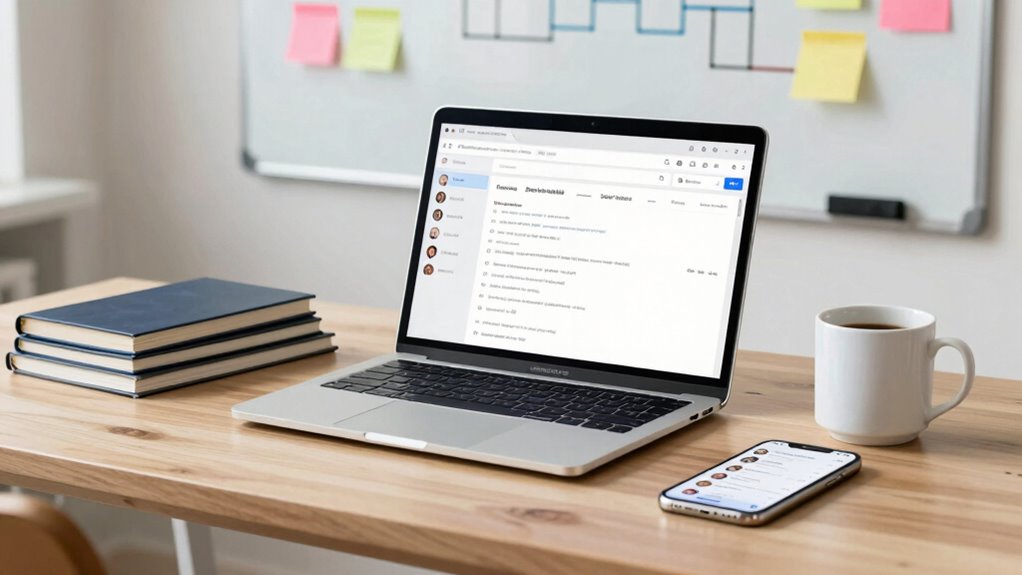
To grow into bigger email roles, focus on effective delegation by assigning clear responsibilities, leveraging automation to handle routine tasks, and establishing transparent communication guidelines. Trust your team to make decisions within their scope, empowering them and boosting morale. Use collaborative tools and ongoing training to support growth, creating a culture of shared success. Keep improving these strategies to transform your email team into an agile, high-performing unit ready for larger challenges.

Get business pricing on office and shipping supplies
- Business-only prices and quantity discounts
- Tax-exempt purchasing
- Multiple users, one account, clear invoices
Key Takeaways
- Implement clear delegation protocols to distribute responsibilities and empower team members for larger email management roles.
- Use automation tools to efficiently assign, sort, and respond to high message volumes.
- Establish transparent communication strategies to ensure role clarity and team coordination.
- Foster a culture of trust, decision-making, and continuous training to enable growth into bigger email roles.
- Leverage collaborative platforms and hardware investments to support scalable email team operations.

Have you ever wondered how email teams manage to stay organized and efficient despite handling countless messages? The secret often lies in effective delegation, which streamlines workflows and ensures everyone contributes their strengths. As your team grows, so does the need for clear responsibilities and smooth communication. Delegation isn’t just about assigning tasks; it’s about empowering team members to take ownership of their roles, ultimately boosting team collaboration and productivity.
One way to facilitate this process is through email automation. Automated tools help assign, sort, and prioritize messages without manual intervention. For example, you can set rules that automatically route inquiries to the right team member based on keywords or sender information. This reduces the risk of messages slipping through the cracks and allows team members to focus on high-priority tasks. Automated responses can also acknowledge receipt of emails, providing immediate reassurance to clients or colleagues while freeing up time for more complex issues.
Delegation becomes even more effective when combined with a well-structured communication strategy. Clear guidelines help team members understand their roles and responsibilities, especially when managing shared email accounts. You might designate specific team members to handle customer inquiries, internal updates, or project communications. When everyone knows what they’re responsible for, team collaboration improves, and you avoid duplication or overlooked messages. Regular check-ins and updates foster transparency, ensuring everyone stays informed about ongoing tasks and priorities. Incorporating digital communication tools can also improve overall efficiency in managing digital communications. Utilizing automation within these tools further enhances the delegation process by reducing manual oversight and ensuring consistent message handling. Additionally, understanding how communication flows within your team can help identify bottlenecks and areas for process improvement.
In larger teams, delegation also involves empowering individuals to make decisions within their scope. Trusting team members to handle their assigned responsibilities not only speeds up responses but also boosts morale. Encourage your team to flag complex issues or escalate when necessary, maintaining a balance between autonomy and oversight. Using collaborative tools like shared inboxes or project management platforms further enhances coordination, allowing everyone to see current tasks and their statuses. Incorporating monitors and other hardware investments can also improve overall efficiency in managing digital communications. Additionally, providing ongoing training ensures your team stays updated with the latest tools and best practices, making delegation more effective. Remember, the goal isn’t just to lighten your workload but to develop your team’s capabilities and foster a culture of shared success.
Ultimately, delegation in email teams hinges on a combination of automation, clear communication, and trust. When you delegate effectively, your team becomes more agile and capable of handling larger roles. Growth isn’t just about doing more; it’s about doing smarter, with everyone working together seamlessly. This playbook for delegation sets the stage for scaling your email operations and empowering your team to reach new heights.
email automation tools for teams
As an affiliate, we earn on qualifying purchases.
As an affiliate, we earn on qualifying purchases.
Frequently Asked Questions
How Do I Choose the Right Team Members to Delegate Email Tasks?
To choose the right team members for email tasks, evaluate their skills and team dynamics. Look for individuals with strong communication, organization, and responsiveness. Assess their capacity to handle additional responsibilities without sacrificing quality. Consider how well they collaborate and adapt within your team, ensuring they can manage email workload efficiently. By aligning skills with team dynamics, you’ll delegate effectively, fostering growth and maintaining productivity.
What Tools Help Streamline Email Delegation Effectively?
You can streamline email delegation by using tools that automate sorting and apply priority tagging automatically. These features help you quickly categorize incoming messages, making it easier to assign tasks efficiently. Email management platforms like Outlook, Gmail, or specialized apps such as Spark or Superhuman offer automated sorting and priority tagging. These tools save time, reduce errors, and guarantee your team focuses on the most important emails first, improving overall productivity.
How Can I Ensure Accountability in Delegated Email Responsibilities?
Did you know that 85% of employees say trust is vital for effective delegation? To guarantee accountability, use trust-building strategies like clear expectations and regular check-ins. Establish feedback loops so team members can share progress and address issues early. By consistently monitoring tasks and encouraging open communication, you foster responsibility and keep everyone aligned, making certain delegated email responsibilities are completed effectively and reliably.
What Are Common Pitfalls When Delegating Email Tasks?
When delegating email tasks, you might face common pitfalls like email overload and miscommunication risks. You may underestimate the volume of emails, leading to overwhelmed team members, or send unclear instructions that cause confusion. To avoid this, set clear expectations, establish guidelines for handling emails, and regularly check in. This way, you keep everyone aligned, reduce overload, and minimize miscommunication risks, ensuring smooth delegation and team efficiency.
How Do I Balance Delegation With Maintaining Control Over Email Communication?
You can balance delegation with control by setting clear expectations about email tone and timing upfront. When you delegate, communicate the desired email style and deadlines to your team. Regularly check in on progress without micromanaging, adjusting your oversight as trust builds. This approach guarantees your team maintains consistent communication standards while you retain oversight, fostering efficiency and professionalism in your email interactions.
shared inbox management software
As an affiliate, we earn on qualifying purchases.
As an affiliate, we earn on qualifying purchases.
Conclusion
Mastering delegation in your email team opens growth and efficiency. For example, imagine you delegate routine inquiries to a trusted team member, freeing you to focus on strategy. Over time, they handle more complex tasks, boosting both their skills and your team’s productivity. By embracing delegation, you’ll foster teamwork and create space for bigger responsibilities. Keep trusting your team, and watch everyone grow—your email operations will thrive as a result.
team collaboration platforms for email
As an affiliate, we earn on qualifying purchases.
As an affiliate, we earn on qualifying purchases.
As an affiliate, we earn on qualifying purchases.
Halloween Picks
halloween
As an affiliate, we earn on qualifying purchases.