

In your ESP, contacts are your raw email addresses, regardless of user permission, while subscribers have explicitly opted in to receive your messages. Profiles add detailed data about preferences, behaviors, and demographics, helping you personalize content. Understanding the difference guarantees proper organization, compliance, and targeted campaigns. Managing these elements correctly boosts engagement and trust. Keep exploring this topic to discover how to optimize your data structure for better marketing success.
Key Takeaways
- Contacts are raw email addresses used for initial outreach; subscribers are contacts who have opted in for marketing communications.
- Profiles contain detailed demographic, behavioral, and preference data, enabling personalized messaging and deeper engagement.
- Differentiating contacts, subscribers, and profiles ensures compliance with privacy laws and improves targeting accuracy.
- Proper data organization and normalization prevent duplicates, support segmentation, and enhance campaign effectiveness.
- Maintaining accurate, secure, and updated data builds trust, boosts engagement, and maximizes marketing ROI.
What Are Contacts, Subscribers, and Profiles in ESPs? A Simple Explanation
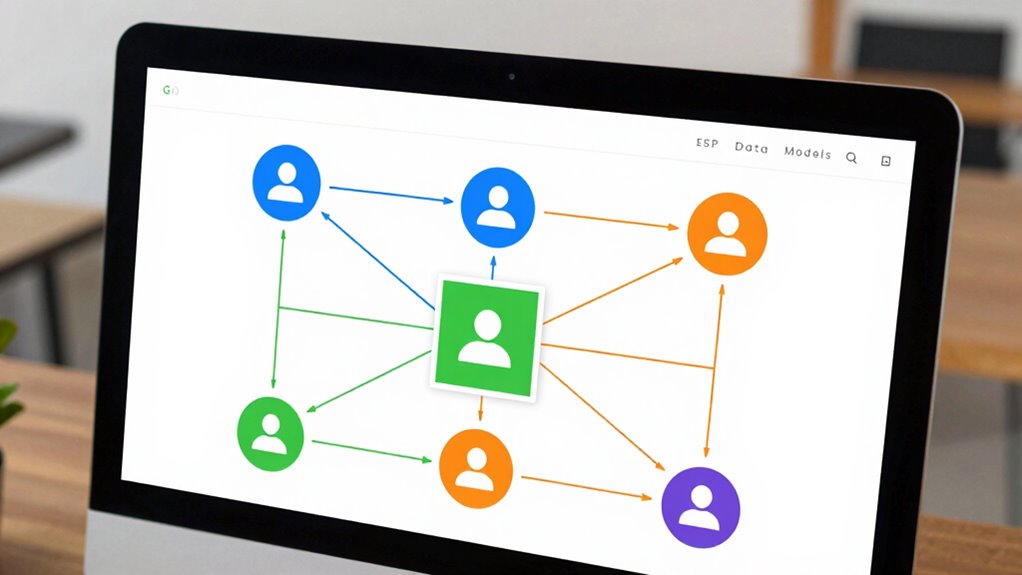
Ever wondered what the key terms in an Email Service Provider (ESP) actually mean? When working with contacts, subscribers, and profiles, understanding their roles helps you manage your email list effectively. Your contacts are anyone whose email address you store—regardless of whether they’ve opted in. Subscribers are contacts who have given you permission to send them emails, respecting data privacy rules. Profiles are detailed records that include subscriber preferences and behaviors. Be cautious of contact duplication, which can lead to sending multiple emails to the same person, damaging your engagement and risking privacy issues. Properly organizing these elements ensures your email list stays clean, compliant, and effective, helping you build trust and improve your marketing results. Additionally, maintaining color accuracy in your email visuals can enhance overall engagement and brand perception. Understanding data management concepts like segmentation and personalization can also contribute to more effective email marketing strategies.
Why Knowing the Difference Is Crucial for Your Email Marketing

Understanding the differences in data management impacts how effectively you target your audience. It influences your campaign strategies and how you segment your contacts. Knowing these distinctions helps you optimize your email marketing efforts for better results. Additionally, implementing transparent disclosures about data collection fosters trust with your subscribers. Being aware of European cloud innovation and the importance of sustainable, secure cloud solutions can also enhance your overall data governance practices. Recognizing data privacy regulations ensures compliance and builds credibility with your audience. Moreover, understanding Cookie Categories can help you better manage user consent and improve user experience. Incorporating Free Floating concepts into your strategy can further streamline your data management processes.
Data Management Differences
Knowing the difference between data management processes is essential because it directly impacts your email marketing success. Proper data normalization guarantees your contact, subscriber, and profile data are consistent and accurate, reducing errors and improving targeting. It also makes your data easier to analyze and update. Data consistency is crucial for maintaining reliable segments and personalized messaging. Ensuring your data is clean and well-structured minimizes data errors that could lead to ineffective campaigns. Equally important is privacy compliance; understanding how each data type is managed helps you meet regulations like GDPR and CAN-SPAM, avoiding costly penalties. Managing data properly means you can segment audiences more precisely, personalize messages, and maintain trust. If you mishandle data, you risk inconsistencies or breaches that damage your reputation. So, understanding these data management differences allows you to optimize your campaigns while respecting user rights and safeguarding sensitive information. Additionally, thermal behavior principles from high-heat outdoor cooking emphasize the importance of understanding data flow and data integrity to achieve optimal results.
Impact on Campaigns
Proper data management directly influences how effectively your email campaigns perform. When you understand the differences between contacts, subscribers, and profiles, you can tailor your email personalization to resonate with your audience. Accurate data guarantees you send targeted content, increasing engagement and conversions. Mismanaging data can lead to irrelevant messaging, which damages your sender reputation and hampers campaign success. Additionally, knowing these distinctions helps you prioritize data privacy, ensuring you comply with regulations like GDPR or CAN-SPAM. Respecting data privacy builds trust with your subscribers, encouraging ongoing interaction. In short, clear data models enable you to craft more impactful campaigns while safeguarding your recipients’ information, making your email marketing efforts more efficient and compliant. Understanding data models is essential for building a sustainable and effective email marketing strategy.
Segmentation Strategies
Effective segmentation starts with clearly distinguishing between contacts, subscribers, and profiles, because each plays a different role in your email marketing strategy. Misunderstanding these can lead to segmentation challenges, like targeting the wrong group or inconsistent data. To overcome this, focus on data normalization—standardizing data formats for accurate segmentation. Here’s a quick overview:
| Aspect | Purpose |
|---|---|
| Contacts | All individuals you’ve reached out to |
| Subscribers | Contacts who opted in to receive emails |
| Profiles | Detailed data about subscriber behavior |
How Contacts Fit Into Your ESP Data Model

Contacts are the foundation of your ESP data model, serving as the primary entities that drive your email marketing efforts. They represent the individuals you communicate with and are essential for organizing your audience. Ensuring data privacy is critical, so you must handle contact information responsibly and securely. Contact deduplication helps prevent multiple records for the same individual, which keeps your data clean and accurate. When managing contacts, you’ll want to implement processes that identify and merge duplicates, reducing confusion and improving targeting. This approach not only enhances campaign effectiveness but also maintains compliance with privacy regulations. Additionally, understanding the importance of essential oils for contact health can inspire better data management practices that support audience engagement. Proper data handling includes verifying contact information with the IRS and state regulators to avoid scams and fraud. Recognizing the role of data accuracy is vital for sustaining trust and achieving successful marketing outcomes. Incorporating modern technology into your contact management can further streamline your processes and improve data security. Utilizing data validation techniques can also help ensure your contact data remains reliable and up-to-date. Ultimately, understanding how contacts fit into your data model helps you deliver personalized, relevant messages while respecting your audience’s privacy.
What Are Subscribers? Understanding Their Role and How They Relate to Contacts

Subscribers are the individuals who have explicitly expressed interest in receiving your emails, often by signing up through a form or opt-in process. They are central to your email marketing efforts and play a key role in your subscriber lifecycle. Understanding how subscribers relate to contacts helps optimize email engagement and deliver relevant content.
- Subscribers may or may not have a contact record, depending on your data setup
- Their activity, like opens and clicks, signals engagement level
- Managing subscriber status helps tailor your messaging throughout their lifecycle
- Contact information can be linked or associated with multiple subscribers for better segmentation
What Are User Profiles? Managing Data Beyond Subscriptions

User profiles let you manage more than just subscription data; they give you a complete view of your contacts. You can track preferences, behaviors, and interactions to better tailor your messaging. This deeper data management helps you build stronger relationships and improve campaign effectiveness. By utilizing home décor inspiration and interior design tips, you can create personalized experiences that resonate with your audience. Incorporating data-driven comparisons allows for more precise segmentation and targeted communication strategies. Understanding how data models influence your contact management enables more effective engagement and relationship building.
Profile Data Management
Understanding user profiles is essential for effective data management beyond just tracking subscriptions. You manage diverse data points that enrich your understanding of each user, enabling targeted email personalization while respecting data privacy. To do this effectively, focus on:
- Keeping profile data up-to-date to ensure relevant messaging
- Segmenting profiles based on behavior and preferences
- Securing data to comply with privacy regulations
- Using profiles to create personalized experiences without overstepping privacy boundaries
Beyond Subscription Metrics
While subscription metrics provide valuable insights into engagement levels, they only scratch the surface of what user profiles can reveal. User profiles store detailed data about your contacts, such as preferences, behaviors, and demographics, enabling more personalized marketing. Managing this data beyond basic subscriptions helps optimize campaigns and improve customer experiences. However, handling profiles raises privacy concerns, so you must prioritize data compliance to respect user rights and adhere to regulations like GDPR or CCPA. Ensuring transparent data collection and giving users control over their information builds trust and reduces legal risks. By managing user profiles responsibly, you can access deeper insights and foster stronger relationships, all while maintaining ethical standards and protecting privacy.
Comparing Contacts, Subscribers, and Profiles: Key Features and Use Cases

Contacts, subscribers, and profiles each serve distinct roles in ESP data management, helping you target and personalize your marketing efforts more effectively. Understanding their key features and use cases guarantees better segmentation and engagement. – Contacts are raw data points, such as email addresses or phone numbers, mainly used for initial outreach and data privacy compliance. – subscribers are Contacts that have opted in, allowing you to send marketing messages while respecting data privacy laws. – profiles contain detailed behavioral and demographic info, enabling cross channel integration and personalized content delivery. Additionally, maintaining accurate data synchronization across these entities ensures consistency and enhances marketing effectiveness. Their differences influence how you manage data, segment audiences, and ensure compliance. Recognizing these roles helps you optimize campaigns while maintaining data privacy standards across channels. This understanding guarantees your marketing is targeted, respectful, and effective. Proper data management is essential for leveraging these distinctions to achieve optimal marketing results.
How to Manage Contacts, Subscribers, and Profiles Effectively in Your ESP

Effective management of contacts, subscribers, and profiles in your ESP requires a clear strategy for organizing and maintaining each data type. Prioritize privacy compliance by implementing strict access controls and regular audits to protect personal information. Guarantee data security through encryption and secure storage methods to prevent breaches. Keep your contact lists updated by removing inactive or invalid entries, and segment your subscribers based on engagement and preferences to improve targeting. Maintain accurate profiles by continuously enriching data and verifying details. Regularly review your data management practices to stay aligned with privacy regulations and security standards. Incorporating data privacy principles into your strategy helps you build trust with your audience, reduces risks, and maximizes the effectiveness of your campaigns.
Common Mistakes When Mixing Up Contacts, Subscribers, and Profiles (And How to Avoid Them)

Mixing up contacts, subscribers, and profiles is a common mistake that can undermine your email marketing efforts. Confusing these elements may lead to data privacy issues or misaligned subscription preferences, risking compliance violations and subscriber dissatisfaction. To avoid this, ensure you understand their distinct roles:
- Treat contacts as raw data, not necessarily linked to active subscriptions.
- Keep subscriber data separate, focusing on engagement and preferences.
- Use profiles to store detailed, consent-based information aligned with privacy policies.
- Regularly audit your data to prevent overlaps that could breach data privacy and compromise subscription preferences.
Being clear about these differences helps you manage data responsibly, respect privacy laws, and deliver personalized content without confusion or errors. Proper segmentation and understanding are essential to maintaining trust and compliance.
Practical Tips for Building a Clear and Actionable Data Model

Building a clear and actionable data model starts with defining the specific roles of each data element and how they interconnect. Focus on effective contact management by organizing data into distinct categories, such as contacts, subscribers, and profiles, to prevent confusion. Guarantee data accuracy by regularly cleaning and validating your data to avoid errors that compromise campaign success. Use consistent naming conventions and standardized fields to make data integration smoother. Document your data relationships clearly so team members understand how each element interacts. Avoid overcomplicating your structure; simplicity promotes better insight and easier updates. By establishing clear definitions and maintaining data accuracy, you create a foundation that enables targeted, efficient campaigns and better overall contact management.
Final Tips: Optimizing Your Data Structure for Better Campaign Results

To get the most out of your campaigns, focus on maintain target data consistency so your insights stay reliable. Simplify your data segmentation to ensure messaging is relevant and easily manageable. When you optimize these areas, you’ll see clearer results and better engagement.
Target Data Consistency
Ensuring target data consistency is essential for achieving ideal campaign results. Consistent data helps you accurately segment audiences and tailor messages effectively. To maintain this, focus on data privacy and data normalization—both critical for trustworthy insights. You should:
- Regularly audit your data for discrepancies or duplicates
- Implement standardized data entry protocols
- Use validation rules to prevent inconsistent inputs
- Enforce strict data privacy policies to protect sensitive info
These practices ensure your data remains reliable and compliant, reducing errors that could compromise your campaigns. Consistent data not only improves targeting but also builds trust with your audience. When your data is normalized and privacy measures are in place, you gain a clearer, more actionable view of your contacts, leading to better engagement and results.
Streamline Data Segmentation
Optimizing your data structure is key to streamlining segmentation and boosting campaign performance. Start with data normalization to ensure consistency and eliminate duplicates, making your segments more accurate. Maintain a clear hierarchy by organizing contacts, subscribers, and profiles properly, so you can quickly target specific groups. Prioritize data privacy by implementing secure processes and respecting user consent, which builds trust and complies with regulations. Well-structured data allows you to create dynamic segments that adapt to user behavior, leading to more relevant messaging. Regularly review and update your segmentation criteria to keep your data fresh. When your data is clean, consistent, and privacy-conscious, your campaigns become more effective, resulting in better engagement and ROI.
Frequently Asked Questions
How Do Contacts, Subscribers, and Profiles Interact in Real-Time?
In real-time, contacts, subscribers, and profiles stay connected through data synchronization, updating instantly based on user activity tracking. When someone opens an email or clicks a link, this activity updates their profile, which in turn refreshes their subscriber status and contact details. This seamless data flow guarantees you always have current insights, allowing personalized messaging and targeted campaigns that respond instantly to user interactions.
Can a Contact Become a Subscriber Automatically?
About 70% of marketers use automation workflows to streamline processes. Yes, a contact can automatically become a subscriber through these workflows, which trigger data synchronization and status updates. When someone interacts with your campaign, automation can change their contact status to subscriber, ensuring your data stays current without manual intervention. This seamless process helps you nurture leads efficiently and maintain accurate segmentation, boosting engagement and campaign success.
What Privacy Considerations Exist With Managing Profiles?
You need to prioritize privacy compliance when managing profiles, ensuring you handle personal data responsibly. Be aware of privacy laws like GDPR or CCPA, which require transparent data collection and user consent. Use data anonymization techniques to protect identities, especially when analyzing or sharing data. Regularly review your data management practices, and give users control over their profiles to foster trust and avoid legal issues.
How Do Segmentation Strategies Differ Across These Data Types?
Think of segmentation strategies like a master chef refining a recipe. For contacts, you focus on basic segmentation criteria like demographics, using broader targeting strategies. Subscribers allow more personalized targeting based on engagement and preferences. Profiles offer the deepest insight, enabling highly tailored messaging through detailed segmentation criteria. Your goal is to match the right message to the right audience by adjusting your targeting strategies according to each data type’s granularity.
Are There Industry Standards for Naming These Data Models?
Industry standards for naming data models vary, but common naming conventions include clear, descriptive terms like Contacts, Subscribers, and Profiles. You should use consistent, intuitive names across your systems to avoid confusion and improve data management. While there’s no strict global standard, aligning your naming conventions with industry best practices helps make certain of clarity and seamless integration, making it easier for your team to understand and utilize the data models effectively.
Conclusion
Understanding the differences between contacts, subscribers, and profiles can boost your email campaign success. Did you know that segmented campaigns are 14% more likely to drive engagement? By organizing your data clearly, you’ll send more targeted, relevant messages that resonate with your audience. Keep your data structure simple and accurate, and watch your open and click-through rates improve. Mastering these models is key to your email marketing growth—start refining today!