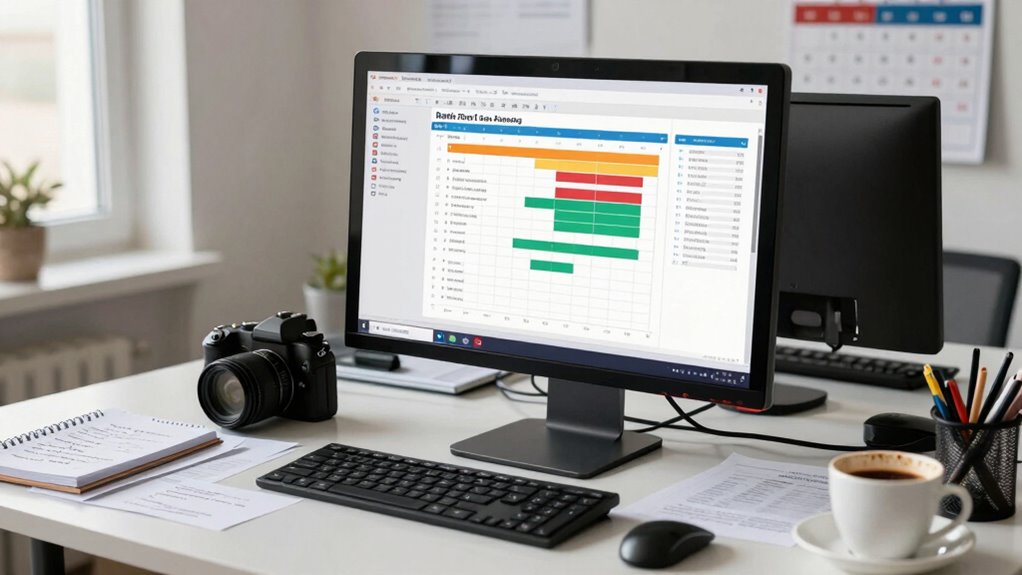
Last-minute reviews often miss key risks because they rely heavily on automated checks that can miss subtle issues, cultural nuances, or ambiguous language. When time is tight, human oversight becomes rushed or limited, reducing the chance to catch complex problems or context-specific concerns. Automated tools focus on predefined rules but lack the understanding of deeper implications, while humans struggle with quick judgments. Keep going to discover how combining these methods can improve your risk assessments.

Get business pricing on office and shipping supplies
- Business-only prices and quantity discounts
- Tax-exempt purchasing
- Multiple users, one account, clear invoices
Key Takeaways
- Last-minute reviews often rely solely on automated tools, which may miss nuanced or context-specific issues.
- Human judgment is limited under tight time constraints, increasing the likelihood of overlooking subtle risks.
- Automated systems focus on predefined rules, missing cultural, tonal, or regulatory nuances critical for risk assessment.
- Rushed evaluations tend to prioritize speed over thoroughness, reducing the effectiveness of both automation and human oversight.
- Complex or ambiguous language often requires deeper analysis that is unlikely to be captured during last-minute reviews.

A Pre Send Risk Assessment is an essential step in guaranteeing that your communications or shipments are safe, compliant, and free from potential issues before they go out. It’s your safeguard against mistakes that could lead to costly delays, legal complications, or damage to your reputation. While it might seem tempting to rush through this process, especially when deadlines loom, it’s imperative to understand what’s often overlooked—especially in last-minute reviews. That’s where automated tools and human oversight come into play, working together to catch what automated systems might miss and what humans might overlook in hurried checks.
Automated tools have revolutionized the way you conduct risk assessments. They scan documents, data, or messages quickly and efficiently, flagging obvious errors, inconsistencies, or compliance violations. These tools can analyze large volumes of information in seconds, making them indispensable for catching common mistakes and ensuring basic compliance. However, they aren’t foolproof. Automated systems tend to focus on predefined patterns and rules, meaning they might miss nuanced issues or contextual errors that require a deeper understanding. Relying solely on automation in last-minute reviews can lead you to overlook subtleties, such as tone, intent, or complex regulatory nuances.
That’s why human oversight remains essential. When you’re pressed for time, it’s tempting to skip this step, but human review provides critical judgment that automated tools can’t replicate. A knowledgeable reviewer can interpret ambiguous language, assess the potential impact of a message or shipment, and make nuanced decisions based on context. They notice inconsistencies that don’t strictly violate rules but could still pose risks—such as language that might be misinterpreted or details that don’t align with current regulations. Human oversight ensures that your assessment isn’t just technically correct but also appropriate and aligned with your broader compliance standards. Additionally, incorporating manual review helps identify issues that automated systems are designed to overlook, such as contextual or cultural sensitivities. Moreover, incorporating regulatory knowledge into the review process further enhances accuracy and relevance.
The key to an effective pre-send risk assessment isn’t choosing between automated tools and human oversight but integrating both seamlessly. Automated tools should handle the heavy lifting—quickly identifying obvious issues—while human reviewers focus on the complex, subtle, or subjective aspects. This combined approach reduces the chances of oversight, even when you’re working under tight deadlines. It’s about creating a layered review process that catches more potential problems, saving you from costly corrections or reputational damage later on. Skipping this step or rushing through it risks letting mistakes slip through, mistakes that could’ve been prevented with a balanced, thorough review process.
automated risk assessment software
As an affiliate, we earn on qualifying purchases.
As an affiliate, we earn on qualifying purchases.
Frequently Asked Questions
How Early Should a Pre-Send Risk Assessment Be Conducted?
You should conduct a pre-send risk assessment well in advance of your project deadline, ideally during early planning stages. Timing considerations are essential because earlier assessments allow you to identify potential issues and implement risk mitigation strategies effectively. Waiting until the last minute often leads to overlooked risks, so start the review early enough to address concerns thoroughly, ensuring smoother project execution and reducing the chance of costly surprises later.
What Tools Assist in Effective Last-Minute Risk Reviews?
Think of last-minute risk reviews as steering a storm with a reliable compass. Automated tools act as that compass, swiftly flagging potential issues, while collaboration platforms like Slack or Teams serve as your crew, facilitating quick communication. Together, they streamline the review process, ensuring you don’t miss critical risks. Using these tools, you can steer confidently through last-minute checks, catching hazards before they become costly trouble.
Who Should Be Involved in the Risk Assessment Process?
You should involve key stakeholders from different departments in the risk assessment process. Their collaboration guarantees diverse perspectives, helping you identify potential issues early. Engaging project managers, safety officers, and technical experts enhances risk mitigation strategies, making them more effective. By including the right people, you improve communication and decision-making, reducing last-minute surprises and increasing the likelihood of a smooth, successful project completion.
How to Prioritize Risks Identified in Tight Review Windows?
Think of your risks as a tangled web—fast-paced review windows make it easy to overlook the most critical strands. To prioritize effectively, cut through the chaos with clear risk mitigation strategies, focusing on those with the highest potential impact and likelihood. Set your priorities by evaluating which risks could cause the biggest disruptions, then act swiftly to address them first, ensuring your review stays sharp and thorough despite time constraints.
What Are Common Pitfalls in Last-Minute Risk Assessments?
You often miss key pitfalls like poor risk communication and documentation inaccuracies during last-minute assessments. Rushing can cause you to overlook critical details, leading to incomplete or unclear risk documentation. This hampers effective communication of risks to stakeholders. To avoid this, take a moment to verify your documentation accuracy and guarantee your risk communication is clear and thorough, even under tight deadlines. This helps prevent overlooked risks and misunderstandings.
manual review checklist for risk analysis
As an affiliate, we earn on qualifying purchases.
As an affiliate, we earn on qualifying purchases.
Conclusion
So, next time you’re rushing through that last-minute review, remember: skipping your pre-send risk assessment is like skipping leg day at the gym—you might look good in the moment, but you’ll regret it when things fall apart. Don’t let complacency be your downfall. Take a moment, breathe, and actually check those risks. Because nothing says “professional” like sending out a risky email and pretending it was all part of the master plan.
regulatory compliance document scanner
As an affiliate, we earn on qualifying purchases.
As an affiliate, we earn on qualifying purchases.
risk management tools for business
As an affiliate, we earn on qualifying purchases.
As an affiliate, we earn on qualifying purchases.
Columbus Day / Indigenous Peoples' Day Picks
long weekend sales
As an affiliate, we earn on qualifying purchases.