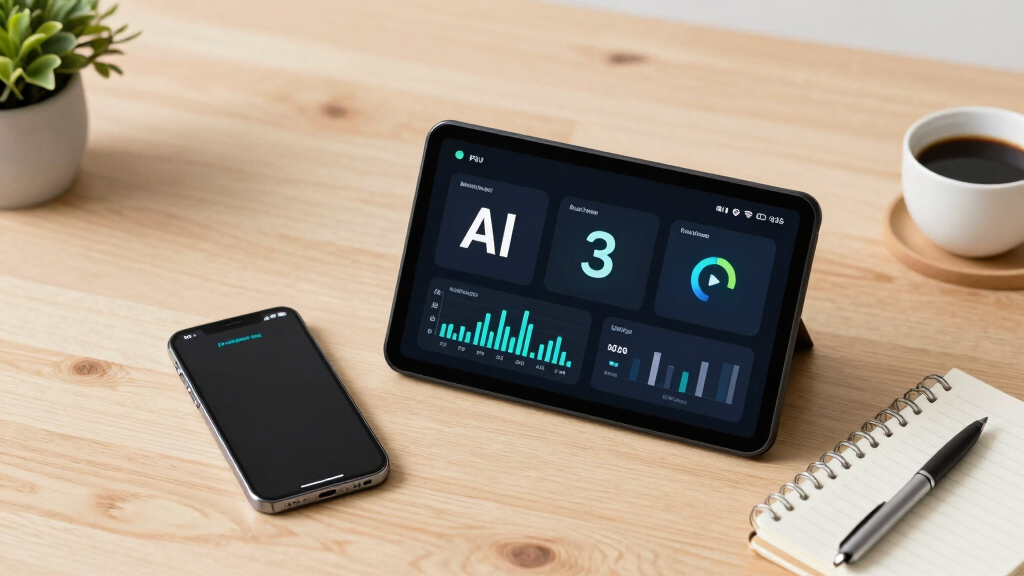

📊 Full opportunity report: AI workflow reliability monitor for small teams on IdeaNavigator AI — validation score, market gap, and execution plan.

Get business pricing on office and shipping supplies
- Business-only prices and quantity discounts
- Tax-exempt purchasing
- Multiple users, one account, clear invoices
TL;DR
A new AI workflow reliability monitor tailored for small teams is currently in testing. It aims to track failures, latency spikes, and automations to ensure dependable AI operations. This development addresses growing reliance on AI tools in daily workflows.
A new AI workflow reliability monitor designed specifically for small teams is in the testing stage, aiming to address the increasing dependence on AI tools and the associated risks of silent failures and latency issues.
The reliability monitor is intended as a local status and output checker that records failures such as unresponsive prompts, latency spikes, degraded responses, and fallback actions across a team’s AI workflows. It is targeted at small team operators who rely heavily on AI for client or internal processes.
Developed as a minimum viable product (MVP), the tool aims to provide dependable monitoring that can alert teams to issues promptly, helping prevent work disruptions caused by silent automation failures. The concept emerged from the recognition that AI tools are now integral to daily operations, making their reliability critical.
Why It Matters
This development matters because small teams increasingly depend on AI for operational efficiency, yet often lack dedicated monitoring systems. An effective reliability monitor could reduce downtime, improve workflow consistency, and foster trust in AI tools, ultimately enhancing productivity and client satisfaction.
Popular right now

Dyson V15 Detect Cordless Vacuum

TCL 65-Inch 4K UHD Smart LED TV (65S425)

Dyson V9 Motorbar Cordless Vacuum
As an affiliate, we earn on qualifying purchases.
Background
As AI tools become embedded in daily workflows, failures such as unresponsive prompts or silent automation breaks can cause significant disruptions. Currently, many small teams rely on manual checks or ad hoc troubleshooting, which can be inefficient and unreliable. The new monitor aims to fill this gap by providing automated, real-time tracking of AI performance metrics.
“Teams increasingly rely on AI tools but often lack reliable ways to monitor their performance, leading to unnoticed failures that impact productivity.”
— an anonymous researcher
What Remains Unclear
It is not yet clear how well the monitor will perform in diverse real-world environments or how widely it will be adopted after testing. Details about its integration capabilities and scalability remain to be seen as development progresses.
What’s Next
The testing phase will involve deploying the monitor with five AI-heavy operators to gather feedback on its effectiveness. Based on results, developers aim to refine the tool and prepare for broader release, with subscription plans targeting small teams seeking dependable AI workflow management.
Key Questions
What specific problems does the AI workflow reliability monitor address?
It aims to detect failures such as unresponsive prompts, latency spikes, and silent automation breaks to prevent workflow disruptions.
Who is the target user for this monitor?
Small team operators who rely on AI tools for client or internal workflows are the primary target users.
Is this monitor available for general use now?
No, it is currently in the testing phase with a small group of users, and a broader release is planned after validation.
How will the monitor make money?
Through subscription plans aimed at teams that need reliable AI workflow monitoring services.
Source: IdeaNavigator AI