Entrepreneurs comparing The 1-Page Marketing Plan by Allan Dib with Traction by Gabriel Weinberg and Justin Mares are choosing between two different kinds of help: a clear structure for planning marketing and a disciplined way to discover which customer acquisition channels can work. Both books are aimed at founders who need practical guidance, but they solve different problems. Dib’s book is the more accessible starting point for turning an offer and target market into a working marketing plan. Traction is better suited to founders who already have a product and need to test channels rather than keep guessing. The main tradeoff is simplicity versus experimentation: choose A for a broad, easy-to-follow roadmap; choose B for a more systematic search for repeatable growth.

Get business pricing on office and shipping supplies
- Business-only prices and quantity discounts
- Tax-exempt purchasing
- Multiple users, one account, clear invoices

This Is Marketing: You Can’t Be Seen Until You Learn to See
- ✔ Author: Seth Godin
- ✔ ASIN: B07DKN7DG2
- ✔ Book title: This Is Marketing: You Can’t Be Seen Until You Learn to See

The 1-Page Marketing Plan: Get New Customers, Make More Money, and Stand Out from the Crowd
- ✔ Author: Not provided in the supplied product details
- ✔ ASIN: B0F9VLSR9P
- ✔ Book title: The 1-Page Marketing Plan: Get New Customers, Make More Money, and Stand Out from the Crowd
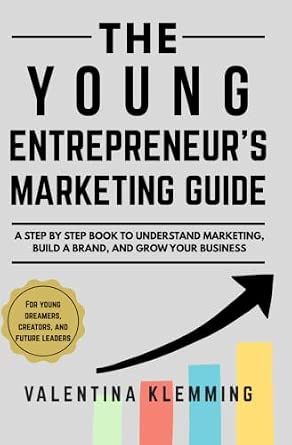
The Young Entrepreneur’s Guide to Marketing: How to Build a Brand, Reach Customers, and Turn Ideas Into Businesses
- ✔ Author: Not provided in the supplied product details
- ✔ ASIN: B0H9NYPSMZ
- ✔ Book title: The Young Entrepreneur’s Guide to Marketing: How to Build a Brand, Reach Customers, and Turn Ideas Into Businesses
At a Glance
| Criteria | The 1-Page Marketing Plan by Allan Dib | Traction: How Any Startup Can Achieve Explosive Customer Growth by Gabriel Weinberg and Justin Mares | Winner |
|---|---|---|---|
| Core approach | Builds a marketing plan across the customer journey | Tests a range of acquisition channels to identify promising sources of growth | Depends |
| Best business stage | New or small businesses that need a coherent starting plan | Startups with a product and a need to find customers consistently | A |
| Marketing planning | Strong: a concise framework for defining audience, message, and follow-up | Useful for directing growth work, but not a full marketing plan template | A |
| Channel discovery | Covers promotion as part of the plan, with less focus on systematic channel testing | Strong: structured channel brainstorming, testing, and prioritization | B |
| Ease of use | Very approachable and designed to be applied quickly | More demanding because it calls for experiments and evaluation | A |
| Strategic depth | Broad practical guidance, with limited depth on testing each channel | More detailed on channel discovery and experimentation | B |
| Value for money | Usually the lower-cost, faster read for founders who need structure | Worth the extra time or cost when channel selection is the bottleneck | Depends |
This Is Marketing: You Can’t Be Seen Until You Learn to See
For entrepreneurs still working out what makes their business matter to a particular group of people, This Is Marketing offers the most compelling strategic starting point in this lineup. Its subtitle, “You Can’t Be Seen Until You Learn to See,” signals a focus on noticing customers and their needs before pushing a message. That orientation can help a founder think beyond simply broadcasting an offer and toward earning attention through relevance. Compared with The 1-Page Marketing Plan, this pick appears more centered on perspective and positioning than on a compact planning structure; it is a better match when the strategy itself is still fuzzy.That breadth is also the tradeoff. The product details supplied here do not specify a step-by-step framework, exercises, or how quickly a reader can translate the ideas into a campaign. Entrepreneurs who already know their audience and need a tightly organized customer-acquisition checklist may prefer the more explicitly plan-oriented title. And while this book’s audience-first framing suits many businesses, a founder looking for narrowly defined tactics for a specific channel should confirm that the full book covers the level of detail they need. We rank it first for its clear strategic premise, not because the available information proves it is the most tactical option.
Pros:
- Customer-centered premise suited to foundational strategy decisions.
- Connects marketing with understanding the people a business wants to reach.
- Broadly relevant to founders who are refining positioning or messaging.
- Offers a distinct strategic angle compared with the plan-focused option in this roundup.
Cons:
- Supplied details do not confirm a step-by-step planning tool or implementation template.
- May feel too broad for readers who already have positioning and need immediate channel tactics.
- The available product information does not describe its chapter structure or practical exercises.
Best for: Entrepreneurs who need to sharpen their understanding of a target audience and make their positioning more relevant before choosing tactics.
Not ideal for: Readers who primarily want a channel-specific playbook, a detailed template, or a clearly documented sequence of implementation steps.
Bottom line: We’d start here when the main entrepreneurial marketing challenge is deciding whom we serve and how to make our offer matter to them.
“We’d start here when the main entrepreneurial marketing challenge is deciding whom we serve and how to make our offer matter to them.”
The 1-Page Marketing Plan: Get New Customers, Make More Money, and Stand Out from the Crowd
When we have a business idea and need to organize marketing around a practical outcome, The 1-Page Marketing Plan is the most directly structured choice by title and description. Its stated promise is a one-page plan focused on attracting customers, increasing revenue, and standing out. That concise framing gives it a different role from This Is Marketing: the latter is the stronger fit for exploring customer understanding, while this book appears designed to help entrepreneurs collect their marketing thinking in a compact plan. For a founder balancing sales, operations, and product work, a defined planning format can make the next marketing conversation easier to start.We should keep the limits of the available description in view. It does not tell us what sections the page contains, whether the book includes examples or templates, or how it handles testing and measurement. A one-page format may also compress complex decisions; businesses with several audiences, long buying cycles, or multiple product lines may need a more detailed plan alongside it. Compared with the beginner-specific guide, this title makes a broader promise around customer acquisition and revenue, but it does not signal the same explicit focus on young founders. We place it second because its format is unusually clear, while the supplied details leave its actual process unconfirmed.
Pros:
- One-page format signals an emphasis on concise planning.
- Its stated goals connect marketing with finding customers and growing revenue.
- A clear alternative to the broader audience-centered premise of This Is Marketing.
- May suit founders who want to bring marketing priorities into one manageable view.
Cons:
- Supplied description does not explain the plan’s actual sections or method.
- A condensed plan may not capture the complexity of multi-audience businesses.
- No provided details confirm examples, templates, or measurement guidance.
Best for: Founders who want a concise structure for organizing marketing priorities around customer acquisition and business growth.
Not ideal for: Entrepreneurs who need deep instruction on a particular channel or a fully documented, multi-stage marketing system.
Bottom line: We’d choose this when we want a compact marketing plan, while checking the full description for the level of detail our business requires.
“We’d choose this when we want a compact marketing plan, while checking the full description for the level of detail our business requires.”
The Young Entrepreneur’s Guide to Marketing: How to Build a Brand, Reach Customers, and Turn Ideas Into Businesses
The Young Entrepreneur’s Guide to Marketing is the clearest audience-specific pick for someone at the earliest stages of building a business. Its description names three concerns that often arrive together for a new founder: establishing a brand, reaching customers, and turning an idea into a business. That makes it a natural starting point for readers who want marketing framed around the transition from concept to customer. Compared with This Is Marketing, its title makes the beginner audience more explicit; compared with The 1-Page Marketing Plan, it suggests a wider introduction rather than a single concise planning format.However, the product information provided is sparse. It does not tell us whether the book offers exercises, concrete examples, or a sequence for moving from branding to customer outreach. That uncertainty matters more here because the title’s broad scope could mean a helpful overview, or it could leave readers wanting more depth in any one area. Entrepreneurs with an established business and a specific growth problem may get a more relevant starting point from the audience-first strategy of This Is Marketing or the compact plan concept in the second pick. We include this guide for its clear beginner positioning, while ranking it third because there is less information available to judge the substance of its method.
Pros:
- Explicitly aimed at young entrepreneurs and early business building.
- Covers branding and reaching customers in its stated scope.
- Connects marketing with the step from idea to business.
- Its broad beginner framing differs from the other two books’ more defined premises.
Cons:
- Very limited supplied description makes the approach difficult to assess.
- No details confirm practical exercises, examples, or an actionable sequence.
- Its broad scope may not provide enough depth for a specific marketing challenge.
Best for: Young or first-time entrepreneurs who want an introductory marketing resource spanning brand-building and customer reach.
Not ideal for: Experienced founders seeking advanced positioning advice, channel-specific tactics, or a well-documented planning framework.
Bottom line: We’d consider this guide when we’re new to entrepreneurship and want an introductory overview, after checking whether its full contents offer the practical depth we need.
“We’d consider this guide when we’re new to entrepreneurship and want an introductory overview, after checking whether its full contents offer the practical depth we need.”
As an Amazon Associate we earn from qualifying purchases.
Key Differences
The books differ first in what they ask the reader to do. The 1-Page Marketing Plan gives entrepreneurs a compact structure for deciding who they serve, how they attract prospects, and how they convert and retain customers. That breadth is useful when marketing feels scattered. It can help a founder connect individual tactics to a customer journey instead of treating each post, promotion, or email as a separate idea.
Traction narrows the problem to customer acquisition. Its channel framework encourages founders to consider multiple ways to reach customers, run tests, and concentrate effort where there is evidence of potential. That makes it more useful when the offer exists but the company has not found a dependable source of customers. It does not replace the need to define positioning, messaging, and follow-up.
For an early entrepreneur with limited time and little marketing structure, A is the better first purchase. For a founder with a defined product who is unsure which acquisition channel deserves investment, B is the stronger guide. Neither book guarantees results: both provide methods, and their value depends on applying them to a real business and learning from customer response.
Detailed Comparison
Core approach (major difference)
A wins for building an overall marketing picture: its framework connects audience, message, prospecting, conversion, and retention. B wins when the central question is how to find acquisition channels that can produce growth. The difference is moderate and comes down to the problem in front of the founder: A organizes the work; B structures channel discovery.
Best business stage (The 1-Page Marketing Plan by Allan Dib wins — moderate)
A has the edge for a first-time entrepreneur or small business owner who is still working out a coherent marketing approach. B assumes more readiness to test ways of acquiring customers, so it fits better once there is a product or service to put in front of a market. The gap is moderate: a very early founder can still learn from B, but may lack the focus or evidence to use it fully.
Marketing planning (The 1-Page Marketing Plan by Allan Dib wins — major)
A is the clear winner for turning broad marketing decisions into a concise plan that a small team can reference. B offers a useful growth process, but it does not provide the same end-to-end marketing planning structure. This is a major practical difference for owners who need to align messaging, lead generation, sales, and customer retention rather than solve acquisition alone.
Channel discovery (Traction: How Any Startup Can Achieve Explosive Customer Growth by Gabriel Weinberg and Justin Mares wins — major)
B wins decisively on comparing potential acquisition channels and deciding where to experiment. The book’s Bullseye framework pushes readers to look beyond familiar tactics and test possibilities before committing resources. A discusses promotion within a wider plan, but offers less structure for ranking and testing channels. The advantage is major if a business has a clear offer yet cannot identify a reliable way to reach buyers.
Ease of use (The 1-Page Marketing Plan by Allan Dib wins — moderate)
A is easier to take from reading to action: its format gives an entrepreneur a compact set of decisions to fill in and revisit. B requires more active work, including generating channel ideas, designing tests, and evaluating the results. A wins by a moderate margin for busy solo founders; B’s effort is worthwhile when the business can act on what the experiments reveal.
Strategic depth (Traction: How Any Startup Can Achieve Explosive Customer Growth by Gabriel Weinberg and Justin Mares wins — moderate)
B offers more depth on the specific challenge of identifying growth channels and testing whether they can work. A is broader in scope but deliberately compact, which makes it less detailed on channel experiments. B wins by a moderate margin for a founder with an acquisition problem to investigate; A’s breadth can be more useful when the company needs a general marketing foundation.
Value for money (minor difference)
A is generally the better value for someone who needs a readable framework and can apply it without a large team or marketing budget. B earns its cost when the business has the time and resources to run channel tests and use the findings. The difference is minor in book price for many buyers; the more important cost is implementation time. Pay more for B’s approach only if channel choice is the real constraint.
The 1-Page Marketing Plan by Allan Dib: Pros and Cons
Pros:
- Offers a clear, memorable framework for a full marketing plan
- Accessible to entrepreneurs without a marketing background
- Connects audience, messaging, leads, conversion, and retention
- Useful as a shared reference for a small team
Cons:
- Less detailed on running and evaluating acquisition channel experiments
- Broad guidance may need adaptation to a particular industry or business model
- A completed plan still needs execution and customer feedback
Traction: How Any Startup Can Achieve Explosive Customer Growth by Gabriel Weinberg and Justin Mares: Pros and Cons
Pros:
- Provides a structured method for exploring and testing customer acquisition channels
- Encourages founders to test assumptions instead of relying only on familiar tactics
- Useful for startups seeking a repeatable source of growth
- Offers more focused depth on growth experimentation
Cons:
- Less suited to founders who first need a complete marketing plan
- Requires time and capacity to run tests and assess results
- Channel experiments may be difficult to interpret before a product has a defined audience and offer
Who Should Choose What
Choose The 1-Page Marketing Plan by Allan Dib if:
- You are starting a business and need a practical marketing structure.
- Your marketing activity feels disconnected and you want to align messaging, lead generation, sales, and retention.
- You are a solo founder or small team looking for an approachable first book on marketing.
Choose Traction: How Any Startup Can Achieve Explosive Customer Growth by Gabriel Weinberg and Justin Mares if:
- You have a product or service and need to identify which channels can bring customers.
- You can run small experiments and use the results to guide where you spend time or budget.
- Your main growth problem is choosing among possible acquisition channels.
Skip both if: Skip both if you need specialized advice for a regulated industry, a detailed advertising platform manual, or hands-on help diagnosing a business with little customer research or no clear offer.
Value for Money
The 1-Page Marketing Plan is usually the better value for entrepreneurs seeking a broad foundation: it takes less effort to apply and can help organize work across the customer journey. Traction is worth the extra reading and implementation time when a business has a defined offer but lacks a dependable customer acquisition channel. Its value comes from making experiments more deliberate, not from a promise that any channel will work. If your main need is a complete marketing direction, pay for A’s clarity; if you already have that foundation and need evidence about where to grow, B can justify the added effort.
Final Verdict
For most first-time entrepreneurs choosing one book, start with The 1-Page Marketing Plan. It addresses more of the decisions a small business must make and gives a clearer starting structure. Choose Traction instead when your product, audience, and basic message are already defined and customer acquisition is the specific bottleneck. The deciding factor is whether you need to organize marketing as a whole or discover which channel can bring customers consistently. A gives more immediate direction; B gives a stronger process for testing growth options.
Frequently Asked Questions
Which book should a first-time entrepreneur read first?
The 1-Page Marketing Plan is the stronger first choice for most beginners because it covers more of the marketing journey and is easier to turn into an initial plan. Read Traction first if your main question is already which channels to test for customer acquisition.
Is Traction useful for a small business, or mainly for tech startups?
Its channel-testing approach can help many kinds of businesses, including small businesses, but the ideas need to fit the audience, sales cycle, and available resources. It is most useful when the business can run and evaluate acquisition experiments.
Can The 1-Page Marketing Plan help me choose advertising channels?
It can help put promotion into a wider marketing plan, but it is less focused on systematically testing and ranking channels. For that specific job, Traction provides the more direct framework.
Should I read both books?
They can complement each other: use A to map the marketing work and clarify the customer journey, then use B to investigate which acquisition channels deserve experiments. If you only need one, choose according to your current bottleneck rather than buying both by default.