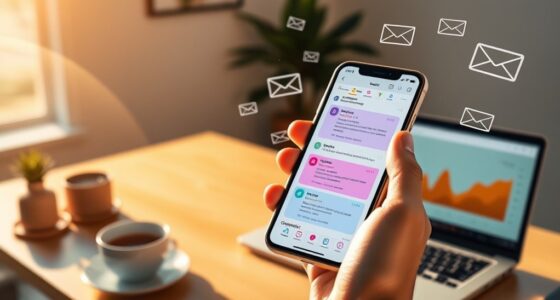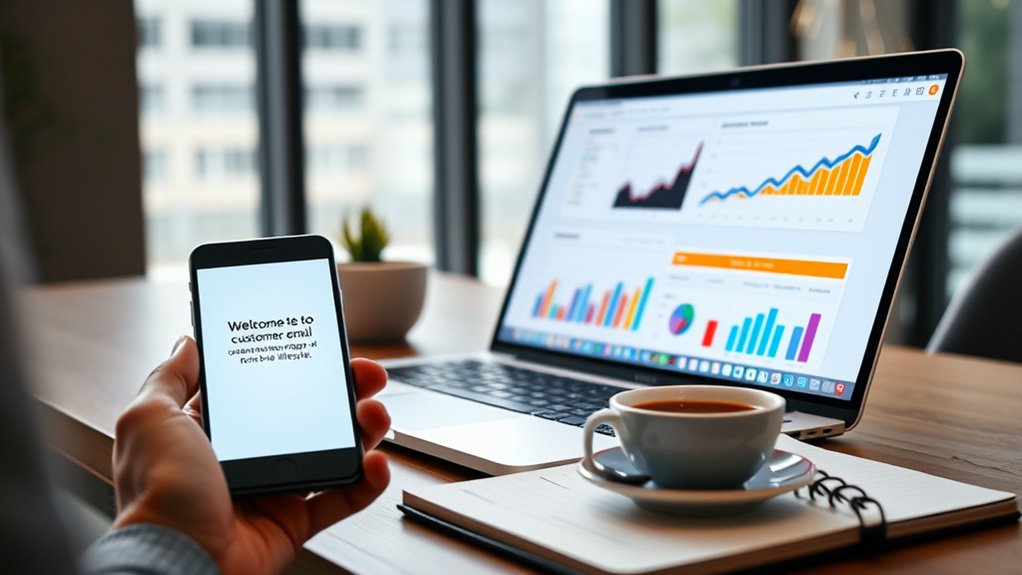

Email marketing shines at every stage of your customer’s journey by helping you target prospects with engaging content, personalize messages to boost conversions, and strengthen loyalty with tailored offers. During awareness and consideration, it builds familiarity; in conversion, it encourages purchases; and for retention, it re-engages inactive customers. By segmenting and personalizing, you turn buyers into loyal advocates. Keep exploring to discover how you’ll maximize email’s impact at each phase of your customer lifecycle.
Key Takeaways
- Email effectively nurtures prospects during awareness and consideration by delivering targeted, relevant content based on browsing behavior.
- Personalization in emails boosts conversion rates by referencing customer preferences, purchase history, and browsing activity.
- Re-engagement campaigns use tailored emails to reactivate inactive customers and maintain ongoing engagement.
- Loyalty programs and exclusive offers in emails reinforce customer retention and foster brand advocacy.
- Segmentation at each stage enables precise targeting, maximizing email impact across the entire customer lifecycle.

Have you ever wondered how businesses turn one-time buyers into loyal customers? The secret lies in effective customer lifecycle marketing, where email plays a pivotal role at every stage. To do this well, you need to understand and implement segmentation strategies and personalization tactics. Segmentation allows you to divide your audience based on their behaviors, preferences, and purchase history, so your messages hit the right people at the right time. Personalization tactics, on the other hand, help you craft emails that feel tailored specifically to each recipient, making your communication more engaging and relevant.
Effective customer lifecycle marketing uses segmentation and personalization to turn buyers into loyal fans.
At the awareness and consideration stages, segmentation strategies help you target prospects with content that addresses their specific needs or interests. For example, if someone browses a particular category on your website, you can send them emails featuring related products or helpful tips. Personalization tactics amplify this by including their name, referencing their browsing activity, or suggesting products based on their previous interactions. This approach not only captures their attention but also builds a sense of familiarity and trust, encouraging them to consider making a purchase.
Once someone becomes a customer, the focus shifts to nurturing loyalty. Here, segmentation strategies become even more essential. You can group customers based on their purchase frequency, average order value, or engagement level, allowing you to tailor your messaging accordingly. For high-value or frequent buyers, personalized emails that offer exclusive discounts, early access to new products, or personalized recommendations show appreciation and reinforce their loyalty. For less active customers, targeted re-engagement campaigns with personalized offers can reignite their interest.
As customers move into the retention phase, your goal is to keep them engaged and satisfied. Use segmentation strategies to identify customers who haven’t interacted with your brand recently, then send personalized reactivation emails that remind them of the benefits of your products or services. Incorporate personalization tactics by referencing their previous purchases or preferences, making your message feel unique to each individual. This level of tailored communication demonstrates that you understand their needs and value their continued business.
Finally, at the advocacy stage, your email marketing can encourage satisfied customers to share their experiences. Segment your most loyal clients and send personalized requests for reviews or referrals. Offer incentives or exclusive rewards, and craft messages that recognize their loyalty. Personalization tactics here make your requests feel genuine and considerate, increasing the likelihood they’ll advocate for your brand. Additionally, understanding the Worth of your marketing efforts, like WWE Raw’s revenue impact, can help you allocate resources effectively to maximize customer lifetime value and overall success.
Frequently Asked Questions
How Can I Personalize Emails for Different Customer Segments Effectively?
You can personalize emails effectively by implementing segmentation strategies that group customers based on behaviors, preferences, or demographics. Use personalization tactics like tailored subject lines, dynamic content, and personalized product recommendations. Regularly analyze data to refine segments and guarantee your messages stay relevant. This targeted approach boosts engagement, builds loyalty, and drives conversions by making each customer feel understood and valued.
What Metrics Best Measure Email Success at Each Lifecycle Stage?
They say, “What gets measured gets managed,” so focus on metrics that reflect your goals. For customer retention, track repeat purchase rate and unsubscribe rates. During email segmentation, monitor open rates and click-through rates to see if your targeted messages resonate. These metrics help you gauge success at each lifecycle stage, ensuring your email strategy boosts engagement and builds lasting customer relationships.
How Do I Re-Engage Inactive Customers Through Email Campaigns?
You can re-engage inactive customers by crafting targeted email campaigns that utilize re-engagement strategies. Start with personalized content, reminding them of your value. Offer incentive offers like discounts or exclusive access to motivate their return. Use compelling subject lines to grab attention, and consider a clear call-to-action that encourages interaction. Regularly analyze engagement metrics to refine your approach and guarantee your re-engagement efforts are effective.
What Are Common Pitfalls in Customer Lifecycle Email Marketing?
You often face pitfalls like list segmentation errors, which can cause irrelevant emails that annoy your audience. Ignoring personalization also hampers engagement, making your messages feel generic and less effective. To avoid these mistakes, double-check your segmentation, tailor your content, and make certain you’re delivering relevant, personalized messages. This approach helps build stronger relationships, increases open rates, and boosts overall campaign performance.
How Can Automation Improve Email Engagement Throughout the Customer Journey?
Automation boosts your email engagement by leveraging behavior triggers and content customization. It personalizes messages based on actions your customers take, ensuring relevance at each journey stage. By automating timely follow-ups, cart reminders, or personalized offers, you keep customers engaged, nurture relationships, and drive conversions. This continuous, targeted communication builds loyalty, enhances experience, and maximizes your marketing efforts—all while saving you time and effort.
Conclusion
By understanding each stage of the customer lifecycle, you can tailor your email marketing to nurture relationships and drive conversions. When you hit the right notes at the right time, you build trust and loyalty that last. Remember, it’s a marathon, not a sprint—consistency is key. Keep engaging, refining, and listening to your customers’ needs, and you’ll find that success comes to those who play their cards right. Stick with it, and watch your efforts pay off.