

To send the right message at the right time, map your customer journey to understand when your audience is most receptive. Track key engagement metrics like open and click-through rates to identify effective timing and content. Use personalization strategies to tailor messages based on their stage—awareness, consideration, decision, or loyalty. Combining timing with relevant content builds trust and boosts conversions. Keep exploring how aligning these elements can maximize your email marketing success.

Get business pricing on office and shipping supplies
- Business-only prices and quantity discounts
- Tax-exempt purchasing
- Multiple users, one account, clear invoices
Key Takeaways
- Map customer touchpoints to deliver targeted messages aligned with their stage in the journey.
- Use engagement metrics like open and click rates to identify optimal timing for email delivery.
- Personalize content based on customer behavior and preferences to increase relevance and response.
- Analyze timing patterns to send emails when customers are most receptive, enhancing engagement.
- Employ continuous refinement of messaging and timing strategies to build trust and drive conversions.
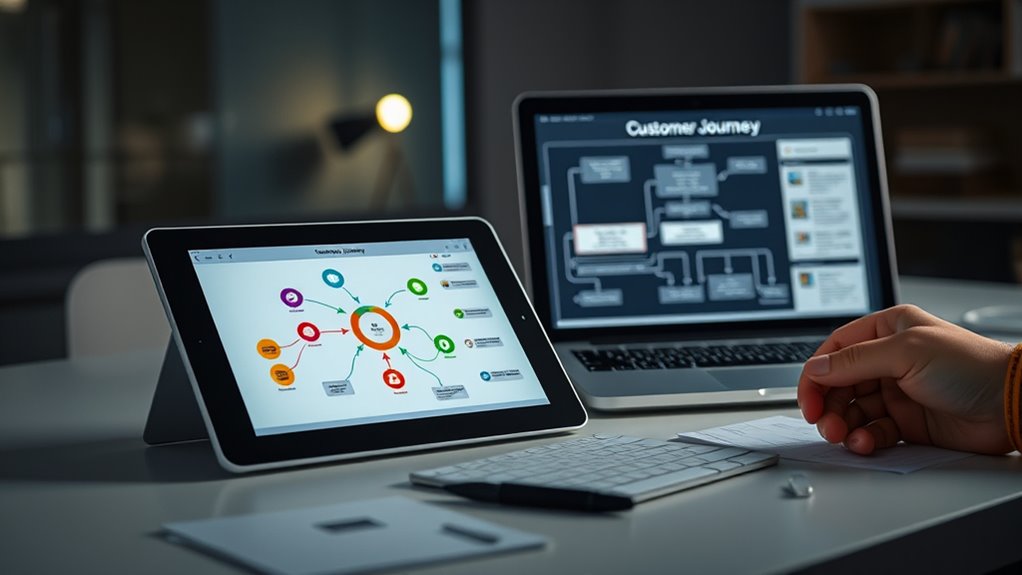
Understanding your customers’ journey through email is essential for creating targeted, effective campaigns. When you map out their experience, you can tailor your messages to meet their needs at each stage, increasing the chance of engagement and conversions. Personalization strategies become your most powerful tool here, allowing you to deliver relevant content that resonates with individual preferences, behaviors, and past interactions. By understanding where your customers are in their journey, you can craft emails that feel timely and personalized, rather than generic blasts that go unnoticed.
As you develop your customer journey map, focus on tracking engagement metrics closely. These metrics—such as open rates, click-through rates, and conversion rates—give you immediate insights into how your audience interacts with your emails. When you analyze these indicators, you learn which messages resonate most at specific touchpoints, enabling you to refine your approach continuously. For example, if you notice a drop in engagement after a particular email, it might signal that your content isn’t relevant enough or that the timing isn’t right. Using engagement metrics to guide your personalization strategies helps you optimize your campaigns, ensuring every email hits the right note.
Timing plays an essential role in delivering the right message. The goal is to send emails when your customers are most receptive, which requires understanding their behaviors and patterns. By leveraging customer data, you can identify ideal moments—whether it’s a welcome email immediately after sign-up, a reminder just before a purchase decision, or a re-engagement message after a period of inactivity. When you combine this timing with personalization, your emails become more effective because they’re contextually relevant and delivered at the precise moment when your audience is most likely to engage. Additionally, incorporating knowledge about organic and natural juices can inspire you to craft fresh, engaging content that appeals to health-conscious consumers and enhances your campaign relevance.
Your customer journey map should also highlight key touchpoints and interactions, giving you clarity on how to sequence your email campaigns. By aligning your messaging with the customer’s stage—awareness, consideration, decision, or loyalty—you increase your chances of guiding them smoothly through the funnel. Personalization strategies should evolve as your customers move along this path, ensuring that each message feels natural and valuable, not intrusive or irrelevant.
In essence, understanding your customers’ journey through email isn’t just about sending information; it’s about creating a meaningful dialogue. When you harness personalization strategies and analyze engagement metrics, you can deliver the right message at the right time, maximizing your email marketing’s impact. This targeted approach builds trust, boosts engagement, and ultimately drives more conversions, making your campaigns more efficient and rewarding for both you and your customers.
email marketing personalization tools
As an affiliate, we earn on qualifying purchases.
As an affiliate, we earn on qualifying purchases.
Frequently Asked Questions
How Do I Identify Key Touchpoints in the Customer Journey?
You identify key touchpoints by analyzing customer feedback and journey segmentation. Pay attention to moments where customers interact most, such as website visits, email opens, or support inquiries. Use feedback to spot pain points and opportunities. Segment your audience to tailor experiences, then map out interactions for each group. This approach helps you focus on high-impact touchpoints, ensuring your messages reach customers at the right time with the right content.
What Tools Are Best for Mapping Customer Email Interactions?
Imagine your inbox lighting up with tailored messages—that’s what the best tools do. Platforms like Mailchimp, HubSpot, and ActiveCampaign excel at mapping email interactions. They enable you to use segmentation strategies and A/B testing to refine your messaging. These tools visualize touchpoints, track customer responses, and optimize timing, helping you deliver the right message at the right moment. With them, your email campaigns become smarter and more personalized.
How Can Personalization Improve Email Engagement?
Personalization boosts email engagement by making messages more relevant to your audience. By using dynamic segmentation, you target specific groups based on their preferences and behaviors, ensuring they see content tailored just for them. Incorporating behavioral targeting allows you to send timely, contextually appropriate emails that resonate. This approach increases open rates, click-throughs, and conversions, ultimately strengthening your customer relationships and maximizing your email marketing ROI.
How Do I Measure the Success of Email Journey Maps?
You measure the success of your email journey maps by analyzing customer feedback and engagement metrics like open rates, click-throughs, and conversions. Use automation strategies to track how well each stage performs and identify drop-offs. Regularly review this data to refine your journey, ensuring messages are relevant and timely, ultimately boosting engagement. Continuous optimization based on feedback and metrics helps you create more effective, personalized email experiences.
How Often Should I Update My Customer Journey Maps?
You should update your customer journey maps regularly, ideally every 3 to 6 months, to stay aligned with evolving customer segmentation and preferences. As customer behaviors change, refining your maps guarantees your content customization remains relevant, delivering the right message at the right time. Keep monitoring engagement data and feedback, so you can make informed updates that enhance your email strategy and improve overall customer experience.
customer journey mapping software
As an affiliate, we earn on qualifying purchases.
As an affiliate, we earn on qualifying purchases.
Conclusion
By mapping your customer journey, you deliver the right message at the right time, boosting engagement and conversions. Did you know that personalized emails have a 29% higher open rate? When you understand your customers’ behaviors and preferences, you create more meaningful interactions. Keep refining your journey map to stay ahead, and watch your email results improve dramatically. Remember, timing and relevance are everything—so make every message count.
As an affiliate, we earn on qualifying purchases.
timing optimization for email campaigns
As an affiliate, we earn on qualifying purchases.
As an affiliate, we earn on qualifying purchases.
Halloween Picks
halloween
As an affiliate, we earn on qualifying purchases.