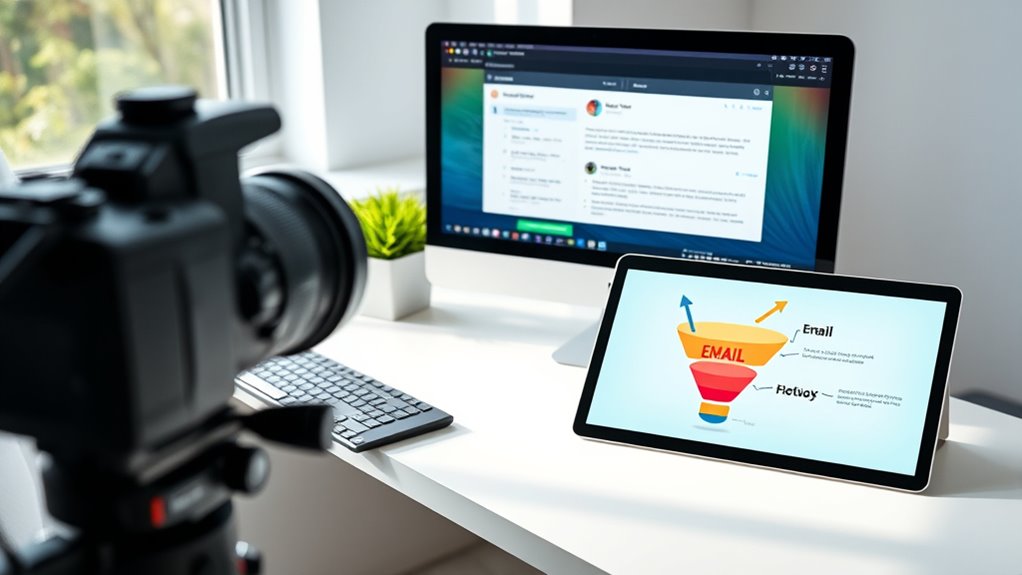

To guide prospects from inbox to purchase, you need to align your email campaigns with each sales funnel stage. Segment your audience based on behaviors and preferences to send targeted, relevant messages. Personalize content using data like past interactions. Timing is key—deliver educational content early and persuasive offers closer to the sale. Regularly analyze metrics to refine your approach. Keep exploring how these strategies can seamlessly connect your emails with your sales process.
Key Takeaways
- Synchronize email campaigns with each sales funnel stage to guide prospects smoothly toward purchase.
- Segment your audience based on behaviors and preferences for targeted, relevant messaging.
- Personalize emails by leveraging customer data to increase engagement and trust.
- Deliver content tailored to the funnel stage, using timing and relevance to influence decision-making.
- Continuously analyze metrics to refine strategies and ensure a seamless email-to-purchase customer journey.
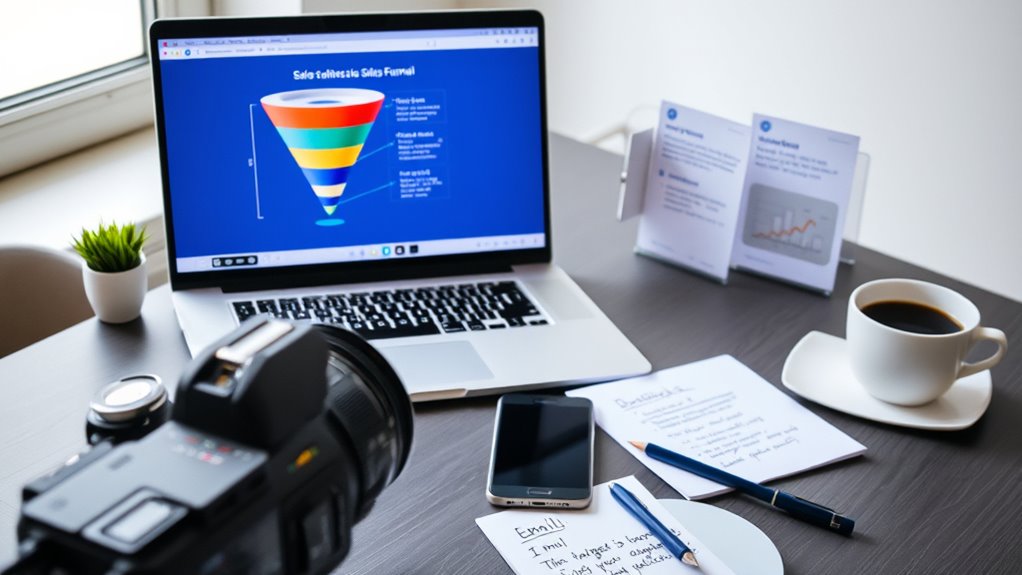
Aligning your email marketing with your sales funnel is essential for turning prospects into loyal customers. When you synchronize your email campaigns with each stage of the funnel, you guide potential buyers seamlessly from awareness to decision, increasing your chances of closing sales. The key to this alignment lies in implementing effective segmentation strategies and personalization tactics. Segmentation allows you to categorize your audience based on behaviors, preferences, and demographics. Instead of sending the same generic message to everyone, you tailor your content to meet the specific needs of each segment. For instance, new subscribers might receive introductory offers, while those who have shown interest in specific products get targeted recommendations. This approach ensures your emails are relevant, which keeps your audience engaged and nurtures their journey through your sales funnel.
Personalization tactics take segmentation a step further. By leveraging data such as past purchases, browsing history, or engagement levels, you can craft highly personalized messages that resonate with each individual recipient. Personalization makes your emails feel more human and less transactional, fostering trust and encouraging action. For example, addressing a subscriber by name and referencing their previous interactions makes your communications more relatable and compelling. When you combine segmentation strategies with personalization tactics, you create a dynamic email experience that aligns perfectly with where your prospects are in their buying journey. Early-stage prospects might receive educational content that builds awareness, while those closer to making a purchase get persuasive offers or demos.
Additionally, understanding the importance of content relevance can significantly improve your engagement rates, especially when considering factors like the timing and context of your messages. Continuously analyzing your email performance metrics helps you refine this alignment. Look at open rates, click-through rates, and conversions to understand what resonates at each stage of the funnel. Use this data to adjust your segmentation and personalization efforts, ensuring that your messaging evolves with your audience’s needs. Remember, the goal isn’t just to send emails but to create a seamless, personalized experience that guides your prospects toward becoming paying customers. The more targeted and relevant your messages, the higher your chances of converting leads into loyal buyers.
Frequently Asked Questions
How Do I Segment My Email List for Better Funnel Alignment?
You should segment your email list based on customer behavior, such as purchase history or engagement levels, to tailor your messages effectively. Use this data to create content customization that resonates with each group. By doing so, you guarantee your emails are relevant, which boosts conversions and moves prospects smoothly through your sales funnel. Regularly analyze behavior patterns to refine your segments and improve your email marketing strategy.
What Metrics Best Indicate Email Success Within the Sales Funnel?
Think of click-through rates and conversion rates as your email’s heartbeat signals. High click-through rates show engaging content that sparks interest, while strong conversion rates indicate your emails effectively guide prospects toward making decisions. Monitoring these metrics helps you identify what’s resonating and where you might need to refine your approach. Stay attentive to both, and you’ll better align your email campaigns with each stage of your sales funnel.
How Often Should I Send Emails at Different Funnel Stages?
You should adjust your email frequency based on funnel stages, aiming for more frequent contact during awareness and consideration phases, then tapering off in the decision stage. Use timing optimization to determine the best intervals—perhaps weekly early on, then bi-weekly or monthly later. This approach keeps your audience engaged without overwhelming them, ensuring your email cadence aligns with their buying journey and maximizes conversion potential.
How Can I Personalize Emails for Different Buyer Personas?
Think of your email list as a garden, and each buyer persona as a unique plant. To help them thrive, use personalization strategies tailored to each persona’s needs and preferences. Craft your emails with relevant content, tone, and offers that resonate. By understanding your buyer personas deeply, you can craft messages that speak directly to them, increasing engagement and conversions. Personalization makes your emails feel like they’re made just for each recipient.
What Are Common Mistakes to Avoid When Integrating Email and Sales Funnels?
You should avoid neglecting email automation and bounce management, as these are vital for seamless integration. Don’t send generic messages that don’t match the funnel stage, and always monitor bounce rates to prevent deliverability issues. Also, avoid overloading recipients with too many emails, which can lead to unsubscribes. Instead, tailor your automation to guide prospects smoothly through the funnel, ensuring each touchpoint adds value and enhances engagement.
Conclusion
By aligning your emails with each stage of your sales funnel, you turn strangers into loyal customers. Just as a key open a door, the right message opens opportunities. When your emails nurture interest and build trust, the purchase becomes inevitable—like the sunrise following night. Remember, your inbox isn’t just a cluttered space; it’s a gateway to growth. Embrace this alignment, and watch your sales journey transform from chaos into clarity.