

Marketing automation software only pays off if you actually know how to configure it, and the fastest way to close that knowledge gap is a well-written guide. After comparing twelve of the most popular books on the subject, The No-Code Automation Playbook stands out as the best overall pick because it covers hands-on implementation across platforms rather than tying you to a single vendor. Two other options earned spots near the top: Make.com for Beginners 2026 for readers who want a platform-specific, step-by-step entry point, and Zapier Mastery for those already running workflows who need advanced techniques. The main tradeoff across this category is breadth versus depth — broad strategy books explain the “why” but leave you stuck at setup, while tool-specific guides get you building quickly but can lock you into one ecosystem. Price is rarely the differentiator here; structure, recency, and whether a book includes actual buildable workflows matter far more. Keep reading for the full breakdown of what each guide does well and who should skip it.

Get business pricing on office and shipping supplies
- Business-only prices and quantity discounts
- Tax-exempt purchasing
- Multiple users, one account, clear invoices
Key Takeaways
- Books tied to a specific platform (Make.com, Zapier, Mailchimp, HubSpot) consistently delivered more actionable instruction than vendor-neutral strategy titles, because readers could follow along click-by-click.
- The 2026 editions outperformed older titles almost every time — AI agent coverage and updated interface walkthroughs made pre-2024 books feel outdated despite otherwise solid fundamentals.
- Agency-focused blueprints (AI Automation Agency Made Easy, The One-Person AI Automation Agency) overlapped heavily; only one earns a recommendation depending on whether you want a business model or a 30-day execution plan.
- The For Dummies and No B.S. titles occupy opposite ends of the tone spectrum, but both suffer from the same weakness: too much theory, too few buildable workflows.
- The biggest cost in this category isn’t the book price — it’s the hours lost to a guide that doesn’t match your chosen tool, so matching the book to your actual platform should come before any purchase.
| AI Powered Digital Marketing Agencies |  | Best for Agency Owners | Format: Digital book | Primary Focus: AI and automation for digital marketing agencies | Core Topics: Client acquisition, agency growth, AI-driven marketing systems | VIEW LATEST PRICE | See Our Full Breakdown |
| HubSpot User Guide 2026 |  | Best Tool-Specific Handbook | Format: Digital user guide | Platform Covered: HubSpot | Core Topics: CRM, sales, marketing, automation, reporting | VIEW LATEST PRICE | See Our Full Breakdown |
| AI Workflow Automation Blueprint System |  | Best for Building End-to-End Systems | Format: Blueprint system / digital guide | Primary Focus: AI workflow design and automation systems | Core Topics: Intelligent workflows, AI agents, business process automation | VIEW LATEST PRICE | See Our Full Breakdown |
| AI Automation Agency Made Easy: Build a Business That Runs Itself |  | Best for Aspiring Founders | Format: Digital book (series: Make Money With AI, Book 6) | Primary Focus: Building an AI automation agency business | Core Topics: Business automation, self-sustaining income, AI-driven service delivery | VIEW LATEST PRICE | See Our Full Breakdown |
| Marketing Automation with Mailchimp |  | Best for Email-First Marketers | Format: Digital book | Platform Covered: Mailchimp | Primary Focus: Email marketing automation | VIEW LATEST PRICE | See Our Full Breakdown |
| No B.S. Guide to Successful Marketing Automation |  | Best Strategy Primer | Format: Book (digital/print) | Focus Area: Marketing automation strategy | Technology Coverage: Automation and AI | VIEW LATEST PRICE | See Our Full Breakdown |
| The One-Person AI Automation Agency: A Practical 30-Day Blueprint to Build a Future-Ready Service Business, Win Small-Business Clients, and Create Recurring Revenue with Artificial Intelligence | 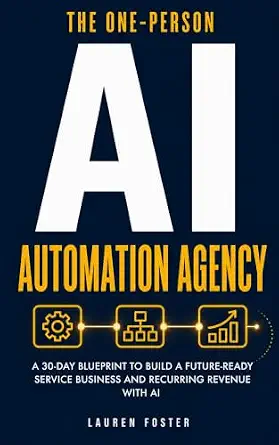 | Best for Building an Automation Business | Format: Book (digital/print) | Focus Area: AI automation agency business | Structure: 30-day step-by-step blueprint | VIEW LATEST PRICE | See Our Full Breakdown |
| Marketing Automation For Dummies |  | Best for Complete Beginners | Format: Paperback/digital book | Focus Area: Marketing automation fundamentals | Audience Level: Beginners and professionals new to automation | VIEW LATEST PRICE | See Our Full Breakdown |
| The No-Code Automation Playbook: Step-by-Step Guide to Automate Repetitive Tasks and Build Hands-Free Online Businesses |  | Best for Solopreneurs and Side Hustles | Format: Book (digital/print) | Focus Area: No-code task automation | Structure: Step-by-step playbook | VIEW LATEST PRICE | See Our Full Breakdown |
| Make.com for Beginners 2026: Build No-Code Automations & AI Agents |  | Best Platform-Specific Hands-On Guide | Format: Book (digital/print) | Platform Covered: Make.com | Edition: 2026 edition (current features) | VIEW LATEST PRICE | See Our Full Breakdown |
| Zapier Mastery: Advanced Workflow Automation with Zapier |  | Best for Scaling Beyond Basics | Format: Book (The Zapier Automation Series) | Focus: Advanced Zapier automation strategies | Business functions covered: Marketing, sales, HR, customer success | VIEW LATEST PRICE | See Our Full Breakdown |
| AI-Powered Digital & Social Media Marketing and Business Automation |  | Best for AI Social Media Beginners | Format: Book (digital guide) | Focus: AI content creation and social media marketing automation | Platforms covered: YouTube, Instagram, Facebook, X, TikTok | VIEW LATEST PRICE | See Our Full Breakdown |
| marketing automation software | Format | Audience Level | Core Topics |
|---|---|---|---|
| AI Powered Digital Marketing A | Digital book | Agency owners and marketing professionals | Client acquisition, agency growth, AI-driven marketing systems |
| HubSpot User Guide 2026 | Digital user guide | Beginner to experienced | CRM, sales, marketing, automation, reporting |
| AI Workflow Automation Bluepri | Blueprint system / digital guide | — | Intelligent workflows, AI agents, business process automation |
| AI Automation Agency Made Easy | Digital book (series: Make Money With AI, Book 6) | Entrepreneurs with some AI familiarity | Business automation, self-sustaining income, AI-driven service delivery |
| Marketing Automation with Mail | Digital book | Small business marketers | Campaign automation, engagement optimization, ROI scaling |
| No B.S. Guide to Successful Ma | Book (digital/print) | Intermediate marketing professionals | — |
| The One-Person AI Automation A | Book (digital/print) | — | — |
| Marketing Automation For Dummi | Paperback/digital book | Beginners and professionals new to automation | — |
| The No-Code Automation Playboo | Book (digital/print) | Beginner to intermediate solopreneurs | — |
| Make.com for Beginners 2026: B | Book (digital/print) | Beginners | — |
| Zapier Mastery: Advanced Workf | Book (The Zapier Automation Series) | — | — |
| AI-Powered Digital & Social Me | Book (digital guide) | — | AI content strategy, digital marketing automation |
More Details on Our Top Picks
AI Powered Digital Marketing Agencies
This pick stands out for its agency-specific focus, which most automation titles skip entirely. Where Marketing Automation For Dummies teaches tool fundamentals to individuals, this one frames AI and automation as a way to transform client acquisition and scale an agency’s delivery model. That lens makes it a better fit for owners thinking about margins, retainers, and service packaging rather than step-by-step tool setup. Compared with AI Automation Agency Made Easy, which targets solo entrepreneurs launching a business, this book assumes you already run an operation and want AI to compound it. The tradeoff: it stays at the strategy level and won’t hand you implementation walkthroughs, so readers wanting tactical depth will need a companion resource.
Pros:- Frames automation around agency growth and client acquisition rather than generic tactics
- Covers AI strategy at a level useful for business planning and positioning
- Written specifically for marketing professionals rather than general technologists
- Suits leaders deciding where to invest in automation across their business
Cons:- Lacks practical, step-by-step implementation guidance
- No tangible tools, templates, or exercises included
Best for: Digital marketing agency owners who want AI and automation strategies to improve client acquisition and operational efficiency
Not ideal for: Doers who need hands-on tool tutorials — this is a strategy book with little step-by-step implementation detail
- Format:Digital book
- Primary Focus:AI and automation for digital marketing agencies
- Core Topics:Client acquisition, agency growth, AI-driven marketing systems
- Audience Level:Agency owners and marketing professionals
- Approach:Strategy and insights
- Practical Exercises:Limited
Our verdict“Agency owners deciding how AI fits into their growth strategy will get the most from this; hands-on implementers should look elsewhere.”
HubSpot User Guide 2026
Among these titles, this is the only one anchored to a single, widely used platform, and that specificity is its strength. Books like The No-Code Automation Playbook teach transferable concepts, but if your company runs HubSpot, a step-by-step feature guide saves the trial-and-error of figuring out workflows, CRM stages, and reporting dashboards on your own. The 2026 edition also means coverage reflects the current interface, which matters for a product that changes yearly. Compared with Marketing Automation with Mailchimp, which narrows to email-centric automation, this spans CRM, sales, marketing, and reporting in one place. The limitation is baked in: everything here applies only within HubSpot’s ecosystem, so teams on other stacks get nothing from it.
Pros:- Step-by-step instructions that lower the learning curve for a complex platform
- Covers CRM, sales, marketing, automation, and reporting in one reference
- Updated for the 2026 interface and feature set
- Accessible to beginners while still useful as a reference for experienced users
Cons:- Completely locked to one platform with no transferable concepts
- Content depth varies by section and is not clearly indicated upfront
Best for: Marketing and sales teams already committed to HubSpot who want guided, current walkthroughs of its CRM, automation, and reporting features
Not ideal for: Teams using Salesforce, Mailchimp, or other platforms — every page assumes the HubSpot ecosystem
- Format:Digital user guide
- Platform Covered:HubSpot
- Core Topics:CRM, sales, marketing, automation, reporting
- Edition:2026
- Instruction Style:Step-by-step
- Audience Level:Beginner to experienced
Our verdict“If HubSpot is your stack, this is the most directly actionable title in the lineup; if it isn’t, skip it entirely.”
AI Workflow Automation Blueprint System
Most titles in this roundup teach you to operate inside one tool; this one takes a systems-design approach, treating workflows, automations, and AI agents as connected pieces across marketing, sales, and operations. Compared with Zapier Mastery, which goes deep on one connector platform, this blueprint pushes you to design intelligent multi-process systems rather than isolated automations — a meaningful difference for anyone whose pain is fragmentation between tools. It pairs naturally with Make.com for Beginners 2026 as the conceptual layer above that book’s tool-specific tutorials. The tradeoff is breadth over depth: because it spans so many functions, it can’t walk through any single build in detail, and readers new to automation concepts may find the jump from idea to execution steep.
Pros:- Covers workflow design, automation systems, and AI agents in one framework
- Applies across marketing, sales, content, and general business operations
- Teaches transferable system thinking rather than one platform’s buttons
- Scales conceptually as a business adds more tools
Cons:- Few concrete specifications or example builds to follow
- No community feedback or reviews yet to validate the material
- Too abstract for readers who want copy-and-paste implementations
Best for: Operations-minded founders and marketers who want a framework for connecting AI workflows across marketing, sales, and content processes
Not ideal for: First-time automators who need a single-tool tutorial before tackling multi-system design
- Format:Blueprint system / digital guide
- Primary Focus:AI workflow design and automation systems
- Core Topics:Intelligent workflows, AI agents, business process automation
- Functional Coverage:Marketing, sales, content creation, operations
- Approach:System design framework
- Tool Lock-In:None — platform agnostic
Our verdict“This pick makes the most sense for builders ready to architect multi-tool automation systems rather than learn one platform at a time.”
AI Automation Agency Made Easy: Build a Business That Runs Itself
Where most entries here optimize an existing marketing function, this one targets the business-building path: launching an AI automation agency that generates recurring income with minimal day-to-day involvement. It’s the entrepreneurship-focused counterpart to The One-Person AI Automation Agency, and readers should weigh the two directly — this one leans into the self-sustaining income model while the 30-day blueprint leans into client acquisition tactics. Compared with AI Powered Digital Marketing Agencies, this is written for people starting from zero rather than scaling an established shop. The honest tradeoff: minimal technical instruction means you’ll leave knowing the strategy but not the build steps, and some prior familiarity with AI concepts is assumed rather than taught.
Pros:- Focuses squarely on building recurring, low-maintenance income streams
- Frames AI automation as a service business rather than a set of tools
- Part of a series, so it extends naturally if you want more depth
- Strategy-first approach suits big-picture planners
Cons:- Lacks detailed technical instructions for actually delivering services
- Assumes prior AI knowledge that beginners won’t have
- No customer reviews available to gauge real-world results
Best for: Aspiring entrepreneurs who want a strategic roadmap for launching an AI automation service business with passive-income potential
Not ideal for: Readers without any AI background — concepts are assumed, and technical build instructions are thin
- Format:Digital book (series: Make Money With AI, Book 6)
- Primary Focus:Building an AI automation agency business
- Core Topics:Business automation, self-sustaining income, AI-driven service delivery
- Audience Level:Entrepreneurs with some AI familiarity
- Approach:Strategy and business model
- Technical Depth:Low
Our verdict“Choose this if you’re designing the business, not building the automations — and pair it with a technical title for execution.”
Marketing Automation with Mailchimp
This is the narrowest title in the batch, and that narrowness is the point: it treats email automation and ROI measurement as the core of marketing automation rather than one feature among many. Small businesses and solo marketers already on Mailchimp get expert techniques and best practices for campaign sequencing, engagement, and scaling — the tactical layer that Marketing Automation For Dummies covers only generically. Compared with the HubSpot User Guide 2026, this costs a fraction of the ecosystem complexity: Mailchimp is cheaper and simpler to run, though far less powerful for sales pipelines and multi-channel workflows. The tradeoff is obvious — if your automation ambitions extend past email into CRM, ads, and lead scoring, this book’s scope will feel confined.
Pros:- Expert-level tips grounded in a tool small businesses actually use
- Directly ties techniques to ROI and scaling outcomes
- Practical email marketing focus rather than abstract theory
- Lower barrier to entry than full-suite platforms like HubSpot
Cons:- Confined to one platform and largely one channel
- No detailed content overview or reader reviews to gauge depth
Best for: Small business owners and solo marketers using Mailchimp who want to sharpen email automation, engagement, and ROI
Not ideal for: Teams needing multi-channel automation across CRM and sales — Mailchimp’s scope is email-centric
- Format:Digital book
- Platform Covered:Mailchimp
- Primary Focus:Email marketing automation
- Core Topics:Campaign automation, engagement optimization, ROI scaling
- Approach:Expert tips and best practices
- Audience Level:Small business marketers
Our verdict“If Mailchimp is your marketing stack, this is the most immediately applicable pick here; anyone with broader automation needs should start with a wider-scoped title.”
No B.S. Guide to Successful Marketing Automation
Among the books in this lineup, No B.S. Guide to Successful Marketing Automation earns its place by focusing on strategy over button-clicking. Where Marketing Automation For Dummies explains what automation is, this one presses further into how AI reshapes campaign decisions — segmentation, timing, and personalization at a practical level. I’d position it as the thinking marketer’s companion: it helps you decide what to automate and why, before you commit to any platform.
The tradeoff is real, though. Compared with Make.com for Beginners 2026, it offers almost no hands-on implementation guidance. If you need to build a workflow tonight, this won’t get you there — and advanced practitioners may find the treatment of AI too high-level to change their playbook.
Pros:- Strategy-first approach that explains what to automate and why
- Covers current AI capabilities, keeping the guidance relevant to modern campaigns
- Direct, jargon-free writing style that respects the reader’s time
- Practical tips marketers can apply across any platform
Cons:- No detailed technical instructions or tool walkthroughs
- Too high-level for advanced users already running mature automation programs
Best for: Marketing managers and strategists who want a modern, AI-aware framework for deciding where automation adds value
Not ideal for: Hands-on builders who need tool-specific tutorials and step-by-step implementation instructions
- Format:Book (digital/print)
- Focus Area:Marketing automation strategy
- Technology Coverage:Automation and AI
- Audience Level:Intermediate marketing professionals
- Approach:Practical insights and tips
- Technical Depth:Conceptual, not implementation-focused
Our verdict“A smart pick for marketers who want the strategic judgment behind automation rather than a software manual.”
The One-Person AI Automation Agency: A Practical 30-Day Blueprint to Build a Future-Ready Service Business, Win Small-Business Clients, and Create Recurring Revenue with Artificial Intelligence
This one plays a completely different role from the rest of the lineup: it’s not about automating your own marketing — it’s about selling automation as a service. The 30-day blueprint structure sets it apart from titles like AI Automation Agency Made Easy, giving readers a day-by-day path to landing small-business clients and structuring recurring revenue rather than one-off projects.
The business framing is its strength and its weakness. It’s a much better fit for a freelancer or consultant than for a marketing manager inside a company. And unlike The No-Code Automation Playbook, it assumes you already know how the tools work — there’s little hand-holding on the technical side, so complete newcomers may stall in week one.
Pros:- Concrete 30-day timeline turns a vague business idea into an actionable plan
- Focuses on recurring revenue models rather than one-off gigs
- Targets the realistic small-business client market instead of enterprise fantasy
- Frames AI as a sellable service offering, not just an internal tool
Cons:- No specific technical or tool-level details for delivering the services
- Assumes prior familiarity with AI and automation concepts
Best for: Freelancers and solo consultants who already understand automation basics and want a structured path to a service business
Not ideal for: In-house marketers or readers with no prior AI/automation knowledge who need fundamentals first
- Format:Book (digital/print)
- Focus Area:AI automation agency business
- Structure:30-day step-by-step blueprint
- Business Model:Client services with recurring revenue
- Target Clients:Small businesses
- Technology Coverage:Artificial intelligence tools (conceptual)
- Prerequisite Knowledge:Prior AI/automation familiarity recommended
Our verdict“If your goal is an income stream from automation services rather than better campaigns, this is the roadmap — but bring your own technical chops.”
Marketing Automation For Dummies
Every roundup needs a baseline entry, and Marketing Automation For Dummies is the one to hand someone who has never touched a drip campaign. It explains the core vocabulary — lead scoring, nurturing, segmentation — in plain language, which makes it a gentler on-ramp than the No B.S. Guide, whose strategy-first framing assumes you already speak the language.
The catch is age and depth. It won’t teach you to build anything: compared with Make.com for Beginners 2026, the implementation guidance is thin, and a general-purpose intro ages faster than tool-specific titles. Treat it as vocabulary and concepts, then graduate to a hands-on book once the fundamentals click. Readers who already run campaigns will find little here they don’t know.
Pros:- Accessible, jargon-free introduction that assumes zero background
- Covers the full conceptual landscape: strategy, concepts, and tools
- Practical tips and strategies usable across any platform
- Friendly Dummies format makes a dry topic easy to digest
Cons:- Lacks detailed technical implementation guidance
- Content can lag behind fast-moving automation technology
Best for: Career-changers, students, and non-marketing managers who need a plain-English foundation in automation concepts
Not ideal for: Practitioners seeking current tool coverage or hands-on build instructions
- Format:Paperback/digital book
- Focus Area:Marketing automation fundamentals
- Audience Level:Beginners and professionals new to automation
- Coverage:Concepts, strategies, and tool overview
- Technical Depth:Introductory, non-implementation
- Style:Plain-language tutorial format
Our verdict“The right first book if automation is entirely new to you — just plan to follow it with something hands-on.”
The No-Code Automation Playbook: Step-by-Step Guide to Automate Repetitive Tasks and Build Hands-Free Online Businesses
The No-Code Automation Playbook sits between two neighbors in this lineup. It’s more hands-on than Marketing Automation For Dummies but broader than Make.com for Beginners 2026 — instead of one platform, it teaches a repeatable method for automating repetitive tasks across an entire online business, from email sequences to order handling, without writing code.
That breadth is the appeal for solo operators wearing every hat, and the step-by-step structure means you can act on each chapter immediately. The flip side: because it avoids anything technical, advanced automation — complex logic, API work, custom integrations — is out of scope, and experienced users will find the material too elementary. Compared with the Zapier Mastery title in this roundup, this is the on-ramp, not the destination.
Pros:- Step-by-step instructions you can act on immediately
- Platform-agnostic coverage of no-code tools rather than one vendor
- Business-outcome focus: turning automation into hands-free operations
- No programming background required
Cons:- No-code constraint rules out advanced techniques and custom logic
- Too basic for readers who already automate regularly
Best for: Solopreneurs and side-hustle builders who want to systematize routine work without learning to code
Not ideal for: Experienced automation users or teams needing complex, multi-step workflows
- Format:Book (digital/print)
- Focus Area:No-code task automation
- Structure:Step-by-step playbook
- Technical Skill Required:None — no-code approach
- Business Application:Hands-free online business operations
- Tool Coverage:Multiple no-code platforms (general)
- Audience Level:Beginner to intermediate solopreneurs
Our verdict“The best fit for one-person businesses drowning in repetitive tasks who want systems, not just tool tips.”
Make.com for Beginners 2026: Build No-Code Automations & AI Agents
This is the most tool-specific entry in the batch, and that’s exactly why it earns a slot. Where The No-Code Automation Playbook teaches general principles, this book walks you through Make.com itself — building scenarios, connecting apps, and, unusually for beginner guides, assembling AI agents. The 2026 edition means the screenshots and features match what you’ll actually see on screen, which matters enormously when you’re learning by doing.
The tradeoff is the flip side of specialization: everything you learn lives inside one platform. Migrate to Zapier and much of the value evaporates, and the book includes no downloadable templates or code samples to shortcut your builds. Advanced Make users will outgrow it quickly, making it a starter investment rather than a long-term reference.
Pros:- Fully up-to-date coverage of Make.com’s current 2026 features
- Step-by-step beginner pacing with nothing assumed
- Includes AI agent building, a rare topic in intro-level guides
- Directly translatable into real automations you can run the same day
Cons:- Knowledge locked to a single platform
- No bundled digital resources, templates, or code samples
- Shallow for users past the beginner stage
Best for: Beginners who have chosen Make.com as their platform and want current, guided walkthroughs including AI agents
Not ideal for: Users on other platforms or advanced builders who need deep technical reference material
- Format:Book (digital/print)
- Platform Covered:Make.com
- Edition:2026 edition (current features)
- Topics:No-code automations and AI agents
- Audience Level:Beginners
- Structure:Step-by-step tutorials
- Included Resources:None — no digital assets or code samples
Our verdict“If Make.com is your tool, this is the fastest guided path from zero to working automations — just know it’s a launchpad, not a manual for power users.”
Zapier Mastery: Advanced Workflow Automation with Zapier
Most automation books on this list, like Make.com for Beginners 2026 or The No-Code Automation Playbook, stop at simple two-step workflows. Zapier Mastery stands apart by treating automation as a cross-functional system, extending well past marketing into sales, HR, and customer success workflows. For a reader who has already built basic Zaps and hit the ceiling of what single-trigger logic can do, this is the logical next step — the focus is on scalable architecture rather than one-off tricks. Compared with Marketing Automation with Mailchimp, which stays inside one platform’s ecosystem, this book teaches patterns that transfer across the tools a growing business actually uses. The tradeoff is real, though: it assumes prior Zapier fluency, and the lack of pricing and rating data makes it harder to gauge value before committing. Beginners should start elsewhere in this lineup.
Pros:- Goes beyond marketing to cover sales, HR, and customer success automation in one system
- Teaches scalable workflow architecture rather than isolated one-off automations
- Part of a structured series, so readers can progress through levels
- Platform-agnostic patterns that transfer across the Zapier ecosystem
Cons:- No pricing or rating information available to evaluate value before buying
- Assumes existing Zapier knowledge, leaving true beginners behind
- No detailed specifications or page-level detail provided by the publisher
Best for: Intermediate-to-advanced Zapier users and operations-minded marketers who need multi-department workflows that scale with a growing company
Not ideal for: Automation newcomers — the advanced framing skips foundational concepts covered better by beginner-focused titles in this roundup
- Format:Book (The Zapier Automation Series)
- Focus:Advanced Zapier automation strategies
- Business functions covered:Marketing, sales, HR, customer success
- Skill level:Intermediate to advanced
- Primary platform:Zapier
- Pricing data:Not listed
- Ratings data:Not available
Our verdict“If you already know Zapier basics and need to automate an entire business rather than a single campaign, this is the most advanced pick in the lineup — but total beginners should start with a primer first.”
AI-Powered Digital & Social Media Marketing and Business Automation
Where Zapier Mastery drills into one platform’s advanced mechanics, this title takes the opposite approach: a broad, beginner-friendly tour of AI content creation across YouTube, Instagram, Facebook, X, and TikTok. Its strength is breadth — a solo creator or small business owner who wants a single primer on AI-assisted social marketing gets multi-platform strategy in one place, rather than piecing together five separate guides. Compared with AI Powered Digital Marketing Agencies, which targets agency builders managing clients, this book is clearly written for people running their own channels and campaigns. The honest limitation is depth: it skews conceptual, with few named tools and little step-by-step technical instruction, so readers who want exact prompts, workflows, or tool walkthroughs will finish it informed but not equipped. Treat it as a strategy orientation, not an implementation manual.
Pros:- Covers all five major social platforms in a single volume
- Up-to-date strategies reflecting current AI content tools and trends
- Genuinely accessible for readers with no prior AI or marketing background
- Broad perspective helps beginners decide where to focus their efforts first
Cons:- Lacks detailed technical instructions and named tool walkthroughs
- No customer reviews or ratings available to verify quality
- Breadth comes at the cost of depth on any single platform
Best for: Solo creators, freelancers, and small business owners who want an accessible overview of AI-driven content across all major social platforms
Not ideal for: Hands-on implementers who need specific tools, prompts, and technical walkthroughs — the book stays at the strategy level
- Format:Book (digital guide)
- Focus:AI content creation and social media marketing automation
- Platforms covered:YouTube, Instagram, Facebook, X, TikTok
- Skill level:Beginner
- Core topics:AI content strategy, digital marketing automation
- Technical depth:Conceptual/strategic, not tool-specific
- Ratings data:Not available
Our verdict“A sensible first read for AI-curious social media beginners who want the full landscape before committing to one platform — just pair it with a hands-on guide afterward.”

How We Picked
I evaluated each guide against four criteria that directly affect whether a reader succeeds with marketing automation. Actionability carried the most weight: books that include real workflow blueprints, screenshots, or exercises you can build the same day ranked higher than those that only explain concepts. Recency came next — marketing automation platforms change interfaces and add AI features constantly, so 2026 editions and AI-forward titles scored better than older material. Audience fit determined whether a book could earn a top spot at all: a brilliant advanced Zapier book helps no beginner, so I ranked titles by how clearly they define and serve their intended reader. Finally, I weighed vendor specificity versus breadth, since that tradeoff shapes the entire purchase decision in this category.
The ranking order reflects a simple logic: guides that pair a defined audience with buildable workflows land highest, platform-agnostic strategy books fill the middle tier, and titles that are either too vague or too derivative of better options sit at the bottom. Where two books cover nearly identical ground — as with the two agency blueprints — I ranked the one with the tighter execution framework ahead and flagged the other as a skip for most readers.
| marketing automation software | Core Topics |
|---|---|
| AI Powered Digital Marketing A | Client acquisition, agency growth, AI-driven marketing systems |
| HubSpot User Guide 2026 | CRM, sales, marketing, automation, reporting |
| AI Workflow Automation Bluepri | Intelligent workflows, AI agents, business process automation |
| AI Automation Agency Made Easy | Business automation, self-sustaining income, AI-driven service delivery |
| Marketing Automation with Mail | Campaign automation, engagement optimization, ROI scaling |
| No B.S. Guide to Successful Ma | — |
| The One-Person AI Automation A | — |
| Marketing Automation For Dummi | — |
| The No-Code Automation Playboo | — |
| Make.com for Beginners 2026: B | — |
| Zapier Mastery: Advanced Workf | — |
| AI-Powered Digital & Social Me | AI content strategy, digital marketing automation |
Factors to Consider When Choosing Marketing Automation Software
Before choosing a marketing automation guide, it helps to understand the forces that shape this category. The twelve books above differ less in quality than in fit, and a few structural realities of the market will determine whether your purchase pays off.
Match the Book to Your Platform First
The single most common mistake buyers make is purchasing a general marketing automation book when they already know which tool they’ll use. A Mailchimp-specific guide will teach you segmentation logic and drip campaign design inside the exact interface you’ll click through, while a vendor-neutral book leaves you translating every example into your platform’s terminology. That translation step is where most self-taught automators quit. If you haven’t chosen a platform yet, a broad book makes sense — but commit to a tool within a month or your generalized knowledge will start to evaporate. Platform-specific guides also age faster, so check the edition year against the vendor’s current interface before buying.
Decide Whether You’re Building a Skill or a Business
This category quietly splits into two very different products: guides that teach you to operate automation software, and blueprints that teach you to sell automation services to clients. Readers frequently buy the wrong one. If you want to automate your own marketing, an agency-launch book will spend 200 pages on pricing, client acquisition, and service packaging before reaching any technical content. Conversely, if you want to start an automation agency, an operational guide won’t cover positioning, retainers, or how to scope client work. Be honest about which outcome you’re buying for, because even the best book in the wrong category will feel like a wasted purchase.
Prioritize Books With Buildable Workflows Over Concept Coverage
Marketing automation is a skill you learn by building, not reading. The strongest guides in this roundup include actual automation recipes — trigger conditions, data mappings, and branching logic you can reconstruct in your own account. Books that spend most of their page count on strategy frameworks, funnel theory, or the history of automation tend to produce readers who can talk about the subject but can’t ship a working sequence. A useful test before buying: scan the table of contents for chapter titles that name specific workflows or features. If every chapter sounds conceptual, expect to finish the book still needing a second resource to actually implement anything.
AI Coverage Is Now Table Stakes — but Check What Kind
Nearly every 2026 title slaps AI on the cover, but the quality of that coverage varies enormously. Some books genuinely walk through AI agents, prompt-based branching, and AI-assisted content generation inside real workflows. Others dedicate a single chapter to vague commentary about artificial intelligence changing marketing, which adds nothing you can act on. Look for specifics: does the book show AI steps inside an actual automation builder? Does it address cost, since AI actions in platforms like Make and Zapier are billed differently from standard steps? Guides published before mid-2024 almost never cover agentic workflows at all, which is a real gap if AI is part of your plan.
Beware of Overlapping Purchases
Several books in this space cover 70–80% of the same material, and buying two overlapping titles is the most common waste of money here. The two agency blueprints in this roundup are a clear example — most readers need one or the other, not both. The same applies to pairing a no-code automation primer with a platform-specific beginner guide; the beginner guide will re-teach everything the primer covered, with more precision. A smarter stack pairs one platform-specific operational guide with one business or strategy book, giving you depth in execution plus context on why the workflows matter. Map your intended stack before checkout rather than accumulating a shelf of partial redundancy.
Free Documentation Versus Paid Books: When a Book Earns Its Price
Every major automation platform publishes extensive free documentation, tutorials, and certification courses, so a paid book needs to offer something the vendor doesn’t. The best ones provide curation — a sequenced learning path instead of scattered docs — plus real-world judgment about what to automate, what to skip, and common failure patterns that vendor documentation never mentions. Books also tend to include decision frameworks and business context that free tutorials lack. If you’re comfortable self-directing through official docs, a book may add less value than you’d expect. But if you’ve tried learning from documentation and stalled, a structured guide is usually the cheaper alternative to months of stalled progress.
Frequently Asked Questions
Should I learn a specific tool like Zapier or Make, or start with a platform-agnostic book?
If you already know which platform your business runs on, go specific — the translation cost of converting general concepts into a tool’s actual interface is where most learners stall, and platform books eliminate it entirely. A platform-agnostic book only makes sense during the selection phase, when you’re still comparing vendors and need to understand what automation can do before committing. Keep in mind that skills transfer more than people expect: once you understand triggers, actions, filters, and data mapping in Make, picking up Zapier takes a weekend rather than a month. My suggestion is to pick one platform within your first month of learning, then invest in a deep guide for it rather than staying in generalist mode indefinitely.
Are the AI automation agency blueprints realistic, or just hype?
The honest answer is that the business model is real but harder than the covers suggest. Small businesses genuinely pay recurring fees for automation setup and maintenance, and demand has grown as AI tools have made more workflows feasible. What the better blueprints in this roundup do responsibly is break the launch into a concrete timeline with client-acquisition tactics, while the weaker ones spend too long on income promises and too little on delivery. Expect the first three clients to be the hardest and least profitable — that’s where most people quit. If a book’s pitch centers on passive income rather than service delivery, treat it as a red flag and favor the titles with execution frameworks.
Do I need a book at all, or is free vendor documentation enough?
It depends entirely on how you learn. Vendor documentation is reference material — excellent when you know what you’re looking for, poor for building a mental model from zero. A good book supplies sequencing, context, and the judgment calls documentation omits, like which workflows actually drive revenue versus which are just technically impressive. The readers who struggle with free docs are those who bounce between tutorials without a curriculum; a structured guide solves exactly that problem. If you’ve already built a few working automations on your own, you may only need a book for advanced patterns — in that case, skip the beginner titles entirely and go straight to an advanced guide like the Zapier one in this lineup.
How quickly do these books go out of date, and does it matter?
Platform-specific books age fast — interfaces get redesigned, features get renamed, and pricing tiers shift, sometimes twice a year. A 2024 edition of a Make or Zapier guide can have screenshots and menu paths that no longer match what you see on screen, which is genuinely frustrating when you’re following along step-by-step. Strategy and concept books hold up much better, since segmentation logic and funnel design change slowly. The practical rule: buy the most recent edition available for any tool-specific guide, and check the publication date against the vendor’s current interface before purchasing. For AI-related content specifically, anything published before mid-2024 predates the agentic workflow features that now define the category.
Which single book should I buy if I can only get one?
For most readers, a platform-specific 2026 guide is the highest-return single purchase, because it converts directly into working automations the fastest. If you don’t yet know your platform, The No-Code Automation Playbook earns the top overall spot in this roundup for teaching transferable automation fundamentals through buildable projects rather than abstract theory. Readers focused on building a service business should choose one of the agency blueprints instead, with the 30-day framework edging out the competition for its tighter execution structure. What I’d advise against is buying the general overview titles as your only resource — they explain the landscape well but leave the actual building to a second book you’ll inevitably need.
Conclusion
The right pick here depends entirely on what you’re trying to accomplish. Best overall goes to The No-Code Automation Playbook, which balances buildable workflows with platform flexibility and serves the widest range of readers. For best value, Marketing Automation For Dummies delivers serviceable fundamentals at the lowest commitment, though serious implementers will outgrow it. The best premium-oriented choice is the HubSpot User Guide 2026, since it maps to the most powerful (and most expensive) software ecosystem in the lineup — worth it only if HubSpot is your platform. For beginners, Make.com for Beginners 2026 is the clearest on-ramp, pairing a friendly tool with genuinely step-by-step instruction. Specific needs break down cleanly: choose Zapier Mastery for advanced workflow work, the Mailchimp guide for email-centric marketing, the No B.S. Guide if you want strategy without tool tutorials, and the 30-Day AI Automation Agency blueprint if you’re building a service business rather than running your own campaigns. Whatever you choose, buy one guide that matches your platform and your goal — not three that overlap.
Halloween Picks
halloween
As an affiliate, we earn on qualifying purchases.