

Small-business owners searching for email marketing platforms often need two things: help choosing software and a workable plan for using it. These five products are books and platform guides, not email marketing software subscriptions, so none of them can send campaigns or manage a subscriber list for you. My leading picks are Email Marketing Rules for its checklists and broad practical advice, Solo-Powered Email Marketing for one-person businesses watching their budget, and GetResponse and Systeme.io Email Marketing Platforms for readers whose first question is which of those two services to compare.

Get business pricing on office and shipping supplies
- Business-only prices and quantity discounts
- Tax-exempt purchasing
- Multiple users, one account, clear invoices
The tradeoff is specificity. Some titles promise hands-on frameworks or a defined small-business audience, while others offer only a topic and little information about their contents. I rank them by how clearly the available description supports a useful buying decision, not by assumed software features or unverified claims. If you want a platform you can sign up for today, these books are research aids rather than substitutes for software.
Key Takeaways
- These five products are books or guides, not email-sending platforms; buying one will not provide campaign software or subscriber management.
- Email Marketing Rules has the clearest stated toolkit: checklists, frameworks, and 150 best practices, though its breadth may feel dense to a newcomer.
- Solo-Powered Email Marketing is the most directly matched title for a one-person business seeking budget-conscious platform guidance and automation ideas.
- GetResponse and Systeme.io Email Marketing Platforms is the only title explicitly framed around comparing two named services, but the supplied details do not establish its depth or currency.
- Small Business Email Marketing (Part One) focuses on list growth and profit, while Email Marketing Mastery spans list building, campaign writing, and automated follow-ups.
| Email Marketing Rules: Checklists, Frameworks, and 150 Best Practices for Business Success |  | Best Overall Guide for Practical Marketing Workflows | Product type: Book | Subject: Email marketing | Named tools: Checklists and frameworks | VIEW LATEST PRICE | See Our Full Breakdown |
| Solo-Powered Email Marketing: Budget-Friendly Platforms and Automation Strategies for One-Person Businesses |  | Best for Solo Operators and Lean Teams | Product type: Book | Intended audience: One-person businesses | Primary topic: Email marketing | VIEW LATEST PRICE | See Our Full Breakdown |
| GetResponse and Systeme.io Email Marketing Platforms |  | Best for Readers Comparing Two Named Services | Product type: Not specified in the supplied product details | Named service: GetResponse | Second named service: Systeme.io | VIEW LATEST PRICE | See Our Full Breakdown |
| Email Marketing Mastery: A Practical Guide to Building Email Lists, Writing High-Converting Campaigns, Automating Follow-Ups, and Growing Your Online Business | 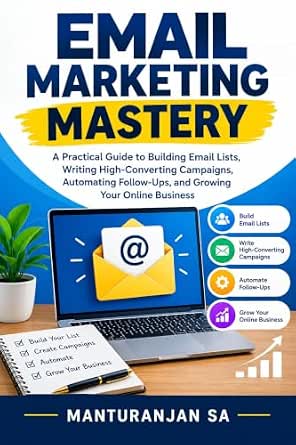 | Best for Online Businesses Building an End-to-End Email Routine | Product type: Guide; precise format not specified | Main audience: Online businesses | List building: Covered | VIEW LATEST PRICE | See Our Full Breakdown |
| Small Business Email Marketing (Part One): Growing Lists and Increasing Profits with Smart Email Strategies |  | Best for List-Growth and Revenue-Focused Readers | Product type: Not specified in supplied product details | Stated audience: Small businesses | Series designation: Part One | VIEW LATEST PRICE | See Our Full Breakdown |
| email marketing platforms for small business | Product type |
|---|---|
| Email Marketing Rules: Checkli | Book |
| Solo-Powered Email Marketing: | Book |
| GetResponse and Systeme.io Ema | Not specified in the supplied product details |
| Email Marketing Mastery: A Pra | Guide; precise format not specified |
| Small Business Email Marketing | Not specified in supplied product details |
More Details on Our Top Picks
Email Marketing Rules: Checklists, Frameworks, and 150 Best Practices for Business Success
Email Marketing Rules earns the lead position because its description gives the clearest account of what a small-business reader will receive: checklists, frameworks, and 150 actionable best practices. That is more concrete than the broad promises attached to several other titles here. Rather than focusing on one platform, it appears intended to improve campaign work across a business, which can be useful when the owner is still comparing services or already has a provider.
Compared with Solo-Powered Email Marketing, this title appears broader and more focused on repeatable practices than on the constraints of running a one-person operation. That wider scope makes it the strongest general-purpose learning pick, but it may not be the best match for a solo founder who wants advice tailored specifically to limited time and budget. The description itself flags a meaningful drawback: the material may feel dense to beginners.
The other limitation is that platform guidance may age differently from general marketing principles. The description warns that some best practices could become outdated as platforms change. I would treat it as a workbook for campaign decisions, not as proof that any particular software is the right choice today. The available information does not identify a specific platform, edition date, or technical walkthrough. For readers who need software comparisons rather than marketing routines, the GetResponse and Systeme.io title has a more targeted promise, but much less supporting detail.
For a small business that wants structured prompts to review its email work, the stated toolkit gives this book the strongest case in the lineup. It is less tailored than the solo-business guide and less narrowly concerned with list growth than Small Business Email Marketing (Part One), yet it offers the most clearly described range of practical material. I would choose it when the goal is to build a repeatable process and skip it if you need a current, step-by-step tour of a named platform.
Pros:- Description specifies 150 actionable best practices.
- Checklists and frameworks can turn broad advice into repeatable work.
- Business-focused scope suits owners and marketers rather than only hobby senders.
- General campaign guidance may remain useful while comparing different providers.
Cons:- The supplied description warns that its material may feel dense to beginners.
- Some platform-related advice may age as services and features change.
- No specific platform, edition date, or software walkthrough is confirmed.
Best for: Small-business owners or marketers who want structured checklists and broad, actionable guidance for improving campaigns.
Not ideal for: Complete beginners seeking a short, highly simplified introduction, or buyers who need current, platform-specific setup instructions.
- Product type:Book
- Subject:Email marketing
- Named tools:Checklists and frameworks
- Stated practice count:150 best practices
- Intended audience:Business owners and marketers
- Practical emphasis:Actionable campaign improvement
- Platform named:No specific service identified
- Format detail supplied:Not specified in the provided product information
Our verdict“I rank it first for its clearly stated practical toolkit, provided you want a marketing guide rather than an email platform or current software manual.”
Solo-Powered Email Marketing: Budget-Friendly Platforms and Automation Strategies for One-Person Businesses
Solo-Powered Email Marketing has the sharpest audience definition in this group: one-person businesses. That matters because a freelancer or independent shop often has to pick software around limited time, a small list, and a need to automate routine follow-up without adding a complex marketing operation. The description specifically promises discussion of budget-friendly platforms and automation strategies, giving it a more focused angle than Email Marketing Rules.
Its narrowness is also its main advantage over the more general options. Email Marketing Mastery covers list building, campaign writing, and follow-ups for online business growth, but its description does not single out solo operators or budget constraints. This title makes a more direct promise to that buyer. Still, the supplied information names no particular services, features, or method for comparing them, so readers should not assume it provides a current software shortlist or detailed setup instructions.
Compared with the platform-specific title about GetResponse and Systeme.io, this book appears to approach the choice through the needs of a one-person business rather than a two-service comparison. That could be more useful if your decision starts with your working style and budget. The tradeoff is that the comparison guide at least names the services it covers, while this title’s description remains general. Its audience fit is clear; its platform-level detail is not.
I would put it ahead of the broader guides for a solo owner who wants email to run with less manual effort. I would not choose it as the sole source for a technical buying decision unless the edition confirms up-to-date provider comparisons and practical instructions. The product is listed as a book, but no additional format, length, publication, or platform-compatibility details are provided. That information gap keeps it below the top-ranked general guide even though its intended reader is unusually well defined.
Pros:- Explicitly addresses one-person businesses.
- Connects platform selection with budget-conscious needs.
- Includes automation strategies, a useful focus for owners with limited time.
- Has a more specific audience than the general business guides in this lineup.
Cons:- No named email service or specific platform features are confirmed.
- The provided description gives no detail about the depth of its comparisons.
- No edition date or additional format information is supplied.
Best for: Freelancers, consultants, and other one-person businesses seeking budget-conscious platform guidance and automation ideas.
Not ideal for: Larger teams seeking advanced marketing operations, or buyers who require confirmed, current feature-by-feature software comparisons.
- Product type:Book
- Intended audience:One-person businesses
- Primary topic:Email marketing
- Platform angle:Budget-friendly platforms
- Automation coverage:Strategies included
- Named services:None specified in the product description
- Format detail supplied:Not specified beyond book
- Additional product details:Not provided
Our verdict“I recommend it as the most audience-specific choice for a solo operator, while advising readers to verify that its platform advice matches their current shortlist.”
GetResponse and Systeme.io Email Marketing Platforms
This title has the most direct software-comparison framing in the lineup: it names GetResponse and Systeme.io. That makes it a natural candidate for a small-business owner who has narrowed the search to those two services and wants a guide focused on that pair. In contrast, Email Marketing Rules describes general campaign frameworks, while Solo-Powered Email Marketing addresses budget and automation needs without naming a provider in the available description.
But the evidence provided is exceptionally limited. There is no description of the comparison, features covered, author approach, format, or edition. The title alone does not establish whether the book weighs email tools fairly, explains costs, addresses list size, or includes current screenshots. I cannot responsibly claim that it identifies a winner or gives reliable setup directions. Its distinct role comes from the named pair, not from confirmed depth.
That uncertainty matters especially for software research, where interfaces and service plans can change. A comparison can be useful only if its publication and platform information are recent enough for the decision at hand. Compared with Email Marketing Mastery, which at least states that it covers list building, campaign writing, and follow-up automation, this product gives less information about what a reader will learn. Its narrower title may still be exactly relevant, but buyers should inspect the edition and sample content before relying on it.
I place it third because its topic is the closest match to choosing between actual platforms, even though the supplied description does not support a stronger endorsement. It is not itself GetResponse or Systeme.io access; the listed product is a book-like title, and the product format is not specified in the supplied data. Choose it only if those are the services you are comparing and the available edition verifies useful, current coverage. If you want known practical frameworks instead, Email Marketing Rules is a safer choice based on the information available.
Pros:- Names two email marketing services directly in its title.
- Has the narrowest and most clearly defined comparison topic.
- May fit a buyer whose shortlist already contains both named providers.
Cons:- No product description or feature coverage is supplied.
- Publication date, format, and currency of platform information are unconfirmed.
- The available details do not show how the two services are compared.
Best for: Small-business owners already comparing GetResponse with Systeme.io who can confirm the guide’s edition and contents before relying on it.
Not ideal for: Readers seeking an email software subscription, a broad beginner guide, or a comparison with providers other than the two named in the title.
- Product type:Not specified in the supplied product details
- Named service:GetResponse
- Second named service:Systeme.io
- Stated subject:Email marketing platforms
- Comparison scope:Two named services
- Feature coverage:Not provided
- Publication or edition date:Not provided
- Additional description:Not provided
Our verdict“I would consider it only for a GetResponse-versus-Systeme.io shortlist, after verifying the edition and contents because the supplied product data is minimal.”
Email Marketing Mastery: A Practical Guide to Building Email Lists, Writing High-Converting Campaigns, Automating Follow-Ups, and Growing Your Online Business
Email Marketing Mastery takes an end-to-end approach. Its stated subjects include building an email list, writing campaigns, automating follow-ups, and growing an online business. For a small business that has not yet joined those tasks into a single process, that breadth gives the book a different role from Small Business Email Marketing (Part One), which is more tightly centered on list growth and profits.
The sequence implied by the description is useful: attract subscribers, communicate with them, then automate follow-up. That may suit an online business trying to make email a regular part of customer acquisition and retention. Compared with Email Marketing Rules, however, the supplied details do not identify a specific number of checklists or frameworks. Its promise is a practical guide, but the product information does not clarify how detailed the instruction is or whether it covers specific software.
Automation is a point of overlap with Solo-Powered Email Marketing. The difference is audience: the latter explicitly targets one-person businesses and budget-friendly platform choices, while this title frames its scope around growing an online business. A small team may prefer the broader growth lens; a solo operator who needs help matching tools to a tight budget may find the other book more directly relevant. Neither description confirms named services or current platform walkthroughs.
The key limitation is the lack of supplied format, edition, platform, or other product specifics. The title also uses the phrase “high-converting,” but the available description does not establish a method or result, so I treat it as a subject promise rather than a guaranteed outcome. I rank it fourth because its topic coverage is appealing but less concretely documented than the checklists in Email Marketing Rules. Choose it for a broad workflow, not as a substitute for testing software against your own requirements.
Pros:- Covers list building, campaign writing, and automated follow-ups.
- Connects email practices to online business growth.
- Offers a broader workflow scope than the list-growth-focused Part One title.
- Automation coverage may help readers reduce repetitive follow-up work.
Cons:- No named platforms or specific software instructions are confirmed.
- The supplied information does not detail its frameworks or level of instruction.
- Edition date and format are not provided.
Best for: Online small businesses that want one guide spanning list building, campaign writing, and automated follow-ups.
Not ideal for: Buyers focused on comparing named software providers or readers who want a clearly documented checklist-based reference.
- Product type:Guide; precise format not specified
- Main audience:Online businesses
- List building:Covered
- Campaign writing:Covered
- Follow-up automation:Covered
- Business goal:Online business growth
- Named email platforms:None specified
- Edition details:Not provided
Our verdict“I see it as a broad workflow guide for online businesses, but not a confirmed software-comparison resource.”
Small Business Email Marketing (Part One): Growing Lists and Increasing Profits with Smart Email Strategies
Small Business Email Marketing (Part One) is the most explicitly small-business-labeled title, and its stated focus is straightforward: growing subscriber lists and increasing profits through email strategies. That makes it a plausible fit for an owner whose immediate concern is reaching more subscribers and connecting email activity to business results. Compared with Email Marketing Mastery, it appears narrower, spending its stated attention on list growth and profit rather than also naming campaign writing and follow-up automation.
The focus can help a reader avoid a guide that ranges too widely, but the supplied product information is thin. It does not describe methods, examples, checklists, platform comparisons, or how the book approaches the connection between subscribers and profit. The subtitle promises smart strategies, yet no details support a more specific claim about the material. For a reader seeking a named platform decision, GetResponse and Systeme.io Email Marketing Platforms is more directly framed, though that title also lacks supporting description.
Its “Part One” label is another point to check before buying. The supplied data does not explain whether the book stands alone, what later parts cover, or whether this installment includes the guidance a buyer needs. I would look at the sample and series information rather than assume the title is a complete course. Compared with the more fully described Email Marketing Rules, this book gives a clearer small-business subject but much less evidence about its tools and depth.
I place it fifth not because list growth is unimportant, but because the available description offers fewer details to judge than the other entries. It may still suit a small business with a specific audience-building goal. Choose it if the list-growth and profit emphasis matches your current need and the edition answers your questions; skip it if you require a verified platform comparison, automation walkthrough, or well-documented reference structure.
Pros:- Explicitly addresses small-business email marketing.
- Centers on subscriber-list growth.
- Connects its stated strategy focus with business profits.
- Has a more focused subject than broad online-business guides.
Cons:- The supplied description gives no examples, tools, or method details.
- It is unclear whether Part One stands alone or what later parts contain.
- No platform coverage, edition date, or format is specified.
Best for: Small-business owners whose main email marketing goal is expanding a subscriber list and tying campaigns to business returns.
Not ideal for: Readers seeking confirmed software comparisons, automation instructions, or a clearly described all-in-one learning resource.
- Product type:Not specified in supplied product details
- Stated audience:Small businesses
- Series designation:Part One
- Primary focus:Growing email subscriber lists
- Business focus:Increasing profits
- Platform names:None specified
- Methods and examples:Not described in the supplied information
- Edition and format:Not provided
Our verdict“I would shortlist it for a list-growth priority, but its sparse description makes it a less certain choice than the better-documented guides.”

How We Picked
I ranked these options for a small-business reader who wants to make better email marketing decisions, while checking the boundary between the search request and the products actually supplied. Every item here is a book or guide; none is identified as a software platform. I will not present these titles as subscriptions, claim they include platform access, or infer features that are not in their descriptions.
My ranking favors the strength and usefulness of the stated scope. A product rises when its description names practical tools, a distinct audience, or a clear comparison task. That puts Email Marketing Rules first for its specified checklists and frameworks, and Solo-Powered Email Marketing near the top for its focused one-person-business angle. I give the platform-comparison title a separate role, but its limited product information makes it harder to judge than its title alone suggests.
I also account for fit and uncertainty. A guide aimed at solo operators may be more relevant to a freelancer than a general handbook; a book centered on list growth may suit a business with an audience-building problem better than one focused on campaign operations. Sparse descriptions are not proof of poor content, but they do make it harder for me to recommend a title confidently. Where details are missing, I say so rather than inventing publication, format, platform compatibility, or chapter information.
Finally, I weigh what each description leaves unresolved. The supplied data does not confirm whether any book has current screenshots, platform-by-platform walkthroughs, deliverability guidance, or updated advice for 2027. Readers should check the edition and sample pages before purchase, especially when they need current instructions. My order is a guide to choosing among these learning resources—not a ranking of email software providers.
| email marketing platforms for small business | Product type |
|---|---|
| Email Marketing Rules: Checkli | Book |
| Solo-Powered Email Marketing: | Book |
| GetResponse and Systeme.io Ema | Not specified in the supplied product details |
| Email Marketing Mastery: A Pra | Guide; precise format not specified |
| Small Business Email Marketing | Not specified in supplied product details |
Factors to Consider When Choosing Email Marketing Platforms For Small Business
Because this roundup contains books and guides rather than software subscriptions, I would use it to refine your decision, then evaluate the actual platforms separately. Start with the problem you need to solve—choosing a provider, building a list, writing campaigns, or automating follow-up—rather than selecting a title based on a broad promise alone.
Check whether you need a guide or a working platform
An email marketing platform is a service that helps you collect subscribers, organize contacts, send campaigns, and often automate messages. None of the five listed products is identified as that kind of service. They are books or guides, or products with incomplete format information. They will not provide an email list manager or campaign-sending account based on the details supplied. If your immediate need is to send a newsletter, compare software providers directly; if you need to learn how to plan and improve your email work, one of these learning resources may help.
I would keep those two purchases separate in my decision. A guide can explain principles, but it may not reflect the current interface or plan limits of a service. A software trial or provider documentation can answer implementation questions, but may not teach campaign strategy. For a small business, the most useful sequence is often to define a basic workflow, shortlist services against actual requirements, and verify current features with the providers themselves.
Match the material to your business size and working style
Solo-Powered Email Marketing has the most specific audience match for a freelancer or one-person business. Its stated budget and automation angle speaks to the reality of doing marketing alongside every other job. Email Marketing Rules is broader and better documented in the supplied description, making it a stronger general reference for an owner or marketer who wants structured practices. Audience fit can matter more than breadth: a solo operator may gain more from tailored constraints than from an extensive general framework.
For a small team, look at whether you need a shared process, practical checklists, or broad business-growth instruction. The descriptions here do not confirm collaboration guidance in any title, so I would not assume that a book covers team approvals or multi-user workflows. Instead, use the stated scope as a filter and inspect sample pages for the kinds of examples your business can apply.
Identify your biggest email marketing bottleneck
If you need a repeatable way to review campaigns, Email Marketing Rules has the strongest stated toolkit through its checklists and frameworks. If your main problem is getting subscribers, Small Business Email Marketing (Part One) directly emphasizes list growth, though its methods are not described in the supplied data. If you need a connected process from attracting subscribers to sending campaigns and automating follow-ups, Email Marketing Mastery names all three areas. Choose based on the task you need to improve first, not on a promise of business results alone.
One clear priority can also expose what a book does not cover. A list-building guide might not help you compare software; a general campaign handbook might not explain how to configure a particular automation. Write down your next concrete task—such as creating a welcome sequence or choosing a signup form—and check the contents or sample against it before committing.
Treat platform comparisons as time-sensitive
The GetResponse and Systeme.io title is the only product explicitly framed around two named platforms. That gives it a narrow use case, but the supplied details do not confirm its comparison method or whether its information is current. Platform interfaces, capabilities, and plan terms can change. Before relying on a comparison, check the publication or edition date, review the sample pages, and verify any key claim against the providers’ own current materials.
The same rule applies to broader guides that discuss budget-friendly services. A book can help you frame questions—such as whether you need automation or a particular workflow—but it should not be treated as a live feature sheet. Verify provider details before making a software decision, especially when a feature is central to your business process.
Read the product details as carefully as the title
Several listings here have limited descriptions. That limits how confidently I can assess depth, format, edition, or platform coverage. Email Marketing Rules stands apart because its listing identifies specific tools and a practice count; the solo-business guide identifies its target reader and subject areas. The other titles may still be useful, but their descriptions leave more open questions. An appealing title is not evidence of step-by-step instructions, current examples, or a complete comparison.
Before buying, I would check whether the product is a standalone book, what edition is offered, whether the sample matches my needs, and whether a “Part One” title depends on later installments. For a guide promising platform comparisons, I would look for named services and a clear publication date. Uncertainty should lower confidence, not invite assumptions.
Use a practical software checklist after choosing a learning resource
When you move from reading to choosing a service, make a short list of needs: the number and types of contacts you manage, signup and unsubscribe handling, the campaigns you plan to send, the automations you require, reporting needs, and any connections to your existing business tools. Confirm those requirements with each provider rather than assuming a book’s general advice settles the choice. Small businesses often benefit from keeping the first workflow simple, then adding complexity only when a real need appears.
Also check what happens as your list or process changes. Review contact management, export options, account access, support documentation, and the terms attached to the features you expect to use. These are software-selection questions, not confirmed qualities of the five books in this roundup. The guides can help with planning; the current provider information should decide whether a service fits your operation.
Frequently Asked Questions
Are any of these products email marketing software platforms?
No. The supplied product information identifies books and guides, not subscriptions that send campaigns or manage contacts. The title about GetResponse and Systeme.io is framed as a comparison of those services, but the listed product is not access to either platform. If you need working software, evaluate the providers directly and use these books only as learning resources.
Which option is the strongest starting point for a small-business owner?
I would start with Email Marketing Rules if you want the clearest stated set of practical tools: checklists, frameworks, and 150 best practices. A solo founder may find Solo-Powered Email Marketing more relevant because it explicitly addresses one-person businesses and budget-conscious platform choices. The better starting point depends on whether you value a broad structured reference or a guide aimed at your working style.
Which title is most relevant to comparing email providers?
GetResponse and Systeme.io Email Marketing Platforms is the only title that names a pair of services, so it has the most direct comparison framing. However, the supplied information does not describe its coverage, method, or edition date. I would inspect its contents and verify current platform details before using it to make a software decision.
Which guide should I choose if list growth is my main goal?
Small Business Email Marketing (Part One) directly emphasizes growing subscriber lists and increasing profits, so its stated focus matches that need. Email Marketing Mastery also covers list building, but pairs it with campaign writing and automated follow-ups. The Part One listing provides few details about its methods and does not explain whether it stands alone, so check the sample and series information before buying.
How can I tell whether platform advice in a book is current?
Check the publication or edition date, inspect the sample pages for named services and recent examples, and compare important claims with each provider’s current documentation. The listings here do not provide confirmed edition dates or current feature coverage for most titles. Treat general advice as a planning aid, then verify software capabilities, terms, and setup steps directly with the service before acting.
Conclusion
My choice depends on the job you need the resource to do. For a general small-business reference with clearly stated practical tools, I would choose Email Marketing Rules. For a freelancer or one-person business looking for budget-minded platform discussion and automation ideas, Solo-Powered Email Marketing is the more closely tailored fit. If you are already comparing GetResponse with Systeme.io, inspect that title’s edition and contents before relying on it, since its supplied description is sparse.
Choose Email Marketing Mastery if your priority is a broad workflow spanning list building, campaigns, and follow-ups; choose Small Business Email Marketing (Part One) if list growth and profit are your immediate focus and the installment’s scope suits you. None of these products replaces email software. For an actual platform purchase, I would confirm my requirements, compare current provider information, and treat any book as supporting guidance—not a live feature list.
Halloween Picks
halloween
As an affiliate, we earn on qualifying purchases.