

Treating your email content calendar as infrastructure helps you stay reliable, coordinated, and aligned with your goals. It enables you to plan campaigns ahead, guarantee consistent messaging, and improve audience engagement through personalized content. By tracking performance and making data-driven adjustments, you strengthen your outreach’s effectiveness. Plus, it keeps your team synchronized and ready for surprises. If you want to discover how this foundation boosts your overall strategy, keep exploring the benefits.

Get business pricing on office and shipping supplies
- Business-only prices and quantity discounts
- Tax-exempt purchasing
- Multiple users, one account, clear invoices
Key Takeaways
- It provides reliable support for consistent, strategic outreach aligned with marketing goals.
- It enables personalized, targeted content that boosts engagement and builds trust.
- It simplifies data tracking for ongoing optimization and performance improvement.
- It ensures cross-team coordination, promoting cohesive and timely communication.
- It leverages tools and organized content management for scalable, adaptable marketing efforts.
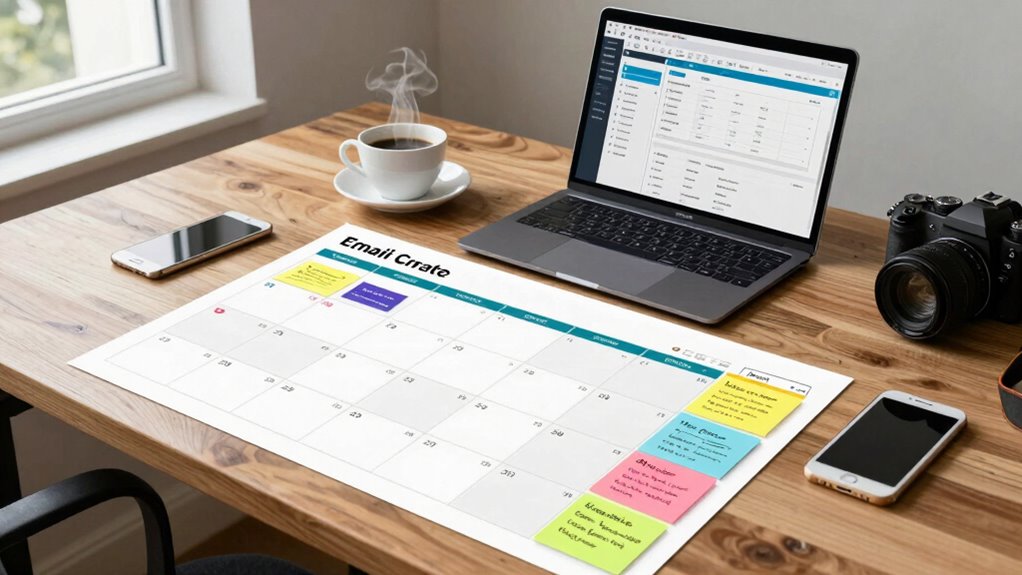
Have you ever wondered how successful businesses consistently deliver engaging emails without missing a beat? The secret often lies in having a well-structured email content calendar that functions like reliable infrastructure. Think of it as the backbone of your outreach efforts—nothing should be left to chance. When you treat your email content calendar as essential infrastructure, you create a foundation that supports consistent messaging, timely campaigns, and meaningful connections. This approach ensures your team can plan ahead, avoid last-minute scrambles, and stay aligned with your overall marketing goals. A well-maintained content strategy is also crucial for adapting to changing audience needs and environmental factors. One of the core reasons this strategy works is because it allows you to implement effective personalization strategies. When you have a clear schedule, you can tailor content based on customer behaviors, preferences, and engagement history. Personalization isn’t just about inserting a name; it’s about delivering the right message at the right moment. With a solid calendar in place, you can schedule targeted campaigns that resonate deeply with different segments of your audience. This proactive planning boosts engagement metrics, such as open rates, click-throughs, and conversions, because your emails feel more relevant and timely. Consistently adhering to a schedule also helps you build trust with your recipients, making your brand more recognizable and dependable. Tracking engagement metrics becomes much easier when your emails are sent consistently according to a calendar. Instead of reacting to poor performance after the fact, you can analyze patterns, identify what resonates most, and adjust your content accordingly. When your team treats the calendar as infrastructure, it becomes a tool for continuous improvement. You can set benchmarks, monitor how campaigns perform over time, and refine your personalization strategies based on real data. This iterative process drives better engagement, helping you build stronger relationships with your audience. Furthermore, a dedicated email content calendar helps you coordinate across teams. Whether it’s marketing, sales, or customer support, everyone stays on the same page about upcoming campaigns, special promotions, or seasonal messages. It ensures your communications are cohesive, timely, and aligned with broader business initiatives. When your team invests in this infrastructure, it reduces chaos and enhances efficiency, so your email marketing efforts become more predictable and scalable. Additionally, having a clear schedule allows your team to leverage marketing tools more effectively, automating parts of the process and maximizing your resources. Recognizing the importance of content planning as part of your overall marketing infrastructure can significantly boost your team’s ability to execute campaigns smoothly and strategically. Building a robust system for content management enables you to adapt quickly to unforeseen changes, ensuring your messaging remains relevant. In essence, treating your email content calendar like infrastructure means recognizing its role as a strategic asset. It’s not just a scheduling tool but a foundational element that supports personalization strategies, improves engagement metrics, and promotes organized, effective communication. When you prioritize it, your email campaigns become more than just messages—they turn into a consistent, reliable channel that nurtures relationships, drives results, and propels your business forward.
Popular right now

Bose QuietComfort True Wireless Earbuds with Active Noise Cancellation, Black

Vitamix Propel Series 510 Professional-Grade Blender, 3 Programs, Black

Dyson Ball Animal 2 Plus Corded Vacuum
As an affiliate, we earn on qualifying purchases.
Frequently Asked Questions
How Often Should I Update My Email Content Calendar?
You should update your email content calendar at least monthly to maintain content freshness and boost audience engagement. Regular updates guarantee your messaging stays relevant and aligned with current trends or campaigns. Keep an eye on performance metrics, and adjust your schedule as needed. This proactive approach helps you stay connected with your audience, prevents content from becoming stale, and ultimately drives better engagement and results over time.
What Tools Are Best for Managing an Email Content Calendar?
Think of managing your email content calendar like orchestrating a symphony. Tools like Trello, Asana, or Airtable are great for content scheduling and campaign coordination. They help you visualize deadlines, assign tasks, and keep everything on track. Use these tools to streamline your workflow, prevent overlaps, and guarantee your campaigns roll out smoothly. With the right platform, you’ll keep your email marketing organized, responsive, and effective.
How Do I Align Email Content With Overall Marketing Strategy?
To align your email content with your overall marketing strategy, focus on audience segmentation and personalization tactics. Segment your audience based on demographics, behaviors, and preferences, then tailor your messages accordingly. Use personalization to make content relevant and engaging, ensuring your emails support your broader goals. Regularly review performance data to refine your approach, keeping your email campaigns integrated with your marketing strategy for maximum impact.
What Metrics Should I Track to Measure Calendar Effectiveness?
You should track open rates, click-through rates, and conversion rates to measure your calendar’s effectiveness. Additionally, focus on audience segmentation data to see how well you’re reaching targeted groups. Personalization metrics, like engagement from segmented segments, reveal how tailored your content is. Monitoring these metrics helps you optimize timing, relevancy, and overall strategy, ensuring your email calendar drives results and supports your marketing goals effectively.
How Can I Involve Team Members in Calendar Planning?
Imagine a circus without clowns—boring, chaotic, and lacking flair. That’s what your calendar would be without team collaboration and creative brainstorming. To involve team members, invite them to regular planning sessions, encourage open feedback, and assign specific content slots. Make it a collaborative dance, where everyone’s ideas sway together, turning mundane scheduling into a lively, shared creative process that boosts engagement and ownership.
Conclusion
Think of your email content calendar as the foundation of a skyscraper—without it, everything risks collapsing. When your team treats it like infrastructure, you build reliability, consistency, and trust with your audience. Just like a well-planned bridge connects two points smoothly, a smart content calendar keeps your messaging seamless and on schedule. Invest in it, and watch your communication elevate—because in the world of email marketing, a solid plan isn’t optional, it’s essential.