📊 Full opportunity report: Phone-based injury-risk movement screening for hiring on IdeaNavigator AI — validation score, market gap, and execution plan.

Get business pricing on office and shipping supplies
- Business-only prices and quantity discounts
- Tax-exempt purchasing
- Multiple users, one account, clear invoices
TL;DR
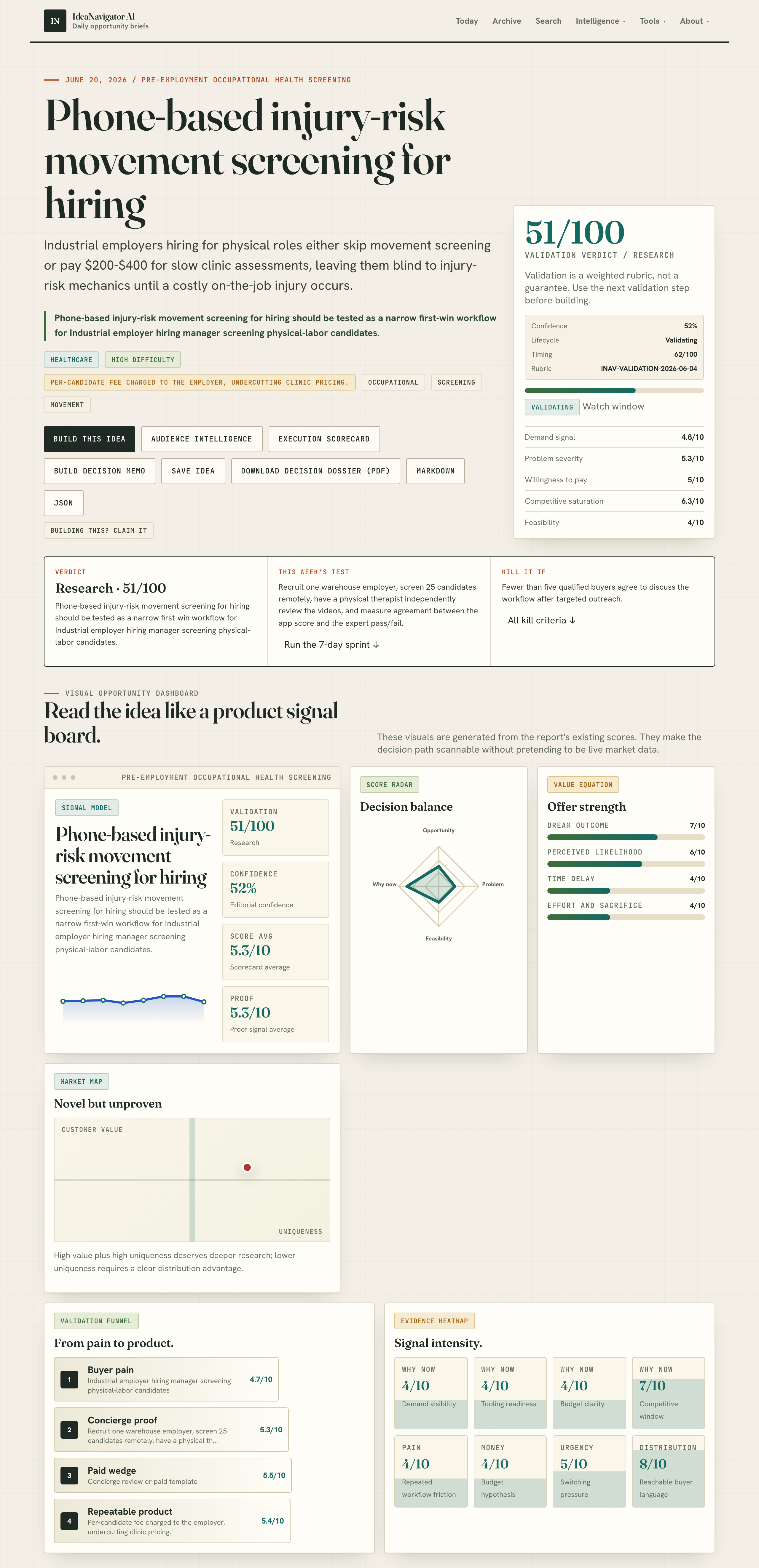
A new remote movement screening method using phone cameras is being tested for industrial hiring. It aims to provide quick, affordable injury risk assessments, potentially replacing clinic evaluations.
A new phone-based movement screening system for industrial job candidates is being tested to assess injury risk remotely, offering a faster and cheaper alternative to traditional clinic assessments. This development could significantly impact hiring practices for physically demanding roles, addressing a longstanding gap in injury prevention.
The proposed system involves candidates performing 5-7 specific movements, such as squats, reaches, lifts, and balance holds, captured via their smartphone cameras. The app then analyzes these videos using pose estimation technology to generate a pass/fail injury risk score within 24 hours, at a cost of approximately $30-50 per candidate.
This approach aims to address the current challenge faced by industrial employers, who often skip movement screening due to high costs ($200-$400) or logistical delays associated with clinic assessments. The new method could streamline the screening process, making it more accessible and scalable for large candidate pools.
Initial validation plans involve recruiting a warehouse employer to test the system on 25 candidates. An independent physical therapist will review the videos to compare their assessment with the app’s scores, measuring the agreement to validate effectiveness. The goal is to establish a reliable, automated pre-hire injury risk screening tool.
Potential Impact on Industrial Hiring Practices
If successful, this phone-based screening could transform how employers evaluate injury risk before hiring, reducing on-the-job injuries and associated costs. It offers a scalable, low-cost alternative to clinic assessments, potentially leading to widespread adoption across industries with physically demanding roles. The approach also aligns with rising workers’ compensation costs, incentivizing proactive injury prevention measures.
Popular right now

De'Longhi Rivelia Automatic Espresso Machine with Milk Frother

Shark Rotator Lift-Away Vacuum with DuoClean PowerFins (LA555) – Dark Grey

Dyson V8 Cyclone Cordless Vacuum
As an affiliate, we earn on qualifying purchases.
Current Limitations in Injury Screening for Physical Labor
Industrial employers frequently face challenges in assessing injury risk during hiring, often resorting to expensive or slow clinic-based evaluations. These assessments are typically conducted only after an injury occurs, leading to costly workers’ compensation claims and lost productivity. Despite the importance of screening for lifting mechanics and movement quality, existing methods remain limited by high costs and logistical hurdles.
The advent of pose estimation technology and widespread smartphone use has opened new possibilities for remote assessment. The concept of remote movement screening has been discussed in industry circles, but practical testing and validation remain in early stages. This development arrives amid increasing pressure to implement more effective injury prevention strategies in the workplace.
“Using phone cameras and pose estimation, remote movement screening could become a practical tool for pre-employment injury risk assessment.”
— an anonymous researcher
Validation and Adoption Challenges Remain
It is not yet clear how accurately the app’s injury risk scores will align with expert assessments or actual injury outcomes. The effectiveness of the system in diverse candidate populations and different job roles remains to be tested. Additionally, regulatory and employer acceptance hurdles could impact widespread implementation.
Planned Pilot Testing and Validation Steps
The next phase involves recruiting a single warehouse employer to pilot the system on 25 candidates. Independent physical therapists will review the videos to compare their assessments with the app scores. Results from this validation will determine the tool’s reliability and inform further development. If successful, broader deployment and integration into hiring workflows could follow.
Key Questions
How does the phone-based movement screening work?
Candidates perform specific movements on their smartphones, which are recorded and analyzed by an app using pose estimation technology to assess injury risk.
What are the advantages of this method over traditional assessments?
It offers faster, lower-cost screening that can be done remotely, reducing logistical delays and expenses associated with clinic evaluations.
Will this replace physical therapist assessments entirely?
Initially, the system is intended as a screening tool to supplement, not replace, professional evaluations, with validation ongoing to ensure reliability.
What are the main uncertainties about this technology?
Its accuracy in predicting actual injury risk and acceptance by employers and regulators are still unproven and under study.
When might this technology be widely available?
If validation is successful, a broader rollout could occur within the next 1-2 years, depending on pilot results and industry adoption.
Source: IdeaNavigator AI