

📊 Full opportunity report: When Does Cheap Memory Come Back? The 2027–2029 Question on ThorstenMeyerAI.com — validation score, market gap, and execution plan.
TL;DR
Memory shortages are expected to persist until at least 2028, with prices remaining elevated. Experts agree that a return to pre-crisis prices is unlikely before 2028–2029, due to physical and industry constraints.
Memory prices are unlikely to return to pre-crisis levels before 2028–2029, according to industry analysts and major manufacturers. This ongoing shortage affects sectors from AI infrastructure to consumer electronics, making the timeline critical for market planning and investment decisions.
The consensus among analysts is that memory supply will begin to stabilize around 2027, with IDC expecting prices to level off by mid-2027, and Counterpoint citing Q4 2027 as an earliest inflection point. However, Samsung and SK Hynix warn shortages could extend into 2027 and beyond, with a more realistic easing forecast set for late 2028 or 2029.
The physical constraints are the primary reason for the delayed relief. Building new fabs takes years, with capacity expansion focused on high-bandwidth memory (HBM) and delayed for the most part. Key capacity additions include Micron’s Idaho fab starting DRAM production mid-2027, and SK Hynix’s Indiana plant, but the largest project, Micron’s Clay fab in New York, is pushed back to 2030.
Industry forecasts suggest that supply will not meet demand until late 2028 or 2029, meaning prices will stay permanently higher—about 30–50% above pre-crisis levels—beyond the immediate future.
When does cheap memory come back?
The question everyone’s really asking: do I just wait this out? The honest answer is a timeline, three scenarios, and news you may not want — the cheap memory you remember isn’t coming back. A less-expensive market probably is — later, and at a higher floor.
Capacity ramps ’27–’28; price climbs stop, then ease. Settles ~30–50% above pre-crisis — the new baseline, not a return to 2024.
AI keeps accelerating; OpenAI locked ~40% of DRAM through 2029; makers pause expansion to protect record margins; each HBM gen worsens the math.
AI demand moderates just as delayed ’27–’28 fabs all arrive → classic overshoot → prices crash. Not the bet — but never impossible in this industry.
The one relief valve that needs no fab is efficiency: if compression (Part 9) cuts how much memory each model needs, demand softens on the timescale of a software update, not a construction project. So the posture isn’t waiting — it’s the discipline this series has been about. Memory is now a scarce, valuable resource; treat it that way. Buy what you need, right-size, own what’s steady, rent what’s spiky, quantize either way. The people who do best won’t be the ones who guessed the bottom — they’ll be the ones who stopped needing so much. That’s the squeeze, end to end.
Implications of Prolonged Memory Shortage and Price Elevation
This persistent shortage impacts a broad range of sectors, especially AI infrastructure, data centers, and consumer electronics, where memory is a critical component. The expectation of permanently higher prices alters market strategies, investment plans, and technological development timelines, making supply chain planning more complex for manufacturers and buyers alike.
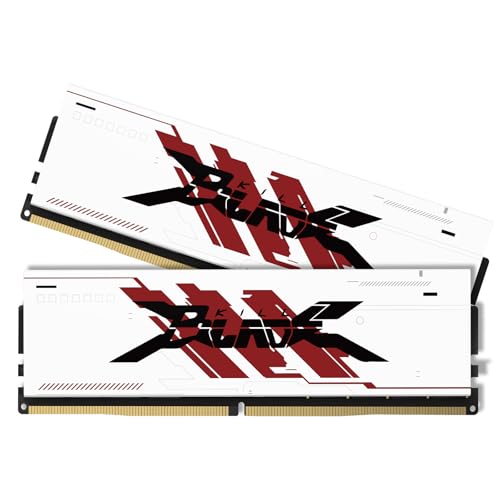
PUSKILL 32GB Kit (2x16GB) DDR4 RAM 3200MHz PC4-25600 Desktop Memory with Aluminum Heatsink, Non-ECC Unbuffered UDIMM 1.35V CL16 288-Pin, High Performance Gaming PC Upgrade for Intel & AMD
[UNCOMPROMISED 32GB PERFORMANCE] Supercharge your rig with 32GB (two 16GB modules) of high-speed memory. Designed for power users,…
As an affiliate, we earn on qualifying purchases.
As an affiliate, we earn on qualifying purchases.
Physical and Industry Constraints Delay Memory Market Relief
The current memory crunch stems from physical limitations in manufacturing capacity. New fabs take years to build and ramp, with the bulk of capacity expansion scheduled for 2028 and beyond. The industry’s focus on high-value HBM and wafer-intensive processes further constrains supply, as existing bottlenecks in cleanroom space and advanced packaging cap capacity limit immediate relief.
While some capacity will come online in 2027 and 2028, the largest projects are delayed into 2030, and US-based fabs funded by the CHIPS Act are unlikely to impact near-term supply. Industry insiders emphasize that physical constraints are the fundamental reason why relief will be slow and prices remain elevated.
“The shortage could extend through 2027 and beyond, with a genuine easing not expected before late 2028.”
— Samsung and SK Hynix
gaming computer memory upgrade
As an affiliate, we earn on qualifying purchases.
As an affiliate, we earn on qualifying purchases.
Uncertainties in Demand, Technology, and Market Dynamics
While capacity expansion is scheduled for 2028–2029, several factors remain uncertain: whether AI demand will continue to grow at current rates, if future memory transitions will exacerbate shortages, or if a sudden market oversupply could trigger a crash. The potential for demand moderation or technological efficiency improvements could alter the timeline, but these are still developing scenarios.
laptop memory modules 16GB
As an affiliate, we earn on qualifying purchases.
As an affiliate, we earn on qualifying purchases.
Monitoring Capacity Expansion and Demand Trends
Industry watchers will need to track new fab openings, technological advancements in memory efficiency, and shifts in AI and data center spending. Key milestones include Micron’s 2027 capacity ramp-up, SK Hynix’s Indiana plant, and the impact of US-funded fabs starting in late 2020s. Market conditions may shift if demand slows or supply expands faster than expected.
desktop RAM sticks 32GB
As an affiliate, we earn on qualifying purchases.
As an affiliate, we earn on qualifying purchases.
Key Questions
Will memory prices ever return to pre-crisis levels?
Most analysts believe prices will remain permanently higher, around 30–50% above pre-crisis levels, with a full return to previous prices unlikely before 2028–2029.
What is causing the delay in memory supply relief?
The primary cause is physical constraints, including the time required to build and ramp new fabs, and bottlenecks in cleanroom capacity and advanced packaging.
Could a market crash still happen?
Yes, if demand moderates sharply or a supply overshoot occurs when delayed capacity comes online, a price crash could happen, but current forecasts suggest a slow easing rather than a collapse.
How might demand reduction impact prices?
Demand could decrease if AI models become more efficient or if other technological improvements reduce memory needs, potentially easing prices faster without new capacity.
What should companies plan for in the near term?
Businesses should prepare for sustained higher memory costs and consider efficiency improvements or alternative architectures, as relief is not expected before 2028–2029.
Source: ThorstenMeyerAI.com