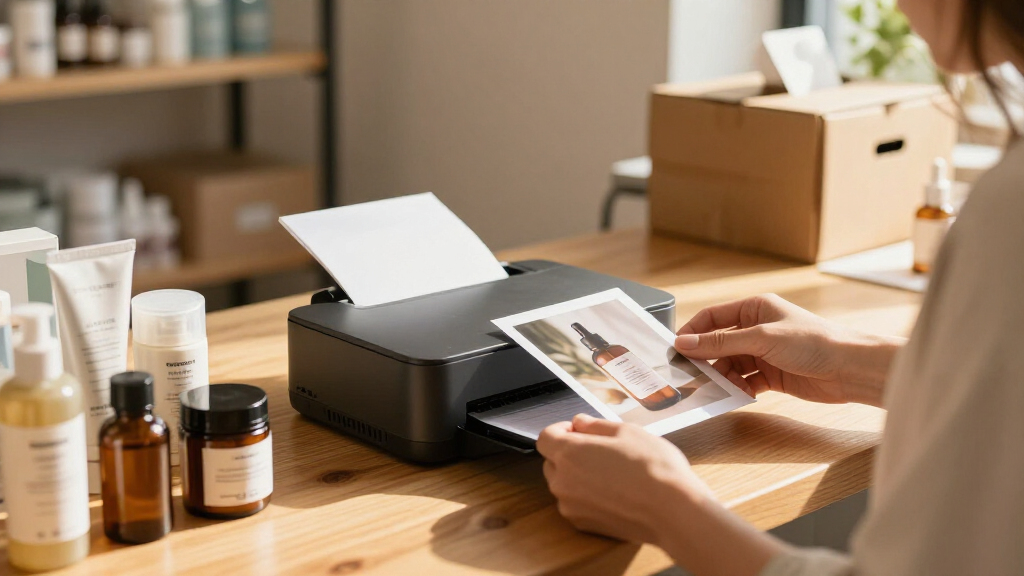

For portable photo printers for product marketing, I recommend the Canon SELPHY CP1500 as the best overall choice for polished 4×6-inch product cards, while the Liene M100 stands out for a compact, app-based workflow and the NELKO Flow for small-format magnets and transfers. The right fit depends on whether you need durable display prints, fast handouts at events, or small branded inserts that can travel with an order. Print size, power needs, media costs, and how easily staff can send a job all affect the choice. This roundup compares those tradeoffs across 14 models, from pocket printers to event-oriented dye-sublimation units. Read on for the full breakdown and guidance by marketing use case.

Get business pricing on office and shipping supplies
- Business-only prices and quantity discounts
- Tax-exempt purchasing
- Multiple users, one account, clear invoices
Key Takeaways
- The CP1500 is the most balanced pick: it offers a practical 4×6-inch format for product cards and event handouts without stepping up to a more specialized event printer.
- Small-format printers serve a different job: the NELKO Flow, Nelko PP01, and Canon IVY 2 suit compact inserts, stickers, or keepsakes, not full-size product sheets.
- Media bundles change launch-day readiness, not printer capability: the Liene M110 and M100 bundles include more supplies, while buyers should still check ongoing media availability and replenishment needs.
- Event volume can justify pro-style hardware: the HiTi P525L and DNP QW410 are aimed at more demanding print workflows, but their size and setup make less sense for occasional small-batch marketing.
- Connectivity and print format matter more than the word portable: Wi-Fi, Bluetooth, app workflows, and 4×6 output affect staff convenience and campaign use more than a compact body alone.
| NELKO Flow 2×3 Photo Printer for Magnets and Transfers, Grey, 60 Sheets |  | Best for Product Samples and Swag | Printer type: Inkjet | Print output: Color | Dimensions: 4.2 x 5.05 x 1.69 inches | VIEW LATEST PRICE | See Our Full Breakdown |
| PRT CP6000 4×6 Photo Printer with WiFi, AR Video, and Bluetooth Speaker |  | Best for Interactive Brand Handouts | Printer type: Dye sublimation | Resolution: 300 x 300 dpi | Print size: 4 x 6 inches, borderless | VIEW LATEST PRICE | See Our Full Breakdown |
| Canon IVY 2 Mini Photo Printer, White |  | Best for Quick, Stick-On Product Labels | Printer type: Portable ZINK photo printer | Print size: 2 x 3 inches | Resolution: 313 x 512 dpi | VIEW LATEST PRICE | See Our Full Breakdown |
| Canon Selphy CP1200 Black Wireless Color Photo Printer |  | Best for Multi-Format Event Prints | Printer type: Dye sublimation | Output: Color | Resolution: 4800 x 1200 dpi | VIEW LATEST PRICE | See Our Full Breakdown |
| Canon SELPHY CP1500 Compact Photo Printer White |  | Best for Polished 4 x 6 Campaign Prints | Maximum media size: 4 x 6 inches | Supported print sizes: 4 x 6, 3.5 x 4.7, 2.1 x 3.4, 2.1 x 2.1 inches, and 22 x 17.3 mm | Color resolution: 300 x 300 dpi | VIEW LATEST PRICE | See Our Full Breakdown |
| Liene Amber M110 Bluetooth Photo Printer with 80 Sheets and 2 Cartridges |  | Best for Mixed-Format Product Samples | Printer type: Thermal dye sublimation | Connectivity: Bluetooth, USB | Supported paper sizes: 4×6 inches, 3×3 inches | VIEW LATEST PRICE | See Our Full Breakdown |
| Liene M100 4×6-Inch Wi-Fi Photo Printer |  | Best for Small Teams Sharing One Printer | Printer type: Thermal dye sublimation | Maximum media size: 4 × 6 inches | Connectivity: Built-in Wi-Fi hotspot; wired connection for PC | VIEW LATEST PRICE | See Our Full Breakdown |
| Nelko PP01 Portable 2×3-Inch Photo Printer |  | Best for Pocket-Sized Samples and Labels | Printer type: Inkjet | Print size: 2 × 3 inches | Print resolution: 600 × 600 DPI | VIEW LATEST PRICE | See Our Full Breakdown |
| Epson PictureMate PM-400 Wireless Compact Photo Printer |  | Best for Larger, Detail-Rich Marketing Prints | Printer type: Inkjet | Supported photo sizes: 4 × 6 inches, 5 × 7 inches | Connectivity: Wi-Fi, USB | VIEW LATEST PRICE | See Our Full Breakdown |
| Liene M100 Portable 4×6 Photo Printer with 100 Sheets and 3 Cartridges |  | Best for Campaigns That Need Supplies Ready | Printer type: Dye sublimation | Connectivity: Wi-Fi, USB-C | Compatibility: iOS, Android, Windows, Mac | VIEW LATEST PRICE | See Our Full Breakdown |
| HiTi P525L Compact Dye-Sublimation Photo Printer |  | Best for High-Volume Event Marketing | Printer type: Dye sublimation | Print resolution: 300 dpi | Print sizes: 4 × 6, 5 × 7, and 6 × 8 inches | VIEW LATEST PRICE | See Our Full Breakdown |
| Canon SELPHY CP1500 Wireless Photo Printer Bundle with 108 Sheets of Paper |  | Best Ready-to-Use Bundle | Model: Canon SELPHY CP1500 | Printer type: Dye sublimation | Print output: Color | VIEW LATEST PRICE | See Our Full Breakdown |
| Liene M110 Portable 4×6-Inch Photo and 3×3-Inch Sticker Printer Bundle |  | Best for Product Stickers and Small Runs | Model: Liene M110 | Printer type: Dye sublimation | Supported media: Glossy photo paper and labels | VIEW LATEST PRICE | See Our Full Breakdown |
| DNP QW410 4.5″ Dye Sublimation Printer with 4×6 Media and Carrying Case |  | Best for Rugged On-Location Printing | Printer type: Dye sublimation | Resolution: 300 × 300 dpi | 4 × 6 print time: 19 seconds per photo | VIEW LATEST PRICE | See Our Full Breakdown |
| portable photo printers for product marketing | Printer type | Connectivity | Weight | Resolution |
|---|---|---|---|---|
| NELKO Flow 2×3 Photo Printer f | Inkjet | Bluetooth | 310 g | — |
| PRT CP6000 4×6 Photo Printer w | Dye sublimation | Wi-Fi and Bluetooth | 2.8 pounds | 300 x 300 dpi |
| Canon IVY 2 Mini Photo Printer | Portable ZINK photo printer | Bluetooth 5.0 | 145 g | 313 x 512 dpi |
| Canon Selphy CP1200 Black Wire | Dye sublimation | — | 1.9 pounds | 4800 x 1200 dpi |
| Canon SELPHY CP1500 Compact Ph | — | Wi-Fi, USB, memory card, AirPrint, and Canon PRINT app | 1.58 kg | — |
| Liene Amber M110 Bluetooth Pho | Thermal dye sublimation | Bluetooth, USB | 2.9 pounds | 300 × 300 dpi |
| Liene M100 4×6-Inch Wi-Fi Phot | Thermal dye sublimation | Built-in Wi-Fi hotspot; wired connection for PC | 2.2 pounds | — |
| Nelko PP01 Portable 2×3-Inch P | Inkjet | Bluetooth | 308 g | — |
| Epson PictureMate PM-400 Wirel | Inkjet | Wi-Fi, USB | 6 pounds | 5760 × 1440 |
| Liene M100 Portable 4×6 Photo | Dye sublimation | Wi-Fi, USB-C | 200 g | 300 × 300 DPI |
| HiTi P525L Compact Dye-Sublima | Dye sublimation | USB 2.0 | — | — |
| Canon SELPHY CP1500 Wireless P | Dye sublimation | Wi-Fi | — | — |
| Liene M110 Portable 4×6-Inch P | Dye sublimation | Bluetooth | — | — |
| DNP QW410 4.5" Dye Sublimation | Dye sublimation | USB 2.0 wired; optional wireless dongle | 22 pounds | 300 × 300 dpi |
More Details on Our Top Picks
NELKO Flow 2×3 Photo Printer for Magnets and Transfers, Grey, 60 Sheets
For small brands that need more than a conventional photo print, the NELKO Flow has the most varied marketing use in this group. Its included media supports magnets, heat transfers, and water-slide decals, so a product image can become a small giveaway or a sample for packaging and display. Compared with the Canon IVY 2, which focuses on peel-and-stick photo paper, the Flow offers more ways to turn an image into branded material. Its Bluetooth app and battery rated for up to 80 prints also suit pop-ups where a power outlet is inconvenient. The tradeoff is scale: output is limited to 2 x 3 inches, and heat-transfer decorations are not washable and require specific ironing instructions. I’d choose it for compact, hands-on promotional pieces, not durable apparel or larger product photography.
Pros:- Included media supports magnets, heat transfers, and water-slide decals.
- Compact 310 g body is easy to carry to markets or client meetings.
- Battery supports up to 80 prints per charge, with a stated 90-minute charging time.
- Bluetooth app connection and magnetic cartridge simplify mobile setup.
Cons:- Prints are limited to 2 x 3 inches, too small for most product display cards.
- Heat-transfer items are decorative and not washable.
- Heat transfers require specific ironing instructions.
Best for: Small-business owners and makers who want to produce mini branded magnets, decals, or decorative transfer samples at markets and events.
Not ideal for: Brands that need larger images, washable garment graphics, or consistent full-size product photos for catalogs and online listings.
- Printer type:Inkjet
- Print output:Color
- Dimensions:4.2 x 5.05 x 1.69 inches
- Weight:310 g
- Connectivity:Bluetooth
- Compatibility:iOS, Android, smartphones, and tablets
- Battery:Up to 80 photos per charge; 90-minute charging time
- Included media:60 sheets: stickers, magnetic, heat-transfer, and water-transfer media
Our verdict“Choose the NELKO Flow if you want to turn product images into varied small promotional pieces rather than standard photo prints.”
PRT CP6000 4×6 Photo Printer with WiFi, AR Video, and Bluetooth Speaker
The PRT CP6000 is the most distinctive choice here for campaigns that pair a printed image with digital storytelling. Its AR video and voice-message features let recipients connect a 4 x 6 print to extra content through the HeyPhoto app, which could make a product launch handout or event keepsake more memorable than a static print. Unlike the pocket-sized Canon IVY 2, this is a small desktop device that produces a larger format suited to counter displays and customer takeaways. Dye-sublimation output is described as waterproof, scratch-resistant, and fade-proof, a useful combination for materials handled at events. That added presentation comes with constraints: it uses proprietary paper and ribbon, prints only 4 x 6 images, and its speaker function is less relevant to a focused marketing workflow. I’d pick it for interactive campaigns, not the simplest print station.
Pros:- AR video and voice messages add a digital layer to printed campaign materials.
- 4 x 6 borderless output provides more display space than mini printers.
- Prints are described as waterproof, scratch-resistant, and fade-proof.
- Wi-Fi and Bluetooth support printing from compatible phones and tablets.
Cons:- Output is limited to 4 x 6 prints.
- Requires proprietary photo paper and ribbon consumables.
- Desktop form and speaker features may be unnecessary for a lean, mobile print setup.
Best for: Retail and event marketers who want 4 x 6 takeaways linked to videos or voice messages through a companion app.
Not ideal for: Mobile sellers who need a pocketable printer, varied print formats, or a straightforward device without proprietary paper and ribbon.
- Printer type:Dye sublimation
- Resolution:300 x 300 dpi
- Print size:4 x 6 inches, borderless
- Connectivity:Wi-Fi and Bluetooth
- Compatibility:iPhone, Android, smartphones, and tablets
- Dimensions:5.12 x 7.87 x 3.43 inches
- Weight:2.8 pounds
- Included media:20 sheets of photo paper and 1 ribbon cassette
Our verdict“Pick the CP6000 when interactive 4 x 6 campaign handouts matter more than pocket portability or flexible media formats.”
Canon IVY 2 Mini Photo Printer, White
For a seller who wants to print small product visuals straight from a phone, the Canon IVY 2 keeps the setup simple: Bluetooth 5.0, the Canon Mini Print app, and ink-free ZINK paper with peel-and-stick backing. That makes it more convenient for quick labels, sample tags, or mood-board images than the PRT CP6000, which prints larger 4 x 6 photos but needs a ribbon and dedicated media. At 145 g, the IVY 2 is also easier to carry between a studio and a market booth than Canon’s SELPHY CP1200. Its small format is a real limit for product marketing, though: 2 x 3 inches cannot replace a larger display print, and a print can take up to 50 seconds. I’d choose this for small, informal materials and skip it when legible product details or larger visual impact matter.
Pros:- Peel-and-stick backing makes prints easy to place on packaging and display boards.
- ZINK printing requires no ink cartridges.
- 145 g weight and compact size suit travel between workspaces and events.
- Bluetooth 5.0 connects with compatible iOS and Android devices.
Cons:- Print size is limited to 2 x 3 inches.
- A print can take up to 50 seconds, which slows batch production.
- The included paper pack contains only 10 sheets.
Best for: Independent makers and online sellers who need portable, peel-and-stick mini images for sample packaging, labels, or event boards.
Not ideal for: Businesses that need large, detailed product images, high-volume printing, or formats beyond 2 x 3 inches.
- Printer type:Portable ZINK photo printer
- Print size:2 x 3 inches
- Resolution:313 x 512 dpi
- Connectivity:Bluetooth 5.0
- Compatibility:iOS and Android smartphones and tablets
- Media:Glossy photo paper with peel-and-stick backing
- Weight:145 g
- Included paper:10 sheets
Our verdict“Choose the IVY 2 for portable mini visuals and stick-on labels, but use a 4 x 6 model when product imagery needs room to read.”
Canon Selphy CP1200 Black Wireless Color Photo Printer
The Canon SELPHY CP1200 earns its place for marketers who want to produce more than one kind of takeaway: it supports postcard, label, square, and sticker media, giving it greater format flexibility than the PRT CP6000’s fixed 4 x 6 output. Dye-sublimation printing and customizable borders can help create polished handouts, while AirPrint and the Canon Print app reduce the setup burden for compatible devices. An optional battery pack adds mobility, with a stated capacity of up to 54 prints per charge, so the printer can move to a booth or client presentation. Compared with the newer SELPHY CP1500, the CP1200’s listed specs provide less detail about device connections and supported formats, so I’d verify compatibility and media availability before building a workflow around it. It is also print-only, and the listed black-and-white speed is slow.
Pros:- Supports postcard, label, square, and sticker media formats.
- AirPrint and the Canon Print app offer wireless printing options.
- Dye-sublimation output supports vibrant color prints with customizable borders.
- Optional battery enables mobile use, with up to 54 prints per charge stated.
Cons:- Optional battery pack is not included.
- Print-only design does not scan or copy.
- Listed black-and-white print speed is only 1 page per minute.
Best for: Event teams and small retailers who want wireless color prints across postcard, square, label, and sticker formats.
Not ideal for: Marketers who need scanning or copying, dependable monochrome throughput, or a printer with a battery included as standard.
- Printer type:Dye sublimation
- Output:Color
- Resolution:4800 x 1200 dpi
- Wireless:Yes
- Weight:1.9 pounds
- Color print speed:10 pages per minute
- Black-and-white print speed:1 page per minute
- Display:LCD
Our verdict“Choose the CP1200 if several small-format print types matter more than built-in battery power or multifunction features.”
Canon SELPHY CP1500 Compact Photo Printer White
For product marketers who need a standard-size image that can be handed to customers or displayed at a counter, the Canon SELPHY CP1500 is the strongest fit in this set. It handles 4 x 6 prints alongside square and mini-label formats, and accepts jobs from phones, cameras, USB drives, or memory cards. That broader input range makes it more adaptable than the Bluetooth-only Canon IVY 2, while its larger output is better suited to product detail and branding. The prints are described as water-resistant and designed to last up to 100 years, which supports keepsakes and materials that may be handled repeatedly. The tradeoff is a less grab-and-go workflow: its battery is optional, and the tray holds only one sheet per load. I’d choose it for polished campaign prints, not continuous unattended batches.
Pros:- Supports 4 x 6, square, and mini-label formats.
- Accepts print jobs through Wi-Fi, USB, memory card, AirPrint, and the Canon PRINT app.
- Prints are described as water-resistant and designed to last up to 100 years.
- Optional battery pack supports mobile printing.
Cons:- Optional battery pack is sold separately.
- Paper tray holds only one sheet per load.
- At 1.58 kg, it is heavier than the Canon IVY 2 and less suited to pocket carry.
Best for: Small brands and retail teams that need durable 4 x 6 product images, with occasional square prints or mini labels from multiple device types.
Not ideal for: Marketers who need a pocket-sized printer, fast unattended batch output, or a battery included for immediate off-grid use.
- Maximum media size:4 x 6 inches
- Supported print sizes:4 x 6, 3.5 x 4.7, 2.1 x 3.4, 2.1 x 2.1 inches, and 22 x 17.3 mm
- Color resolution:300 x 300 dpi
- Connectivity:Wi-Fi, USB, memory card, AirPrint, and Canon PRINT app
- Dimensions:5.2 x 7.2 x 2.3 inches
- Weight:1.58 kg
- Paper capacity:1 sheet per load
- Optional battery:Available separately
Our verdict“Choose the SELPHY CP1500 for durable, versatile 4 x 6 marketing prints when you can work around single-sheet loading and a separately purchased battery.”
Liene Amber M110 Bluetooth Photo Printer with 80 Sheets and 2 Cartridges
Two print formats in one portable unit make the Amber M110 a practical pick for marketers who need both conventional 4×6-inch product images and smaller square stickers for samples, packaging, or handouts. Its app tools for brightness, contrast, borders, and filters give you basic control before printing, while the laminated finish is described as resistant to water, scratches, fingerprints, and fading. Compared with the Liene M100, which focuses on standard 4×6-inch prints and supports up to five connected devices over Wi-Fi, this model trades shared wireless access for Bluetooth simplicity and square-sticker output. The package includes 60 standard sheets, 20 sticker sheets, and two cartridges, but its listed maximum capacity is only 20 sheets. Proprietary Liene cartridges also limit your supply choices, so this is less appealing for high-volume campaigns.
Pros:- Supports both 4×6-inch photos and 3×3-inch sticker prints
- Laminated output is described as resisting water, scratches, fingerprints, and fading
- App provides brightness, contrast, border, and filter adjustments
- Includes 60 standard sheets, 20 square sticker sheets, and two cartridges
Cons:- Listed maximum sheet capacity is 20, so larger campaigns need frequent reloading
- Cartridges must be compatible Liene 4×6-inch or 3×3-inch supplies
- Bluetooth connection is less suited than the Liene M100’s hotspot to multi-device team printing
Best for: Small product teams that want durable 4×6-inch images and square adhesive samples from one Bluetooth printer.
Not ideal for: Marketers printing large batches or sharing jobs across several devices, since the listed capacity is 20 sheets and this model uses Bluetooth rather than the M100’s multi-device Wi-Fi hotspot.
- Printer type:Thermal dye sublimation
- Connectivity:Bluetooth, USB
- Supported paper sizes:4×6 inches, 3×3 inches
- Included paper:60 sheets of 4×6-inch paper and 20 sheets of 3-inch square sticker paper
- Resolution:300 × 300 dpi
- Weight:2.9 pounds
- Dimensions:8.07 × 3.48 × 5.38 inches
- Included cartridges:2
Our verdict“Choose the Amber M110 if your product marketing needs both durable standard photos and square stickers, but look elsewhere for higher-volume or shared wireless workflows.”
Liene M100 4×6-Inch Wi-Fi Photo Printer
Shared Wi-Fi access is the M100’s clearest advantage for product marketing: up to five devices can connect to its built-in hotspot, so a small team can send images without taking turns pairing over Bluetooth. It prints borderless 4×6-inch color photos with a protective finish designed to resist water, scratches, and fading, which suits product leave-behinds and sample boards that get handled. The app adds frames, filters, and ID-photo printing. Compared with the Amber M110, the M100 gives up square sticker output but offers a more team-friendly connection; compared with the M100 bundle with 100 sheets, this package includes only 20 sheets and one cartridge. That makes it a simpler entry into the format, but not the strongest choice for a campaign requiring many prints at once.
Pros:- Built-in Wi-Fi hotspot supports up to five connected devices
- Borderless 4×6-inch prints have a finish designed to resist water, scratches, and fading
- App includes frames, filters, and ID-photo printing
- Works with iOS, Android, laptops, and PCs
Cons:- Prints only up to 4×6 inches, unlike the Epson PictureMate PM-400’s support for 5×7-inch photos
- Includes just 20 sheets and one cartridge
- Listed paper capacity is limited to 20 sheets
Best for: Small marketing teams that need several phones or computers to share a compact printer for standard 4×6-inch product photos.
Not ideal for: Campaign teams that need square stickers, larger-format prints, or enough included media for extended production without replenishing supplies.
- Printer type:Thermal dye sublimation
- Maximum media size:4 × 6 inches
- Connectivity:Built-in Wi-Fi hotspot; wired connection for PC
- Simultaneous connections:Up to 5 devices
- Print resolution:300 × 300 dpi
- Paper capacity:20 sheets
- Weight:2.2 pounds
- Included supplies:20 sheets of photo paper and 1 cartridge
Our verdict“Pick the M100 when a small team needs easy multi-device printing of standard 4×6-inch marketing photos, not a larger format or a large supply bundle.”
Nelko PP01 Portable 2×3-Inch Photo Printer
When a product demo calls for a tiny takeaway rather than a polished 4×6-inch print, the pocket-sized PP01 is the most portable option in this group. It prints 2×3-inch images on glossy adhesive-backed paper, giving marketers a compact format for sample labels, quick collages, and small promotional handouts. Its Bluetooth connection and app editing tools—collages, filters, stickers, and text—make phone-based customization straightforward. The adhesive format sets it apart from the Liene M100, which produces larger, more presentation-ready 4×6-inch photos, while the PP01’s listed 600 × 600 DPI resolution is higher than the Liene models’ 300 × 300 DPI. That does not make it a substitute for larger product photography: the output is small, and ongoing use depends on Nelko paper and cartridges. A USB charging cable is included, but no adapter.
Pros:- Lightweight design weighs 308 g and fits easily in a travel kit
- 2×3-inch glossy prints have adhesive backing
- Bluetooth printing works with iOS and Android phones
- App supports editing, collages, filters, stickers, and text
Cons:- Small print size is less useful than the Liene M100’s 4×6-inch output for product presentations
- Requires Nelko photo paper and ink cartridges
- USB charging cable is included, but a power adapter is not
Best for: Field marketers and makers who want lightweight, adhesive-backed mini prints for sample labels, quick product notes, or compact giveaways.
Not ideal for: Teams creating client-facing product boards or larger promotional images, since output is limited to 2×3 inches and the printer requires brand-specific media and cartridges.
- Printer type:Inkjet
- Print size:2 × 3 inches
- Print resolution:600 × 600 DPI
- Connectivity:Bluetooth
- Compatibility:iOS and Android
- Print media:Glossy adhesive-backed photo paper
- Weight:308 g
- Print yield:Up to 80 photos per ink cartridge
Our verdict“Choose the PP01 for portable adhesive mini-prints and phone-made labels, but use a 4×6-inch printer when the image needs to sell product details at a glance.”
Epson PictureMate PM-400 Wireless Compact Photo Printer
The PictureMate PM-400 is the pick here for marketers who need more than pocket-size samples: it supports borderless 4×6-inch and 5×7-inch photos, giving product images more room for packaging details, textures, and presentation. Its listed 5760 × 1440 resolution and Wi-Fi or USB connectivity make it a more flexible output option than the 300 × 300 dpi Liene M100 models, though resolution figures alone do not establish print quality. Epson states that a borderless 4×6-inch photo can print in as fast as 36 seconds under default conditions, with actual times varying by setup and image complexity. Compared with the smaller Nelko PP01, this is far better suited to polished handouts, but its six-pound weight and larger footprint make it less convenient to carry. It also requires genuine Epson cartridges, narrowing supply options.
Pros:- Supports borderless 4×6-inch and 5×7-inch color photos
- Wi-Fi and USB provide more connection options than Bluetooth-only mini printers
- Listed resolution is 5760 × 1440
- Stated 4×6-inch print time is as fast as 36 seconds under default conditions
Cons:- At 6 pounds, it is less convenient to carry than the 2.2-pound Liene M100
- Designed for use with genuine Epson cartridges
- Actual print time varies with system configuration, software, and image complexity
Best for: Product marketers who want portable, borderless 4×6-inch or 5×7-inch prints with space for visible product detail.
Not ideal for: Travelers who prioritize pocket portability or teams that want flexible cartridge sourcing, since it weighs 6 pounds and is designed for genuine Epson cartridges.
- Printer type:Inkjet
- Supported photo sizes:4 × 6 inches, 5 × 7 inches
- Connectivity:Wi-Fi, USB
- Resolution:5760 × 1440
- Print speed:4 × 6-inch borderless photo in as fast as 36 seconds under stated default conditions
- Maximum sheet capacity:50
- Weight:6 pounds
- Dimensions:9.8 × 15.1 × 7.9 inches (D × W × H)
Our verdict“Choose the PM-400 if larger, detailed product photos matter more than minimum carry weight or broad cartridge choice.”
Liene M100 Portable 4×6 Photo Printer with 100 Sheets and 3 Cartridges
This M100 bundle is the strongest fit in the batch for marketers who want to print a run of standard product photos without starting with a small paper pack: it includes 100 sheets and three cartridges. The printer makes 4×6-inch dye-sublimation prints, with a built-in Wi-Fi hotspot for cable-free use and an app for filters, borders, and ID-photo layouts. Its water-, scratch-, and fade-resistant finish is a useful match for handouts and sample images that may be handled repeatedly. Compared with the standard Liene M100, the hardware’s core format and workflow are similar, but this package supplies substantially more media; the Amber M110 is more versatile for square stickers. The tradeoff is proprietary Liene paper and cartridges, plus a print head that needs regular cleaning to prevent smudges. It also lacks scanning and copying, which are outside this photo-focused workflow.
Pros:- Includes 100 sheets of paper and three cartridges
- Built-in Wi-Fi hotspot supports cable-free printing from compatible devices
- Dye-sublimation prints are described as water-, scratch-, and fade-resistant
- App offers filters, borders, and ID-photo printing
Cons:- Requires proprietary Liene cartridges and paper
- Print head needs regular cleaning to help prevent smudges
- No scanner or copy functionality
Best for: Small businesses and event marketers preparing a batch of 4×6-inch product photos who want paper and cartridges included for extended printing.
Not ideal for: Marketers who need square sticker output, scan-and-copy functions, or freedom to use third-party supplies.
- Printer type:Dye sublimation
- Connectivity:Wi-Fi, USB-C
- Compatibility:iOS, Android, Windows, Mac
- Maximum media size:4 × 6 inches
- Resolution:300 × 300 DPI
- Included supplies:100 sheets and 3 cartridges
- Weight:200 g
- Warranty:12 months
Our verdict“Choose this M100 package for a ready-to-print batch of durable 4×6-inch marketing photos, and choose the Amber M110 instead if square stickers are part of the plan.”
HiTi P525L Compact Dye-Sublimation Photo Printer
For marketers printing samples or branded handouts at busy events, the HiTi P525L stands out for its fast 4 × 6 output and support for three print sizes. Its 12.8-second print time and capacity of up to 280 sheets per hour make it better suited to a steady queue than the Canon SELPHY CP1500 bundle, which is more focused on compact, convenient wireless printing. Glossy and matte finishes let teams tailor the look of a product image or campaign piece, while RFID media recognition can simplify roll changes during a workday. The tradeoff is substantial: at 39 pounds, this is a portable event printer in the transportable-equipment sense, not a grab-and-go device. USB 2.0 connectivity and roll media also make setup less casual than a phone-first printer.
Pros:- Prints 4 × 6 photos in 12.8 seconds, supporting brisk event workflows
- Handles 4 × 6, 5 × 7, and 6 × 8 inch prints
- Offers glossy and matte finishes for different campaign materials
- RFID media recognition helps simplify roll changes
Cons:- 39-pound weight limits practical portability
- Roll media is less convenient to store and swap than sheet paper
- USB 2.0 connection lacks the direct wireless convenience of the Canon SELPHY CP1500
Best for: Event marketers and photo-booth operators who need rapid, repeatable prints in multiple sizes and can transport a 39-pound printer.
Not ideal for: Solo sellers and small teams that need a lightweight, wireless printer for occasional product shots or quick desk-side use.
- Printer type:Dye sublimation
- Print resolution:300 dpi
- Print sizes:4 × 6, 5 × 7, and 6 × 8 inches
- 4 × 6 print time:12.8 seconds
- Output capacity:Up to 280 sheets per hour
- Media and finishes:Roll media; glossy or matte
- Connectivity:USB 2.0
- Dimensions and weight:12.8 × 14 inches; 39 pounds
Our verdict“Choose the HiTi P525L for high-volume event printing and flexible sizes, but skip it if lightweight transport or wireless setup matters more.”
Canon SELPHY CP1500 Wireless Photo Printer Bundle with 108 Sheets of Paper
This Canon bundle is a practical fit for a small brand that wants to start printing product photos without sourcing paper and cartridges separately: it includes 108 sheets of paper and three color ink cartridges. Wi-Fi printing from phones, tablets, and computers makes it easier to produce a quick sample at a shop, pop-up, or studio than with the USB-connected HiTi P525L. The prints are described as water-resistant and fingerprint-resistant, a useful quality for handouts passed between customers. Its main limit is the fixed 4 × 6-inch maximum; the HiTi offers larger 5 × 7 and 6 × 8 formats and faster listed output. This bundle prioritizes straightforward setup and a useful supply of consumables over event-scale speed or larger promotional prints.
Pros:- Includes 108 sheets of KP-108 photo paper and three color ink cartridges
- Supports wireless printing from smartphones, tablets, and computers
- Compact design suits small workspaces and pop-up setups
- Produces water-resistant and fingerprint-resistant photos
Cons:- Maximum print size is limited to 4 × 6 inches
- No scanning or copying functions
- Less suited to rapid, sustained output than the HiTi P525L
Best for: Small-shop owners and independent makers who want a wireless printer with paper and cartridges included for producing 4 × 6 product samples.
Not ideal for: Marketing teams that need prints larger than 4 × 6 inches, high-volume event output, or scanning and copying functions.
- Model:Canon SELPHY CP1500
- Printer type:Dye sublimation
- Print output:Color
- Connectivity:Wi-Fi
- Maximum media size:4 × 6 inches
- Included paper:KP-108, 108 sheets
- Included accessories:Three color ink cartridges and microfiber cleaning cloth
- Print resolution:1200 × 1200
Our verdict“Pick this bundle for convenient wireless 4 × 6 printing with supplies included, not for larger campaign pieces or heavy event queues.”
Liene M110 Portable 4×6-Inch Photo and 3×3-Inch Sticker Printer Bundle
The Liene M110 is the most flexible pick here for a marketer who wants both 4 × 6 product photos and 3 × 3 stickers from one portable setup. Two trays make switching between those formats more practical than relying on a single-media workflow, while Bluetooth and support for up to five connected devices suit a small team sharing print duties. The included photo paper, sticker paper, and cartridges give a new seller materials for both customer handouts and packaging details. Its app adds borders, filters, and image adjustments, although those tools are less of a substitute for desktop design software than a convenience for quick edits. Compared with the Canon SELPHY CP1500 bundle, the M110 adds sticker output but has a more specialized paper requirement and no Wi-Fi listed.
Pros:- Two trays support both standard photos and 3 × 3-inch stickers
- Bluetooth connection supports portable, cable-free printing
- Up to five devices can connect simultaneously
- Bundle includes photo paper, sticker paper, and three ink cartridges
Cons:- Requires compatible paper and ink cartridges
- Maximum media size is 4 × 6 inches
- Print-only design has no scanning or copying functions
Best for: Independent makers and small product teams that want portable 4 × 6 photos plus custom 3 × 3 stickers for packaging, samples, or promotions.
Not ideal for: Teams needing larger prints, broad media compatibility, or a printer that can scan and copy documents.
- Model:Liene M110
- Printer type:Dye sublimation
- Supported media:Glossy photo paper and labels
- Maximum media size:4 × 6 inches
- Paper trays:2
- Connectivity:Bluetooth
- Simultaneous connections:Up to 5 devices
- Bundle contents:100 sheets of photo paper, 20 sheets of sticker paper, and 3 ink cartridges
- Functions:Photo, sticker, ID, and Visa photo printing
Our verdict“Choose the M110 when product stickers matter alongside photo handouts; choose the Canon SELPHY CP1500 bundle for a simpler 4 × 6-only wireless setup.”
DNP QW410 4.5″ Dye Sublimation Printer with 4×6 Media and Carrying Case
The DNP QW410 is a strong match for marketers who move between event sites and want a printer designed around transport, with a carrying case included and a 22-pound weight that is easier to manage than the 39-pound HiTi P525L. Its 300 × 300 dpi output and 19-second 4 × 6 print time suit product samples and customer takeaways, though the HiTi is faster on that common size. The QW410 also supports 4 × 6 and 4.5 × 8 media, giving it a wider-format option absent from the Canon SELPHY CP1500 bundle. Connectivity is the compromise: USB 2.0 is standard, and wireless printing requires an optional dongle. Its listed maximum media size and supported formats are narrow compared with printers built for broader size flexibility.
Pros:- Includes a sturdy carrying case for moving between locations
- 300 × 300 dpi output supports detailed color product images
- Supports both 4 × 6 and 4.5 × 8 media formats
- Prints a 4 × 6 photo in 19 seconds
Cons:- At 22 pounds, it is still heavy for frequent hand-carrying
- Wireless printing requires an optional dongle
- Slower 4 × 6 output than the HiTi P525L
Best for: Field marketing staff and event photographers who need a transportable dye-sublimation printer, a protective case, and dependable 4 × 6 output.
Not ideal for: Phone-first teams that need built-in wireless printing, or marketers who need several standard print sizes beyond the listed formats.
- Printer type:Dye sublimation
- Resolution:300 × 300 dpi
- 4 × 6 print time:19 seconds per photo
- Supported media sizes:4 × 6 and 4.5 × 8 inches
- Media capacity:150 sheets of 4 × 6 or 110 sheets of 4.5 × 8; 300 sheets total listed
- Connectivity:USB 2.0 wired; optional wireless dongle
- Dimensions:13.76 × 13.76 × 13.25 inches
- Weight:22 pounds
- Warranty:1-year limited
Our verdict“Choose the QW410 for case-protected field use and two media formats, but look elsewhere for built-in wireless or faster batch printing.”
How We Picked
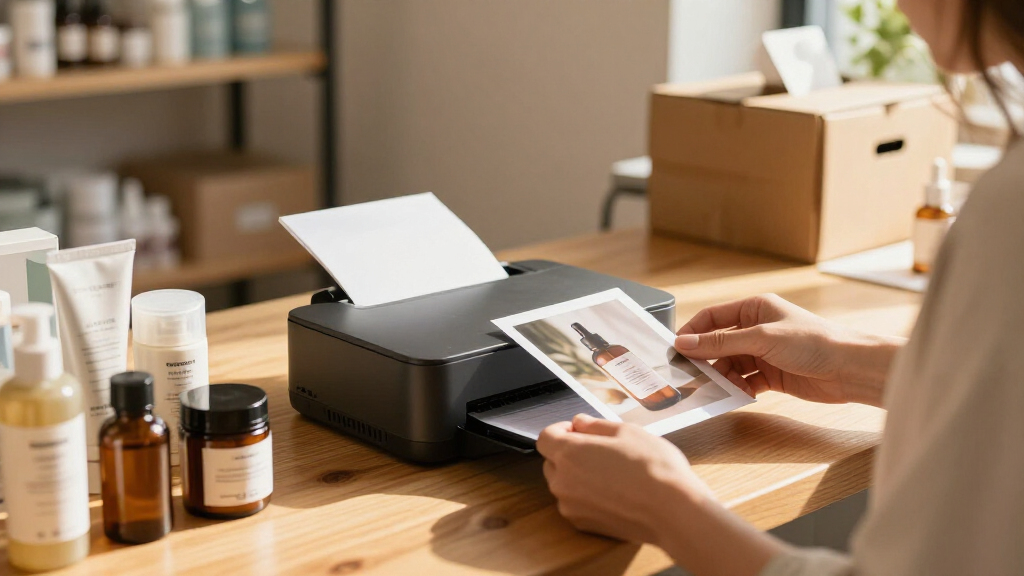
I compared these printers around the jobs product marketers actually need to handle: making sample cards, packaging inserts, event handouts, small stickers, and on-demand display prints. The main criteria were print format and its usefulness for marketing, connection options and workflow, portability and setup demands, included media, and the likely fit for occasional versus higher-volume use. I treated a bundle as a readiness advantage, not proof of lower long-term operating cost, and separated pocket-sized printers from 4×6 models and event-focused dye-sublimation units.
The ranking favors versatility for common marketing tasks, then gives credit to products with a clear specialist role. The SELPHY CP1500 leads for its practical balance of output size and everyday usability; compact printers rank well when the campaign benefits from small keepsakes or stickers, but lower for 4×6 collateral. Professional models are included for buyers with heavier event needs, though their specialized workflow and footprint make them less suitable as general-purpose portable picks. I did not treat any model as universally best: the right choice depends on print size, volume, staff workflow, and where printing will happen.
| portable photo printers for product marketing | Printer type |
|---|---|
| NELKO Flow 2×3 Photo Printer f | Inkjet |
| PRT CP6000 4×6 Photo Printer w | Dye sublimation |
| Canon IVY 2 Mini Photo Printer | Portable ZINK photo printer |
| Canon Selphy CP1200 Black Wire | Dye sublimation |
| Canon SELPHY CP1500 Compact Ph | — |
| Liene Amber M110 Bluetooth Pho | Thermal dye sublimation |
| Liene M100 4×6-Inch Wi-Fi Phot | Thermal dye sublimation |
| Nelko PP01 Portable 2×3-Inch P | Inkjet |
| Epson PictureMate PM-400 Wirel | Inkjet |
| Liene M100 Portable 4×6 Photo | Dye sublimation |
| HiTi P525L Compact Dye-Sublima | Dye sublimation |
| Canon SELPHY CP1500 Wireless P | Dye sublimation |
| Liene M110 Portable 4×6-Inch P | Dye sublimation |
| DNP QW410 4.5" Dye Sublimation | Dye sublimation |
Factors to Consider When Choosing Portable Photo Printers For Product Marketing
Choosing a printer for marketing starts with the deliverable, not the printer’s feature list. I would map the print to its place in the customer journey—on a package, at a booth, beside a sample, or handed out after a demo—then match format and workflow to that job.
Match Print Size to the Marketing Job
A 2×3-inch print can work as a small thank-you insert, quick sample image, or giveaway, but it cannot carry the same amount of product detail as a 4×6 card. Before choosing a pocket printer, mock up the actual content at its final size and check whether the logo, product name, and call to action remain readable. A larger format may use more space in a package, yet it can also make a product demonstration or QR code easier to scan. Sticker and magnet media add a tactile keepsake angle, but they are not substitutes for a clean information card. Avoid buying by maximum dimensions alone; the best format is the one your customer can read and use.
Plan for Campaign Volume and Replenishment
Estimate the number of prints per event or campaign and include misprints, staff tests, and last-minute replacements. A starter bundle can help a team begin without sourcing media immediately, but included sheets only describe the first run. Check that compatible paper and cartridges are easy to replenish and that the media format fits the planned artwork. For a few personalized prints, a compact model may keep setup simple; recurring booth production can justify a printer designed for a more sustained workflow. A common mistake is planning only for the number of attendees and leaving no supply buffer.
Choose a Workflow Staff Can Run
At a live event, the printer is part of a service process: someone captures or selects an image, sends it, checks the result, and hands it over. Decide whether staff will print from phones, tablets, or a computer, then verify that the connection method and app fit those devices. Wireless convenience can reduce cable clutter, but shared networks, device pairing, and app permissions can slow a line if no one has rehearsed the process. Keep a fallback plan, such as a direct connection or preselected images, for busy periods. The simplest workflow often beats a longer feature list when several staff members need to operate the same printer.
Separate Travel Portability from Event Portability
A printer described as portable may still need a stable table, power access, media storage, and room for output. Pocket-sized models are easier to carry between meetings, while larger 4×6 and event-focused printers are better treated as equipment for a planned activation. Map the complete kit—including paper, cartridges, cables, and protective case—rather than judging the printer body alone. If printing outdoors or at a pop-up, check power arrangements and protect supplies from dust, moisture, and heat. A unit that travels easily but is awkward to set up may not be the best choice for a fast-moving campaign.
Budget for the Whole Print System
Compare the printer, compatible media, replacement supplies, and any accessories needed for the intended workflow. A low-friction starter bundle can be useful, but do not assume its included supplies represent the full cost of a campaign. Dye-sublimation systems and small-format sticker printers use different media paths, so compare like with like rather than treating every sheet as interchangeable. Also account for staff time: difficult pairing, frequent supply changes, or a slow handoff can add operating costs that do not appear on a spec sheet. For recurring campaigns, test a small batch and calculate the cost per usable print, including rejects.
Design Artwork for the Print Process
Small prints need simpler layouts than a screen graphic or full-size flyer. Use a clear hierarchy, strong contrast, and a short call to action; fine text and subtle color differences can disappear when scaled down. Leave safe margins so essential content is not crowded by print boundaries, and create separate artwork for sticker or magnet formats when their shape changes the layout. Color can also vary between a phone display and a physical print, so approve a sample before producing a large batch. This step prevents a common waste: printing a campaign asset that looks polished on screen but is hard to read in a customer’s hand.
Frequently Asked Questions
Is a 2×3-inch printer large enough for product marketing?
It can work for compact inserts, small branded keepsakes, and short messages, especially when the product itself is small or the print is meant to prompt a later interaction. It is a poor fit for detailed instructions, lengthy product claims, or a QR code that must scan reliably at a glance. I would test the design at actual print size and ask someone unfamiliar with the campaign to read it. If the print needs to explain several product benefits, a 4×6 format is the safer direction. A small format is most effective when it supplements packaging rather than carrying the whole message.
Should I choose a 4×6 printer or a sticker printer for a launch event?
Choose 4×6 output when visitors need a readable product card, a photo handout, or a larger branded visual. A sticker-focused printer makes more sense when the giveaway itself is the hook and compact, adhesive output suits the activation. Think about what guests will do with the print after leaving: keep it, apply it, or use it to find product information. If you need both formats, check whether one device supports the required media rather than assuming a bundle covers multiple print types. Separate printers may add setup and supply complexity, so use two only when both outputs serve distinct campaign goals.
Are portable photo printers suitable for printing product labels?
They can produce visual tags or short-run promotional labels when the media and adhesive format match the job, but photo prints are not automatically suitable for regulated or operational labeling. Check durability, water resistance, adhesive performance, and legibility before placing them on products that will be handled or shipped. For ingredients, safety details, barcodes, or other required information, use a label system designed for that purpose and verify applicable rules. A photo printer is better viewed as a tool for branded inserts, sample tags, and campaign materials than as a replacement for a dedicated label printer. Test the print on the actual packaging surface before producing a batch.
What should I check before taking a portable printer to a trade show?
Confirm power access, device compatibility, media supply, table space, and the time needed for a complete print cycle. Pair the staff devices and run a sample job before the event, including any edits or app steps that visitors will request. Bring extra compatible media and a backup way to share the campaign asset if printing stops. For high visitor volume, estimate throughput rather than assuming that a compact printer can keep pace with a queue. A larger event-oriented unit may suit repeated output better, while a pocket model is more appropriate for occasional personalized handouts.
Does a larger media bundle make one printer better value for a campaign?
A larger bundle can reduce launch preparation and let a team print more before restocking, which is useful for a planned event or sample run. It does not tell you whether replacement media is affordable, available, or suitable for repeat campaigns. Compare the cost and quantity of compatible supplies over the number of usable prints you expect, including test prints and errors. Also check whether the bundle includes the exact paper and cartridge combination you need, especially if you plan to use a special format. The best value is the setup that supports repeat use without leaving the team with supplies it cannot use.
Conclusion
For the broadest mix of product cards and event handouts, I would choose the Canon SELPHY CP1500 as best overall. The Liene M100 is my best value direction for buyers seeking 4×6 output with a straightforward portable workflow, while the Canon IVY 2 is a simple starting point for beginners who only need small prints. For a premium, higher-volume event setup, compare the HiTi P525L and DNP QW410, accepting their more specialized footprint and workflow. For specific needs, pick the NELKO Flow for magnets and transfers, or a bundled Liene M110 when compact photo-and-sticker output fits the campaign. Start with the size and volume your marketing materials require; that choice narrows this lineup faster than any single feature.
Halloween Picks
halloween
As an affiliate, we earn on qualifying purchases.