📊 Full opportunity report: Museum Education Ideas: Create Games Around Your Exhibits on IdeaNavigator AI — validation score, market gap, and execution plan.

Get business pricing on office and shipping supplies
- Business-only prices and quantity discounts
- Tax-exempt purchasing
- Multiple users, one account, clear invoices
TL;DR
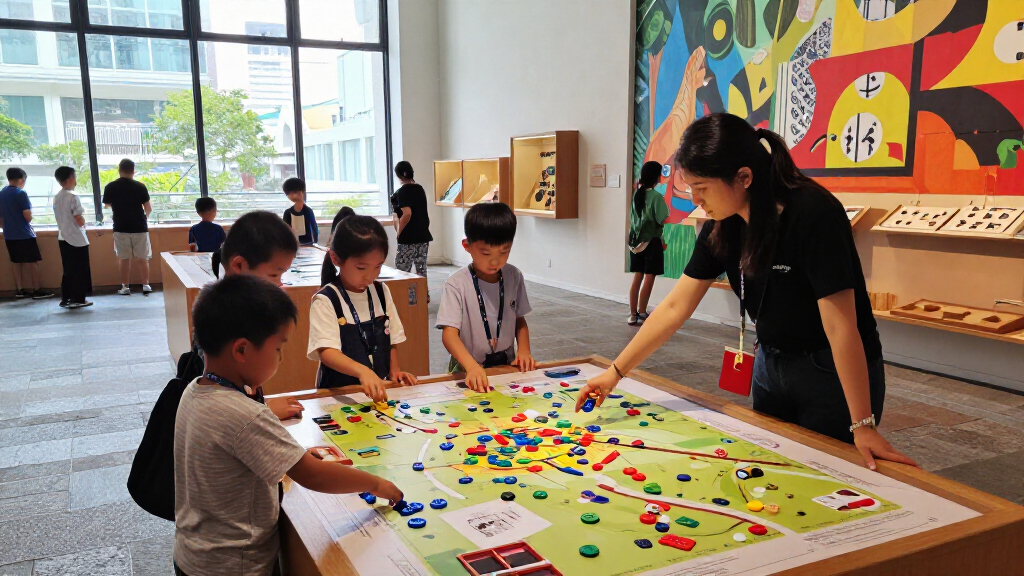
A proposal from IdeaNavigator AI recommends testing exhibit-based learning games with three small museums, rather than treating the idea as a proven solution. The suggested pilot would measure school bookings, family visit duration and repeat visits against the same term a year earlier.
IdeaNavigator AI has proposed testing exhibit-based learning games at three small museums, with the pilot tracking school bookings, family visit duration and repeat visits. The proposal is aimed at museums with limited staff and education budgets, but no pilot results or participating museums have been identified.
According to the IdeaNavigator AI proposal, the product would be a done-for-you browser-based quest built from a museum’s photographs, exhibit labels and object records. The proposal calls for delivery within two weeks and three formats: a school-group hunt organized by grade band and aligned to state standards, a family quest, and a solo trail designed to take about 10 minutes. These are specifications in the proposal, not confirmed features of an existing service.
The proposal says museum staff would receive a basic editor to replace objects as exhibits change, along with a printable alternative for visitors who cannot or do not want to use a browser. It also calls for visit analytics that museums could cite in grant reports. The document says content should be drafted from each museum’s collection and checked by a museum educator.
To test demand, IdeaNavigator AI recommends building quests for three small museums at cost and comparing school-group bookings, family dwell time and repeat visits over one term with the same term a year earlier. The proposal also suggests asking whether at least two of the three museums would include a paid refresh in a future grant application. It provides no evidence that this test has begun or that museums have agreed to take part.
Museum Education Ideas Games Around Exhibits
IdeaNavigator AI proposes testing exhibit-based learning games at three small museums. The idea remains a proposal, with no participating museums or pilot results identified.
What the proposal includes
The suggested package is designed for school groups, families and individual visitors.
Grade-based hunt
A proposed hunt organized by grade band and aligned to state standards.
Exhibit quest
A browser-based activity built from museum collection materials.
Short trail
A proposed individual trail designed to take about 10 minutes.
How the pilot would work
The proposal outlines a test, not a confirmed launch or service.
Create exhibit games for three small museums at cost.
Track school bookings, family visit duration and repeat visits against the same term a year earlier.
Ask whether at least two museums would include a paid refresh in a future grant application.
What would be measured
These indicators could help museums judge engagement and future demand.
What remains unknown
The proposal does not establish that a product or pilot exists.
- Browser-based games and a staff editor
- Printable alternative and visit analytics
- Fixed-price build and annual refresh idea
- Participating museums or start date
- Product provider, costs or results
- Privacy and measurement methods
Testing Games Against Museum Needs
IdeaNavigator AI’s proposal focuses on a practical constraint: small museums may want more interactive visits but have little staff time to write, test and maintain digital activities. The document argues that off-the-shelf hunt apps still require museums to create and update content, while a custom agency project could exceed a small institution’s education budget. These are claims in the proposal; it provides no cost comparisons or survey data to establish how common the problem is.
If a pilot were carried out, its proposed measures could help museums judge whether the games support more than a novelty visit. Changes in school bookings, family visit duration and repeat visits would offer concrete indicators, although a comparison with one prior year alone would not establish that the game caused any change. The proposal’s suggested test of willingness to pay for updates would also address whether the approach can continue after an initial grant-funded build.
The proposal suggests a fixed-price build sized to fit a grant budget, followed by a modest annual hosting and refresh fee. It identifies regional museum associations as possible group buyers. These are business-model ideas in the document, not confirmed prices, contracts or purchasing commitments.
Popular right now

DREAME A3 AWD 1000 LiDAR Robot Lawn Mower

KitchenAid Artisan Mini Tilt-Head Stand Mixer, 3.5 Qt, Contour Silver

Samsung 48 4K OLED Smart TV (2026) with WireLogic 8ft Ultra High Speed HDMI Cable
As an affiliate, we earn on qualifying purchases.
Grant Timing Behind the Proposal
IdeaNavigator AI frames its proposal around funding uncertainty and recent grant activity. The document says the Institute of Museum and Library Services announced its FY2026 Inspire Grants for Small Museums on Sept. 9, 2026, funding 88 small museums for educational programs and exhibits. It also says an April 2026 court settlement left the agency intact, while the president’s FY2027 budget again proposed eliminating IMLS.
The proposal lists the FY2027 National Leadership Grants deadline as tentatively Nov. 13, 2026. That date is presented as tentative, not as a confirmed deadline. The grant announcements, dates, settlement and budget proposal are attributed to IdeaNavigator AI; this article does not independently verify them.
The proposal identifies directors or sole educators at small history, art or science museums as intended customers, typically describing institutions with annual budgets below $250,000 that serve school groups and families. It says these institutions may rely on reused worksheets and short family visits, but provides no research documenting how widespread those conditions are.
Pilot Results Are Not Available
No participating museums, launch date, product provider or completed results are named in the IdeaNavigator AI proposal. It is not clear whether a browser-based quest has been built, whether any institution has agreed to test one, or what a fixed-price build and annual refresh would cost. The proposed two-week delivery period is a target in the document, not a verified service commitment.
The proposed measures also have limitations. The document does not specify how dwell time or repeat visits would be counted, how visitor privacy would be handled, or how changes in school calendars, exhibits and attendance would be accounted for. A year-over-year comparison could show a difference without proving the game caused it. The proposal provides no independent evidence that games would increase bookings or repeat visits.
A Three-Museum Test Is Proposed
The next step described in IdeaNavigator AI’s proposal is a three-museum pilot that would run over one school term, compare selected visitor measures with the same term the previous year, and ask museums whether they would fund a refresh through a future grant application. The document does not say who would conduct the test or when it might begin.
For now, the idea remains a proposed workflow rather than a reported product launch or established museum practice. Any later assessment would need to report which museums took part, the methods used, the costs and the results, including whether any observed changes could reasonably be linked to the games.
Source: IdeaNavigator AI proposal
Key Questions
Have the exhibit-based games been launched?
The IdeaNavigator AI proposal does not report a launch. It recommends testing the idea with three small museums, but names no participating institutions or start date.
What would the proposed game package include?
According to the proposal, it would include a browser-based school-group hunt, a family quest and a short solo trail, plus a staff editor, a printable alternative and visit analytics. These are proposed specifications, not confirmed features of a product currently available.
How would the pilot measure whether the games work?
The proposal recommends comparing school bookings, family visit duration and repeat visits over one term with the same term a year earlier. It would also ask whether two of three museums would consider paying for a refresh through a future grant application.
What is known about the cost?
The proposal suggests a fixed-price build sized for a small grant and a modest annual hosting and refresh fee. It gives no actual prices, budgets or confirmed purchasing commitments.
Are the grant dates and funding details confirmed?
IdeaNavigator AI’s proposal states that IMLS announced FY2026 Inspire Grants on Sept. 9, 2026, funding 88 small museums, and gives Nov. 13, 2026, as a tentative FY2027 National Leadership Grants deadline. Those details are attributed to the proposal and are not independently verified here.
Source: IdeaNavigator AI