📊 Full opportunity report: AI Calendar Agents And The Challenge Of Scheduling Conflicts on IdeaNavigator AI — validation score, market gap, and execution plan.

Get business pricing on office and shipping supplies
- Business-only prices and quantity discounts
- Tax-exempt purchasing
- Multiple users, one account, clear invoices
TL;DR

A proposal for a shared availability layer aims to prevent AI scheduling tools from overwriting tentative holds or double-booking one person’s calendar. The suggested test would involve 10 executive assistants using two AI tools each for two weeks; no test results or product launch are reported.
IdeaNavigator AI has proposed testing a shared availability layer for calendars managed by multiple AI scheduling tools, with the aim of reducing overwritten holds and double-bookings. The concept is at the validation stage: the proposed two-week trial with 10 executive assistants has not been reported as completed.
The problem described is that several AI assistants may write to the same person’s calendar, booking meetings, rescheduling events or placing tentative holds. If the tools do not share a reliable view of availability, one agent may treat time as open even after another has reserved it, or may overwrite a tentative hold. The proposal identifies executive assistants managing calendars touched by multiple AI tools as its initial users.
The suggested minimum product is a hosted service that combines calendar availability and offers a single free/busy view alongside a way to place tentative holds. Before booking, each AI tool would have to claim a hold token; the hold would expire after a set period, described as a time-to-live, unless the booking is completed or the hold is otherwise released. This is a proposed design, not a reported deployed system.
For validation, IdeaNavigator AI recommends recruiting 10 assistants who already use two AI scheduling tools, directing both tools through the hold endpoint for two weeks, and counting prevented double-bookings against each participant’s prior rate. The proposal suggests a per-seat monthly software subscription as a potential business model. It provides no pricing, trial findings, or evidence of customer demand.
Calendar agents need a shared booking rule
IdeaNavigator AI proposes a shared availability layer to help scheduling tools avoid overwritten holds and double-bookings. The concept is awaiting validation.
Why calendars conflict
Several AI tools may change one calendar without sharing a reliable view of availability.
- A tool may treat reserved time as open.
- A tentative hold may be overwritten.
- Overlapping bookings add coordination work.
- Tools check one free/busy view.
- Each tool claims a temporary hold before booking.
- Unused holds expire after a set time.
How the proposed workflow works
A hosted service would coordinate availability and temporary reservations across tools.
The AI tool checks the shared free/busy view.
It claims a hold token before sending a booking request.
The hold ends when booking is completed, released, or its time limit expires.
What the trial would measure
The proposal targets executive assistants already using two AI scheduling tools.
Route both tools through the endpoint
Use the shared hold process for two weeks.
Count conflicts prevented
Compare with each participant’s prior double-booking rate.
If multiple agents can alter one calendar without a shared way to reserve time, users may face conflicting invitations, lost holds and extra coordination work. A common availability service could give each agent a consistent process for checking and temporarily claiming a slot before it sends a booking request. That could be useful to professionals and assistants coordinating busy schedules across more than one automated tool.
The proposal also points to a broader infrastructure question: as people use more agents to perform tasks, those agents need rules for handling shared resources. In this case, the resource is calendar time. A hold token could provide a practical coordination mechanism, but its value would depend on whether tools reliably use it and whether the service sees all relevant calendars and changes. The idea’s benefit remains unproven until a test measures whether it prevents conflicts in real use.
Popular right now

Bose QuietComfort Wireless Noise-Cancelling Headphones, Cypress Green

Dyson Car+Boat Cordless Handheld Vacuum
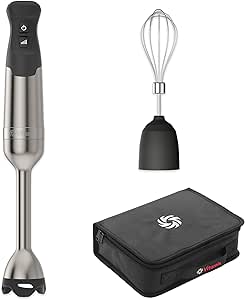
Vitamix 5-Speed Immersion Blender 3-Piece Bundle with Whisk and Storage Case
As an affiliate, we earn on qualifying purchases.
Why Calendar Holds Can Collide
The proposal describes a situation in which two or three AI scheduling tools may write to one person’s calendar, with no shared availability contract between them. Each tool could have its own view of events and tentative reservations. A calendar entry might show a meeting, but a temporary hold may not be visible or interpreted consistently by another tool, leaving room for overlapping actions.
The suggested service would sit between those tools and the calendars they use. Instead of each agent independently deciding that a slot is free, each would check the shared availability endpoint and claim a temporary hold before proceeding. The hold’s expiration is meant to prevent abandoned reservations from blocking time indefinitely. The plan identifies calendar and scheduling infrastructure as its market, but it does not name a product, participating calendar providers or integration partners.
Trial Results and Integrations Remain Unknown
No completed trial, product release or measured reduction in conflicts is reported. The proposed sample of 10 assistants and two-week period are a validation plan, not evidence that the layer works. There is also no baseline figure for participants’ previous double-booking rates, so the expected scale of any improvement cannot be calculated from the proposal.
Several implementation questions are unanswered. The proposal does not specify which calendar services would be supported, how quickly changes would sync, how concurrent hold requests would be resolved, or how the system would handle cancellations and tools that do not use its endpoint. It also provides no details on data access, security, privacy, pricing or how a paid service would be adopted by assistants and their employers.
Measure Conflicts in a Two-Week Trial
The next step set out in the proposal is to recruit 10 executive assistants already using two AI scheduling tools and route both tools through the shared hold endpoint for two weeks. The comparison would use each participant’s prior rate of double-bookings and count conflicts prevented during the trial. No start date, recruitment status or findings are given.
For the test to clarify whether the approach works, its organizers would need to define what counts as a prevented double-booking and how the earlier rate is measured. Results could also depend on which calendars and AI tools take part, and whether every booking path passes through the endpoint. Until those details and findings are available, the availability layer remains a proposed workflow to test, rather than a demonstrated solution.
Source: IdeaNavigator AI
Key Questions
What is the proposed availability layer?
It is a proposed hosted service that would combine calendar availability and let AI scheduling tools check free/busy time and place temporary holds before booking.
How would temporary holds work?
An AI tool would claim a hold token before booking. The hold would expire after a set time-to-live, though the proposal does not specify its duration or all rules for releasing it.
Has the system been tested?
No test results are reported. The proposed validation is a two-week trial with 10 executive assistants who each use two AI scheduling tools.
What would the trial measure?
It would count double-bookings prevented when both AI tools use the hold endpoint and compare that result with participants’ prior double-booking rates. The proposal does not provide baseline figures.
Who is the proposed service for?
The initial target is executive assistants managing calendars that multiple AI tools can change. A per-seat monthly subscription is suggested as a possible revenue model, with no price specified.
Source: IdeaNavigator AI