A first-person report by Thorsten Meyer.

Get business pricing on office and shipping supplies
- Business-only prices and quantity discounts
- Tax-exempt purchasing
- Multiple users, one account, clear invoices
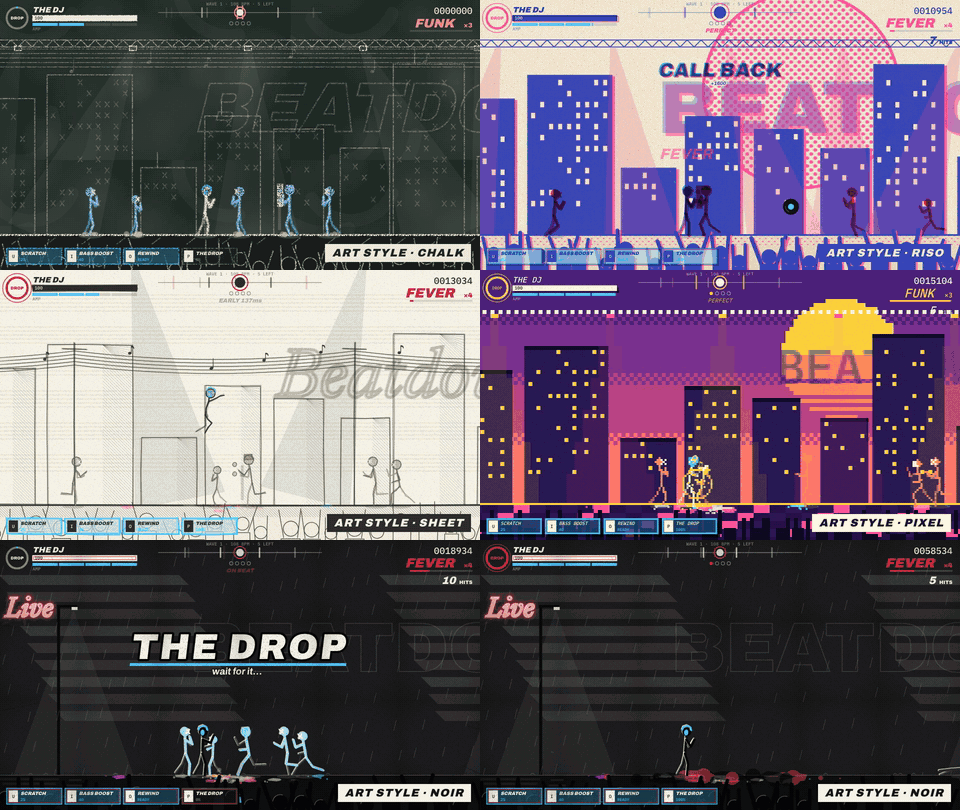
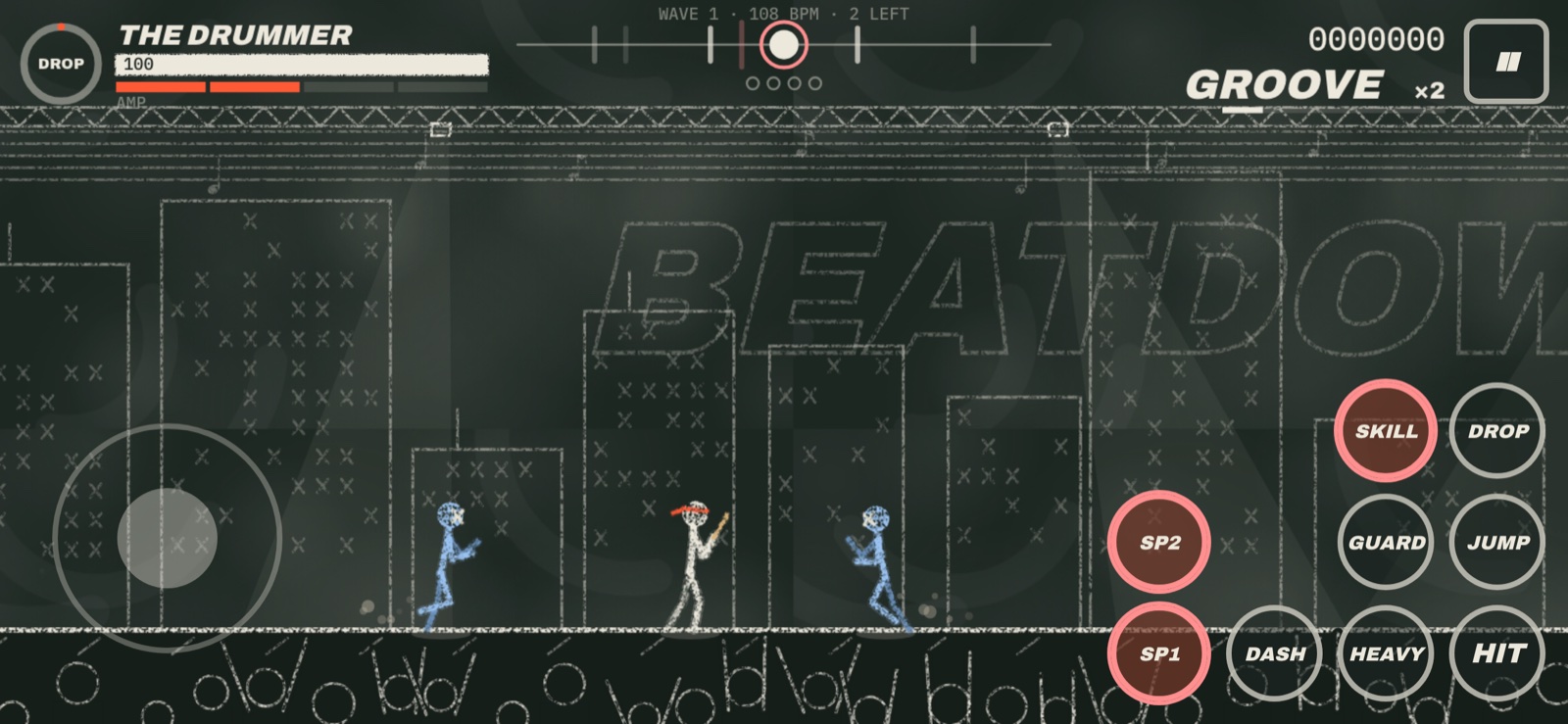
I left the choice of game to the AI with one loose line: make your own stickman game. I did not request a clone or a tutorial. It returned BEATDOWN, a stick-figure brawler that judges every punch against the beat. I had left the kind of game entirely up to it.
I kept asking for more, and by the end of that same day, a whole Stickman Arcade had taken shape, with BEATDOWN as its headliner. It included nine free games and a stick-figure animator. Every game runs in any browser and on phones, and all of them use the same nine art styles.
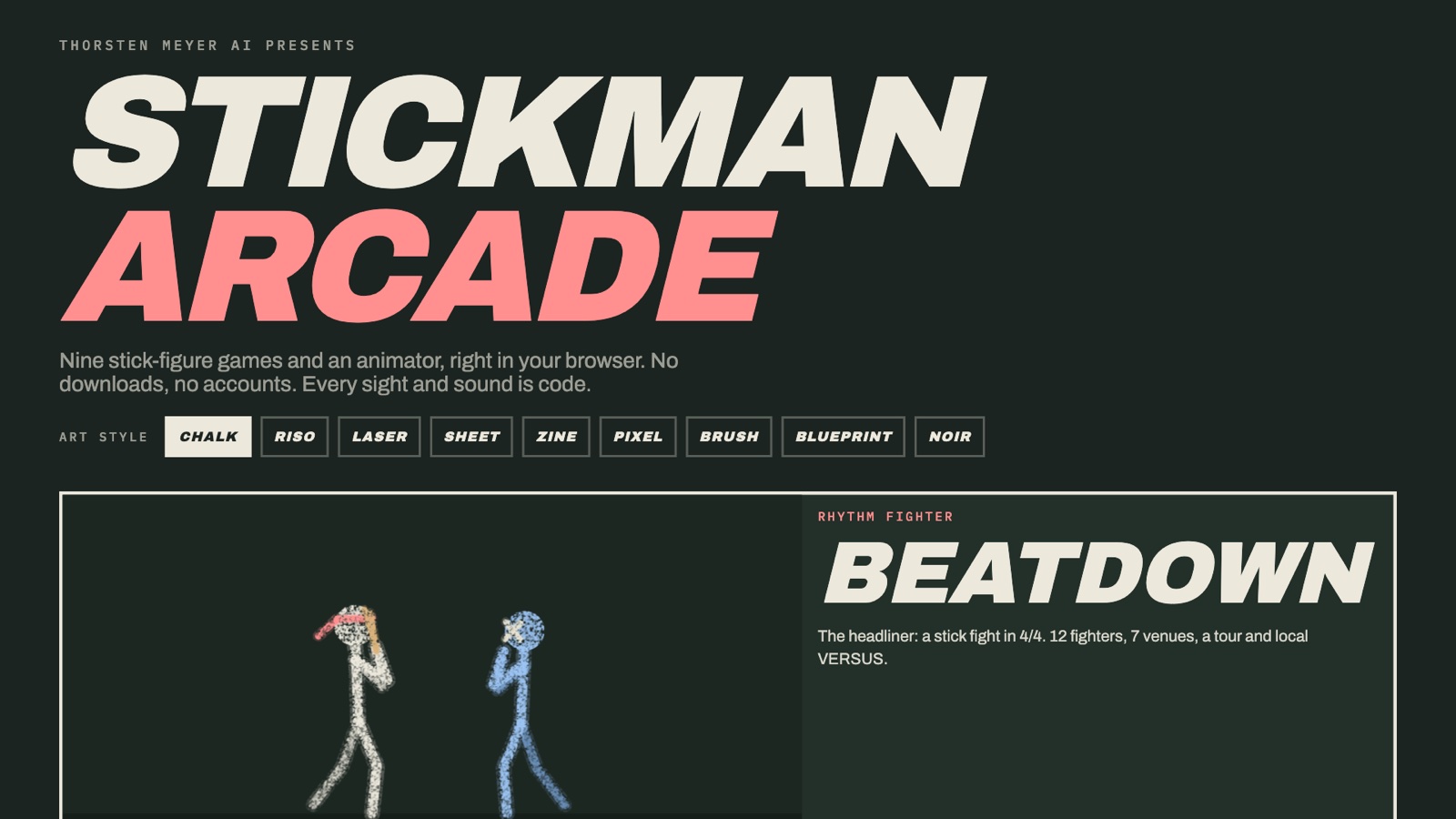
The headliner: a fight you play in time
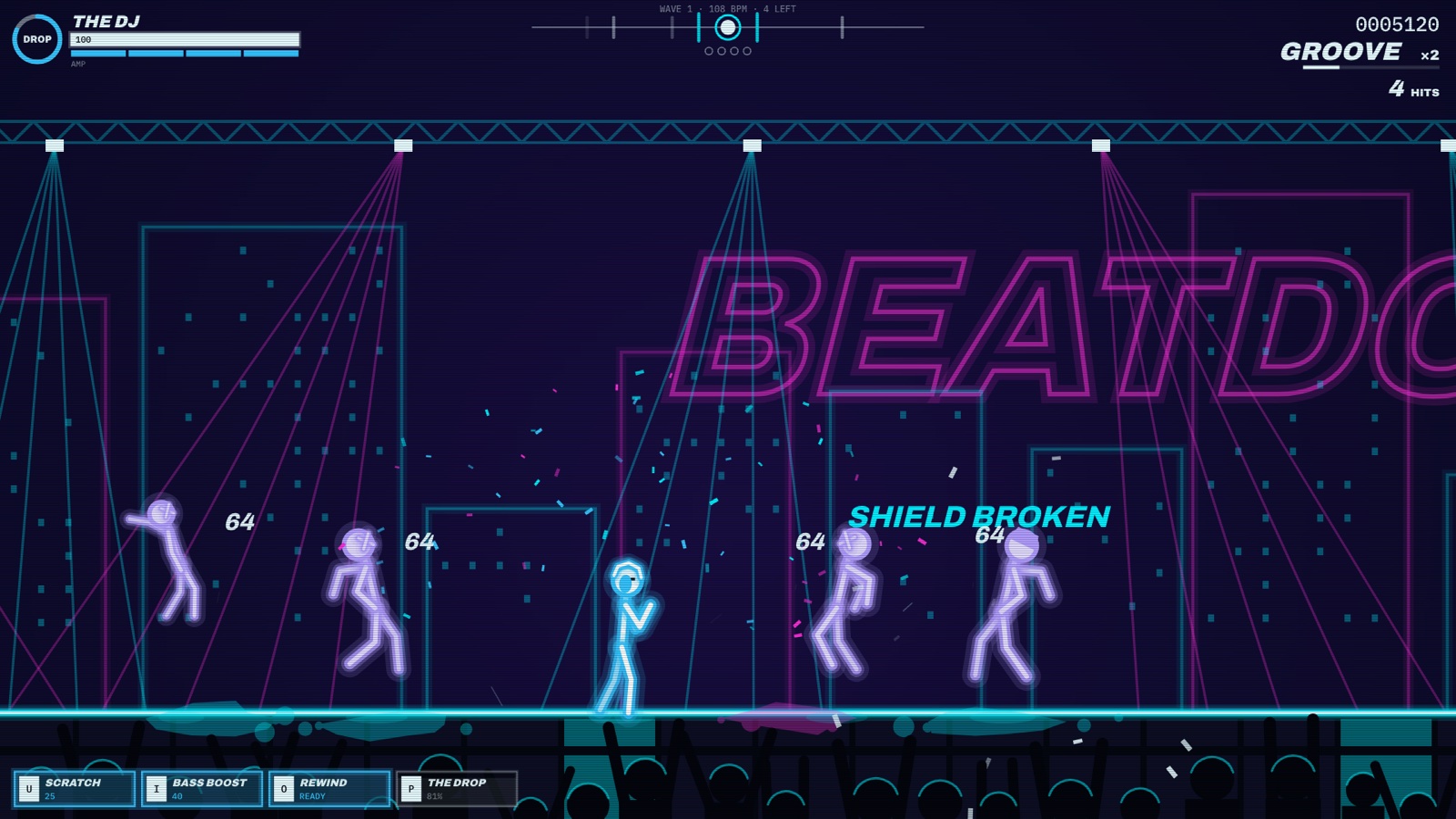
Most stick-figure brawlers are about mashing buttons faster. BEATDOWN asks you to hit on time. Every press is judged against a soundtrack generated live in your browser.
- On-beat hits deal 1.5× damage.
- FOUR ON THE FLOOR: land on-beat hits on four beats in a row for a crushing bonus hit and a shockwave.
- COUNTERPOINT: enemies wind up on one beat and strike on the next. Tap guard as the blow lands and you counter.
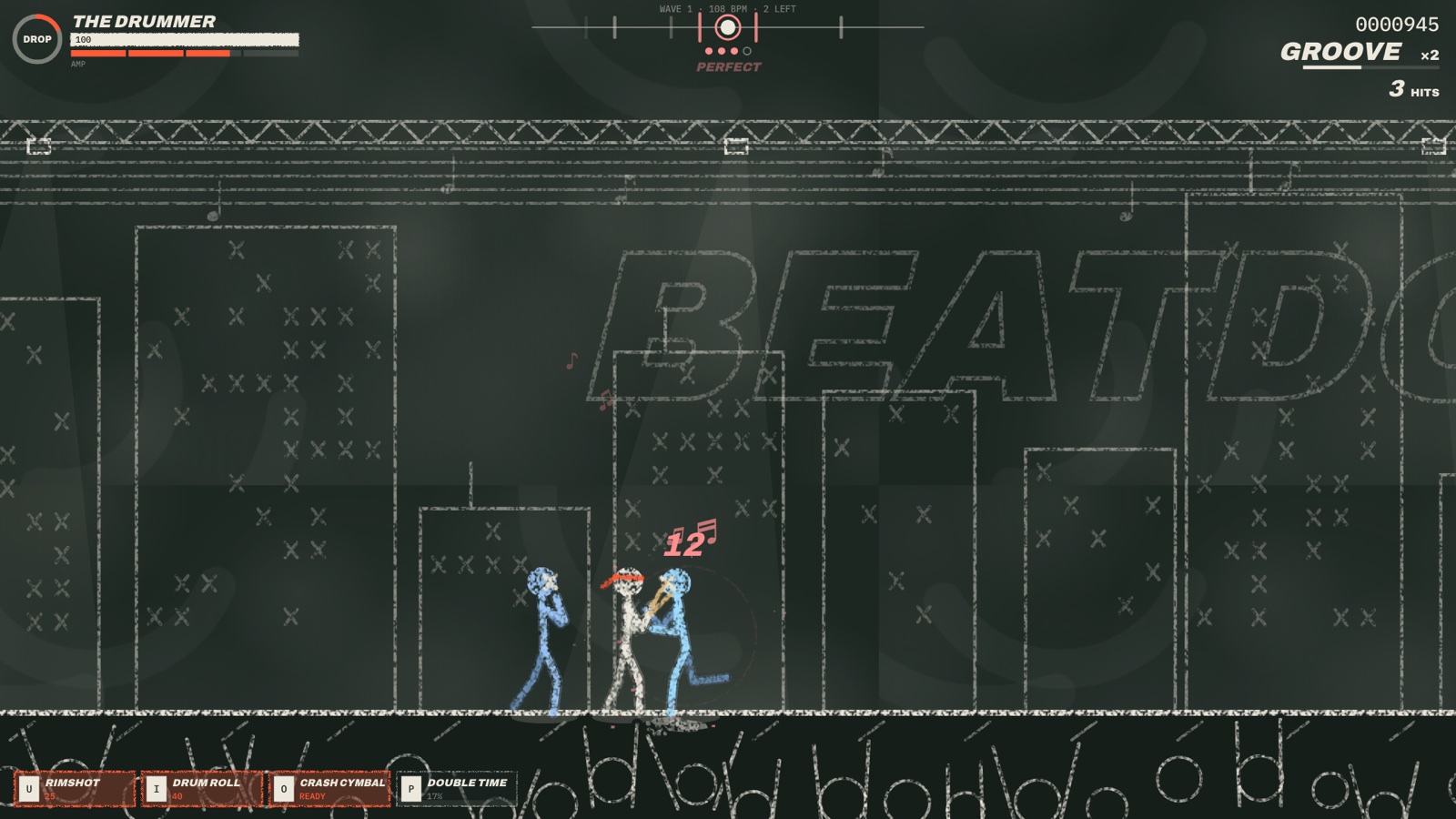
The better you play, the more the band plays. Your Groove rank climbs from MUTE to FEVER, the music adds layers, and the crowd goes from nodding to jumping. Rhythm is a bonus, never a requirement: you can play off-beat and still clear waves. It just hits harder and sounds better in time.
Twelve musicians, sixty abilities
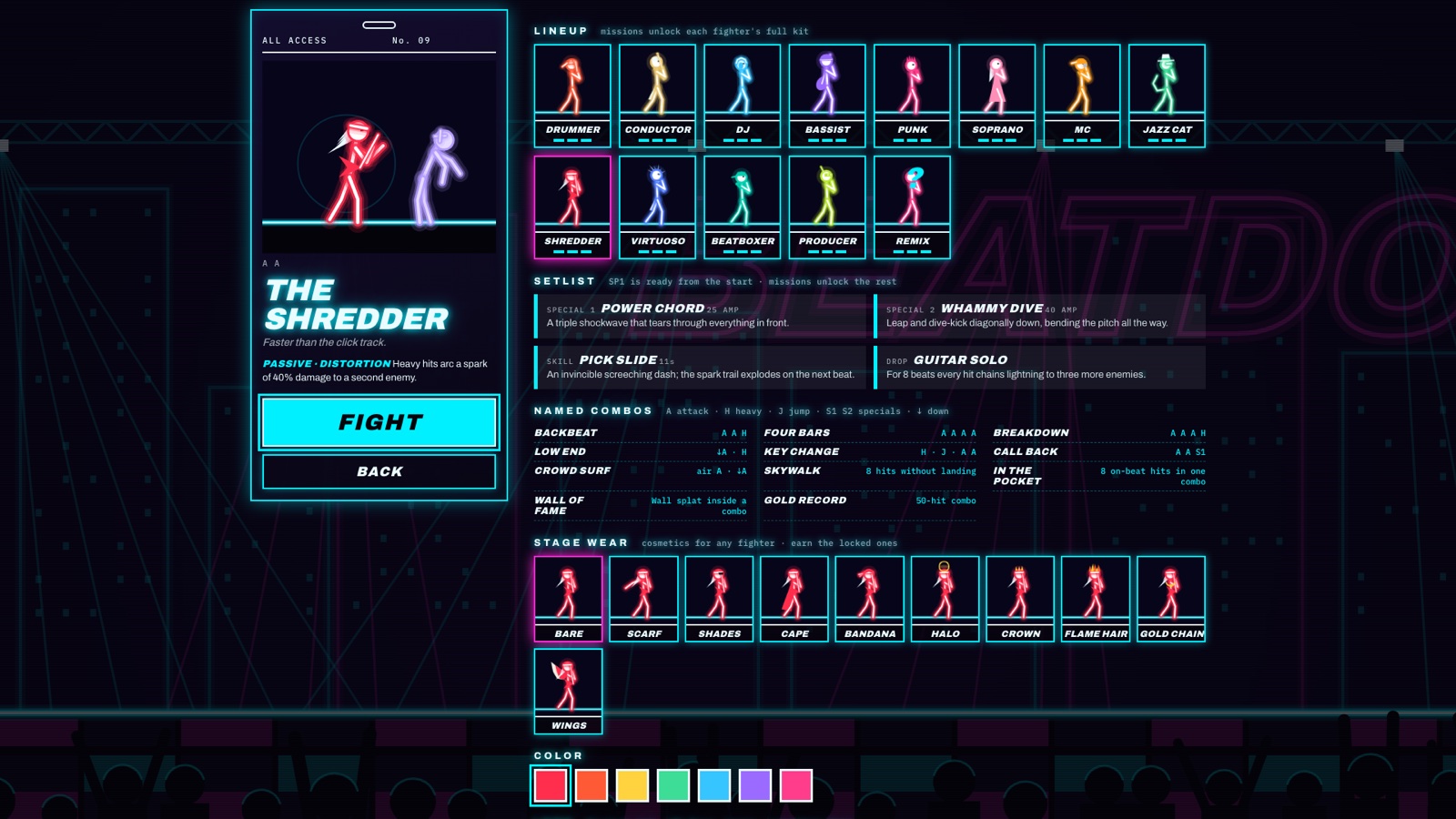
The roster is twelve original fighters, each a musical archetype:
- the Drummer, Conductor, DJ and Bassist;
- the Punk, Soprano, MC and Jazz Cat;
- the Shredder, Virtuoso, Beatboxer and Producer.
Every one has a passive, two specials, a cooldown skill and an ultimate called the DROP. That’s sixty abilities in all. The DJ’s DROP cuts the band for two beats before the drop hits the whole stage. The Shredder’s GUITAR SOLO fires a lick on every beat, and the Beatboxer turns into a HUMAN ORCHESTRA.
Nine art styles that redraw everything
Switching the art style isn’t a colour swap. It changes how everything is drawn: the fighters, the venue, the hit effects, the lettering and the menus.
- CHALK is a blackboard.
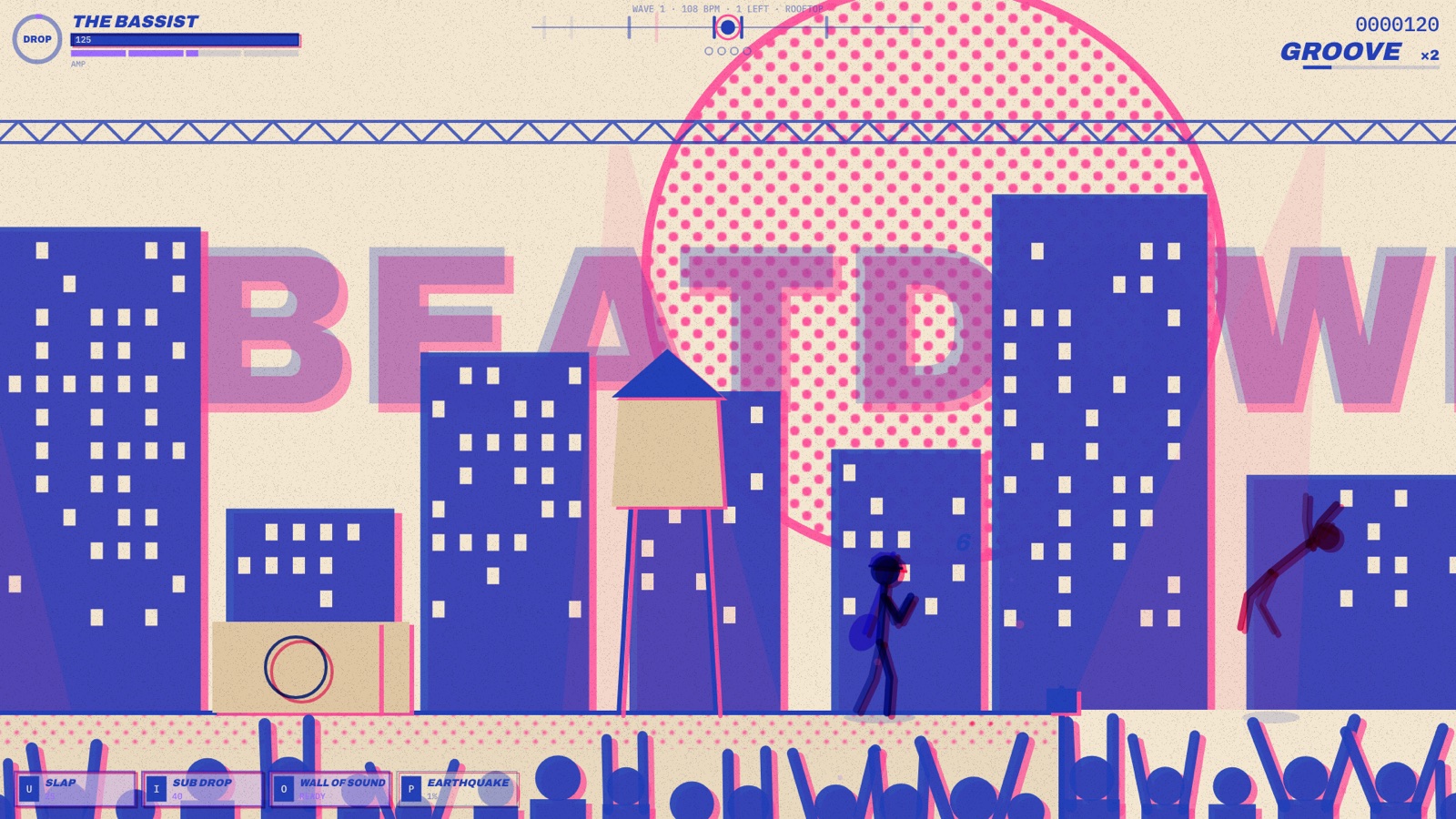
- RISO is a two-ink gig poster.
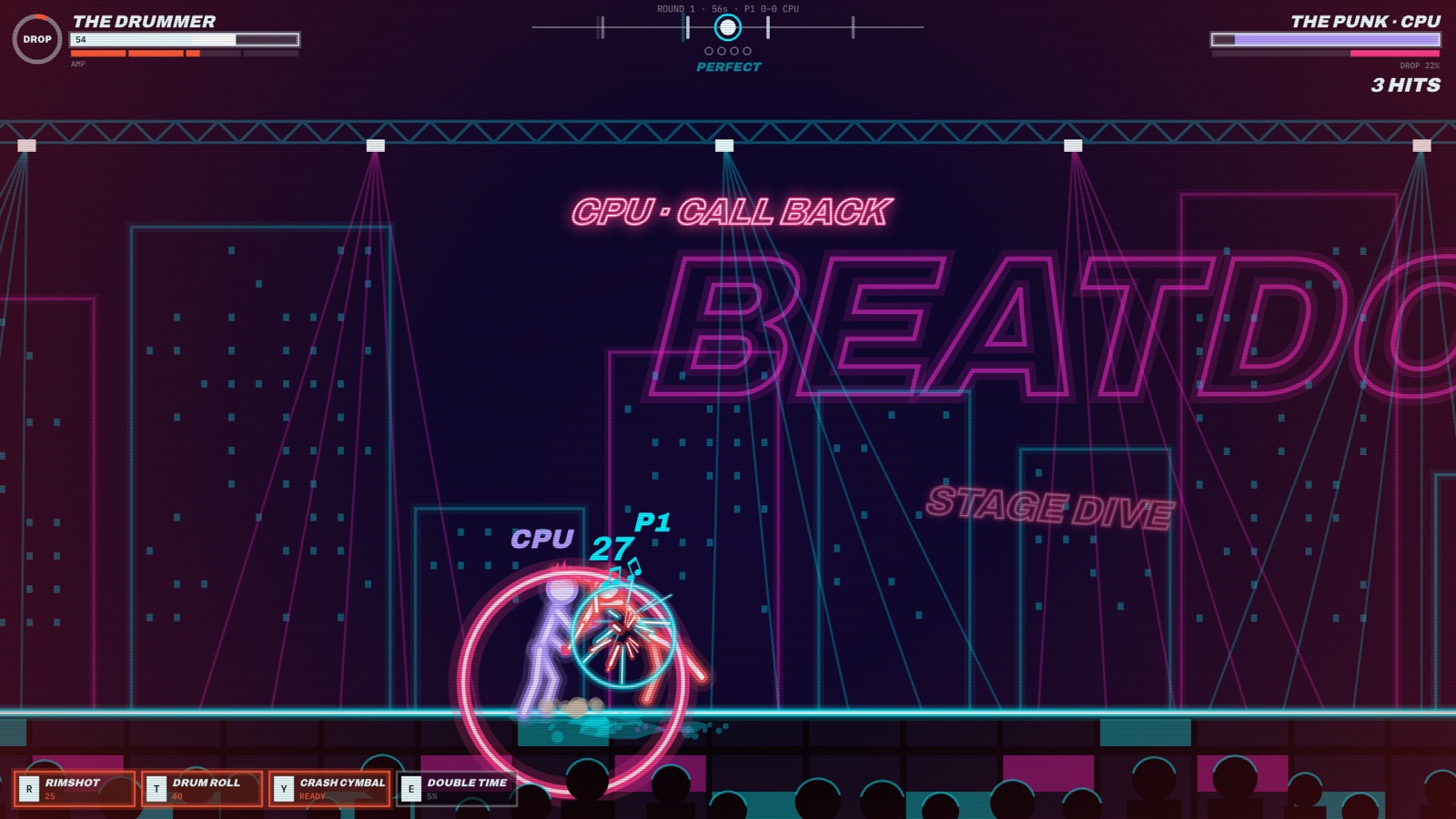
- LASER is a neon club with an LED floor.
- SHEET is pencil on staff paper that redraws itself like hand animation.
- ZINE is a photocopied punk flyer.
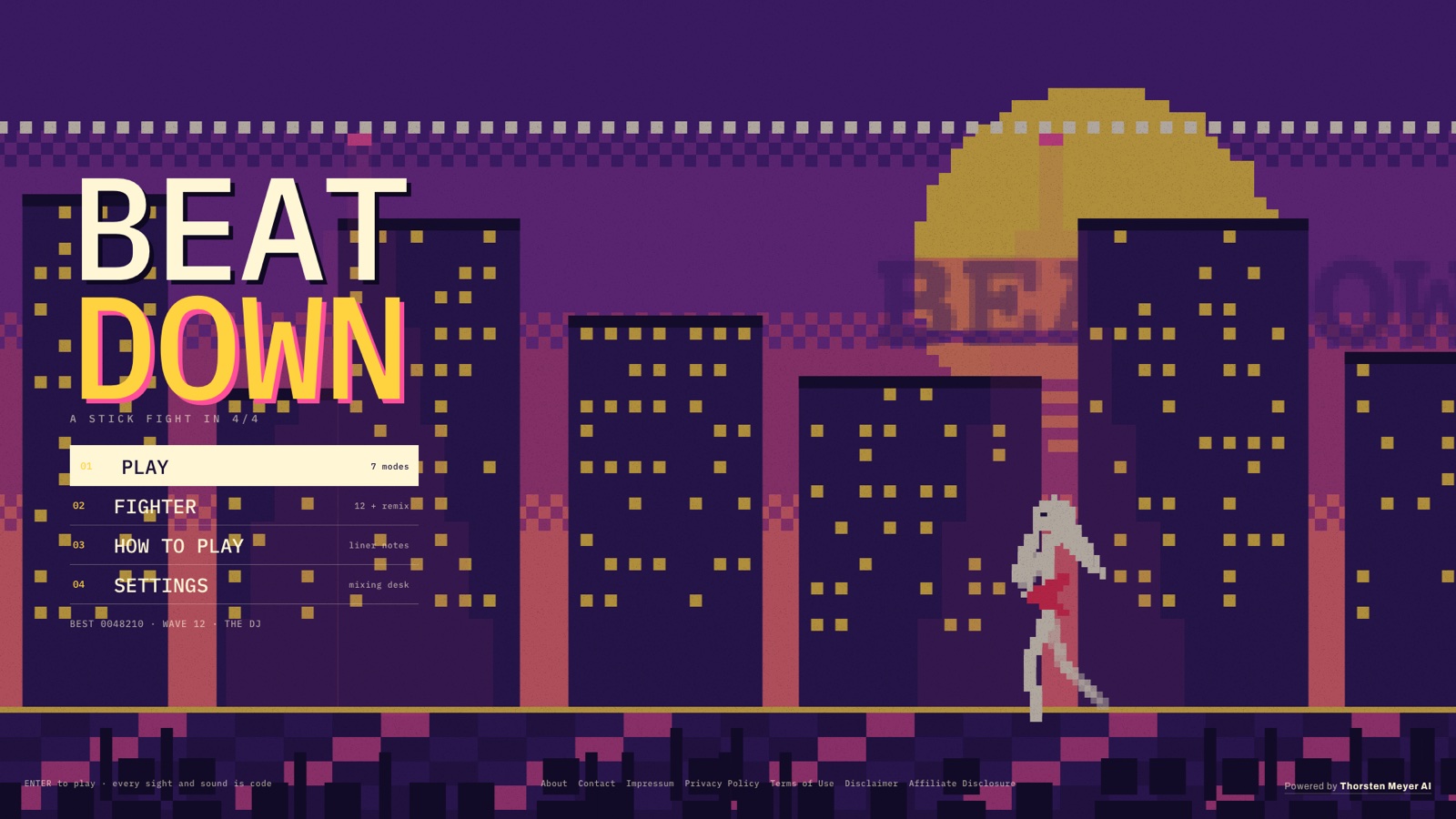
- PIXEL is an 8-bit arcade.
- BRUSH is ink wash with a red sun.
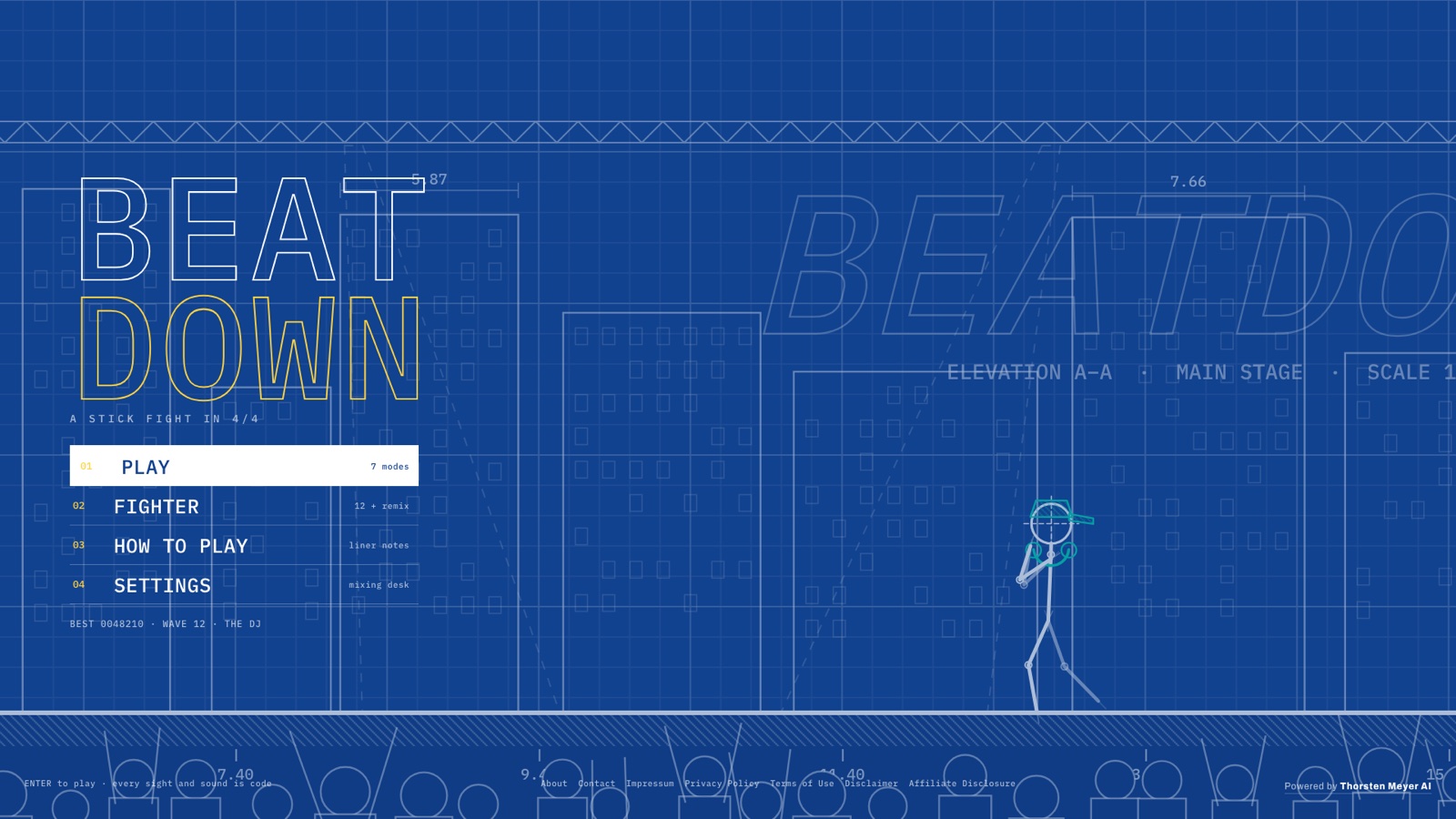
- BLUEPRINT is a technical drawing.
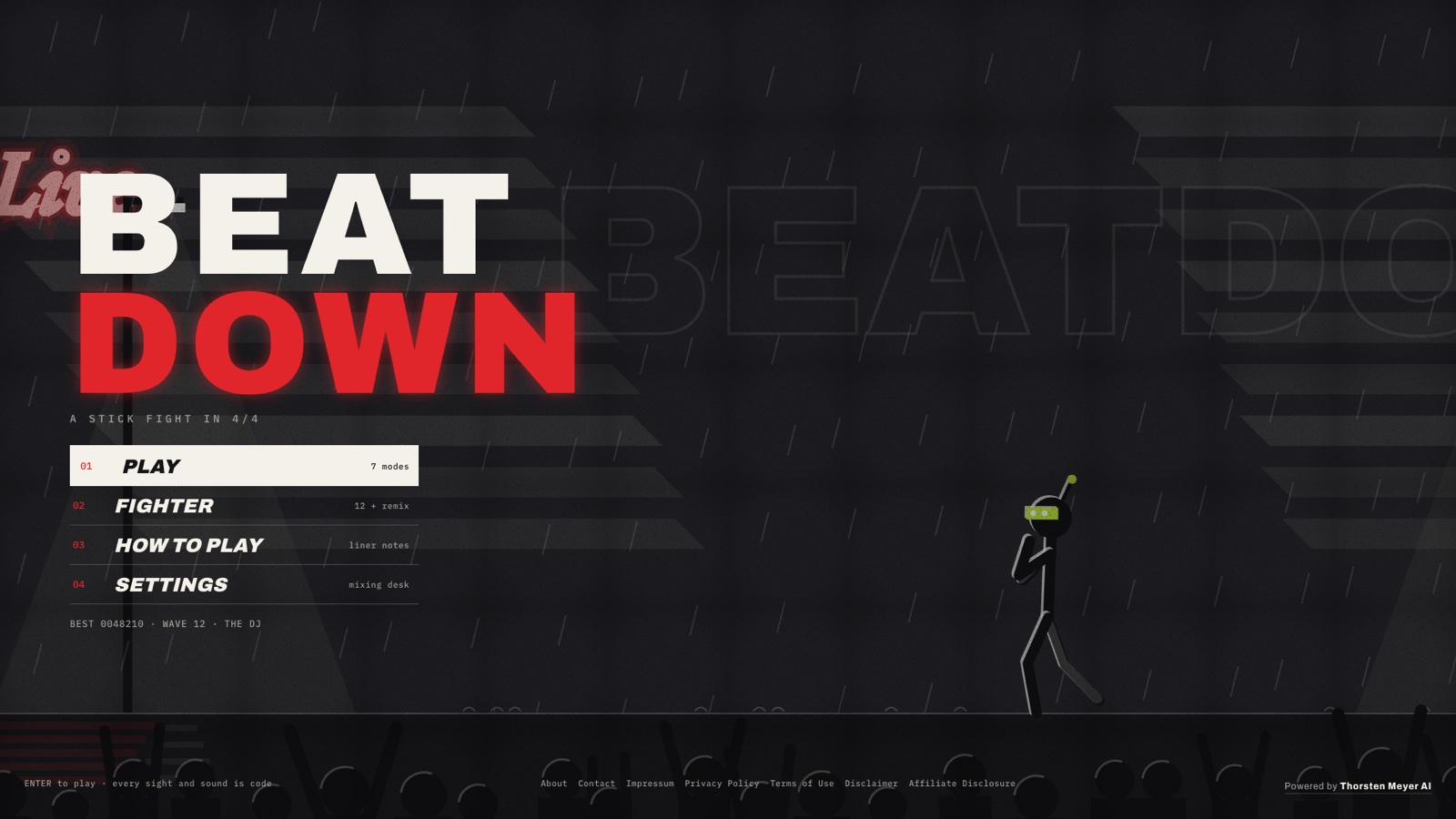
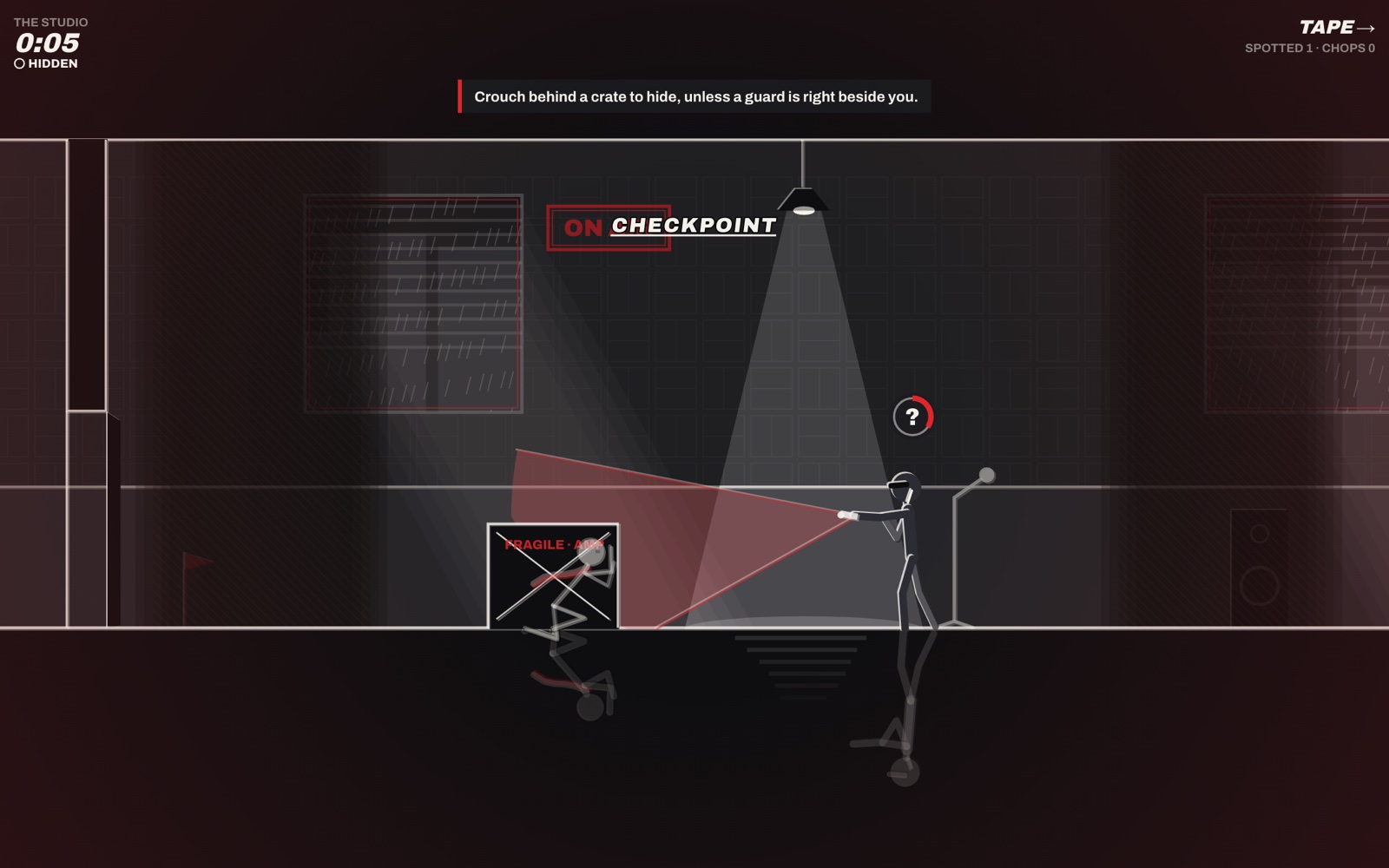
- NOIR is rainy silhouettes under a red neon sign.

Seven venues, seven modes, and VERSUS
Each venue has its own rule:
- Rooftop: there are no walls, so you can knock opponents off the edge.
- Subway: the doors slam on the downbeat.
- Strobe Rave: it’s pitch dark between beats.
- Record Store: shelves are platforms and vinyl rolls across the floor.
- Festival Mud: it’s slippery.
- Cruise Ship: the deck tilts with the song.
TOUR mode takes you through all of them, seven gigs with a boss closing three of them.

VERSUS puts two people on one keyboard (or two gamepads), best of three. Playing alone? The computer opponent plays on the beat too. The other modes are:
- BOSS RUSH: three headliners against the clock.
- BLITZ: two minutes of non-stop fighting.
- DAILY MIX: the same seeded run for everyone that day.
- SOUNDCHECK: practice with a live early/late timing readout.
Eight more games
The arcade adds eight more games on the same engine, each with its own rules:
- Stickman Dismount: launch a ragdoll down stairs, into a wall or off a crane, and score the damage.
- Pose-Off: a dance battle. The rival dances a phrase on the beat, and you answer it.
- Beat Runner: every hurdle, gap and crate lands exactly on the beat.
- Noir Heist: stealth in the rain. Stay in the shadows, dodge flashlight cones, steal the master tape.
- Band Defense: place the band on a stage grid. They play on the beat, and the Mutes march in.
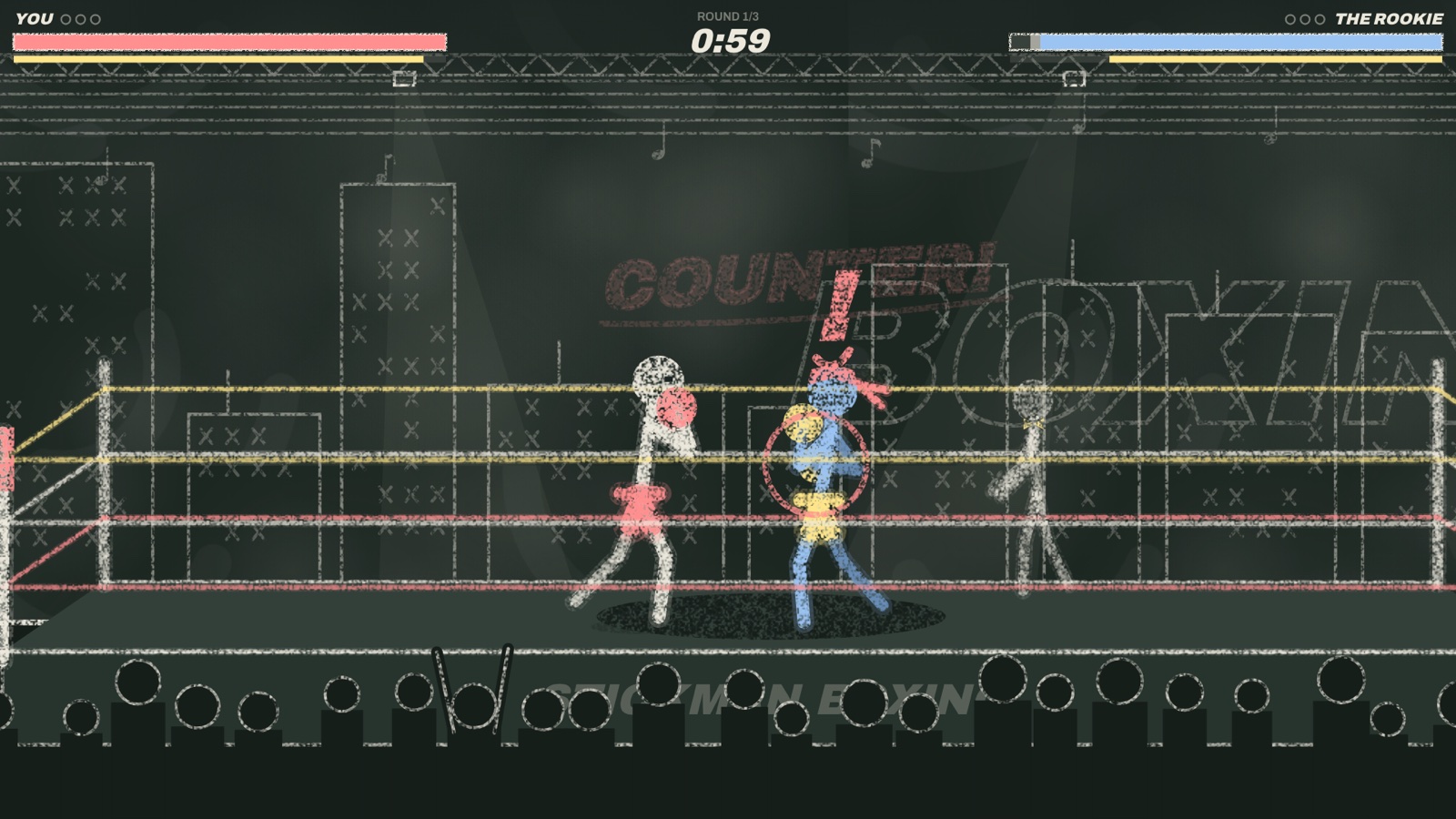
- Stickman Boxing: jab, hook, uppercut, block and duck, three rounds against three rivals.
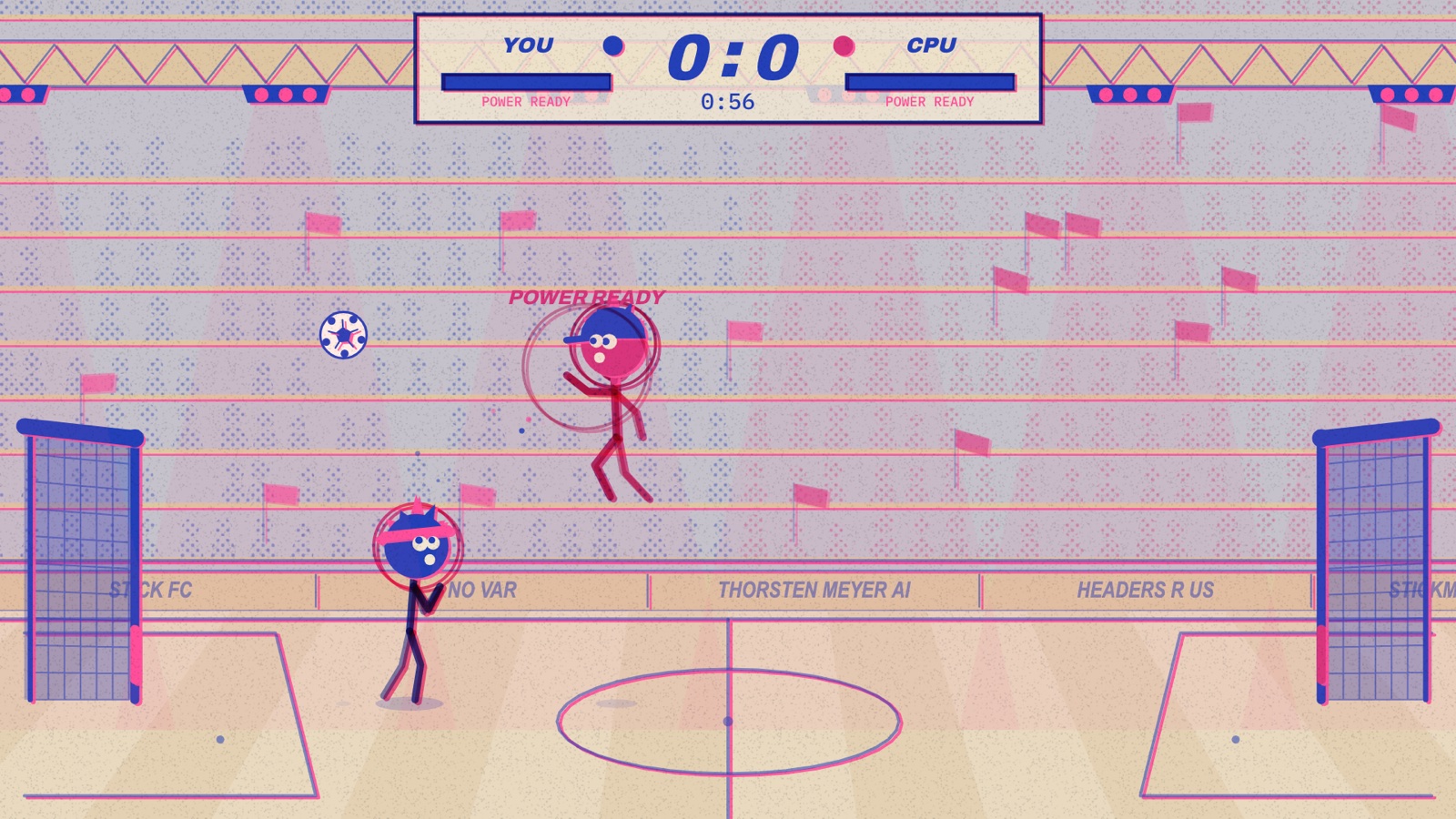
- Head Soccer: big heads, one ball, sixty seconds. Solo against the computer or with a friend.
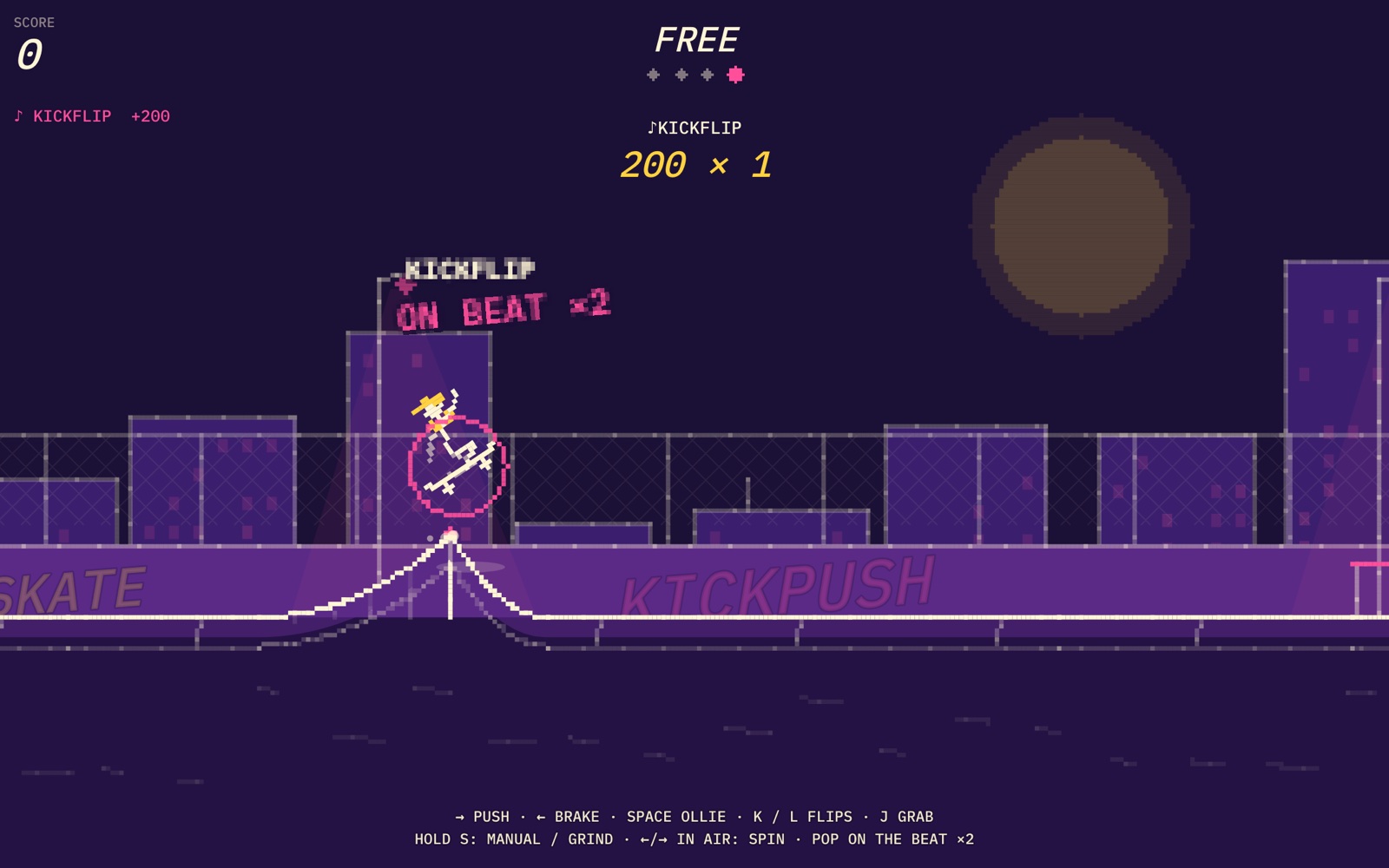
- Beat Skate: ollies, flips, grinds and manuals. Land tricks on the beat for double points.
And an animator
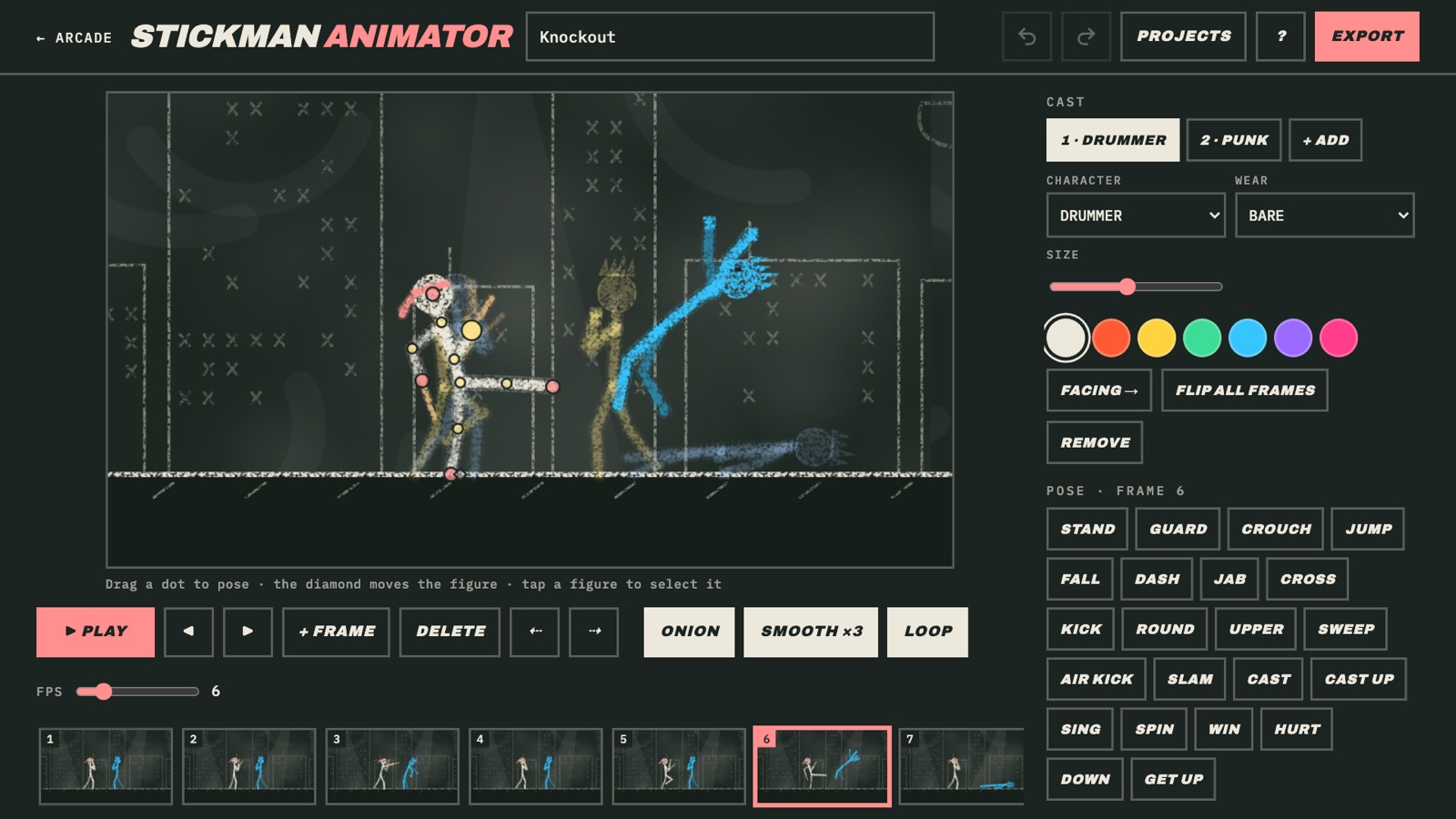
The tenth card isn’t a game. Stickman Animator lets you pose stick figures by dragging their joints, build frames and see the neighbouring frames as ghosts. It can add smooth in-between frames, and it exports a looping GIF, a sprite sheet or a still. It uses the same nine art styles and the fighters’ outfits, and it starts with ready-made moves like a walk cycle or a knockout.
Everything is code
There are no image files and no audio files. Every fighter, venue, drum, bass line and sound effect is generated by code while you play. That’s about 24,500 lines of plain JavaScript with zero dependencies, including the animator’s own GIF encoder. The games collect nothing; your progress lives in your own browser.
How it was made
Everything was built by Claude (Opus 5.5), the AI model, in one day. I wrote no code. I steered: I answered its questions, sent screenshots of games I liked and kept asking for more.
- BEATDOWN was playable in under an hour and live on my site in under two.
- For the arcade, the AI wrote a shared game kit and an engine guide. It then ran eight AI agents in parallel, one per game, each in its own copy of the code. Each agent had to deliver its own automated tests and a browser check that plays the game. The main session reviewed every game, re-ran its checks and merged it.
- By the end there were 233 automated tests, plus a browser check for every game. The browser checks play real matches, runs and heists, test touch controls on phone-sized screens, and even measure the audio for silence or clipping.
What stood out to me is that it checked its own work. Before anything was called finished, it had been played in a real browser, at phone, tablet and desktop sizes, and on the live site.
Play it
A few tips:
- Play with sound. In half of these games, the beat is the game.
- Landscape on phones. Everything works upright too, but sideways is better.
- Start with BEATDOWN’s Drummer. Its passive widens the on-beat window.
- Try the animator. Load the KNOCKOUT example, press play, then export it as a GIF.
Fall Picks
fall essentials
As an affiliate, we earn on qualifying purchases.