📊 Full opportunity report: Why Phone Photos Are Changing The Way Industries Conduct Gauge Readings on IdeaNavigator AI — validation score, market gap, and execution plan.

Get business pricing on office and shipping supplies
- Business-only prices and quantity discounts
- Tax-exempt purchasing
- Multiple users, one account, clear invoices
TL;DR
Industries are exploring phone-photo technology to replace manual gauge readings, offering a cost-effective way to improve data accuracy and trend analysis. Trials at multiple facilities suggest promising results, but wider adoption is still in progress.
Industrial facilities are piloting a new approach to gauge reading using phone photos, replacing traditional clipboard methods. This development could significantly improve data accuracy, reduce errors, and enable better trend analysis without costly sensor upgrades, making it a notable shift in maintenance workflows.
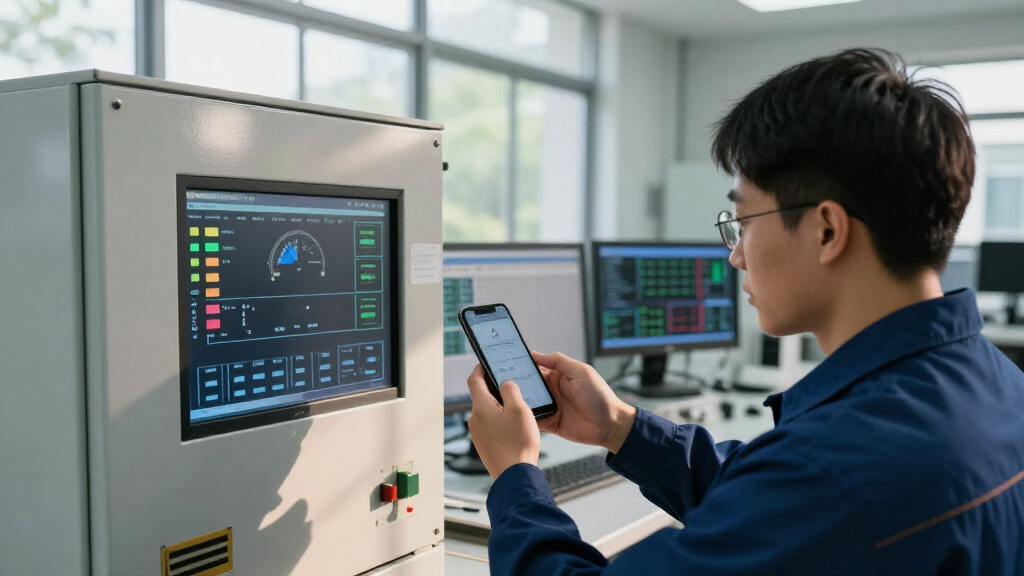
Multiple industrial facilities are testing a workflow where technicians photograph analog gauges, sight glasses, and counters during routine rounds. The images are processed by vision models that reliably read the gauge values, check them against expected ranges, and automatically log the data with timestamps and location tags.
This approach aims to replace manual transcription of gauge readings onto paper, a process that often introduces errors and results in data that is rarely analyzed or trended. By digitizing and automating data collection through phone photos, facilities hope to catch developing failures earlier and improve maintenance planning.
Initial pilot programs are being run at three facilities, where the new system operates alongside existing clipboard rounds. Early results indicate a reduction in transcription errors and improved anomaly detection, although comprehensive data and long-term impacts are still being evaluated.
Implications for Industrial Maintenance Efficiency
This shift toward phone-photo gauge readings could transform maintenance workflows by providing more accurate, real-time data without the need for expensive retrofits of legacy equipment with IoT sensors. It offers a cost-effective solution for facilities seeking better data management and failure prediction, potentially reducing downtime and maintenance costs in the long term.
Furthermore, automating data capture aligns with broader industry trends toward digitalization and predictive maintenance, making this development relevant for facilities aiming to modernize without massive capital investment.
industrial gauge photo reading device
As an affiliate, we earn on qualifying purchases.
As an affiliate, we earn on qualifying purchases.
Legacy Equipment and the Cost of Digital Upgrades
Many industrial facilities rely on analog gauges and sight glasses, which provide critical process data but are difficult to integrate into digital systems. Retrofitting these gauges with IoT sensors can be costly, especially for older or extensive equipment, creating a barrier to digital transformation.
Traditional methods involve manual transcription of readings onto paper, which is prone to errors, delays, and often results in data that is not analyzed or used for trend forecasting. This has limited the ability of facilities to proactively address equipment issues before failures occur.
Recent advances in computer vision and AI have made it possible for ordinary phone photos to reliably read analog gauges, opening the door for a low-cost, scalable alternative to sensor installation.
“Vision models now reliably read analog dials from standard phone photos, making every legacy gauge a potential data source without additional sensors.”
— an anonymous researcher
As an affiliate, we earn on qualifying purchases.
Unanswered Questions About Broader Adoption
It is not yet clear how widely this approach will be adopted across different industries or how it will perform over longer periods and diverse conditions. Questions remain about integration with existing maintenance systems, data security, and the handling of complex or ambiguous gauge readings.
Further validation is needed to confirm whether the system consistently outperforms manual methods in various environments and with different types of gauges.
digital gauge reader for industrial equipment
As an affiliate, we earn on qualifying purchases.
As an affiliate, we earn on qualifying purchases.
Next Steps for Validation and Expansion
The ongoing pilot programs will continue for at least one month, with detailed analysis comparing error rates and early failure detection between photo-based and traditional methods. If results remain positive, facilities may expand the system to more sites and gauge types.
Manufacturers and software providers are also working on refining the vision models and developing user-friendly apps to facilitate wider deployment. Regulatory and operational considerations will influence how quickly this workflow is adopted industry-wide.
phone app for analog gauge readings
As an affiliate, we earn on qualifying purchases.
As an affiliate, we earn on qualifying purchases.
Key Questions
How accurate are phone photos for reading gauges compared to manual methods?
Early tests indicate that vision models can reliably read gauge values from phone photos with accuracy comparable to or better than manual transcription, especially in controlled conditions.
Will this system work with all types of gauges and sight glasses?
Initial trials focus on common analog gauges, but further testing is needed for complex or ambiguous displays. The technology is adaptable, but some gauges may require calibration or specific image quality standards.
What are the cost implications for facilities considering this approach?
This workflow eliminates the need for costly sensor retrofits, relying instead on existing smartphones and software subscriptions, which are expected to be more affordable overall.
How does this approach improve failure detection and maintenance planning?
Automated, frequent data collection enables better trend analysis and early detection of anomalies, allowing maintenance teams to address issues proactively rather than reactively.
Are there any security or privacy concerns with using phone photos for gauge readings?
Data security protocols and access controls are necessary, but since the system primarily captures gauge images and logs data locally or in secure cloud environments, risks are manageable with proper safeguards.
Source: IdeaNavigator AI
Halloween Picks
halloween
As an affiliate, we earn on qualifying purchases.