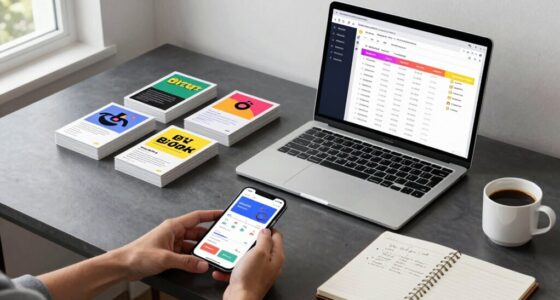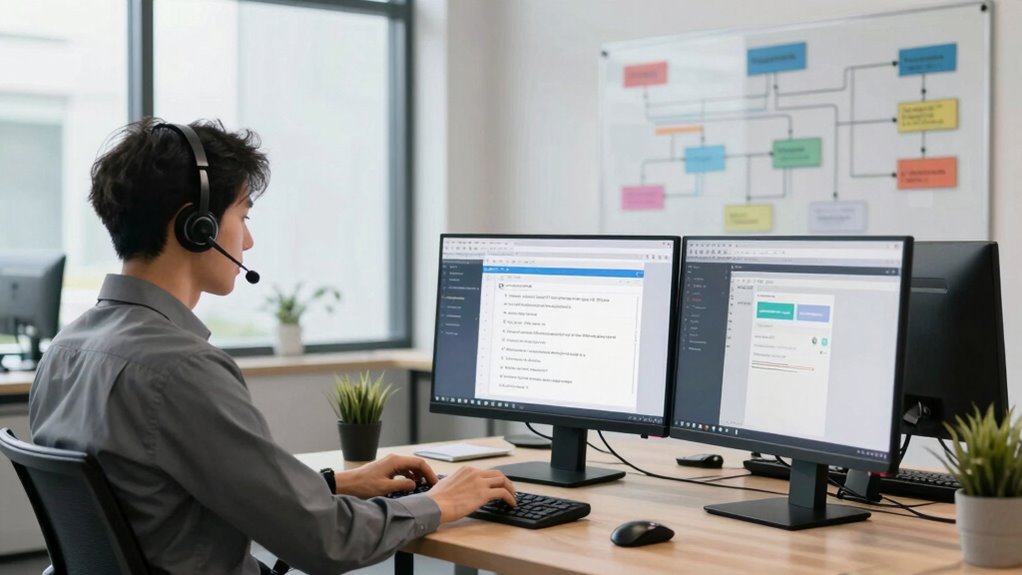

To guarantee email and customer support alignment, you should clarify your strategies early on. Define clear communication protocols, roles, and response time expectations to prevent disconnection and inconsistency. Personalize responses based on customer data and previous interactions to build trust. A shared purpose across channels fosters a cohesive customer journey, making support more efficient. By establishing these points early, you create a solid foundation for consistent, personalized service—and there’s even more you can do to perfect the process.

Get business pricing on office and shipping supplies
- Business-only prices and quantity discounts
- Tax-exempt purchasing
- Multiple users, one account, clear invoices
Key Takeaways
- Define unified communication protocols and tone for all support channels from the outset.
- Clarify roles, responsibilities, and escalation paths to ensure seamless multi-channel coordination.
- Establish shared goals and customer experience standards early to align team efforts.
- Set clear response time expectations for each channel to manage customer perceptions.
- Ensure access to consistent customer data to personalize support and avoid conflicting information.

Have you ever wondered why your email support sometimes feels disconnected from your overall customer service experience? It’s a common frustration, and the root often lies in how well your team aligns across multiple channels. When your support team isn’t on the same page, customers sense the inconsistency, which can undermine trust. To create a seamless experience, strong multi-channel teams need to clarify key strategies early—particularly around personalization strategies and response time management. These elements serve as the foundation for cohesive support that feels unified and attentive.
Personalization strategies are critical because they help your team deliver tailored responses that resonate with each customer. When your team clearly understands who they’re talking to, they can craft replies that reflect previous interactions, preferences, and specific needs. This not only boosts customer satisfaction but also demonstrates that your team values their individual experience. Clarifying these personalization tactics early ensures everyone knows how to access customer data, maintain context, and apply it consistently across channels, including email. Without this shared understanding, responses risk feeling generic or disconnected, which diminishes the overall quality of support. Additionally, implementing effective content management practices can help ensure consistent messaging and a unified tone across all platforms. Establishing clear guidelines for content helps prevent miscommunication and ensures your team communicates with a shared voice. Recognizing the importance of content consistency can further enhance the cohesion of your messaging. Moreover, understanding multichannel integration can help your team coordinate efforts more effectively, ensuring that no customer feels lost in translation between channels.
Personalization ensures tailored responses that reflect customer data, boosting satisfaction and demonstrating genuine care across all support channels.
Response time management is equally crucial. Customers expect prompt replies, especially in email interactions where delays can seem more noticeable. When your team clarifies response time expectations early, it sets a standard that everyone follows. This means defining what constitutes a quick reply, establishing internal benchmarks, and leveraging tools that prioritize urgent messages. Clear response time management also involves training team members to recognize when escalation is necessary, avoiding prolonged delays that frustrate customers. By aligning on these practices from the outset, your team ensures that email support feels timely and efficient, reinforcing a sense of reliability and professionalism.
When these elements—personalization strategies and response time management—are clarified early, your multi-channel team can operate with a shared purpose. This shared clarity reduces silos and eliminates confusion about roles and expectations. It allows your team to deliver consistent messaging across email, chat, social media, and other touchpoints. Customers, in turn, experience a cohesive journey, feeling understood and valued regardless of the channel they choose. This alignment fosters loyalty and encourages repeat engagement, as customers recognize that your support feels genuinely integrated and responsive.
Ultimately, the key to strong email and customer support alignment lies in early clarification. When your team clearly understands how to personalize interactions and manage response times effectively, you create a unified support experience that builds trust and satisfaction. It’s about establishing a clear, shared framework that guides every interaction, making your support not just efficient, but genuinely customer-centric. Ensuring your team is aligned on support strategies from the beginning helps sustain this consistency over time.
customer support email management software
As an affiliate, we earn on qualifying purchases.
As an affiliate, we earn on qualifying purchases.
Frequently Asked Questions
How Can Teams Measure Success in Multi-Channel Customer Support?
You can measure success in multi-channel customer support by analyzing performance metrics like response times, resolution rates, and customer satisfaction scores. Customer feedback provides direct insights into your service quality, highlighting areas for improvement. Combining these metrics with feedback helps you gauge how well your team meets customer needs across channels, ensuring consistent, effective support. Regularly reviewing these indicators keeps your team aligned and focused on delivering exceptional customer experiences.
What Tools Enhance Email and Support Team Collaboration?
Back in the day, before instant messaging, tools like Slack and Zendesk boost your team’s collaboration. You’ll want platforms that integrate automated responses and thorough knowledge bases, so your support team stays updated and consistent. These tools streamline communication, reduce response times, and guarantee everyone’s on the same page. Using shared dashboards and real-time chat features, you can quickly resolve issues and enhance customer satisfaction.
How Do Teams Handle Conflicting Customer Expectations Across Channels?
You handle conflicting customer expectations across channels by prioritizing channel consistency and clear expectation management. You guarantee your team communicates uniformly across all platforms, setting realistic expectations early on. When conflicts arise, you proactively clarify policies and align responses to maintain trust. Regular training and centralized guidelines help your team deliver cohesive support, reducing misunderstandings and ensuring customers feel valued and understood regardless of the channel they choose.
What Training Improves Multi-Channel Communication Skills?
Think of your team as a symphony—effective listening and clear messaging are your instruments. Training that focuses on active listening sharpens your ability to understand customer needs, while clear communication exercises help you craft consistent messages across channels. Role-playing scenarios, feedback sessions, and real-world case studies boost these skills, ensuring your team harmonizes customer interactions seamlessly. This approach transforms diverse voices into a unified, customer-centric melody.
How Do Support Teams Manage Rapid Changes in Customer Preferences?
You manage rapid changes in customer preferences by actively listening to customer feedback and analyzing it for trends. You guarantee channel consistency by updating your communication strategies across all platforms swiftly, so your support remains relevant. By staying flexible and responsive, you adapt your approach quickly, providing seamless support that aligns with evolving customer expectations. This proactive stance keeps your team ahead, building trust and loyalty through timely, consistent, and customer-focused responses.
As an affiliate, we earn on qualifying purchases.
Conclusion
By aligning your email and customer support teams early, you set the stage for smoother interactions and happier customers. When everyone’s on the same page, it’s easier to navigate challenges and turn potential missteps into opportunities for growth. Think of it as fine-tuning a symphony—each part working harmoniously to create a seamless experience. Embrace this proactive approach, and you’ll find your multi-channel efforts become more resonant and rewarding for both your team and your customers.
customer data personalization platform
As an affiliate, we earn on qualifying purchases.
As an affiliate, we earn on qualifying purchases.
As an affiliate, we earn on qualifying purchases.
Halloween Picks
halloween
As an affiliate, we earn on qualifying purchases.