

To prevent your email and SMS channels from competing, clearly define their roles based on their strengths—use email for detailed updates and exclusive content, while reserving SMS for urgent alerts and quick reminders. Segment your audience to deliver relevant messages and personalize content for better engagement. When each channel has a distinct purpose, they work together seamlessly, creating a smooth customer journey. Keep exploring how fine-tuning these roles can elevate your communication strategy.

Get business pricing on office and shipping supplies
- Business-only prices and quantity discounts
- Tax-exempt purchasing
- Multiple users, one account, clear invoices
Key Takeaways
- Define distinct purposes for email and SMS to prevent overlap and ensure complementary messaging.
- Leverage each channel’s strengths—detailed content via email, quick alerts via SMS.
- Segment audiences to send targeted, relevant messages aligned with channel roles.
- Personalize messaging and timing to enhance engagement and reduce intrusion.
- Coordinate communication strategies for seamless customer journeys and unified brand voice.
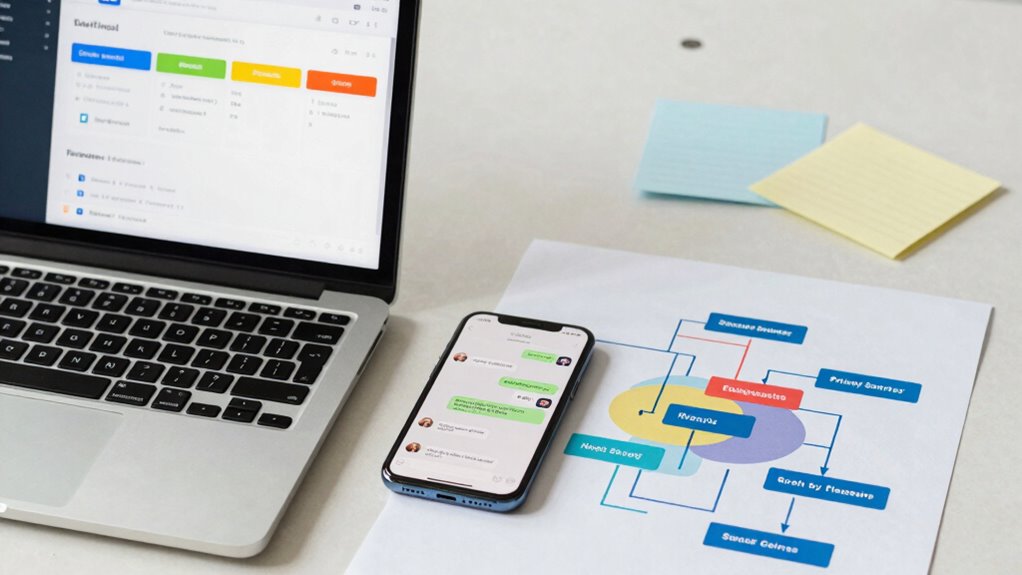
Clear role definition between email and SMS is essential for effective customer communication. When you understand precisely what each channel should handle, you prevent them from competing against each other and instead turn them into a unified, powerful messaging system. To do this, you need to develop clear personalization strategies and refine your audience segmentation. These tactics help you assign the right message to the right person at the right time, making your communications more relevant and engaging.
Defining clear roles for email and SMS ensures cohesive, targeted customer communication that enhances engagement and avoids overlap.
Start by analyzing your customer data to understand their preferences, behaviors, and purchase history. With this insight, you can craft personalized content that resonates deeply. For example, you might use email for detailed updates, exclusive offers, and longer-form content because it’s suited for more in-depth messaging. Conversely, SMS works best for time-sensitive alerts, quick reminders, or urgent promotions where immediacy is key. By clearly defining these roles, you avoid overlap, ensuring that your audience isn’t bombarded with redundant or conflicting messages. Understanding your channel roles helps you optimize your overall communication flow and enhances the customer experience. Additionally, implementing a consistent messaging strategy across channels ensures your brand voice remains unified, further strengthening customer trust. Recognizing the importance of content differentiation allows you to craft unique messages tailored for each channel’s strengths, avoiding redundancy and boosting engagement. Incorporating insights from customer data ensures your approach remains tailored and effective, maximizing engagement and conversions.
Audience segmentation is your guiding principle here. Instead of sending the same message across both channels, segment your audience based on their behaviors, preferences, and engagement levels. For instance, new customers might receive onboarding emails that provide detailed product information, while loyal customers could get SMS alerts about flash sales or limited-time deals. Segmentation allows you to tailor your messaging, ensuring each channel supports a specific purpose within your overall strategy.
Personalization strategies should extend beyond just segmenting your audience. Use the data to personalize content, timing, and frequency. When someone prefers quick updates, send SMS messages at optimal times, while more engaged users might appreciate personalized email newsletters with tailored recommendations. This approach not only enhances user experience but also increases conversion rates, as your messages feel more relevant and less intrusive. Additionally, understanding the importance of channel role clarity helps you optimize your overall communication flow. When your team knows which messages go where, it reduces confusion and streamlines content creation. It helps avoid sending the same message via both channels, which can dilute the impact or annoy customers. Instead, you create a seamless customer journey where each touchpoint complements the others, building trust and encouraging engagement.
email marketing segmentation tools
As an affiliate, we earn on qualifying purchases.
As an affiliate, we earn on qualifying purchases.
Frequently Asked Questions
How Do I Determine Which Channel Should Lead in a Campaign?
You should determine which channel leads based on your audience segmentation and content personalization strategies. Analyze where your audience is most active and receptive—perhaps SMS for urgent updates or email for detailed content. Use data to identify preferences, then tailor content accordingly. Let the channel that best aligns with your audience’s behavior and the message’s urgency take the lead, ensuring a seamless, personalized experience that maximizes engagement.
What Metrics Best Measure the Success of Combined Email and SMS Efforts?
You should track metrics like open rates, click-through rates, conversion rates, and engagement to measure success. Audience segmentation helps you target the right groups with personalized messages, boosting these metrics. By analyzing how different segments respond to email and SMS campaigns, you can refine your messaging, improve personalization, and better gauge overall effectiveness. This approach guarantees your combined efforts lead to meaningful engagement and higher ROI.
How Can I Ensure Consistent Messaging Across Both Channels?
You can guarantee consistent messaging by leveraging content personalization and audience segmentation across both channels. While it might seem complex, aligning your messaging becomes easier when you tailor content to specific segments, ensuring relevance and tone consistency. Use unified brand guidelines and regular cross-channel reviews to maintain harmony. This approach minimizes mixed messages, helps build trust, and makes your campaigns feel cohesive, boosting overall engagement and customer satisfaction.
What Tools Assist in Managing and Coordinating Email and SMS Campaigns?
You can use marketing automation tools like HubSpot, Mailchimp, or Klaviyo to manage and coordinate your email and SMS campaigns effectively. These platforms support segmentation strategies, allowing you to target specific audiences, and enable personalization tactics for more relevant messaging. They streamline campaign planning, scheduling, and analytics, ensuring your channels work together seamlessly, reducing overlap, and enhancing overall campaign performance.
How Often Should I Update or Review the Channel Roles?
You should review and update your channel roles quarterly to keep pace with evolving audience segmentation and message personalization needs. Regular updates guarantee your email and SMS campaigns stay aligned with your target audience’s preferences, preventing overlap or competition. Assess how effectively each channel contributes to your goals, adjust roles based on campaign performance, and refine segmentation strategies. This proactive approach helps optimize engagement and maximizes the impact of your messaging efforts.
SMS marketing automation platform
As an affiliate, we earn on qualifying purchases.
As an affiliate, we earn on qualifying purchases.
Conclusion
By clearly defining the roles of email and SMS, you prevent them from competing and instead create a seamless customer experience. When each channel has its purpose—email for detailed content and SMS for quick updates—you boost engagement and loyalty. Did you know that brands using integrated messaging see a 23% increase in customer retention? Clarity in your communication channels isn’t just smart; it’s essential for maximizing your marketing impact and building stronger relationships.
customer data personalization software
As an affiliate, we earn on qualifying purchases.
As an affiliate, we earn on qualifying purchases.
email and SMS campaign management
As an affiliate, we earn on qualifying purchases.
As an affiliate, we earn on qualifying purchases.
Fall Picks
fall essentials
As an affiliate, we earn on qualifying purchases.