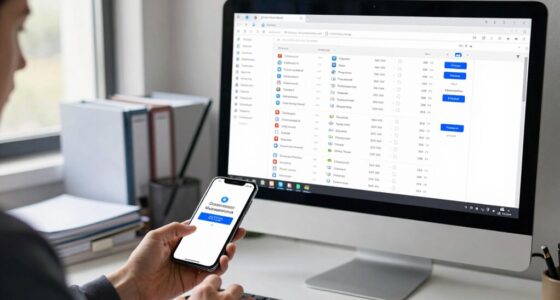

Your sender reputation can silently decline due to poor sending habits, spammy content, or outdated lists, making your emails more likely to land in spam rather than inboxes. Many brands don’t realize the damage until their deliverability drops considerably, affecting engagement and ROI. Regularly monitor your reputation, authenticate your emails, and keep your list clean to prevent unnoticed decline. If you want to safeguard your email success, understanding how to recover your reputation is key—you’ll find helpful tips ahead.
Key Takeaways
- Regularly monitor sender reputation metrics to detect early signs of decline before it impacts deliverability.
- Implement and enforce strict email authentication protocols like SPF, DKIM, and DMARC to rebuild trust.
- Maintain a clean, verified email list by removing invalid addresses and inactive recipients.
- Adjust sending practices by avoiding spam triggers, maintaining consistent schedules, and optimizing content quality.
- Engage recipients with relevant content and transparent preferences to improve engagement and rebuild reputation.

If your email deliverability has taken a hit, understanding how to recover your sender reputation is essential. Your sender reputation is the silent factor that determines whether your emails land in inboxes or get lost in spam folders. When your reputation drops, your emails are more likely to be flagged by spam filters, making it harder for your audience to see your messages. The key to recovery lies in pinpointing the root causes and fixing them quickly, especially by focusing on email authentication. Implementing proper email authentication protocols, such as SPF, DKIM, and DMARC, helps prove to mailbox providers that you’re a legitimate sender. These measures build trust and prevent your emails from being marked as spam, which is crucial in the fight against spam filters. If your emails aren’t properly authenticated, spam filters will scrutinize your messages more intensely, often relegating them to junk folders.
Proper email authentication like SPF, DKIM, and DMARC is key to building trust and avoiding spam filters.
Beyond authentication, you need to consider your email content and sending practices. Sending too many emails at once, or including suspicious links and attachments, can trigger spam filters and damage your reputation. It’s essential to maintain a consistent sending schedule and ensure your content is relevant and engaging. Avoiding spammy language and overly promotional phrases will also help your emails get through filters. Monitoring your engagement metrics—like open rates and click-throughs—provides insight into how your recipients perceive your emails. Low engagement can signal to email providers that your messages are unwanted, which could further harm your sender reputation. Additionally, email list hygiene** plays a vital role in maintaining a strong reputation, as it ensures your list remains free of invalid and inactive addresses. Regularly updating and cleaning your list can prevent issues caused by invalid email addresses, which negatively impact your sender reputation. Implementing a robust email verification process** can further improve list quality and protect your reputation.
Cleaning your email list is another important step. Removing invalid addresses, unsubscribes, and inactive users reduces bounce rates and signals to spam filters that your list is healthy. A well-maintained list helps improve your reputation and minimizes the chances of being flagged as spam. Furthermore, paying attention to your email deliverability metrics can help you identify issues early and make necessary adjustments to your email strategy. Maintaining a good sender reputation involves respecting recipients’ preferences and providing easy ways to unsubscribe. Ignoring these best practices can cause your emails to be marked as spam, making recovery much more difficult. Furthermore, understanding the sender reputation and its impact on deliverability can help you develop more effective email strategies.
Ultimately, recovery requires consistent effort. You won’t fix your sender reputation overnight, but by focusing on email authentication, avoiding spam filters, and practicing good list hygiene, you can regain trust with mailbox providers. Recognize that your reputation is a reflection of your sending habits, content quality, and engagement levels. When you stay vigilant and proactive, you’ll reduce the risk of ending up in spam folders and ensure your messages reach the intended audience every time.
Secure by Design: Building Authentication and User Management in C#: A Practical Guide to Implementing Login, Registration, Roles, and Identity in ASP.NET Core
As an affiliate, we earn on qualifying purchases.
As an affiliate, we earn on qualifying purchases.
Frequently Asked Questions
How Long Does It Typically Take to Recover Sender Reputation?
It can take anywhere from a few days to several weeks to recover your sender reputation, depending on the severity of the issues. You need to address email blacklists promptly and improve engagement metrics by sending relevant, targeted content. Consistently monitoring your sender score and cleaning your email list helps rebuild trust. Patience and proactive efforts are key to restoring your reputation and ensuring your emails reach inboxes again.
What Are Common Mistakes That Harm Sender Reputation?
You often harm your sender reputation by neglecting email authentication, like SPF, DKIM, and DMARC, which verify your identity. Additionally, failing to prevent spam traps can cause serious damage, as they identify unclean mailing practices. Avoid sending to purchased lists or outdated contacts, and monitor your engagement rates regularly. These mistakes can lead to increased spam complaints and blacklisting, making reputation recovery much harder.
Can Poor Sender Reputation Affect Email Deliverability Internationally?
Imagine sending promotional emails to international clients, only to find many bounce back or land in spam folders. Poor sender reputation definitely impacts international targeting, reducing your email deliverability worldwide. Regular reputation monitoring helps you catch issues early, ensuring your emails reach global audiences. Ignoring this risk can damage your sender reputation across borders, making it harder to connect with international customers and hampering your global marketing efforts.
Are There Industry-Specific Factors Influencing Sender Reputation Recovery?
Yes, industry-specific factors and regional compliance greatly influence your sender reputation recovery. You need to stay updated on industry regulations, like GDPR or CAN-SPAM, and regional compliance standards to avoid penalties and trust issues. These factors impact your email practices, affecting deliverability and reputation. By aligning your email strategies with these regulations, you can better recover your reputation and guarantee your messages reach your audience effectively.
How Often Should Sender Reputation Audits Be Performed?
You should perform sender reputation audits at least quarterly to stay ahead of potential issues. During these audits, focus on email authentication methods like SPF, DKIM, and DMARC to guarantee your emails are properly verified. Additionally, review engagement metrics such as open and click rates to identify signs of declining sender reputation. Regular checks help you catch problems early, protecting your deliverability and maintaining your brand’s email credibility.

Vehicle Inspection & Repair Estimate Form – 2-Part Carbonless Auto Service Inspection Sheets, Walk-Around Checklist, Repair Estimate & Final Approval Form, 8.5 x 11 White/Canary – 100 Pack
2-PART CARBONLESS VEHICLE INSPECTION AND REPAIR ESTIMATE FORM: Designed as professional auto inspection forms and repair estimate sheets,…
As an affiliate, we earn on qualifying purchases.
As an affiliate, we earn on qualifying purchases.
Conclusion
Don’t wait for the storm to pass before fixing your sender reputation—act now before it’s too late. Recovery might be a slow burn, but it’s worth every effort to protect your brand’s trust and deliverability. Remember, you’re only as strong as your weakest link, so keep a close eye on your reputation metrics. Stay proactive, and you’ll avoid the silent risk that can quietly take down your email game when you least expect it.
![Express Schedule Free Employee Scheduling Software [PC/Mac Download]](https://m.media-amazon.com/images/I/41yvuCFIVfS._SL500_.jpg "Sender Reputation Recovery: The Silent Risk Most Brands Notice Too Late 6")
Express Schedule Free Employee Scheduling Software [PC/Mac Download]
Simple shift planning via an easy drag & drop interface
As an affiliate, we earn on qualifying purchases.
As an affiliate, we earn on qualifying purchases.
SPF DKIM DMARC setup kit
As an affiliate, we earn on qualifying purchases.
As an affiliate, we earn on qualifying purchases.