
To keep your B2B emails lively and engaging, focus on understanding your audience and using attention-grabbing subject lines with personalization and urgency. Craft concise messages with clear calls to action, and incorporate visuals and formatting to make your emails easy to scan. Test different elements like timing, content, and visuals to see what resonates best. If you want tips on avoiding snooze-worthy messages, there’s plenty more to explore below.
Key Takeaways
- Craft compelling, personalized subject lines that spark curiosity and highlight clear value to increase open rates.
- Use storytelling and emotional triggers to create memorable messages that resonate and stand out.
- Incorporate visuals, formatting, and concise language to make emails engaging and easy to digest.
- Add urgency with time-sensitive offers or calls to action to motivate immediate responses.
- Continuously test different elements and analyze metrics to refine your messaging for maximum impact.
Understand Your B2B Audience and Goals
Have you clearly defined who your B2B audience is and what you want to achieve? It all starts with thorough market research to identify your ideal clients, their needs, and pain points. Once you gather this data, you can perform audience segmentation to categorize prospects based on industry, company size, or purchasing behavior. This clarity helps you craft messages that resonate deeply with each segment. Knowing your goals—whether to generate leads, nurture relationships, or promote a new product—guides your email strategy. When you understand your audience and set clear objectives, your messaging becomes more targeted, relevant, and effective. Without this foundation, your emails risk missing the mark and wasting your efforts. Additionally, understanding your industry’s specifics, such as projector technology features, can help tailor messages that highlight your unique value propositions. Recognizing the importance of customer engagement strategies can further enhance your communication effectiveness.
Craft Attention-Grabbing B2B Email Subject Lines
To grab your audience’s attention, use power words that spark curiosity and highlight value. Personalize your subject lines to make them feel relevant and tailored to each recipient. Adding a sense of urgency with calls to action encourages quick opens and responses.
Use Power Words
Power words are essential for crafting email subject lines that instantly grab attention and compel recipients to open your message. They tap into emotional triggers, making your email feel urgent, exciting, or valuable. Using power words that evoke curiosity or offer solutions encourages recipients to act. Incorporate storytelling techniques by framing your message as a compelling narrative, creating a sense of connection and intrigue. For example, words like “Discover,” “Uncover,” or “Boost” stir curiosity and promise benefits. These words trigger emotional responses, increasing open rates. Keep your subject lines direct, impactful, and focused on what matters most to your audience. By harnessing the power of emotion and storytelling, your email will stand out in crowded inboxes and motivate recipients to engage. Understanding piercing care and hygiene best practices can also help craft more trustworthy and engaging email content. Additionally, emphasizing European cloud innovation can position your message as forward-thinking and trustworthy, capturing recipient interest more effectively. Recognizing how personality assessments can reveal key traits enables you to tailor your messaging for better engagement and response. Incorporating industry-specific insights, such as target audience preferences, can further establish credibility and resonate with your target audience.
Personalize for Relevance
Personalization is key to making your B2B email subject lines stand out in a crowded inbox. When you tailor your subject lines to your recipient’s needs and interests, you’ll catch their attention and boost open rates. Keep in mind that good email etiquette involves respecting their time and avoiding generic or overly salesy language, which can trigger spam filters. Personalization demonstrates that you understand their challenges, making your message more relevant. Avoid vague or misleading subject lines that can harm your credibility and increase spam avoidance risks. Instead, use specific details like their industry, role, or recent activity to craft compelling, relevant subjects. This approach helps your email feel less like spam and more like a valuable connection. Additionally, referencing dream analysis insights can add an intriguing and memorable element to your messaging, showing a deeper understanding of your audience’s interests. Incorporating targeted messaging strategies, based on their specific circumstances, further enhances engagement and response rates. Being aware of email deliverability best practices ensures your messages reach the intended inboxes and are not filtered out. Moreover, understanding how to leverage essential oils for specific needs can make your outreach even more personalized and compelling. To optimize your email campaigns, consider integrating study techniques and exam preparation insights, which can help in crafting content that resonates and engages your audience effectively.
Create Urgent Calls
Creating a sense of urgency in your B2B email subject lines can considerably increase your open rates by prompting recipients to act quickly. Use urgency tactics like time-sensitive language and deadline cues to grab attention. Words such as “Now,” “Limited,” or “Last chance” signal that the opportunity won’t last long, nudging your audience to open immediately. Incorporate clear deadlines to reinforce the need for swift action, like “Register by Friday” or “Offer ends tonight.” These cues create a sense of scarcity and importance, encouraging recipients to prioritize your email. Be genuine with your urgency—faked deadlines can backfire. When done right, creating urgent calls helps cut through inbox clutter and drives faster engagement. Understanding Free Floating concepts can help craft messages that resonate quickly and effectively.
Personalize Your B2B Emails to Stand Out

To truly stand out in a crowded inbox, tailoring your B2B emails to each recipient is essential. Personalization goes beyond inserting a name; it involves understanding your audience’s needs and crafting messages that resonate. Use dynamic storytelling to highlight how your solution addresses their challenges. Incorporate emotional appeals to forge a genuine connection and evoke a sense of trust. Focus on relevant pain points and outcomes, making every word count. Keep your message engaging and relevant, so it feels less like a generic pitch and more like a conversation. Remember, personalized emails show you’ve taken the time to understand their business, increasing engagement and response rates. Additionally, demonstrating an understanding of your audience’s specific needs can significantly boost your credibility and effectiveness. Recognizing the importance of audience understanding ensures your messaging aligns with their unique circumstances and builds stronger relationships. Incorporating health considerations can also demonstrate your awareness of potential concerns that might affect decision-making, making your outreach even more relevant. Understanding sound healing science and how it can be integrated into wellness initiatives can help you craft messages that appeal to health-conscious clients and partners.
Write Clear, Concise Messages With Strong Calls to Action

Clear, concise messages cut through the noise and grab your recipient’s attention quickly. To do this, keep your emails straightforward and focused, avoiding unnecessary details that can cause spam filters to flag your message. Use a strong call to action (CTA) that clearly guides your reader on the next step. Incorporate email humor sparingly—light humor can build rapport without risking confusion or spam detection. Here’s a quick guide:
| Tip | Example | Why it Works |
|---|---|---|
| Be clear & direct | “Schedule a demo today” | Drives immediate action |
| Keep it concise | “Let’s connect next week” | Respects your reader’s time |
| Use humor carefully | “No spam, just good news” | Builds rapport, avoids spam filters |
Writing with clarity, strong CTAs, and a touch of humor ensures your message resonates without ending up in spam. Additionally, understanding content types can help tailor your messaging for better engagement. Recognizing the importance of topical authority in your content can also boost credibility and increase your email’s effectiveness. Developing an awareness of audience preferences can further refine your approach and improve response rates.
Use Visuals and Formatting to Make Your Emails Engaging
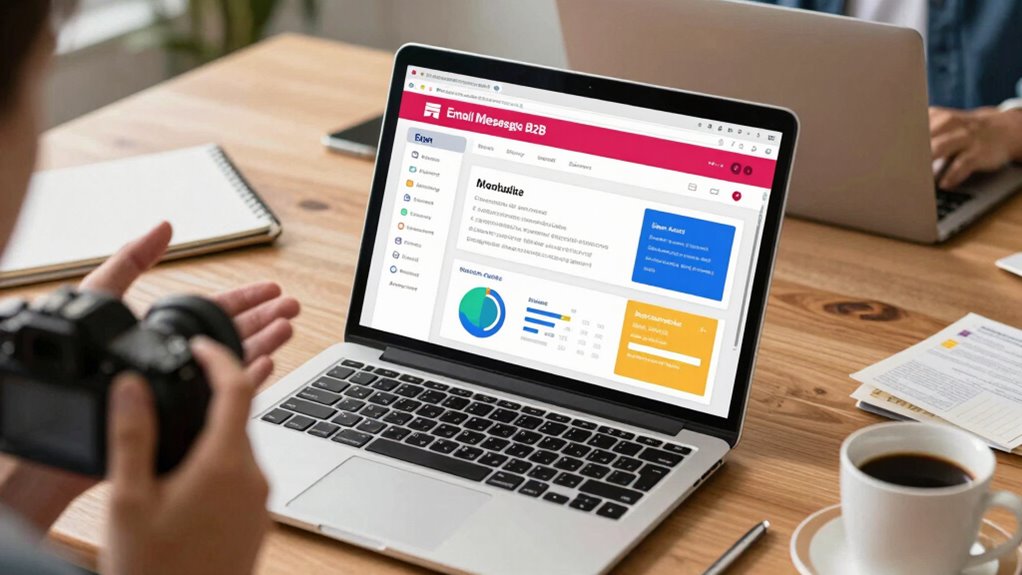
Using visuals and formatting effectively can instantly grab your reader’s attention and make your emails more memorable. To do this, leverage color psychology to evoke the right emotions and guide responses. Maintain a clear visual hierarchy so key messages stand out and aren’t lost in clutter. Incorporate eye-catching images or icons that reinforce your message without overwhelming the content. Use bullet points or bold text to highlight important details, making scanning easier. Keep your design clean with ample white space to prevent overwhelm and ensure focus. By strategically combining color, layout, and visuals, you make your emails more engaging and increase the chances of resonating with your audience.
Test and Optimize Your B2B Email Campaigns for Better Results

To improve your email campaigns, you need to test different elements and analyze the results. Implement A/B testing strategies to identify what resonates best with your audience. By closely examining campaign metrics, you can make data-driven adjustments that boost your overall effectiveness. Incorporating insights from style and presentation, such as visual appeal, can also enhance engagement and response rates. Additionally, understanding the importance of muscle recovery can help tailor your messaging to better address your audience’s needs.
A/B Testing Strategies
A/B testing is essential for refining your B2B email campaigns and boosting their effectiveness. By systematically testing different elements, you can discover what resonates best with your audience. Focus on segment targeting to ensure your messages reach the right groups, and experiment with email timing to maximize open rates. Try different subject lines, calls-to-action, or personalized content to see what drives engagement. Key strategies include:
- Testing various subject lines across segments to identify what captures attention
- Adjusting email timing to find when your audience is most receptive
- Comparing personalized versus generic messaging to gauge impact
Consistently refining these elements through A/B testing helps you optimize your campaigns and deliver content that truly connects with your prospects.
Analyzing Campaign Metrics
Analyzing campaign metrics is essential for understanding how your email efforts perform and identifying areas for improvement. Pay close attention to your click-through rates, as they reveal whether your content resonates and prompts recipients to act. A high click-through rate indicates your message is compelling, while a low rate suggests you need to refine your call-to-action or subject line. Additionally, monitor bounce rates to gauge list health and deliverability. A rising bounce rate signals issues with invalid addresses or spam filters that could harm your sender reputation. Regularly reviewing these metrics allows you to make data-driven adjustments, optimize your content, and improve engagement. For example, incorporating support breakfast concepts can help craft more appealing and relevant messaging for your audience. By continuously analyzing campaign results, you ensure your B2B email strategy remains effective and avoids the pitfalls of ineffective messaging.
Frequently Asked Questions
How Can I Ensure My B2B Emails Comply With Privacy Regulations?
To guarantee your B2B emails comply with privacy regulations, you should implement data encryption to protect sensitive information and use clear consent management practices. Always obtain explicit permission before sending emails, and provide easy options for recipients to revoke consent. Regularly review your privacy policies and stay updated on regulations like GDPR or CAN-SPAM. This proactive approach keeps your messaging compliant and builds trust with your contacts.
What Are Common Mistakes to Avoid in B2B Email Campaigns?
You should avoid generic messages and neglecting personalization strategies, which can make your emails seem impersonal. Don’t overlook subject line optimization; a dull or irrelevant subject line can kill open rates. Also, avoid being too salesy or lengthy, as it turns recipients off. Instead, craft concise, tailored content that addresses their needs, uses compelling subject lines, and encourages engagement. This approach keeps your campaigns effective and recipients interested.
How Often Should I Send B2B Emails for Optimal Engagement?
You should aim for the perfect email frequency—think of it as the heartbeat of your campaign—to maximize engagement timing. Typically, sending 1-2 emails per week strikes the right balance, avoiding overwhelm while staying top of mind. Monitor your audience’s responses and adjust accordingly; too many emails can cause fatigue, while too few might make you forgettable. Consistent, thoughtful contact keeps your brand relevant and your audience engaged.
Which Metrics Best Measure B2B Email Campaign Success?
You should focus on open rates and click-through rates to measure your B2B email campaign success. Open rates show how many recipients are interested enough to open your email, while click-through rates reveal engagement levels by tracking how many click on your links. These metrics give you valuable insights into your message’s effectiveness and help you refine your approach for better results. Keep monitoring them regularly for peak performance.
How Can I Segment My B2B Audience Effectively?
You can segment your B2B audience effectively by starting with detailed buyer personas and analyzing industry segments. Identify key characteristics like company size, job roles, and challenges to tailor your messages. Use your CRM and analytics tools to group contacts accordingly, ensuring relevant content resonates. Regularly update your segments based on engagement data, so your campaigns stay targeted and compelling, ultimately boosting response rates and campaign success.
Conclusion
By applying these strategies, you’ll turn your B2B emails into lively conversations rather than dull exchanges. Think of your messages as vibrant bridges, inviting your audience to cross into engagement and understanding. When you craft with clarity, personalize thoughtfully, and sprinkle in visuals, you create a compelling journey that captures attention without overwhelming. Keep testing and refining—soon, your emails will dance gracefully into inboxes, sparking meaningful connections that grow your business.