To prevent refund requests, craft a clear, friendly shipping delay email that explains the reason for the delay, provides an updated delivery estimate, and offers tracking information. Personalize your message with the customer’s name and order details, show empathy, and include support links for easy assistance. Transparency and proactive communication build trust and reduce frustration. Keep your tone professional yet approachable—if you want to know how to do this effectively, keep exploring these key strategies.
Key Takeaways
- Clearly state the reason for the delay and provide an updated, realistic delivery estimate to manage expectations.
- Include a personalized greeting, specific order details, and tracking information to reassure customers they are valued and informed.
- Offer proactive solutions such as reshipment, refunds, or discounts, presenting options transparently to reduce frustration.
- Use empathetic, honest language, apologize sincerely, and reinforce your commitment to customer satisfaction.
- Provide accessible support channels and follow up promptly to address concerns and prevent refund requests.
Why Shipping Delays Damage Customer Trust: and How to Prevent Refunds
Shipping delays can considerably harm customer trust because buyers rely on timely deliveries to feel confident about their purchases. When customer expectations aren’t met, frustration grows, and trust diminishes. Delivery accuracy is essential; if shipments arrive late or incomplete, customers question your reliability. These issues can lead to negative reviews, loss of future sales, and increased refund requests. To prevent this, you must communicate proactively when delays occur, showing customers you value transparency. Clear, honest updates help manage expectations and demonstrate your commitment to resolving problems. Maintaining consistent delivery accuracy and keeping customers informed builds confidence and loyalty, reducing the likelihood of refunds. Additionally, sharing reliable information about shipping timelines fosters trust and reassures customers that their orders are a priority. Providing accurate tracking details further enhances transparency and reassures customers throughout the delivery process. Implementing effective communication strategies during delays is essential to uphold your reputation. Moreover, understanding the impact of delivery ratios ensures you can address issues promptly and improve overall service. Being aware of delivery performance metrics allows you to identify and rectify recurring problems efficiently. Ultimately, respecting customer expectations and ensuring delivery precision are key to preserving trust and fostering long-term relationships.
What Are the Essential Components of a Shipping Delay Email Template?
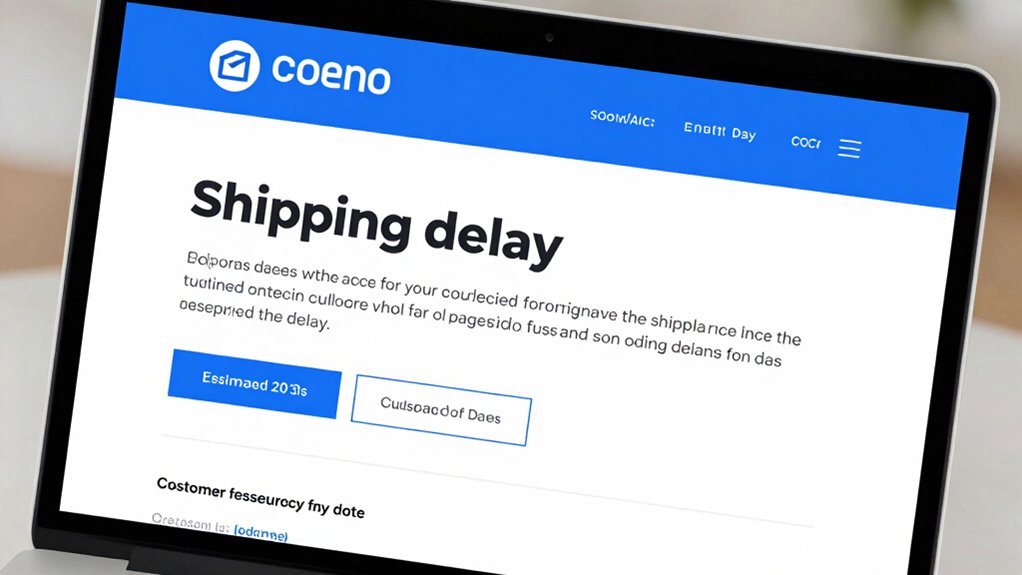
When crafting a shipping delay email, including essential components guarantees clear communication and maintains customer trust. First, clearly state the delay and its reason, referencing relevant shipping regulations if applicable. Providing accurate delivery tracking information helps customers monitor their order’s progress and reduces unnecessary inquiries. Be transparent about the expected new delivery date, and apologize for the inconvenience to show empathy. Including contact details allows customers to reach out with questions or concerns. Use a friendly tone to reinforce your commitment to customer satisfaction. Additionally, highlighting your shipping policies demonstrates professionalism and transparency to your customers. Clarifying your return and refund policies can also preempt misunderstandings that might lead to refund requests. It’s also beneficial to mention your vetted shipping options, such as wave and wind, to reassure customers of reliable delivery methods. Finally, reassure customers that you’re actively managing the situation. These components ensure your message is informative, trustworthy, and professional, helping prevent frustration and refund requests. Properly addressing these elements builds customer confidence and smooths the resolution process.
How to Write a Clear and Friendly Subject Line for Delay Notifications
Crafting a clear and friendly subject line for delay notifications is essential because it sets the tone for your customer’s experience and encourages them to open the message. Your subject line should clearly communicate the delay while remaining approachable, reducing frustration. Mentioning shipping policies or delivery tracking can help build trust and show transparency. For example, use phrases like “Update on Your Shipment” or “Delivery Tracking Update.” Keep it concise and positive, emphasizing that you’re actively managing the situation. Avoid vague or alarming language that might cause unnecessary concern. A friendly tone reassures customers you’re attentive and committed to resolving the issue, which can prevent refund requests and foster loyalty. Incorporating transparent communication practices can further enhance customer trust and satisfaction, especially when you include clear expectations about delivery times and potential delays. Providing proactive updates demonstrates your dedication to service quality and helps manage customer expectations effectively. The right subject line makes your delay notification both informative and reassuring.
How Can You Personalize Your Shipping Delay Messages for Better Engagement?
Personalizing your shipping delay messages can make customers feel valued and understood. Mention their name and specific purchase details to show you’re paying attention. This approach helps build trust and encourages continued engagement with your brand. Incorporating elements of sustainable practices in your communication can also demonstrate your commitment to eco-friendly values, resonating with environmentally conscious customers. Additionally, highlighting your use of eco-friendly packaging can reinforce your dedication to sustainability and appeal to eco-aware consumers. Emphasizing your transparent fee structure can further enhance customer trust by demonstrating honesty in your operations. Being clear about your carbon offset initiatives can also showcase your efforts to reduce environmental impact and strengthen customer loyalty.
Use Personalized Names
Using the customer’s name in your shipping delay messages immediately grabs their attention and makes the communication feel more genuine. Personalization strategies like addressing customers by their names show you value their individual experience. This small touch can considerably boost engagement and reduce frustration. To do this effectively, leverage customer segmentation to tailor your messages based on purchase history or preferences. For example, repeat buyers might appreciate a more personalized tone, while first-time customers benefit from clear, respectful communication. Using names creates a sense of familiarity and trust, making customers more receptive to updates. Incorporating customer engagement techniques, such as personalized messaging, can further enhance your communication effectiveness. Incorporate their names naturally within your message, demonstrating that you’ve taken the time to acknowledge them personally. This simple step enhances your overall communication and helps prevent refund requests. Additionally, understanding media literacy can help you craft messages that are transparent and trustworthy, further strengthening customer relationships. Being aware of consumer trust factors allows you to craft messages that build confidence and loyalty. Moreover, ensuring your messages comply with aviation regulations can prevent misunderstandings and foster credibility with your audience. Regularly updating your messaging approach based on customer feedback can also lead to improved trust and satisfaction.
Reference Purchase Details
Incorporating specific purchase details into your shipping delay messages shows customers you’re attentive to their individual orders. Mentioning order tracking information reassures them that you’re actively monitoring their shipment. For example, include a tracking number or a link to real-time updates, so they can check the progress themselves. Additionally, providing packaging updates adds transparency, showing you’re aware of the shipping process and committed to keeping them informed. Personalizing these details makes your message feel tailored rather than generic, reducing frustration and building trust. When customers see you acknowledge their unique order and share relevant tracking or packaging info, they’re more likely to stay patient and avoid requesting refunds. Clear, specific references demonstrate your dedication to a smooth shipping experience.
How to Clearly Communicate the Delay and Provide Accurate Delivery Estimates
When communicating a shipping delay, it’s essential to be transparent and precise about what customers can expect. Clearly explain the reason for the delay and update your delivery estimates based on current information. Use order tracking data to provide accurate timelines; this helps manage expectations and builds trust. Instead of vague promises, give specific delivery estimates, like “Your order is now expected to arrive within the next 3-5 business days.” Keep your message straightforward and honest, avoiding overpromising. If there’s any uncertainty, acknowledge it and commit to providing updates. Providing clear communication about delays and precise delivery estimates shows you value transparency, reducing frustration and preventing refund requests. This proactive approach keeps customers informed and reassures them their order is still on its way.
How to Reassure Customers and Offer Solutions That Minimize Frustration
To reassure your customers, focus on transparent communication that builds trust and reduces uncertainty. Offer practical solutions, like alternative shipping options or discounts, to show you care about their experience. Clear, honest messaging combined with helpful options can turn frustration into understanding.
Transparent Communication Strategies
Transparent communication is essential when managing shipping delays because it helps build trust and keeps customers informed. Keep them updated on order tracking so they know exactly where their package is in the process. If there’s a delay, send a clear message that includes delivery confirmation details once the item ships again. This reassures customers that their order is still on its way and reduces uncertainty. Avoid vague statements; instead, provide specific reasons for the delay and new estimated delivery dates. Regular updates demonstrate your commitment to transparency and respect for their time. When customers feel informed and confident about their order status, they’re less likely to request refunds or become frustrated. Clear, honest communication fosters a positive experience despite the inconvenience.
Offering Practical Solutions
Once you’ve communicated honestly about the delay, focus on offering practical solutions to ease customer frustration. Setting clear expectations and aligning with your shipping policies helps manage customer expectations effectively. Consider providing options such as reshipping, refunds, or store credit. To illustrate, here’s a quick overview:
| Solution | Description | Benefit |
|---|---|---|
| Reshipment | Send the item again | Fulfills original order |
| Refund | Full refund issued immediately | Restores customer trust |
| Store Credit | Offer credit for future purchase | Encourages future loyalty |
| Estimated Delivery | Updated shipping timeline | Reduces uncertainty |
| Discount | Provide a discount as apology | Shows goodwill |
Align solutions with your shipping policies and customer expectations to minimize frustration.
When and How Often Should You Send Follow-Up Emails About Shipping Delays?
Timing is crucial when sending follow-up emails about shipping delays. You should send your first follow-up within 24 to 48 hours of the initial delay, providing tracking updates and estimated delivery notifications. If the delay extends, send a second follow-up a few days later, reaffirming your commitment to keeping the customer informed. Avoid bombarding customers with frequent emails; instead, space them out to prevent irritation. Use your updates to reassure customers that you’re actively monitoring their shipment and will keep them posted. Consistent communication through well-timed follow-ups helps build trust and reduces the chances of refund requests. Remember, timely updates demonstrate your dedication to customer satisfaction and can turn a frustrating delay into a positive experience.
What Tone and Language Keep Your Customers Confident During Delays?
Using empathetic language shows you understand your customers’ frustrations, helping them feel heard. Clear and honest communication builds trust, even when delivering bad news. Offering practical solutions reassures customers that you’re actively working to resolve the delay.
Use Empathetic Language
When communicating a delay, choosing empathetic language helps reassure your customers that you understand their frustration and are committed to resolving the issue. Use words that acknowledge their inconvenience and express genuine concern. Refer to your shipping policies to clarify what steps you’re taking and reassure them that their order is a priority. Highlight the availability of delivery tracking so they can stay informed about their package’s status. Phrases like “We understand how important this is to you” or “We’re sorry for the inconvenience” demonstrate empathy and build trust. Keep the tone friendly and supportive, showing you’re actively working to resolve the delay. This approach helps maintain confidence and reduces the likelihood of refund requests.
Communicate Clearly and Honestly
Clear and honest communication is essential to maintaining your customers’ confidence during delays. When you’re transparent about the situation, you reduce uncertainty and build trust. Use straightforward language that reassures customers about product quality and shipping costs, even if delays occur. To do this effectively:
- Clearly explain the reason for the delay, avoiding vague statements.
- Acknowledge how it impacts the delivery timeline and any associated shipping costs.
- Reassure customers about the product’s quality and your commitment to delivering it promptly.
- Offer regular updates to keep them informed without overpromising.
Offer Practical Solutions
How can you reassure customers and maintain their confidence during delays? Offering practical solutions helps. Focus on ensuring packaging quality by clearly explaining how you’re protecting their order despite the delay. Assure them that their items are secure and will arrive in excellent condition. Good inventory management is key; update them on when their product is expected to ship or suggest alternative options if possible. Providing a realistic timeline and transparent next steps shows you’re actively managing the situation. You might also offer discounts or free shipping on future orders to keep their goodwill intact. Use a confident, empathetic tone to reinforce that you value their patience and loyalty. This proactive approach minimizes frustration and builds trust, even amid delays.
How to Include Support Links and Contact Options in Your Delay Emails
Including support links and contact options in your delay emails guarantees customers can easily find assistance without frustration. Clear, accessible options help manage expectations and reduce refund requests. To enhance your message:
- Provide a direct link to tracking updates so customers can check their order status quickly.
- Include contact options like a helpline or live chat for immediate support.
- Mention compensation offers upfront, with a link for easy redemption if applicable.
- Use prominent buttons or links to ensure visibility, minimizing customer effort in seeking help.
How to Monitor Customer Responses and Adjust Your Strategy to Reduce Refunds

Monitoring customer responses is essential for identifying patterns and addressing issues before they escalate into refunds. By regularly reviewing customer feedback, you gain valuable insights into their concerns and frustrations, allowing you to make informed adjustments. Response monitoring helps you spot recurring problems, such as delays, miscommunications, or product dissatisfaction, so you can act swiftly. Use this feedback to refine your shipping processes, improve communication, and enhance support channels. Being attentive to customer responses also demonstrates that you value their experience, fostering trust and loyalty. Continuously adapting your strategy based on response data reduces the likelihood of refunds, saving you time and resources. Stay proactive, and always treat customer feedback as an opportunity to improve your service.
Frequently Asked Questions
How Can I Automate Shipping Delay Notifications Efficiently?
You can automate shipping delay notifications by integrating your order tracking system with your email platform. Set up triggers for delivery updates, so when a delay occurs, customers instantly receive an email with detailed order tracking information. This proactive approach keeps customers informed, reduces refund requests, and improves satisfaction. Use automation tools like Zapier or Shopify apps to streamline this process and guarantee timely, accurate delivery updates.
What Legal Considerations Should I Keep in Mind for Delay Emails?
You need to keep your eye on the ball when it comes to legal considerations in delay emails. Make sure your messages comply with shipping laws and respect consumer rights by clearly explaining delays, offering solutions, and avoiding false or misleading info. Failing to do so can open a can of worms legally. Be transparent, honest, and prompt to avoid legal trouble and maintain trust with your customers.
How Do Different Customer Segments Respond to Delay Messages?
You’ll find that different customer segments respond best to tailored delay messages. For instance, loyal customers appreciate personalized strategies that acknowledge their past support, while new customers value transparency and prompt updates. Use customer feedback to refine your messaging, ensuring it resonates. By customizing your communication style, you can maintain trust and reduce frustration, turning delay experiences into opportunities for positive engagement.
What Metrics Indicate Success in Delay Communication Strategies?
Your success metrics for delay communication strategies are clear: high customer satisfaction scores and increased brand loyalty. Track open and click-through rates to gauge engagement, and monitor refund requests—fewer indicate effective messaging. Positive feedback and repeat purchases show your message resonates, building trust. Ultimately, if customers feel informed and valued during delays, you’re winning the battle for loyalty—your brand’s reputation depends on it!
How Can I Handle Recurring Shipping Delays With Customers?
When handling recurring shipping delays, you should keep customers informed through regular updates on order tracking and clearly communicate the reasons for delays. Manage their expectations by providing realistic timelines and showing empathy. Offer solutions like expedited shipping or discounts to maintain satisfaction. By proactively addressing concerns and maintaining transparency, you build trust and reduce frustration, ensuring customers feel valued even when delays happen repeatedly.
Conclusion
By crafting transparent, friendly delay emails, you build trust and reduce refund requests. Even if delays seem unavoidable, honest updates show you care and keep customers confident in your brand. Remember, timely communication often matters more than the delay itself. So, don’t shy away from being proactive—your proactive approach can turn potential refunds into loyal, satisfied customers. With the right strategy, delays become an opportunity to strengthen your relationship, not lose it.