

Effective personalization governance helps you send fewer but smarter emails by focusing on customer segmentation, data privacy, and targeted messaging. By analyzing behavior and preferences, you can craft relevant content that builds trust and reduces email overload. Implement clear policies and monitor compliance to safeguard customer data. This strategic approach not only boosts engagement but also enhances your reputation. Keep exploring to discover how these practices can transform your email campaigns and strengthen customer loyalty.

Get business pricing on office and shipping supplies
- Business-only prices and quantity discounts
- Tax-exempt purchasing
- Multiple users, one account, clear invoices
Key Takeaways
- Establish clear policies on data use, permissions, and retention to ensure responsible personalization and compliance.
- Segment customers accurately based on behavior and preferences to deliver relevant, targeted emails.
- Implement strict data privacy measures, including GDPR and CCPA compliance, to build trust and protect customer info.
- Regularly audit data practices and limit access to sensitive information to minimize privacy risks.
- Focus on sending fewer, impactful emails by leveraging insights and personalization for better engagement.
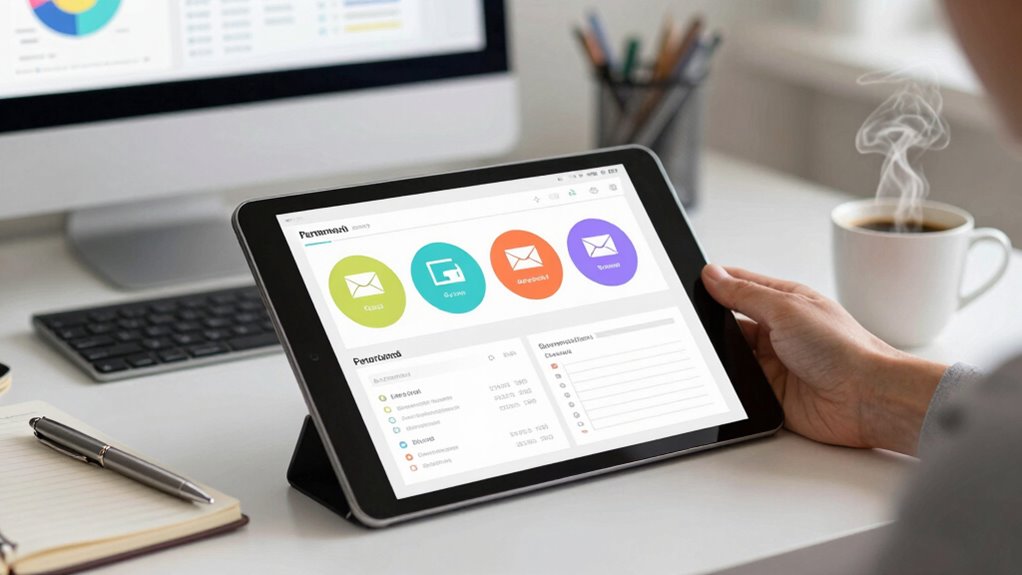
Personalization governance is essential for organizations aiming to deliver tailored experiences without compromising ethical standards or regulatory compliance. When you focus on customer segmentation, you can target specific groups with relevant messaging, making each email more meaningful and effective. Instead of casting a wide net with generic messages, you analyze data to identify distinct customer segments based on behaviors, preferences, and demographics. This targeted approach not only boosts engagement but also reduces the volume of emails you send, preventing your audience from feeling overwhelmed or annoyed. By understanding your customer segments deeply, you guarantee your communications resonate, fostering loyalty and trust.
However, as you refine your segmentation strategies, you must prioritize data privacy. Customers today are increasingly concerned about how their information is used. You’re responsible for safeguarding their data and respecting their privacy rights. This means implementing strict data privacy policies that comply with regulations like GDPR or CCPA. When you collect and process customer data, do so transparently. Clearly communicate how their information will be used and give them control over their preferences. Using data privacy as a cornerstone of your personalization governance not only protects your organization from legal risks but also builds credibility with your customers. They’re more likely to engage with your emails when they trust that their privacy is respected.
In practice, this involves setting up robust data management systems that limit access to sensitive information and regularly audit your data practices. You should also ensure your team understands the importance of data privacy and adheres to best practices. As you develop personalized campaigns, leverage only the data necessary to improve relevance and avoid over-collecting. This disciplined approach helps you stay compliant and minimizes the risk of privacy breaches, which can damage your reputation.
Balancing personalization with privacy isn’t just a technical challenge—it’s a strategic one. You need to establish clear governance policies that define how customer data is used for segmentation and messaging. This includes setting permissions, defining data retention timelines, and monitoring for compliance. By doing so, you create a framework where smarter, more targeted emails are sent fewer times, but with greater impact. Ultimately, your goal is to send fewer emails that truly matter to your audience, which requires a thoughtful combination of precise customer segmentation and unwavering commitment to data privacy. This approach not only elevates your brand’s reputation but also enhances customer relationships, making every email count.
A key component of effective personalization governance is understanding regulatory compliance and integrating it into your overall strategy. Incorporating data privacy regulations into your policies ensures that your organization remains aligned with legal standards and maintains customer trust.
As an affiliate, we earn on qualifying purchases.
Frequently Asked Questions
How Do I Measure the Success of Personalized Email Campaigns?
You measure success by tracking key metrics like open rates, click-through rates, and conversions, focusing on how well your customer segmentation and content customization resonate. If personalized emails lead to higher engagement and sales, you’re on the right track. Use A/B testing to refine your approach, and gather feedback to improve. Consistently analyze data to guarantee your personalization efforts are delivering smarter, more effective campaigns.
What Tools Facilitate Effective Personalization Governance?
You can use tools like customer segmentation platforms and compliance management software to facilitate effective personalization governance. These tools help you organize customer data, ensuring tailored messaging while respecting data privacy regulations. By automating segmentation and monitoring data access, you maintain control over personalization efforts. They also provide audit trails, helping you demonstrate compliance with data privacy laws, ultimately enabling smarter, more compliant email campaigns.
How Can I Balance Personalization With Customer Privacy?
Think of your relationship with customers as a delicate dance. To balance personalization with privacy, prioritize data privacy by being transparent about data use, and ask for consent openly. Respect boundaries to build consumer trust, like a trusted dance partner. Use data responsibly, delivering relevant content without overstepping. This approach guarantees your customers feel valued and secure, strengthening loyalty while keeping privacy at the forefront.
What Are Common Pitfalls in Email Personalization Strategies?
You often fall into the trap of over-personalization, which can alienate your target audience. Relying too heavily on content customization without understanding their preferences leads to irrelevant messages. Additionally, neglecting data privacy risks eroding trust. To avoid these pitfalls, focus on meaningful insights, keep messages authentic, and balance personalization with respect for customer privacy. This way, your emails stay engaging without crossing boundaries.
How Often Should Personalization Data Be Updated?
You should update your personalization data regularly to maintain data freshness and guarantee relevance. The ideal update frequency depends on your industry and customer behavior but generally ranges from weekly to monthly. For fast-changing data like recent purchases or location, daily updates may be necessary. Consistently review and refine your update schedule to keep your email campaigns smarter, more targeted, and engaging without risking outdated information.
As an affiliate, we earn on qualifying purchases.
Conclusion
By mastering personalization governance, you’ll transform your email strategy into a finely tuned machine that outperforms even the most legendary campaigns. Sending fewer, smarter emails isn’t just a good idea—it’s the secret weapon to skyrocketing engagement and building loyal relationships. When you harness the power of responsible, data-driven personalization, you’ll become unstoppable, turning your inbox into a powerhouse of relevance. Embrace this playbook, and watch your email impact soar beyond your wildest dreams!
customer data privacy management
As an affiliate, we earn on qualifying purchases.
As an affiliate, we earn on qualifying purchases.
As an affiliate, we earn on qualifying purchases.
Fall Picks
fall essentials
As an affiliate, we earn on qualifying purchases.