

To improve your targeting, start with cleaner, more accurate purchase intent segmentation. When your data is current and complete, you’ll better understand where your customers are in their buying journey. This clarity helps you craft personalized messages that resonate, increasing the chances of conversion. It also allows you to distinguish casual browsers from ready buyers, making your efforts more efficient. Keep going to discover how refining your segmentation logic can boost your marketing results even further.

Get business pricing on office and shipping supplies
- Business-only prices and quantity discounts
- Tax-exempt purchasing
- Multiple users, one account, clear invoices
Key Takeaways
- Cleaner logic ensures segmentation accurately reflects customer motivations, leading to more targeted and effective marketing efforts.
- Precise data and clear criteria help distinguish between different purchase intent stages for better message alignment.
- Simplified segmentation reduces errors, making customer journey mapping more reliable and actionable.
- Improved data quality enhances predictive capabilities, allowing proactive engagement based on true customer needs.
- Stronger segmentation foundations foster personalized content, increasing engagement and conversion rates.
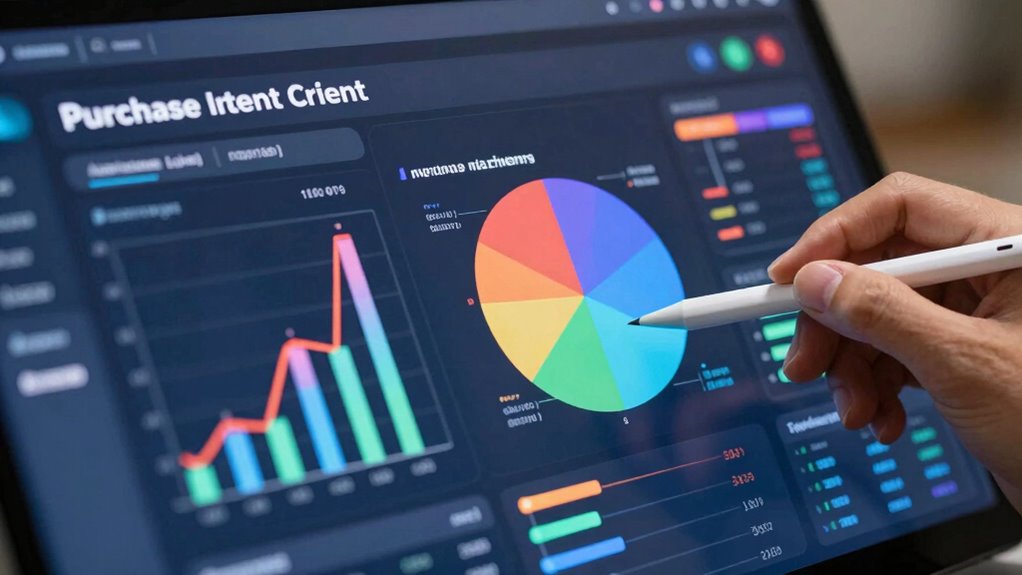
Understanding your customers’ purchase intentions is vital for tailoring marketing strategies that convert. When you grasp where a customer is in their journey, you can deliver the right message at the right moment, increasing the likelihood of a sale. Purchase intent segmentation hinges on accurately identifying these stages, which requires a clear view of the customer journey. The customer journey maps out every interaction your potential buyer has with your brand, from initial awareness to final decision. By analyzing this journey, you can determine what motivates their purchase and what barriers might be stopping them. But none of this is possible without data accuracy. If your data is outdated, incomplete, or inconsistent, your segmentation efforts become unreliable, leading you to misinterpret customer needs and behaviors. data accuracy is the foundation that ensures your segmentation truly reflects customer realities. A well-maintained customer data set helps identify emerging trends and shifts in consumer preferences, enabling you to stay ahead of the competition. Ensuring your data is regularly reviewed and validated further enhances its reliability and relevance.
Accurate data is essential for effective purchase intent segmentation and understanding customer motivations.
Good segmentation isn’t just about dividing your audience into broad groups; it’s about understanding their unique purchase motivations. When your data is precise and up-to-date, you can distinguish between those just browsing casually and those ready to buy. This clarity allows you to craft targeted campaigns that speak directly to each segment’s intent. For example, someone who has visited your pricing page multiple times shows a stronger purchase resolve than someone who just clicked on a blog post. Recognizing these signals helps you prioritize your efforts and allocate resources more efficiently. Additionally, leveraging customer journey mapping enhances your ability to analyze these interactions and refine your strategies further. Incorporating accurate customer data also improves your ability to forecast trends and adapt your offerings proactively. In today’s competitive landscape, understanding these customer behaviors is essential for staying responsive and agile.
Additionally, the quality of your data influences how well you can predict future behaviors. When your data accurately reflects customer interactions and preferences, you can anticipate their needs and adjust your marketing strategies accordingly. This predictive power enhances your ability to engage customers at the right moment, whether through personalized emails, retargeting ads, or special offers. The more reliable your data, the better you can align your messaging with their current stage in the customer journey, increasing your chances of closing the sale. Ensuring data accuracy is an ongoing process that requires regular review and validation to maintain its integrity and usefulness. As customer expectations evolve, maintaining high-quality data becomes even more critical in delivering consistent and relevant messaging.
Ultimately, purchase intent segmentation is all about making smarter decisions through cleaner logic. It’s not enough to gather data; you need accurate, well-organized data that provides insights into your customers’ true motivations. When you invest in improving data accuracy, you set a solid foundation for effective segmentation, allowing you to deliver more relevant content and build stronger relationships. Better targeting begins with cleaner logic—understanding the customer journey with precise data enables you to speak directly to your customers’ needs, guiding them seamlessly through their purchase path toward conversion.
customer data validation software
As an affiliate, we earn on qualifying purchases.
As an affiliate, we earn on qualifying purchases.
Frequently Asked Questions
How Do I Collect Accurate Purchase Intent Data?
To collect accurate purchase intent data, you need to focus on customer profiling and data validation. Start by gathering detailed customer information through surveys, website behavior analysis, and purchase history. Then, validate this data regularly to guarantee accuracy, removing outdated or inconsistent info. This approach helps you understand true customer needs, enabling more precise segmentation and targeted marketing efforts that boost conversion rates.
What Tools Are Best for Segmentation Analysis?
You should consider using tools like Tableau or Power BI for segmentation analysis, as they excel in data visualization and help you create detailed customer profiles. These tools enable you to analyze purchase intent data effectively, revealing patterns and behaviors. By visualizing your data clearly, you improve your customer profiling, making your targeting more precise. This results in better segmentation, ultimately increasing your marketing effectiveness and ROI.
How Often Should Purchase Intent Data Be Updated?
You should update your purchase intent data regularly, ideally every few weeks or monthly, to stay aligned with evolving customer behavior. Frequent updates improve data accuracy, helping you identify shifts in buying patterns and refine your targeting strategies. Relying on stale data risks misjudging customer needs, leading to less effective segmentation. Consistent updates guarantee your insights remain fresh, enabling better decision-making and more precise marketing efforts.
Can Purchase Intent Segmentation Improve ROI?
Yes, purchase intent segmentation can improve ROI by aligning your marketing efforts with customer behavior and market trends. When you target audiences based on their intent, you’re more likely to reach prospects genuinely interested in your products or services. This focused approach reduces waste, increases conversion rates, and boosts overall efficiency. By continuously analyzing customer behavior and adapting to market trends, you guarantee your segmentation remains relevant, maximizing your return on investment.
What Common Mistakes Should I Avoid in Segmentation?
You should avoid common mistakes like neglecting detailed customer profiling, which leads to broad, ineffective segments. Studies show that companies using refined market research see a 20% increase in campaign ROI. Don’t rely solely on assumptions; use data-driven insights to create precise segments. Overlooking these steps risks misaligning your messaging, reducing engagement, and wasting resources. Focus on clean, logical segmentation to improve targeting and boost your results.
As an affiliate, we earn on qualifying purchases.
Conclusion
By now, you see that cleaner logic in purchase intent segmentation isn’t just a nice-to-have—it’s essential for sharper targeting. When your data is clear and precise, you can hit the mark more often than not. Remember, it’s better to have all your ducks in a row than to chase after false leads. With smarter segmentation, you’ll turn prospects into loyal customers and make every marketing dollar count.
customer journey mapping software
As an affiliate, we earn on qualifying purchases.
As an affiliate, we earn on qualifying purchases.
As an affiliate, we earn on qualifying purchases.
Halloween Picks
halloween
As an affiliate, we earn on qualifying purchases.