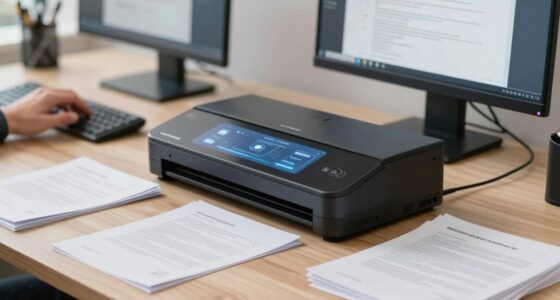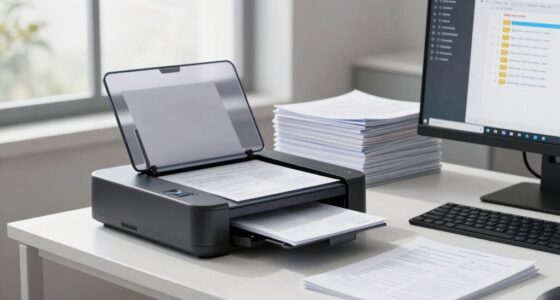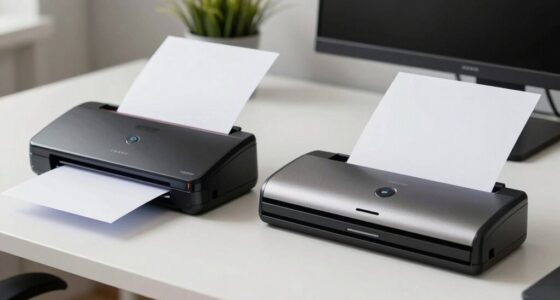

To keep your scanner working efficiently, you need to balance scan quality and speed. If you set the quality too high, scans take longer, slowing down your workflow. Conversely, choosing too low quality can result in blurry or unclear images. Regular maintenance like cleaning, calibration, and updating software helps optimize both. Finding the right balance ensures smooth operation and clear results. Maintain exploring to discover how proper upkeep can make a big difference.

Get business pricing on office and shipping supplies
- Business-only prices and quantity discounts
- Tax-exempt purchasing
- Multiple users, one account, clear invoices
Key Takeaways
- Overly aggressive calibration or cleaning can slow down scanning, reducing overall speed.
- Focusing solely on speed may compromise scan accuracy and image quality.
- Regular maintenance ensures optimal balance between high-quality images and efficient processing.
- Worn parts or dirty optics degrade scan quality, prompting slower scans or rescans.
- Proper calibration and cleaning prevent hardware issues that negatively impact both scan speed and quality.
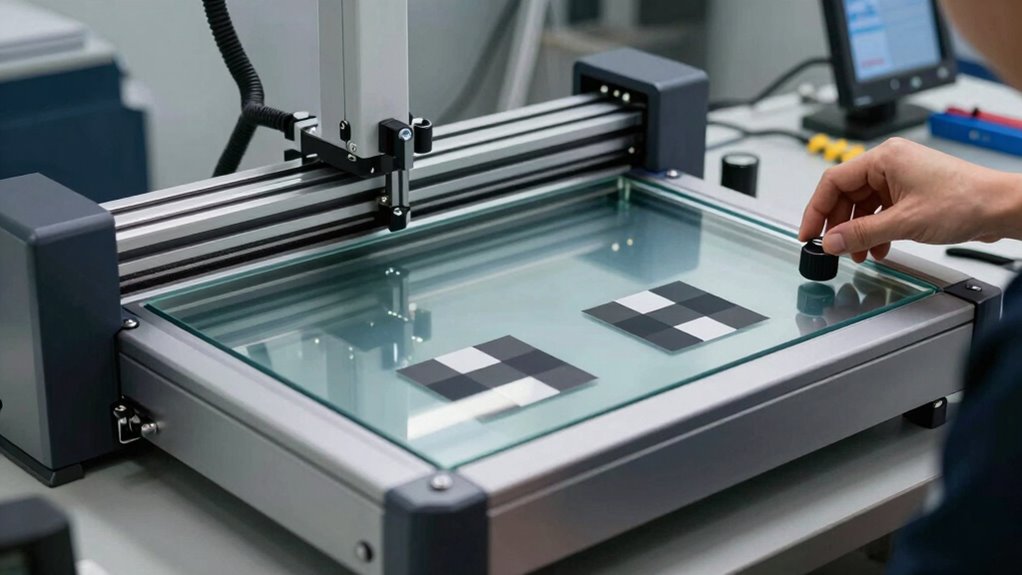
Ever wondered how to keep your scanner functioning at its best? The key lies in understanding the balance between scan quality and speed, and how proper maintenance plays a crucial role. One common issue that disrupts this balance is a paper jam, which not only halts your workflow but can also lead to misaligned scans or damage to internal parts. Regularly clearing paper jams and inspecting the feed rollers can prevent these disruptions and keep your scanner running smoothly. When a paper jam occurs, it’s tempting to force the paper free, but doing so can damage delicate components. Instead, carefully remove the jammed paper, ensuring no torn pieces are left behind, which could cause future jams. This simple step helps maintain ideal paper path alignment, directly impacting both speed and scan quality. Additionally, understanding how to troubleshoot common issues can significantly reduce downtime and extend your device’s lifespan.
Another essential aspect of scanner maintenance is the calibration process. Over time, your scanner’s sensors and optics may drift out of alignment, leading to inconsistent scan quality. Running calibration regularly ensures that colors, contrast, and resolution stay accurate and sharp. Many scanners have built-in calibration tools or software, making this task straightforward. You should perform calibration after significant hardware changes, routine maintenance, or if you notice color shifts or blurry images. Proper calibration not only enhances image clarity but also prevents the need for rescanning, saving you time and effort. Regular calibration can also help identify early signs of hardware wear, allowing for timely repairs and avoiding unexpected breakdowns. Keeping the internal components clean and well-maintained further supports optimal calibration results. Incorporating routine cleaning practices can help maintain the overall health of your scanner and improve its longevity. Additionally, understanding the wear and tear that occurs over time can help you anticipate necessary replacements before issues arise.
Regular calibration ensures sharp, accurate scans and prevents the need for rescanning, saving time and effort.
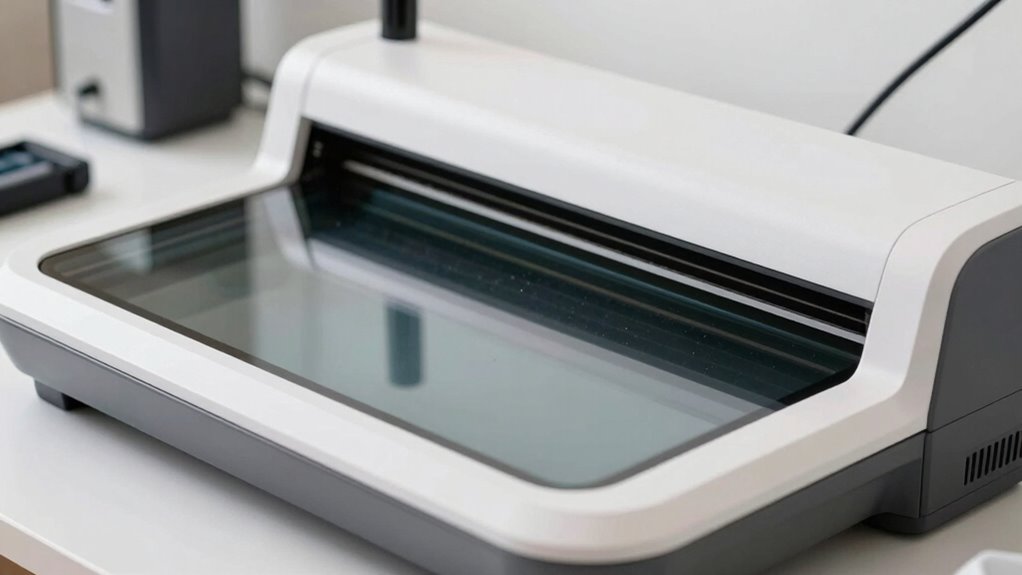
Maintaining your scanner’s cleanliness is equally important. Dust, fingerprints, and debris accumulate on the glass surface and internal components, degrading image quality and slowing down processing speeds. Use a soft, lint-free cloth and gentle cleaning solutions to keep the glass spotless. Avoid harsh chemicals that could damage sensitive parts. By keeping the scanning area clean, you ensure sharp images and reduce the likelihood of errors caused by dirt interfering with sensors. This proactive approach to cleaning can also extend the overall lifespan of your device.
Finally, pay attention to your scanner’s software updates and driver installations. Manufacturers often release updates that improve performance, fix bugs, or enhance compatibility with new operating systems. Staying current with these updates ensures your scanner operates efficiently. Combining this with routine hardware checks—like inspecting cables and replacing worn rollers—extends your scanner’s lifespan and maintains a healthy balance between scan quality and speed. Keeping an eye on scanner maintenance tips can help you stay proactive about device care. Moreover, understanding the importance of routine maintenance can empower you to troubleshoot problems before they escalate, ensuring consistent operation.
As an affiliate, we earn on qualifying purchases.
Frequently Asked Questions
How Often Should I Calibrate My Scanner for Optimal Performance?
You should calibrate your scanner every few months or whenever you notice a drop in scan accuracy or quality. Calibration frequency depends on how often you use it and the types of documents you scan. Regular calibration helps maintain scanner accuracy, ensuring your scans are sharp and consistent. If you handle sensitive or detailed work, consider calibrating more frequently to keep performance ideal and avoid issues like color mismatches or blurry images.
What Are the Signs of a Failing Scanner Motor?
A stitch in time saves nine, and spotting signs of a failing scanner motor helps you avoid bigger issues. If you notice unusual motor noise or abnormal vibrations, these are clear signs your motor may be failing. You might also experience slower scan speeds or inconsistent quality. Addressing these symptoms early guarantees your scanner stays reliable, saving you time and money while maintaining peak scan performance.
Can Cleaning the Scanner Glass Damage the Device?
Cleaning the scanner glass can damage your device if you’re not careful, especially if you disturb sensor alignment or scratch the glass. Dust accumulation on the glass or sensors can lead to poor scan quality, so gentle cleaning is essential. Use a soft, lint-free cloth and avoid harsh chemicals. Proper cleaning preserves sensor alignment and prevents scratches, ensuring your scanner continues to produce high-quality, fast scans without risking damage.
How Does Ambient Temperature Affect Scan Quality?
Think of your scanner like a camera adjusting to light; ambient temperature influences its performance. When it’s too hot or cold, scan quality suffers—images may be blurry or uneven due to temperature-related sensor sensitivity shifts. High temperatures can cause overheating, reducing accuracy, while cold temperatures slow down internal components. Keeping a stable ambient temperature ensures consistent scan quality, preventing distortions and ensuring your scans are clear and reliable.
Are There Specific Maintenance Tips for High-Volume Scanners?
For high-volume scanners, follow a maintenance checklist regularly, including cleaning rollers and sensors to prevent jams and guarantee smooth operation. Keep software updated to improve performance and fix bugs that can affect scan speed and quality. Also, monitor and replace parts as needed, and operate the scanner within recommended settings. These steps help preserve peak scan quality and speed, assuring your equipment handles large workloads efficiently.
As an affiliate, we earn on qualifying purchases.
Conclusion
Remember, maintaining your scanner isn’t just about avoiding glitches — it’s about striking the perfect balance between quality and speed. Think of your scanner as a finely tuned instrument; neglecting its needs can turn it into a discordant note in your workflow. By staying proactive with regular maintenance, you guarantee every scan hits the high notes of clarity and efficiency. Don’t let poor upkeep turn your seamless process into a cacophony of errors—keep it harmonized and running smoothly.
document scanner maintenance tools
As an affiliate, we earn on qualifying purchases.
As an affiliate, we earn on qualifying purchases.
As an affiliate, we earn on qualifying purchases.
Fall Picks
fall essentials
As an affiliate, we earn on qualifying purchases.