
Personalization becomes truly useful in RFM email segmentation when you understand your customers’ behaviors and preferences. By analyzing Recency, Frequency, and Monetary data, you can target your messages more accurately. Tailoring content for high-value, loyal, or inactive customers boosts engagement and sales. Combining this with demographic and behavioral insights makes your campaigns relevant and effective. Keep exploring how strategic segmentation can help you build stronger customer relationships and drive better results.

Get business pricing on office and shipping supplies
- Business-only prices and quantity discounts
- Tax-exempt purchasing
- Multiple users, one account, clear invoices
Key Takeaways
- Personalization based on RFM segments targets customers with relevant offers, increasing engagement and conversion rates.
- Tailored messaging aligns with customer lifecycle stages, enhancing relevance and fostering loyalty.
- Combining RFM with additional data (behavioral, demographic) refines personalization accuracy.
- Personalized campaigns based on RFM insights encourage higher open and click-through rates.
- Ongoing data analysis ensures continuous relevance, making personalization a strategic loyalty-building tool.
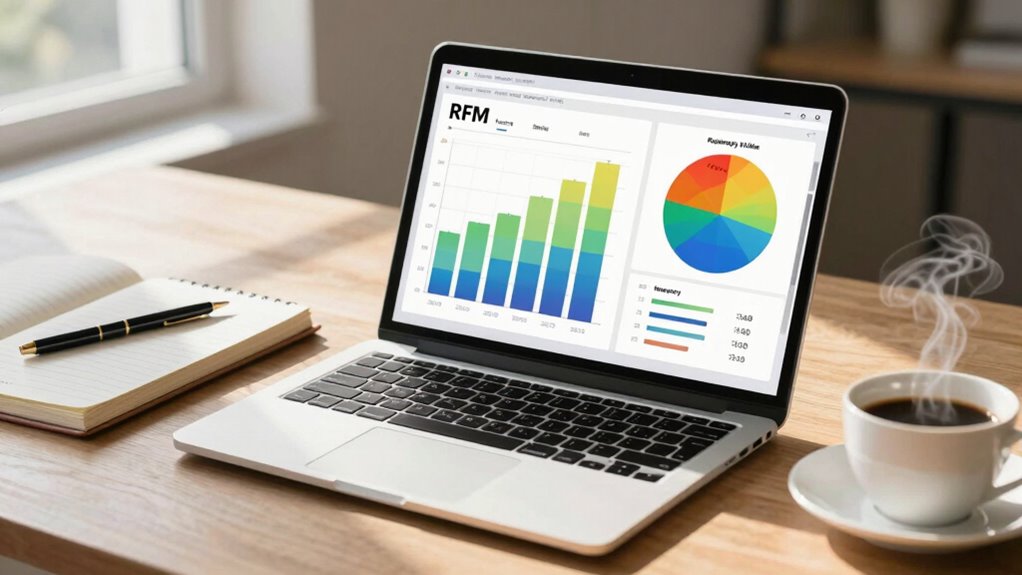
Ever wondered how to target your email campaigns more effectively? The secret lies in understanding your customers deeply enough to customize your messages. RFM email segmentation—based on Recency, Frequency, and Monetary value—offers a powerful way to do this. By leveraging data analysis, you can identify different customer segments and craft tailored emails that resonate with each group. This approach not only boosts engagement but also strengthens customer loyalty, which is essential for sustained growth.
Data analysis is at the core of effective RFM segmentation. It helps you sift through vast amounts of customer data to uncover meaningful patterns. For example, by analyzing how recently a customer made a purchase, you can determine their current level of engagement. Customers who purchased recently are more likely to respond positively to new offers, while those who haven’t bought in a while might need re-engagement strategies. Similarly, tracking how often customers buy helps you identify your most loyal buyers versus occasional shoppers. The monetary value metric pinpoints your highest spenders, enabling you to prioritize their needs and reward their loyalty. When you combine these three data points, you gain a clear picture of each customer’s value and behavior, making your email campaigns more targeted and relevant. Recognizing these patterns through behavioral insights allows for even more precise segmentation. Additionally, incorporating demographic data can further enhance your understanding of customer preferences and tailor your campaigns accordingly.
Personalization becomes truly useful when you use this segmentation to craft specific messaging. Instead of sending generic emails, you address each customer’s unique position within the customer lifecycle. For instance, recent high-value buyers might receive exclusive offers or early access to new products, reinforcing their loyalty. Customers with high frequency but lower monetary spend could be encouraged to increase their basket size with tailored incentives. Inactive customers, identified through recency data, might receive re-engagement campaigns designed to spark their interest again. This level of customization shows that you understand their needs, making your communications more meaningful and increasing the likelihood of conversion. Additionally, incorporating insights from content analysis can further refine your messaging strategies. Employing customer feedback can also help you better understand what resonates with your audience and improve your segmentation strategies. Using predictive analytics can give you a future-oriented view of customer behavior, making your personalization even more effective.
Most importantly, this targeted approach improves customer loyalty over time. When customers see that you recognize their preferences and respond with relevant offers, they’re more likely to stay engaged with your brand. The results of data analysis and RFM segmentation aren’t just better open and click-through rates—they foster trust and a stronger customer-brand relationship. By continuously refining your segments based on ongoing data collection, you ensure your email campaigns stay relevant and effective. In the end, combining data analysis with personalized messaging transforms your email marketing into a strategic tool for building lasting customer loyalty.
As an affiliate, we earn on qualifying purchases.
Frequently Asked Questions
How Often Should RFM Segments Be Updated for Accuracy?
You should update your RFM segments at least every three to six months to maintain data freshness and support customer loyalty. Regular updates guarantee your segmentation reflects recent buying behaviors, helping you personalize emails effectively. If your customer base is highly active, consider updating more frequently, like monthly. This keeps your insights current, enables timely offers, and strengthens your connection with customers, ultimately boosting engagement and loyalty.
Can RFM Segmentation Be Applied to Non-Retail Industries?
Absolutely, RFM segmentation isn’t just a retail party trick. You can totally adapt it across industries with some clever cross-industry adaptation. Instead of purchase recency, frequency, and monetary value, you might focus on engagement levels, service interactions, or project completion rates. Industry-specific metrics help tailor the approach, making your segmentation meaningful and actionable, whether you’re managing a SaaS platform, a healthcare system, or a manufacturing line.
What Tools Are Best for Implementing RFM Email Segmentation?
You should consider tools like Excel, which is great for basic data analysis of customer behavior, and specialized platforms like Mailchimp or Klaviyo that automate RFM segmentation. These tools help you analyze purchase frequency, monetary value, and recency, making segmentation more precise. Using such tools, you can tailor your emails based on customer behavior, boosting engagement and conversions through effective, data-driven personalization.
How Does RFM Segmentation Impact Email Deliverability Rates?
RFM segmentation boosts your email deliverability rates by fostering customer loyalty through targeted messaging. When you use accurate data, you reduce bounce rates and spam complaints, ensuring your emails reach engaged customers. This personalized approach not only improves engagement but signals to email providers that your content is relevant, further enhancing deliverability. By prioritizing data accuracy and customer loyalty, you create a more effective email strategy that reaches the right audience consistently.
Are There Risks of Customer Alienation With Rfm-Based Personalization?
You might risk alienating customers if your RFM-based personalization feels too intrusive or inconsistent, which can harm customer trust. To avoid this, maintain a balance between personalization and respecting privacy, ensuring your messages feel relevant without overstepping boundaries. When you strike this personalization balance, your customers stay engaged and trust your brand more, fostering loyalty without feeling overwhelmed or misunderstood.
customer loyalty email templates
As an affiliate, we earn on qualifying purchases.
As an affiliate, we earn on qualifying purchases.
Conclusion
Now that you understand the power of RFM email segmentation, imagine the possibilities when you truly harness it. Your personalized messages could reveal customer loyalty and boost sales in ways you never thought possible. But here’s the catch—you need to act now, before your competitors do. Will you seize this opportunity and transform your marketing approach? The choice is yours, and the future of your business depends on it. Don’t wait—your next big breakthrough is just one email away.
personalized email marketing software
As an affiliate, we earn on qualifying purchases.
As an affiliate, we earn on qualifying purchases.
As an affiliate, we earn on qualifying purchases.
Halloween Picks
halloween
As an affiliate, we earn on qualifying purchases.