
After each event, review your gear to identify what needs cleaning, repairing, or replacing, and update your checklist to guarantee accuracy. Use labeled containers and organize items by accessibility, with fragile items well-protected. Practice packing routines regularly and verify all components before transport. A disciplined routine reduces last-minute anxiety, keeps your equipment in top shape, and speeds up setups. Keep these habits in mind, and you’ll discover more tips to streamline your event preparations.

Get business pricing on office and shipping supplies
- Business-only prices and quantity discounts
- Tax-exempt purchasing
- Multiple users, one account, clear invoices
Key Takeaways
- Conduct a thorough post-event review to identify damaged, missing, or dirty equipment, updating your packing checklist accordingly.
- Organize gear using labeled containers and color-coding for quick identification and efficient packing.
- Perform routine maintenance, such as cleaning and battery checks, to ensure equipment longevity and reliability.
- Follow a consistent packing routine, verifying all items against the checklist and packing logically for easy access.
- Regularly update procedures to minimize errors, reduce setup time, and ensure dependable event preparations.
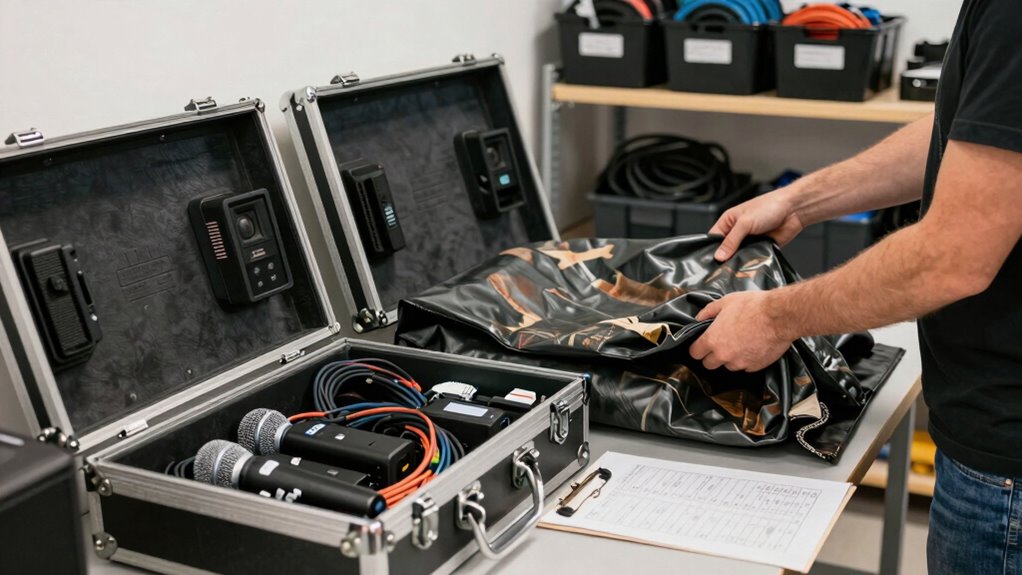
After an event, your gear packing routine is essential for staying organized and ready for the next outing. The way you handle equipment organization now can save you time, reduce stress, and prevent forgotten gear. Developing a solid packing checklist is key to ensuring everything makes it back into your kit without hassle. Start by reviewing what you used during the event, and note any items that need cleaning, repairing, or replacing. With a clear packing checklist, you can quickly verify each item, avoiding last-minute searches or missed gear. This checklist should include every piece of equipment, tools, accessories, and safety gear you relied on. Keep it updated after each outing, so it evolves with your setup and reflects what’s truly necessary.
Review and update your packing checklist after each event to stay organized and prevent forgotten gear.
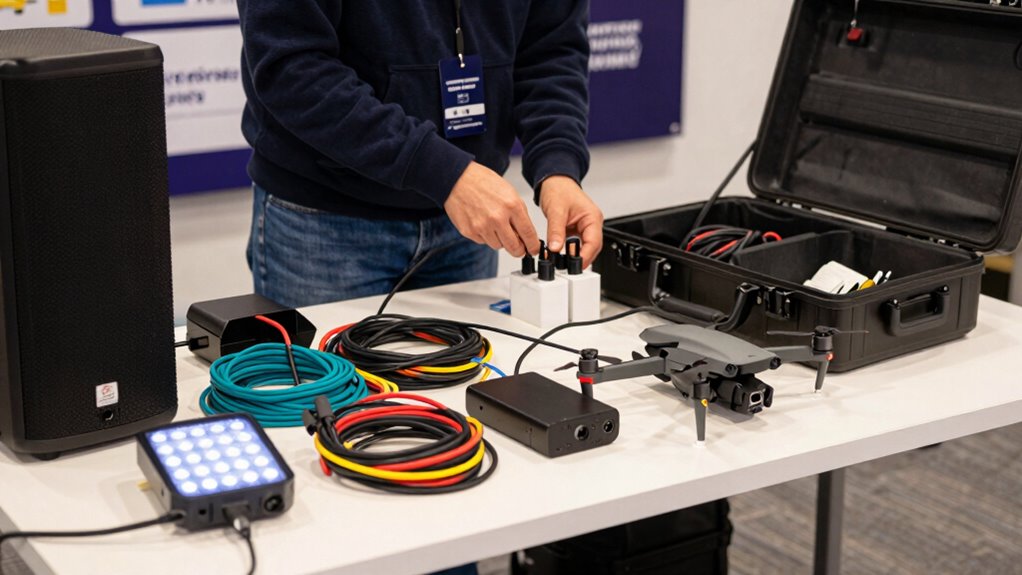
Efficient equipment organization begins with a designated storage system. Use labeled containers, bins, or bags to segregate different types of gear—cables, batteries, personal items, or safety equipment. When packing, place items logically: frequently used gear should be easily accessible, while backup or infrequently used items can be stored toward the back or bottom. This organization minimizes chaos when you unpack or repack, saving valuable time. Consider color-coding or using clear containers so you can identify what’s inside at a glance. Also, make sure fragile items are well-padded and stored separately to prevent damage during transit. Incorporating equipment organization strategies can further streamline your process and protect your gear during transit. Additionally, keeping a well-maintained inventory can help prevent equipment loss and ensure all components are accounted for. Regularly practicing your packing routine can improve efficiency and make the process feel more automatic. Maintaining proper gear maintenance routines can extend the lifespan of your equipment and improve reliability. Establishing a consistent packing routine can also help you develop muscle memory, making the process quicker and more reliable.
Once you’ve completed your post-event review, follow a consistent routine for packing and cleaning. Always wipe down equipment to remove dirt, dust, or moisture that could cause damage over time. Replace or recharge batteries, and check that all cords and connectors are intact. Your packing checklist acts as your guide, helping you verify each item before sealing up your gear. Double-check items that tend to be overlooked, like small accessories or protective cases. When everything is accounted for and in order, pack your gear carefully—using protective padding when necessary to prevent damage during transportation. Creating a habit of methodical equipment organization and sticking to your packing checklist transforms what might feel like a chore into a reliable routine. Over time, this consistency ensures you don’t forget essential gear and that everything remains in good condition. It also makes setup for your next event faster and smoother. When your gear is well-organized and your checklist is complete, you’ll face fewer surprises and enjoy a more seamless experience from teardown to setup. This disciplined approach ultimately boosts your confidence, letting you focus on the event itself rather than scrambling at the last minute.
labeled storage containers for event gear
As an affiliate, we earn on qualifying purchases.
As an affiliate, we earn on qualifying purchases.
Frequently Asked Questions
How Do I Prioritize Gear for Packing Efficiency?
You should prioritize gear based on importance and frequency of use, starting with gear organization to streamline packing. Use a detailed packing checklist to make certain nothing’s missed, and pack essential items last for quick access. Keep frequently used gear in designated, easily accessible spots, and pack less critical equipment first. This method saves time, reduces stress, and guarantees that crucial gear arrives ready for your next event.
What Tools Are Essential for Quick Gear Checks?
You should use essential tools like a digital checklist app or a printed checklist to streamline equipment maintenance and optimize your packing routine. A reliable checklist helps you quickly verify that all gear is accounted for and functioning properly. Incorporate labels and color-coding for easy identification, and keep a repair kit on hand for immediate fixes. These tools guarantee efficient quick gear checks, reducing errors and increasing setup reliability.
How to Handle Damaged or Malfunctioning Equipment Post-Event?
When handling damaged or malfunctioning equipment after an event, start by evaluating the damage and performing equipment repair if possible. Use your spare parts to replace broken components quickly, minimizing downtime. If the damage is extensive, prioritize repairs or replacements based on urgency and availability. Keep detailed records of issues and fixes, which helps streamline future maintenance and guarantees your gear stays reliable for upcoming events.
What Is the Best Way to Label Gear for Easy Identification?
Imagine your gear like a colorful garden, each plant thriving with the right label. You should use color coding to categorize equipment—red for cables, blue for microphones—and waterproof labels to guarantee labels stay legible through rain or spills. This makes identification quick and effortless, even in chaotic situations. Proper labeling reduces mix-ups and saves time, letting you focus on the event rather than searching for the right gear.
How Can I Prevent Gear Loss During Packing?
To prevent gear loss during packing, you should always use secure storage solutions like lockable containers or designated compartments. Implement backup plans by double-checking each item against your packing list before closing up. Keep gear organized and in designated spots, so nothing gets misplaced. Regularly review your packing procedures and make sure all gear is accounted for, reducing the risk of loss and making your setup more reliable.
As an affiliate, we earn on qualifying purchases.
Conclusion
By mastering your post-event gear packing routine, you’re fundamentally planting seeds for a smoother future. Think of it as tending a garden—each properly stored piece of equipment is a healthy sprout, ready to bloom at your next event. When you pack with care, you’re weaving a safety net that catches mistakes before they fall. Keep this routine steady, and your setup will run like a well-oiled machine, transforming chaos into a symphony of seamless success.
fragile item padding for transport
As an affiliate, we earn on qualifying purchases.
As an affiliate, we earn on qualifying purchases.
As an affiliate, we earn on qualifying purchases.
Halloween Picks
halloween
As an affiliate, we earn on qualifying purchases.