📊 Full opportunity report: A Restaurant Group’s Guide To Auditing Supplier Bills on IdeaNavigator AI — validation score, market gap, and execution plan.

Get business pricing on office and shipping supplies
- Business-only prices and quantity discounts
- Tax-exempt purchasing
- Multiple users, one account, clear invoices
TL;DR
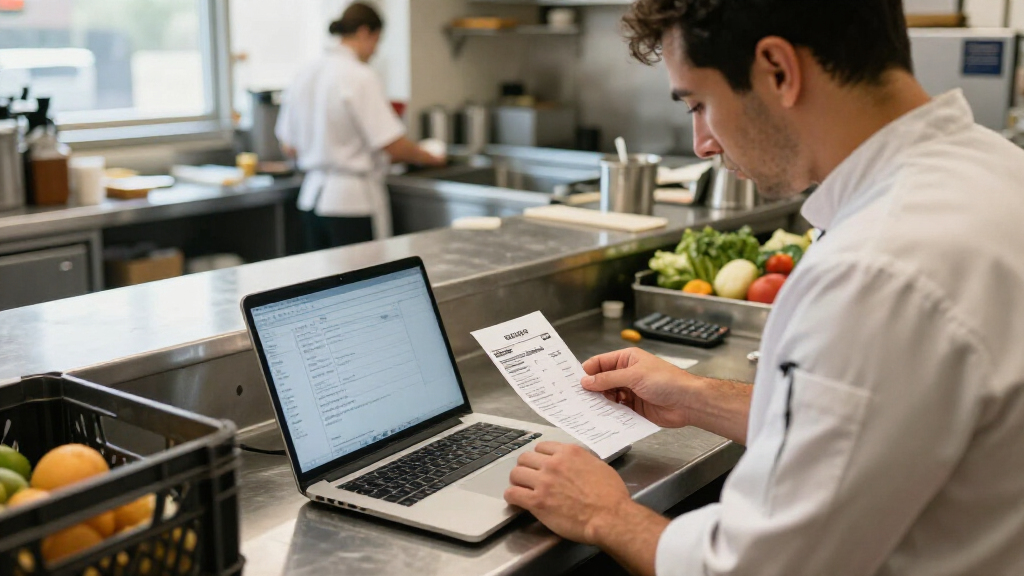
A proposed supplier-bill auditing workflow for independent restaurant groups would compare invoice lines with agreed prices, orders and received deliveries, then track credit requests. The idea has not been shown to recover a specific amount: its suggested test is a 90-day review of paid invoices at three groups.
IdeaNavigator AI has proposed a supplier-bill auditing workflow for independent restaurant groups, designed to compare invoices with orders, delivery records and agreed prices. The proposal recommends testing it against 90 days of paid invoices at three groups; no recovery results or completed trial are reported.
According to IdeaNavigator AI’s proposal, the tool is aimed at a purchasing director or controller at an independent, multi-location restaurant group buying from broadline and specialty food and beverage suppliers. It would ingest invoices through electronic data interchange where available, or from PDFs and photos using optical character recognition. It would also load supplier contracts or quote sheets and the restaurant group’s order guide.
The proposal says the system would compare what was ordered, received and billed on each invoice line with the agreed price. It would flag possible overcharges, cases billed in full despite short shipments, substitutions billed at a higher price and week-to-week price increases. The proposed workflow would then draft a credit request for the supplier and track it until the credit appears on a later invoice.
IdeaNavigator AI describes two possible pricing models: a monthly fee per location and an optional contingency fee based on recovered credits. The proposal does not set subscription prices, report supplier responses or provide measured savings. Those figures would have to be established through testing.
Testing Savings Against Food Costs
As IdeaNavigator AI frames the financial case, it rests on identifying billing discrepancies and securing credits, not simply finding price differences. For a multi-unit group processing hundreds of supplier invoices a week, even small errors could recur across locations. But a flagged discrepancy is not automatically a recoverable overcharge: records must support the claim, suppliers must agree to issue credits, and the credits must be tracked.
The proposed test would measure documented credits per location and compare them with the planned subscription fee. That would give restaurant operators a more practical basis for deciding whether the service is worth paying for than a count of flagged invoice lines alone. The proposal does not establish that the approach will produce savings or that any savings will exceed its cost.
The workflow also brings together information that can sit in separate systems or documents: invoice files, order guides, delivery records and supplier pricing terms. Its usefulness would depend on how reliably those records can be matched, including when product descriptions, units or substitutions differ.
Popular right now

De'Longhi Dinamica Plus Fully Automatic Espresso Machine

De'Longhi Rivelia Fully Automatic Espresso Machine with Milk Frother, White

Dyson Big Ball Multi Floor Canister Vacuum, Yellow
As an affiliate, we earn on qualifying purchases.
Food Price Pressure Behind the Proposal
IdeaNavigator AI’s proposal cites the USDA Economic Research Service’s September 25, 2026 Food Price Outlook. It says the outlook forecasts retail beef and veal prices rising 9.4% and wholesale beef prices rising 8.5% in 2026, while food-away-from-home prices are forecast to rise 3.5%. These are forecasts for specified price categories and the 2026 period, not measurements of supplier overbilling or restaurant-group costs.
IdeaNavigator AI argues that when protein costs rise faster than menu prices, a missed contract price or an unnoticed supplier increase can put pressure on restaurant margins. The proposed audit addresses the gap between agreed and billed terms; it is not a remedy for increases that are correctly applied under supplier pricing agreements.
As described in the proposal, the suggested first step is a 90-day lookback at invoices already paid, alongside contracts or quote sheets, for three restaurant groups. The groups would tally amounts billed above agreed prices, short-shipped cases billed in full and price creep, then compare documented credits with the proposed fee.
Trial Results and Data Gaps
IdeaNavigator AI’s proposal provides no completed pilot or recovery figures. It is not yet clear how many discrepancies the workflow would identify, how often suppliers would approve credits, or how long those credits would take to appear on later invoices. The proposed three-group exercise is a validation plan, not evidence that the product has produced savings.
Other open questions include how the system would verify received quantities when delivery records are incomplete, how it would handle substitutions and inconsistent product units, and what level of human review would be needed before sending a claim. The proposal also does not specify subscription or contingency-fee rates, integration requirements, or how performance would vary by supplier and restaurant group.
A Three-Group Invoice Review
IdeaNavigator AI identifies the next step as a proposed 90-day review across three restaurant groups, using paid invoices and supplier contracts or quote sheets. The test should separate documented price differences and delivery shortfalls from credits that suppliers actually approve and post.
For the idea to pass its stated validation test, documented credits per location would need to clearly exceed the planned subscription fee. No launch date, participating groups or trial results have been announced in the information available. Until those details are reported, the tool’s savings potential and commercial viability remain unverified.
Source: IdeaNavigator AI
Key Questions
What would the proposed restaurant supplier auditor do?
According to IdeaNavigator AI’s proposal, it would compare supplier invoice lines with orders, delivery records and agreed prices, flag potential discrepancies, and help prepare and track supplier credit requests.
Has the tool been shown to recover credits?
No recovery results are provided in the proposal. It sets out a 90-day review at three restaurant groups as a way to test whether documented credits could justify the service fee.
Which billing issues would it look for?
The proposal lists checks for prices above contract or quote terms, short shipments billed in full, higher charges for substitutions, and price increases between orders.
How would a restaurant group judge whether it is worthwhile?
The proposal’s measure is documented credits per location compared with the planned subscription fee. A useful assessment would also distinguish flagged discrepancies from credits actually approved and received.
Source: IdeaNavigator AI