
TL;DR

Get business pricing on office and shipping supplies
- Business-only prices and quantity discounts
- Tax-exempt purchasing
- Multiple users, one account, clear invoices
Halloween themed marketing props are physical or digital items used to make a promotion feel seasonal, memorable, and shareable. Choose props that fit your audience and brand, connect clearly to an offer or experience, stay safe and accessible, and track results such as visits, redemptions, or tagged posts.
A glowing pumpkin in a shop window can stop a passerby. A glowing pumpkin beside an unreadable sale sign? That may be all they remember. Halloween themed marketing props work best when they do more than decorate: they help customers notice your business, understand your promotion, or join in.
These props can be physical, like a branded photo wall or seasonal packaging, or digital, like a social media filter. The right choice depends on your brand, audience, space, and budget. A children’s bookstore might create a friendly monster reading corner; a café could print a small Halloween offer on takeaway cups.
This guide covers how to pick props that fit, turn them into useful customer experiences, keep displays safe and welcoming, and judge whether your campaign earned its space. Halloween falls on October 31, but your planning and promotion may need to start weeks earlier, especially if you sell costumes, décor, or event tickets.
Give each prop a clear job: attract attention, explain an offer, invite participation, or decorate an event.
Match Halloween imagery to your brand, audience, and venue; family-friendly seasonal marketing need not use horror.
Make interactive moments easy to use, clearly branded, and optional to share.
Compare renting, buying, making, and digital options using setup, storage, maintenance, and reuse costs.
Choose a campaign measure before launch, such as visits, redemptions, attendance, or tagged posts.
What Counts as a Halloween Marketing Prop—and What Should It Do?
A Halloween marketing prop is a physical or digital item used to attract attention, communicate a promotion, or encourage customer participation. It might be a window display, themed packaging, branded costume accessory, photo backdrop, inflatable figure, or social media filter. The useful test is simple: can you explain what the prop does for the customer and the campaign?
That distinction matters because a seasonal object alone does not guarantee a marketing result. A large skeleton outside a toy shop may catch the eye, but a skeleton holding a sign for a Saturday costume parade gives visitors a reason to come inside. Attention is the opening; a clear next step is the point.
Think of a prop like a shop assistant who cannot speak. Its colors, placement, and message need to guide a visitor toward one action: browse a seasonal collection, redeem an offer, attend an event, or take a photo. If the display tries to promote five things at once, the message gets lost in the cobwebs. The tradeoff is between breadth and clarity: one prop can support several campaign jobs, but piling on multiple messages makes it harder for a customer to know what to do first.
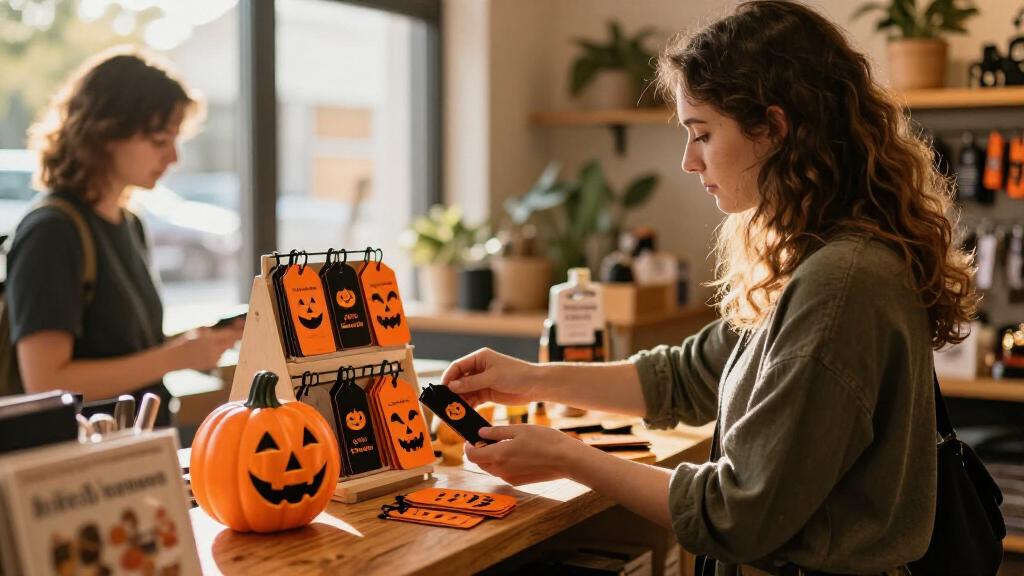
For example, a bakery could use pumpkin-orange labels on a limited-edition pastry box, then place a matching display beside the counter. The packaging makes the product feel seasonal; the display helps customers spot it. In that case, the props support the product rather than competing with it. Useful props connect a visual cue to a clear campaign purpose. That connection also makes the campaign easier to evaluate: if the display points to a specific pastry, the bakery can compare sales of that item rather than guessing whether general Halloween décor mattered.
Halloween themed photo booth backdrop
As an affiliate, we earn on qualifying purchases.
As an affiliate, we earn on qualifying purchases.
Choose a Spooky Style Your Customers Will Actually Enjoy
Halloween themed marketing props work when their mood fits your brand, venue, and audience. A friendly pumpkin patch suits a family shop; sharp horror imagery may feel wrong there, even if it gets noticed. Choose a style that customers can recognize as yours before you add bats, orange lights, or fake cobwebs. The style is part of the customer experience: it can make the business feel approachable, exciting, or out of step with what people came for.
Start with the people who will see the display. A children’s museum might use cheerful ghosts and a daytime scavenger hunt, while a bar advertising a late-night costume event may prefer a darker palette. Neither style is universally better; the match matters. Seasonal does not have to mean scary. A mismatch can draw attention but still reduce trust or comfort, especially when customers cannot easily avoid the display on their way inside.
A neighborhood bookstore, for instance, could set up a “monster book club” table with illustrated creature cutouts, a stack of spooky stories, and a sign offering a small discount on selected titles. The props make the promotion easy to find, but the books stay at the center. If the shop instead filled its entrance with giant decorations, customers might have trouble seeing what it sells—or reaching the doorway. The first choice uses décor to reinforce the store’s identity; the second spends space and attention on spectacle at the expense of browsing.
As you choose colors and imagery, think about whether people who do not celebrate Halloween can still use your space comfortably. Avoid relying on stereotypes or graphic imagery, and offer a non-scary path through the experience. An inviting display can still have a little theatrical sparkle: think warm amber light and paper bats, not a jump scare at the entrance. This does not require removing the seasonal theme; it means making participation a choice so the campaign welcomes more customers without diluting its personality.
branded Halloween costume accessories
As an affiliate, we earn on qualifying purchases.
As an affiliate, we earn on qualifying purchases.
Turn Decorations into an Experience Customers Can Join
Interactive Halloween props give customers something to do, not just something to glance at. A photo spot, try-on accessory, themed giveaway, or simple scavenger hunt can connect your display with a memorable moment. Keep the activity easy to understand and link it to a specific campaign goal. The simpler the action, the less explanation staff need to provide and the more likely customers are to take part; more elaborate activities can feel distinctive, but they also add setup, staffing, and accessibility demands.
Try this simple sequence when planning an interactive prop:
- Pick one outcome: choose visits, offer redemptions, event sign-ups, or customer-created posts.
- Build one easy action: invite shoppers to pose, find a hidden paper bat, or try a costume accessory.
- Add a natural brand cue: place your logo, product, or campaign name where it appears in the experience.
- Explain the next step: use a readable sign to point to an offer, event, or optional sharing prompt.
- Track the result: count entries, redemptions, visits, or tagged posts against a baseline.
For example, a café might set up a well-lit “witch’s pantry” backdrop beside its seasonal drink menu. A small sign could invite customers to take a photo and mention the café if they choose. Make sharing optional; a photo should feel like a treat, not a toll customers must pay to participate. Keeping the offer separate from a posting requirement also avoids excluding people who do not use social media, and lets the café judge the experience by several signals rather than public posts alone.
Recent seasonal campaigns often combine in-person displays with short-form video, social content, or augmented-reality effects. Those formats can extend the experience beyond the shop, but they do not replace a clear idea. A simple, bright photo wall with a recognizable cup can be easier to use than an elaborate digital filter customers cannot find. Digital extensions may reach people who never visit the venue, but they require discovery and device access; an in-store prop is more immediate, but reaches fewer people. Choose the mix according to where your audience already spends time, not simply because a format is fashionable.
digital Halloween social media filters
As an affiliate, we earn on qualifying purchases.
As an affiliate, we earn on qualifying purchases.
Spend on Props That Fit Your Space, Timeline, and Reuse Plans
The right prop depends on your space, how long you need it, and whether you can use it again. A rented installation may suit a one-week event, while reusable signs or modular display pieces can make more sense for a campaign you repeat. Compare the full practical cost, including customization, setup, storage, and maintenance—not just the price tag. A low purchase price can hide costs in repairs and storage, while a rental can be better value when it avoids buying a large item that will sit unused.
For a small business, a seasonal window scene, branded photo backdrop, or themed packaging may deliver more value than a towering inflatable. A florist with a narrow entrance, for instance, could use orange paper sleeves and a compact pumpkin display. The setup is visible, easy to maintain, and less likely to block the doorway. Visibility alone is not enough: the prop should fit how customers move through the space and how the business fulfills the campaign.
| Prop choice | Works well when | Watch for |
|---|---|---|
| Buy or make a reusable prop | You expect to use it again and can store it safely | Wear, repairs, and storage space |
| Rent a large installation | You need a striking feature for a short event | Delivery, setup, venue rules, and rental dates |
| Use seasonal packaging | Your product already reaches customers in a package | Extra material, print lead time, and recycling options |
| Create a digital effect | Your audience already uses the relevant platform | Production time, usability, and whether people will find it |
Reusable and modular pieces can reduce repeat purchases, while recyclable materials and lower-energy LED lighting can help limit waste and energy use. Those choices still need to suit the venue and local rules. Reuse is not automatically the cheapest or least wasteful option if an item needs extensive transport, maintenance, or storage; compare what you will actually do with it after the campaign. Plan storage before you buy: a giant spider that spends eleven months crushed in a damp closet may not be a bargain.
Halloween promotional window decals
As an affiliate, we earn on qualifying purchases.
As an affiliate, we earn on qualifying purchases.
Keep Displays Safe, Accessible, and Easy to Enjoy
A Halloween display should leave customers a clear, comfortable route through your space. Secure freestanding and hanging pieces, keep exits and walkways clear, manage electrical cords, and choose lighting that lets people see steps and signs. A dramatic setup is not worth a blocked doorway or a trip hazard. Safety is also practical campaign planning: a display that has to be removed, repaired, or staffed constantly can consume the time and budget intended for the promotion.
Imagine a retailer placing a fog machine and a row of plastic pumpkins near the entrance. The effect may look atmospheric in a photo, but fog can make a narrow walkway harder to see. Moving the display away from the path, using a stable backdrop, and choosing steady LED lights can keep the mood without creating the same obstruction. This is a useful design tradeoff: atmosphere matters, but visibility and a usable route matter more because customers need to reach the products and leave safely.
Check materials and placement, especially outdoors. Wind and rain can topple lightweight pieces or damage signs; use stable mounting and materials suitable for the conditions. Follow your venue’s fire-safety requirements, and check whether any fabric or hanging decorations need particular treatment. Test the setup before opening, then inspect it during the campaign as pieces shift or wear. A test catches problems under real conditions—such as a cord crossing a path or a sign becoming unreadable at night—before customers encounter them.
Accessibility belongs in the plan from the first sketch. Leave room for mobility devices, make signs readable, and avoid forcing visitors to touch, hear, or enter something frightening to take part. A quiet daytime activity or a non-scary route can help families and visitors with different sensory needs enjoy the event. Good design does not drain the fun; it lets more people reach it. When an alternative route or quieter option is built in, participation becomes less dependent on a customer asking staff for an exception.
Measure Whether Your Halloween Props Earned Their Space
Halloween props worked only if they helped meet a goal you chose before launch. Match the measure to the campaign: track foot traffic for a display, offer redemptions for a promotion, attendance for an event, or tagged posts for a social experience. Compare the result with a useful baseline, such as a similar period or an earlier campaign. Without a baseline, a raw count tells you what happened but not whether the prop performed better than normal seasonal demand.
Say a gift shop creates a branded photo corner and offers a code for a seasonal product. The team can count how many customers use the code, note visits during the promotion, and review voluntary tagged posts. If the photo area attracts plenty of pictures but few people notice the product or offer, the next version might place the product closer to the backdrop or improve the sign. Looking at more than one measure helps separate popularity from commercial usefulness: lots of photos show engagement, but do not by themselves show that customers understood or acted on the offer.
Keep the measurement manageable. A small café does not need a complicated analytics system to learn whether a pumpkin-window promotion helped. Staff can record daily redemptions on a tally sheet and compare them with the previous week, while noting changes such as weather or a local event that could affect foot traffic. Choose measures staff can collect reliably; a precise-looking number is not useful if the method changes from day to day or depends on someone remembering to record it.
Use the results to make a better choice next year, not to claim that a prop alone caused every change. Sales can move for many reasons, and seasonal campaign results are not guarantees of future performance. Set a goal, collect a relevant measure, and treat the result as evidence for your next decision. If results are mixed, that can still be useful: it may show which part of the experience drew attention and which part needs a clearer offer, rather than proving the whole idea failed.
Frequently Asked Questions
What counts as a Halloween marketing prop?
A Halloween marketing prop is a physical or digital item that helps attract attention, explain a promotion, or encourage participation. Examples include a branded pumpkin, seasonal product packaging, a photo backdrop, costume accessories, and a social media filter.
Which Halloween props work well for a small business?
Start with something compact and reusable, such as a themed window display, branded photo backdrop, or seasonal packaging. A café might add a Halloween label to its takeaway cups; a bookstore could use a small display to point customers toward a themed reading event.
How early should I start a Halloween marketing campaign?
Plan early enough to order, make, install, and test your props before the campaign begins. The launch date depends on what you sell: a costume or décor business may need to promote weeks ahead, while a one-day event may focus on a shorter local campaign.
Should I rent or buy Halloween marketing props?
Renting can suit a large installation you need for one short event, while buying or making a prop can work if you will reuse it and have a place to store it. Compare delivery, setup, repairs, storage, and customization—not just the upfront price.
How can I make Halloween props safer and more accessible?
Secure displays, keep exits and paths clear, manage cords, and use lighting that makes signs and steps easy to see. Leave room for mobility devices and offer ways to participate that do not rely on loud sounds, touch, or frightening imagery.
How can I tell whether a Halloween display worked?
Set a goal before launch and track a related measure, such as visits, offer redemptions, event attendance, sales, or voluntary tagged posts. Compare the result with a baseline, and remember that weather, timing, and other promotions can also affect performance.
Conclusion
Choose Halloween props the way you would choose a sign, a product display, or an event activity: give each one a job. A pumpkin, photo wall, or digital filter earns its place when it fits your audience, points toward a clear next step, and stays safe to use.
Start with one strong idea, make it easy for customers to join, and track a result you can learn from. The best seasonal display leaves more than cobwebs behind—it leaves customers knowing what your business offered.
Halloween Picks
halloween
As an affiliate, we earn on qualifying purchases.