📊 Full opportunity report: What Does Good Form Look Like For Young Athletes? on IdeaNavigator AI — validation score, market gap, and execution plan.

Get business pricing on office and shipping supplies
- Business-only prices and quantity discounts
- Tax-exempt purchasing
- Multiple users, one account, clear invoices
TL;DR
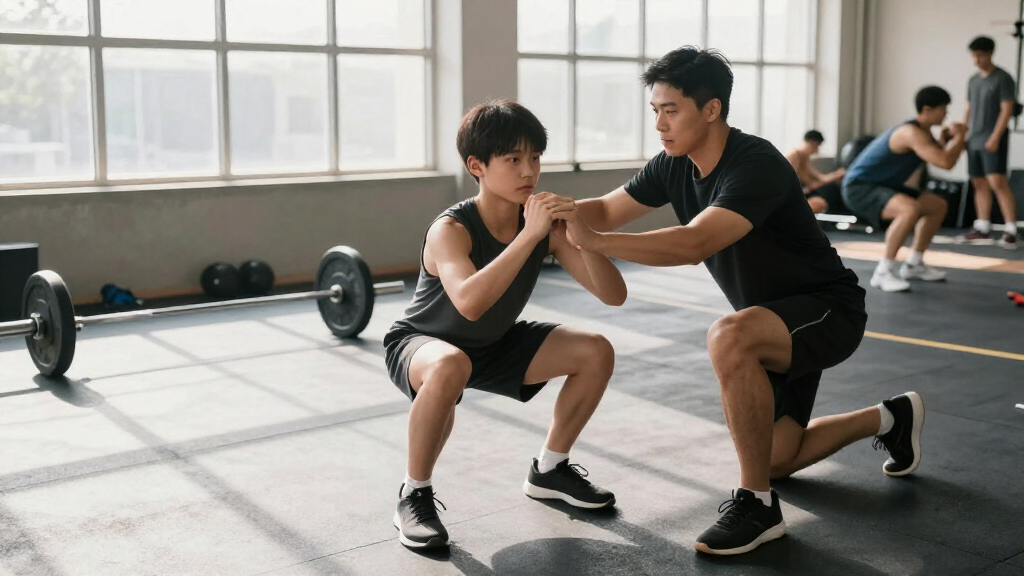
IdeaNavigator AI has outlined a youth-sports training app that would compare a child’s recorded movement with pro-derived reference mechanics and suggest one drill per practice session. The proposal recommends testing the idea first with baseball hitting and having certified coaches review assessments across 100 children; no pilot results or validated accuracy figures are provided.
IdeaNavigator AI has proposed testing a phone-based form-grading app for young athletes, with an initial focus on baseball hitting and certified coaches checking its assessments. The concept would let parents record practice, compare a child’s movement with reference mechanics, and receive one targeted drill, but the proposal does not report that the app has been built or tested.
The proposed first customer is a parent whose child practices without a private coach. The idea addresses a familiar training problem: a young athlete may repeat swings, throws, or running strides without receiving feedback on technique. IdeaNavigator AI says repeated form errors could become habits and may raise injury risk, but it supplies no injury data or study measuring how often this happens.
The suggested minimum product would let a parent film a repetition on a phone. Pose-estimation software would then compare the athlete’s motion with reference profiles derived from professional mechanics and grade selected checkpoints. For baseball hitting, examples could include hip rotation, release angle, and stride; the app would identify a major gap and prescribe one drill for the session.
IdeaNavigator AI proposes a baseball-hitting pilot involving 100 children, with certified coaches auditing the app’s grades against their own assessments. That is a proposed validation plan, not a completed trial. The business model under consideration is a family subscription for each sport, with a separate coach tier for team use; no pricing, partners, launch date, or paying customers are identified.
Testing Form Feedback Outside Coaching
If tested successfully, the concept could give families a way to review practice between coaching sessions or where private instruction is not available. Its appeal rests on combining a tool parents may already have—a phone camera—with feedback aimed at a specific movement, rather than requiring a coach to attend every practice. The proposal frames this as a way to make some form guidance accessible at a lower cost, though it provides no evidence yet that families would use or pay for it.
The central issue is not simply whether software can track a body in a video. It is whether its recommendations are accurate, age-appropriate, and useful across differences in body size, experience, camera position, and practice conditions. A misleading grade could confuse an athlete or direct practice toward the wrong adjustment. The proposed coach audit is therefore an important early test, but it would not by itself establish injury prevention or better performance.
As an affiliate, we earn on qualifying purchases.
A Proposed Baseball-First Test
The idea is presented as an opportunity in youth sports training technology, rather than as a report of a product launch. IdeaNavigator AI argues that phone-based pose-estimation models have advanced enough to compare movement with reference profiles and make basic feedback available through a free tier. The material gives no model name, accuracy measurement, or independent evaluation supporting that assessment.
Its recommendation is to keep the first test narrow: choose one skill, collect assessments for 100 young baseball players, and compare the app’s grades with certified coaches’ judgments. Starting with one sport could make it easier to define the movements to review and identify disagreements before adding other sports. Baseball hitting is the proposed starting point; expansion to other skills remains an idea, not a stated product roadmap.
pose estimation sports training app
As an affiliate, we earn on qualifying purchases.
As an affiliate, we earn on qualifying purchases.
Accuracy and Safety Still Untested
No working app, pilot findings, or measured accuracy results are reported. It is not clear which professional reference motions would be used, how they would account for children’s different stages of development, or how the software would respond when a recording is obstructed or taken from a poor angle. The proposal also does not define how coaches would score agreement or what result would count as a successful test.
The claimed connection between unnoticed technique flaws and injury risk is not supported here with data. Nor is there evidence that a single prescribed drill would improve mechanics or that a subscription would be affordable compared with coaching. Until a pilot reports its methods and results, the app’s potential benefit and limits remain unverified.
kids baseball hitting training tool
As an affiliate, we earn on qualifying purchases.
As an affiliate, we earn on qualifying purchases.
Coach Review Would Be the First Milestone
The next step described is a coach-audited trial of baseball hitting assessments for 100 children. Results would need to show how often the app’s grades match coaches’ evaluations, where they differ, and whether the differences can be addressed before the concept moves beyond an early test. No schedule or participating coaches have been announced in the material.
Further development would also need to clarify how the app protects children’s video, presents feedback to young users and parents, and avoids treating professional mechanics as a single standard for every body and age. For now, the proposal is an unvalidated product concept; whether it proceeds to a pilot or becomes a subscription service is not known.
Source: IdeaNavigator AI
As an affiliate, we earn on qualifying purchases.
Key Questions
Has the youth form-grading app launched?
No launch is reported. IdeaNavigator AI describes a product concept and a proposed pilot, without naming a released app or providing test results.
What would the app assess?
The proposed app would use phone video to compare an athlete’s movement with reference mechanics and grade checkpoints. For baseball hitting, examples include hip rotation, release angle, and stride.
How would the idea be tested?
The suggested first test is to assess baseball hitting for 100 children and have certified coaches compare the app’s grades with their own assessments. This is a plan, not a completed study.
Does the proposal show that the app prevents injuries?
No. The proposal says repeated form flaws may contribute to injury risk, but it provides no injury study or evidence that this app or its drills prevent injuries.
Source: IdeaNavigator AI
Halloween Picks
halloween
As an affiliate, we earn on qualifying purchases.