

An effective account-based email strategy keeps deals warm without pressure by focusing on personalization, value, and building trust. You target high-value accounts with tailored messages that address their specific needs, industry trends, or challenges. By segmenting your audience based on shared traits, you guarantee your messages hit the right tone. Consistently sharing insights and solutions helps nurture relationships and move deals forward naturally. Keep engaging thoughtfully, and you’ll discover how to turn prospects into long-term partners.
Listen free for 30 days with Audible
Thousands of audiobooks and originals — cancel anytime.
As an affiliate, we earn on qualifying purchases.
Key Takeaways
- Personalize emails by referencing company news, industry trends, or specific pain points to create a one-on-one conversation feel.
- Segment target accounts based on traits like industry or size to deliver highly relevant, tailored messages.
- Share valuable insights and resources that address account needs, building trust without applying pressure.
- Regularly analyze engagement data to refine messaging, personalization, and segmentation strategies over time.
- Focus on nurturing relationships through consistent, relevant communication that keeps deals warm without overwhelming prospects.
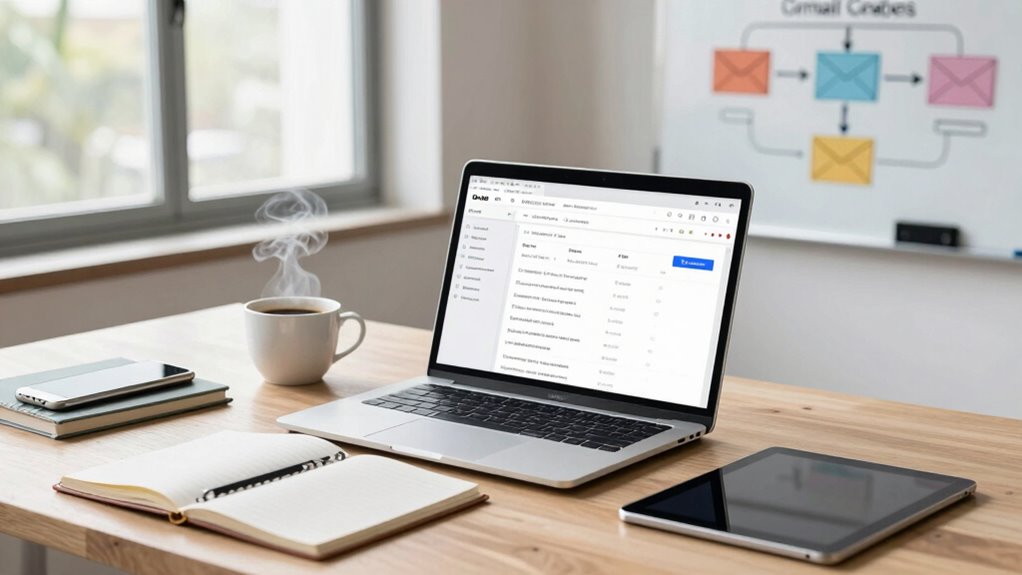
An account-based email strategy focuses on targeting high-value accounts with personalized, relevant messages that resonate with their specific needs. Instead of casting a wide net, you direct your efforts toward a select group of accounts that are most likely to convert, which means your messages must be tailored to each account’s unique challenges and goals. This is where personalization tactics come into play. Rather than sending generic emails, you craft messages that reference recent company news, industry trends, or specific pain points. Personalization helps your outreach feel less like a broadcast and more like a one-on-one conversation, making recipients more receptive and engaged.
Target high-value accounts with personalized messages that address their unique needs and challenges for better engagement.
To effectively implement this approach, email segmentation becomes crucial. You want to divide your target list into smaller, more focused groups based on shared characteristics—such as company size, industry, or buying behavior. This allows you to tailor your content even further, ensuring each segment receives messaging that aligns precisely with their needs. Segmentation helps prevent your emails from feeling generic and irrelevant, which can lead to higher open and response rates. When you combine segmentation with personalization tactics, your outreach becomes more targeted and meaningful, increasing the chances of moving prospects along the sales funnel. Additionally, understanding customer behavior can help refine your segmentation and messaging strategies over time. Recognizing patterns in engagement or decision-making can lead to more effective targeting and improved results. Incorporating data-driven insights is essential for maintaining the relevance and effectiveness of your campaigns.
Your emails should serve as helpful, non-intrusive touchpoints that build trust over time. Instead of pushing hard for a sale, you focus on providing value—sharing insights, resources, or solutions that address the specific issues of each account. This approach keeps your deals warm without pressure, as your goal is to nurture the relationship rather than force a quick sale. When your messaging consistently demonstrates understanding and support, your prospects are more likely to view you as a trusted partner rather than just another vendor.
Moreover, an account-based email strategy requires ongoing optimization. Analyze how each segment responds, tweak your personalization tactics, and refine your segmentation criteria to improve engagement. This iterative process ensures you stay aligned with the evolving needs of your target accounts, making your outreach more effective over time. Remember, the key to success is continuous improvement—by maintaining a steady, personalized communication flow, you keep your deals alive and moving forward without overwhelming your prospects. Fundamentally, this strategy transforms your email efforts from mere outreach into relationship-building, fostering trust and keeping deals warm without any pressure.
email personalization tools for sales
As an affiliate, we earn on qualifying purchases.
As an affiliate, we earn on qualifying purchases.
Frequently Asked Questions
How Do I Identify the Right Accounts for Email Targeting?
You identify the right accounts by conducting effective account segmentation, focusing on industries, company size, and purchase potential. Prioritize contacts within these accounts based on their engagement levels and decision-making authority. Use data analytics to pinpoint high-value targets, ensuring your email efforts are targeted and relevant. This approach helps you focus your outreach on accounts most likely to convert, keeping deals warm without applying pressure.
What Metrics Should I Track to Measure Email Strategy Success?
Think of your email metrics as a compass guiding your success. You should track email engagement rates like open, click-through, and response rates to see how well your content resonates. Content personalization plays a key role—if personalized emails boost engagement, it’s a sign you’re on the right track. Keep an eye on these metrics regularly, adjusting your strategy to maintain warm deals and foster genuine connections without pressure.
How Often Should I Send Emails to Account Contacts?
You should tailor your email frequency based on contact segmentation, sending more frequent emails to highly engaged contacts and less to colder leads. Typically, aim for one to two emails per week for active prospects, while maintaining a monthly or bi-weekly cadence for less engaged contacts. Adjust based on their responses and interactions, ensuring you stay relevant without overwhelming them. Consistent but thoughtful email frequency keeps deals warm without pressure.
How Can I Personalize Emails at Scale Effectively?
Imagine you’re a modern-day scribe, and personalization tactics are your quill. You can personalize emails at scale effectively by leveraging email segmentation to target specific account groups. Use dynamic content to tailor messages based on their interests, behaviors, and past interactions. Automate these tactics with marketing tools, ensuring each email feels unique, relevant, and timely, ultimately keeping deals warm without sounding like a spammer from the past.
What Tools Assist With Account-Based Email Campaigns?
You can use tools like HubSpot, Marketo, or Outreach to assist with account-based email campaigns. These platforms enable effective email personalization by leveraging prospect segmentation, ensuring your messages resonate with each account’s unique needs. They automate workflows, track engagement, and help you tailor content at scale. By combining these tools with your segmentation strategy, you’ll keep deals warm without applying pressure, making your outreach more impactful and efficient.
account-based marketing email software
As an affiliate, we earn on qualifying purchases.
As an affiliate, we earn on qualifying purchases.
Conclusion
With an account-based email strategy, you’re planting seeds in fertile ground, nurturing relationships without rushing the harvest. It’s like tending a garden—patience and care turn small sprouts into thriving blooms. Keep your messages personalized and genuine, allowing trust to blossom naturally. When you treat your prospects like valued partners rather than quick wins, you’re weaving a tapestry of loyalty that withstands the seasons. In this garden of opportunity, steady nurturing reaps the richest rewards.
customer engagement analytics platform
As an affiliate, we earn on qualifying purchases.
As an affiliate, we earn on qualifying purchases.
sales prospecting email templates
As an affiliate, we earn on qualifying purchases.
As an affiliate, we earn on qualifying purchases.
NFL season / tailgating Picks
team gear
As an affiliate, we earn on qualifying purchases.