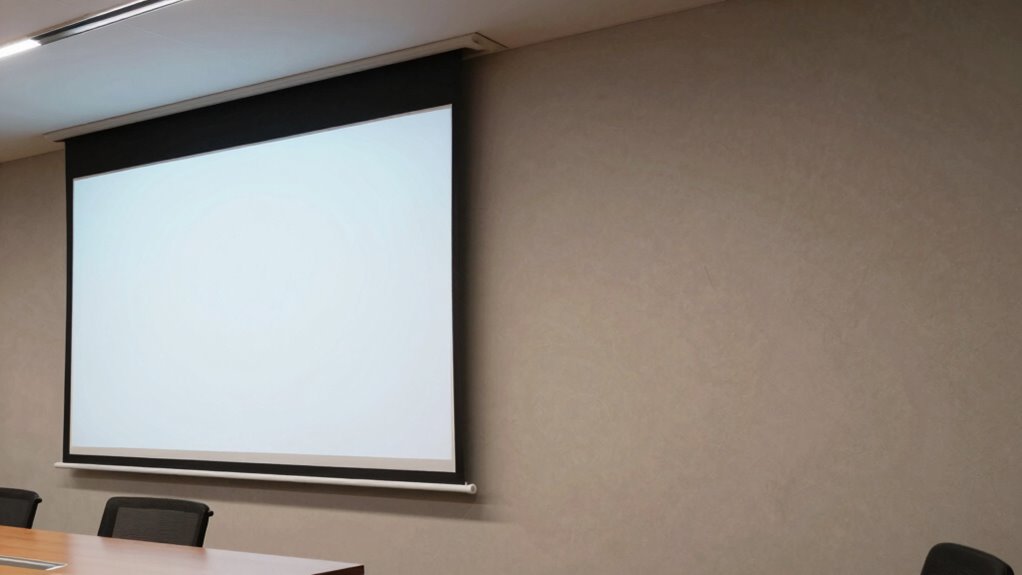

Choosing a dedicated projector screen offers better image quality, especially in well-lit spaces, by reducing glare and enhancing contrast. Walls are uneven, reflect light poorly, and may cause dull or inconsistent images. Portable screens improve flexibility and brightness but still outperform walls in darker rooms. Investing in a quality screen can elevate your home theater experience, even if it costs a bit more upfront. Keep exploring to find out which option suits your space best.

Get business pricing on office and shipping supplies
- Business-only prices and quantity discounts
- Tax-exempt purchasing
- Multiple users, one account, clear invoices
Key Takeaways
- Dedicated projector screens provide a smooth, uniform surface that enhances contrast and color accuracy compared to uneven walls.
- Walls reflect ambient light unevenly, causing glare and washed-out images, reducing overall picture quality.
- Portable screens offer flexibility and better ambient light management but may come with higher costs.
- Walls are cost-effective but often result in inferior image clarity and inconsistent viewing experiences.
- Choosing a dedicated screen improves image brightness, contrast, and overall home theater quality in real-world spaces.
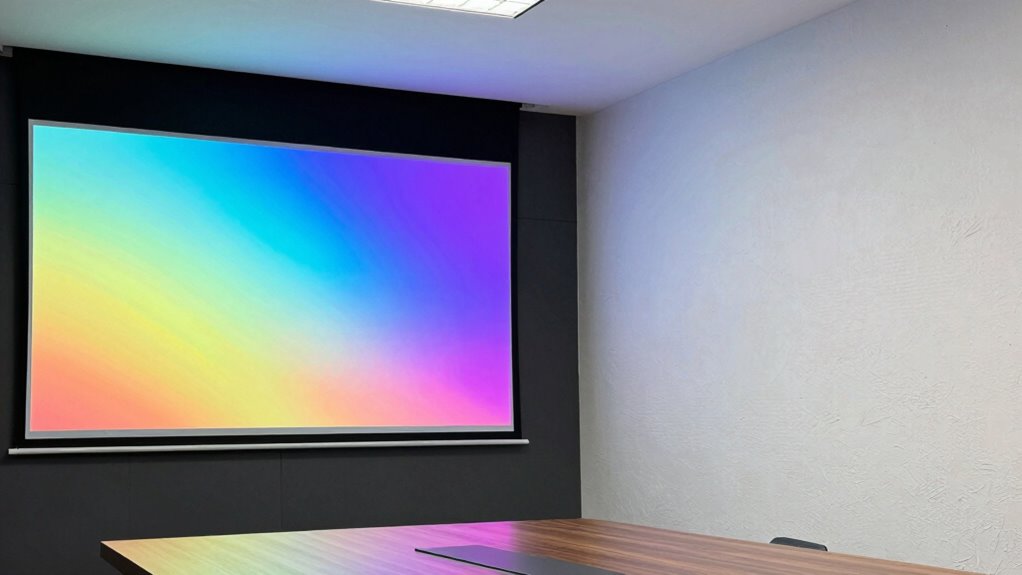
When deciding between a projector screen and a blank wall for your home theater setup, it’s important to understand how each option can impact your viewing experience. If portability is a priority, a portable setup might seem appealing. Portable screens are lightweight, easy to move, and can be set up in different spaces quickly, giving you flexibility for various viewing environments. However, their size and material can affect image quality, especially in rooms with ambient light. Portable screens often come with a reflective surface designed to improve brightness and contrast, making them better suited for environments where ambient light is unavoidable. Without such a specialized surface, projecting onto a blank wall can result in washed-out images, especially if the wall’s color isn’t ideal or if the room isn’t dark enough. Additionally, ambient light is one of the biggest factors in choosing between a screen and a wall. A blank wall, while convenient, isn’t designed to reflect projector images effectively, especially in rooms with lots of natural or artificial light. When ambient light hits the wall, it diminishes contrast and makes images appear dull, reducing your overall viewing enjoyment. On the other hand, many projector screens are engineered to combat ambient light issues. They often feature specialized coatings or materials that enhance contrast and brightness, helping you see clearer pictures even in less-than-ideal lighting conditions. If you’re planning a setup in a room with windows or bright lighting, investing in a high-quality projector screen could considerably improve your viewing experience. Choosing a blank wall might seem like the simplest and most cost-effective option, but it comes with trade-offs. Walls don’t provide uniform surfaces, and their color can influence picture quality. A white or light-colored wall reflects light unevenly, which can cause glare or inconsistent image quality. Conversely, a dedicated projector screen offers a smooth, uniform surface that ensures images are projected evenly, with accurate color reproduction and better contrast. This makes a notable difference if you’re aiming for a cinematic experience. Additionally, proper screen material can significantly impact the overall image quality and viewing pleasure. However, if you prefer a flexible, portable setup that can be easily moved and stored, a portable screen designed for ambient light conditions might be your best bet. It balances convenience with improved image quality, making it a smarter choice for many home theater enthusiasts.
projector screen for bright rooms
As an affiliate, we earn on qualifying purchases.
As an affiliate, we earn on qualifying purchases.
Frequently Asked Questions
How Much Does a High-Quality Projector Screen Typically Cost?
A high-quality projector screen usually costs between $200 and $2,000, depending on size and materials. You’ll want to take into account projection screen materials like tensioned fabric or specialized coatings for the best image clarity. If you opt for a blank wall, make sure wall paint durability so it reflects light properly. Investing in a good screen can greatly enhance your viewing experience, making it worth the higher price point.
Can Walls Be Painted Specifically for Better Projection Quality?
Ever thought about painting your walls for better projection? Yes, painted surfaces designed specifically for projection can considerably enhance image quality. Special projection paints reflect light evenly, reducing glare and improving clarity. Wouldn’t you prefer a crisp, vivid display without investing in a dedicated screen? With the right projection enhancement paint, your walls become an effective, budget-friendly solution, making your space perfect for presentations or movie nights.
Which Is More Durable: a Projector Screen or a Painted Wall?
A projector screen is more durable than a painted wall because of its superior material longevity and surface resilience. Screens are designed specifically for repeated use, resisting scratches and wear over time. Painted walls, on the other hand, can chip, peel, or stain easily, especially with frequent projections. So, if you’re seeking long-term durability, a high-quality projector screen generally outperforms a painted wall in lasting quality.
Do Projector Screens Require Special Maintenance or Cleaning?
Projector screens do require some special maintenance, but cleaning routines are usually simple. You should regularly dust the surface with a soft cloth or a gentle vacuum to maintain material durability. For stains or smudges, use a mild detergent mixed with water, avoiding harsh chemicals that could damage the screen material. Proper upkeep helps preserve image quality and prolongs the lifespan of your projector screen, making it a smart investment.
How Does Ambient Light Affect Projection on Screens Versus Walls?
They say “a little light can go a long way,” and that’s especially true for projection. Ambient lighting impacts both screens and walls, but screens are designed to handle it better. Choose a high-quality projector screen with glare reduction features to minimize ambient light effects, ensuring sharp images. On a blank wall, you’ll notice more washout and glare, so controlling ambient light becomes even more critical for clear visuals.
portable projector screen with reflective surface
As an affiliate, we earn on qualifying purchases.
As an affiliate, we earn on qualifying purchases.
Conclusion
Ultimately, choosing between a projector screen and a blank wall depends on your needs and space. A screen offers a polished, professional look, while a wall provides flexibility and cost savings. Remember, “A place for everything, and everything in its place.” Investing in the right visual hardware can elevate your space and viewing experience. Make your decision thoughtfully, and you’ll enjoy clear, impactful visuals that suit your environment perfectly.
As an affiliate, we earn on qualifying purchases.
fixed projector screen for home theater
As an affiliate, we earn on qualifying purchases.
As an affiliate, we earn on qualifying purchases.
Fall Picks
fall essentials
As an affiliate, we earn on qualifying purchases.