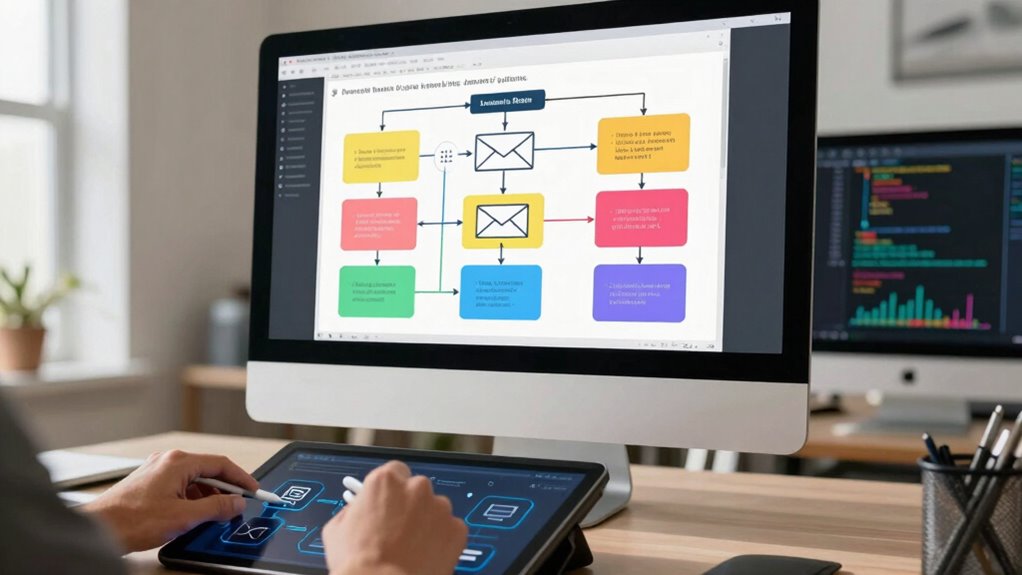

To prevent broken logic in your form-to-email data flow, you need to implement strong validation and automation. This means checking data for accuracy, completeness, and correct formats before it reaches the inbox, and using templates to keep messages clear. Automated notifications and error handling keep your system reliable and users informed. A well-designed process guarantees smooth communication and reduces manual corrections, so you can keep everything running seamlessly—there’s more to discover on how to achieve this effectively.

Get business pricing on office and shipping supplies
- Business-only prices and quantity discounts
- Tax-exempt purchasing
- Multiple users, one account, clear invoices
Key Takeaways
- Implement data validation at form submission to catch errors before processing emails.
- Use templates and formatting to ensure consistent, clear communication in email notifications.
- Automate notifications and error alerts to streamline workflows and reduce manual intervention.
- Cross-verify input data with existing records to prevent invalid or mismatched information.
- Incorporate error handling mechanisms to address issues promptly and maintain system reliability.

When a user submits a form on a website, the data doesn’t just stay on the page—it moves through a structured process to reach your email inbox. This process involves several critical steps designed to ensure the information is accurate, timely, and useful. One of the key elements in this flow is automated notifications, which keep you updated without manual intervention. Whether it’s confirming a registration or alerting you about a new inquiry, automated notifications streamline communication and reduce delays. But for these notifications to be effective, the data they’re based on must be reliable, and that’s where data validation comes into play.
Automated notifications rely on reliable data validation to ensure accurate, timely, and effective communication.
Data validation acts as a gatekeeper, examining the submitted information to ensure it meets your predefined criteria. It prevents errors like misspelled email addresses, incomplete fields, or invalid inputs from entering your system. When data validation is properly implemented, it stops broken logic before it can cause issues downstream—such as failed email deliveries or incorrect information reaching you. This validation can be set up to check formats, enforce required fields, or even cross-reference entries against existing records, ensuring everything checks out before moving forward. Effective validation techniques are crucial for maintaining data integrity and preventing system failures. Additionally, implementing proper validation methods can significantly reduce manual correction efforts and improve overall system efficiency.
Once the data passes validation, it’s ready to be processed and sent via email. Here, the structured flow kicks in. The validated information is formatted appropriately, often using templates that make the data easy to read and act upon. Automated notifications are then triggered, sending the email directly to your inbox or to other relevant recipients. This automation means you don’t have to manually monitor every submission; instead, you receive timely alerts that keep your workflow smooth and responsive. Ensuring the entire process is robust and reliable is vital to prevent disruptions and maintain trust in your communication system. Incorporating automated error handling can further enhance the system’s resilience by addressing potential issues proactively. Moreover, integrating these systems with biodiversity and conservation initiatives can support sustainable practices by ensuring accurate and timely communication of relevant data.
Furthermore, the entire process is designed to prevent broken logic—errors that can cause miscommunication or system failures. When validation is integrated with automated notifications, it ensures that only accurate, complete data is used for these alerts. If something’s amiss, the system can even notify the user to correct their input before the email is sent, avoiding the frustration of receiving incomplete or incorrect information. This not only enhances user experience but also maintains the integrity of your data.
In essence, a well-designed form to email data flow leverages data validation and automated notifications to create a seamless, reliable communication system. It reduces manual oversight, minimizes errors, and keeps your information flowing efficiently. By catching issues early through validation and keeping you informed with automation, you prevent broken logic and ensure your responses are always accurate and timely. This smarter approach transforms a simple form submission into a dependable part of your business or project workflow.
As an affiliate, we earn on qualifying purchases.
Frequently Asked Questions
How Can I Secure Email Data During Form Submissions?
To safeguard email data during form submissions, you should implement encryption protocols like SSL/TLS to protect data in transit. Additionally, guarantee user authentication measures are in place so only authorized users can submit or access sensitive information. This combination safeguards your email data from interception or unauthorized access, providing a safer and more trustworthy form submission process. Always keep security best practices updated to maintain data integrity.
What Are Common Causes of Broken Email Data Flow?
You might face broken email data flow due to incomplete form validation or lapses in user authentication. If form validation isn’t thorough, invalid or malformed data can slip through, causing errors. Similarly, weak user authentication can allow unauthorized submissions or disrupt data transfer. Ensuring proper validation checks and robust authentication processes helps maintain a smooth, reliable email data flow, preventing broken logic and ensuring data integrity from submission to delivery.
How to Troubleshoot Email Delivery Failures?
To troubleshoot email delivery failures, start by checking delivery tracking to identify where the process breaks down. Confirm email encryption isn’t blocking messages or causing issues with spam filters. Verify recipient addresses for accuracy, and review your SMTP server settings. If problems persist, examine bounce-back messages for clues, and consider re-sending with secure email encryption methods to maintain privacy and improve delivery success.
Can Form Data Flow Integrate With CRM Systems?
Yes, form data flow can integrate with CRM systems through CRM integration features. This setup allows you to automatically synchronize data between your forms and CRM, ensuring real-time updates. You can streamline lead management, improve data accuracy, and save time by eliminating manual entry. With seamless data synchronization, your CRM stays current, enhancing your ability to nurture relationships and make data-driven decisions effortlessly.
What Are Best Practices for Managing Email Bouncebacks?
To manage email bouncebacks effectively, you should implement email validation at the point of form submission to reduce invalid addresses. Use bounce management tools to monitor and categorize bounce reasons, helping you identify whether they’re temporary or permanent. Regularly clean your email list by removing invalid addresses, and set up automated follow-ups for soft bounces to improve deliverability and maintain a healthy mailing list.
email notification automation tools
As an affiliate, we earn on qualifying purchases.
As an affiliate, we earn on qualifying purchases.
Conclusion
By streamlining your form-to-email data flow, you prevent broken logic and keep everything running smoothly. It’s like having a well-oiled machine in a world full of unpredictable gears. When your data flows seamlessly, you gain confidence and save time—while chaos and frustration fade into the background. Embrace this smarter approach, and watch your processes stay intact, even as complexity grows. After all, simplicity and reliability are the true marks of a well-designed system.
As an affiliate, we earn on qualifying purchases.
As an affiliate, we earn on qualifying purchases.
Halloween Picks
halloween
As an affiliate, we earn on qualifying purchases.