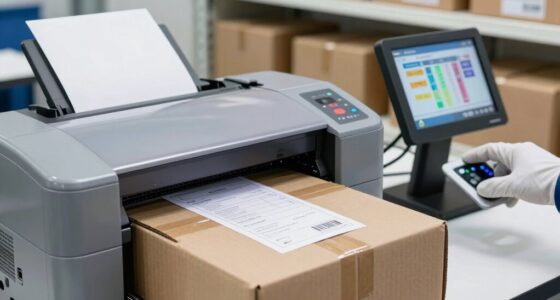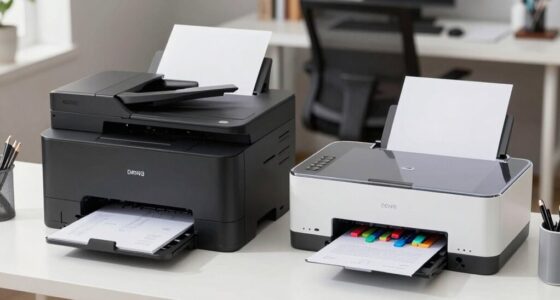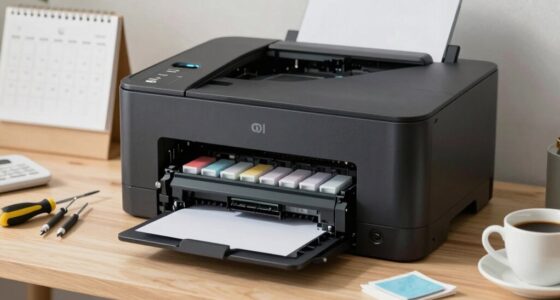
Choosing between color and monochrome printing impacts your costs, waste, and workflow. Color printing creates vibrant visuals and professional documents but costs more and needs higher-quality paper and maintenance. Monochrome is simpler, cheaper, and easier to maintain, making it ideal for everyday prints. Consider your document types, budget, and environmental goals to make an informed choice. If you want to discover which option suits your office best, keep exploring the details ahead.

Get business pricing on office and shipping supplies
- Business-only prices and quantity discounts
- Tax-exempt purchasing
- Multiple users, one account, clear invoices
Key Takeaways
- Choose monochrome for cost-effective, routine documents; opt for color for impactful visual materials and marketing materials.
- Use high-quality paper for color printing to prevent smudging, while standard paper suffices for monochrome to save costs.
- Maintain monochrome printers easily with fewer components, reducing downtime; color printers require more frequent upkeep.
- Color printing incurs higher per-page costs due to ink and paper, whereas monochrome is more economical for large volumes.
- Assess document needs, budget, and environmental impact to select the most efficient, sustainable printing solution.

When choosing between color and monochrome printing for your office, understanding the key differences can help you make a cost-effective decision. Color printing offers vibrant visuals that grab attention and enhance presentations, but it often comes with higher costs and increased maintenance needs. Monochrome printing, on the other hand, is simpler and more economical, making it ideal for everyday document production that doesn’t require color. To balance these options effectively, you need to consider the type of documents you print most frequently, your budget, and your environmental impact.
Choosing between color and monochrome printing depends on your document needs, budget, and environmental considerations.
One major factor to weigh is paper quality. Color printing typically demands higher-quality paper to prevent ink smudging and ensure sharp, vivid images. Using premium paper can increase costs but results in professional-looking documents that leave a lasting impression. Monochrome printing is more forgiving; standard or recycled paper often suffices, helping you save money without sacrificing readability. Choosing the right paper quality for each type of printing helps minimize waste, as lower-quality paper can lead to frequent jams or poor print results, increasing overall waste and frustration. Additionally, opting for sustainable printing practices can further reduce your office’s environmental footprint. Implementing eco-friendly ink and toner options can also contribute to waste reduction and sustainability efforts.
Printer maintenance is another critical aspect. Color printers generally require more frequent upkeep because they involve multiple ink or toner cartridges, each with its own maintenance needs. Color cartridges tend to clog or dry out if not used regularly, leading to increased downtime and repair costs. Monochrome printers are simpler machines with fewer components, making them easier and cheaper to maintain. Regular cleaning and proper printer use extend the lifespan of your devices, reducing waste caused by premature replacements or repairs. Proper maintenance also ensures consistent print quality, avoiding the need to reprint documents and reducing paper waste. Incorporating preventative maintenance into your routine can help identify issues early and extend the lifespan of your printer.
Cost considerations should guide your choice. Color printing is more expensive per page due to the cost of color ink or toner, and higher-quality paper adds to expenses. If your office primarily handles text-based documents or internal memos, monochrome printing is a practical and economical choice. However, if you often print marketing materials, proposals, or visual reports, investing in color printing can improve their impact and professionalism. Moreover, understanding printer technology advancements can help you select models that operate more efficiently, reducing waste and operational costs over time.
Ultimately, your decision hinges on your specific printing needs and how you balance quality, cost, and maintenance. By selecting appropriate paper quality and maintaining your printers properly, you can reduce waste and avoid headaches. Whether you opt for color or monochrome, understanding these factors helps you create an efficient, sustainable printing environment that meets your office’s demands without unnecessary expense or hassle.
As an affiliate, we earn on qualifying purchases.
Frequently Asked Questions
How Does Print Quality Differ Between Color and Monochrome Printers?
You’ll notice that color printers generally offer richer ink saturation and vibrant images, thanks to advanced color calibration, making visuals pop. Monochrome printers focus on sharpness and clarity in black-and-white prints, often with higher resolution. While color printers excel at detailed, colorful documents, monochrome printers provide cleaner, crisper text. Your choice depends on whether you prioritize vivid color or crisp black-and-white output for your office needs.
What Are the Maintenance Costs for Color Versus Monochrome Printers?
Like a trusty sidekick in a vintage comic strip, monochrome printers usually cost less to maintain, mainly because their ink cartridges last longer and are cheaper. Color printers tend to have higher maintenance costs due to frequent ink cartridge replacements and more paper jams. You’ll spend more on supplies and repairs over time, so weigh these costs when choosing between the two.
Can Monochrome Printers Handle High-Volume Printing Efficiently?
Yes, monochrome printers can handle high-volume printing efficiently. They often have better ink cartridge longevity, allowing you to print more pages before needing replacements. Additionally, they tend to have lower paper consumption rates for black-and-white documents, saving you money and reducing waste. This makes monochrome printers a reliable choice for large print jobs, especially when color isn’t necessary, streamlining your workflow and cutting costs.
Are There Environmental Benefits to Using Monochrome Printers?
Using monochrome printers offers notable environmental benefits. They typically consume less energy, reducing your overall energy footprint. Plus, they use less ink, especially eco-friendly inks, which minimizes chemical waste and pollution. By choosing a monochrome printer, you help cut down on resource use and waste, making your office more sustainable. This simple switch supports eco-friendly practices while saving money and reducing your environmental impact.
How Secure Is Color Printing Compared to Monochrome?
Color printing is generally less secure than monochrome because it often involves more complex data transmission and storage, increasing the risk of data breaches. Color cost can also lead to higher expenses, prompting stricter security measures. Monochrome security tends to be simpler and more straightforward, reducing vulnerabilities. If security is your priority, monochrome printers offer a more controlled environment, minimizing risks associated with color data leakage or theft.
As an affiliate, we earn on qualifying purchases.
Conclusion
Choosing between color and monochrome printing isn’t just a matter of preference; it’s about making smarter choices that cut costs and reduce waste. By understanding your office’s needs, you can avoid the trap of overusing color and keep things running smoothly. Remember, sometimes it’s best to keep things simple—less is more. When you strike the right balance, you’ll find that less can indeed be more, saving you headaches and money in the long run.
As an affiliate, we earn on qualifying purchases.
As an affiliate, we earn on qualifying purchases.
Evergreen bestsellers Picks
bestsellers
As an affiliate, we earn on qualifying purchases.