

Building in public is often treated as a promotional exercise: publish screenshots, announce milestones and maintain the appearance of relentless progress. The more useful version is less theatrical. It exposes decisions. It shows what belongs inside the product, what remains in planning and, crucially, what the founder has rejected.

Get office and shipping supplies delivered free — and shop member deals
- Fast, free delivery on millions of items
- Access to Prime Big Deal Days deals on October 6–7
- Prime Video, Amazon Music and more included
Founder judgement · Build in public
The most important feature is the boundary
Gewerkton’s story is not simply what a solo founder and coding-agent fleet can ship. It is how one coherent construction platform is protected from attractive but distracting adjacencies.
When generating code gets cheaper, choosing the wrong direction does not.
21 software packages, verified with negative controls and mutation tests.
1
One brand as a constraint
Ten domains were consolidated into one, supported by an EUIPO trademark. Every product line must strengthen Gewerkton rather than become a separate corporate identity.
27
Content languages, without becoming generic
Global reach sits alongside German depth in GAEB, REB, XRechnung and DATEV—and regional AI choice across the EU, US and Asia, including mainland China.
3
Product lines describe one information flow
The architecture follows construction information from the point of work through plans, models, operations and third-party coordination.
13
AI providers, chosen regionally
The BYO-AI model lets users bring their own keys and select a region, avoiding vendor lock-in. Data can reside in an EU cloud or the user’s own infrastructure.
2026
A roadmap that labels reality
Gewerkton is in beta now, with public beta planned for fall 2026. Visible status markers distinguish shipped capability from intention.
2× no
The rejected list defines the company
Focus is not a short backlog. It is a functional border between integrating with an adjacent category and assuming responsibility for that category.
Gewerkton offers a particularly clear case. The company is developing a voice-first construction documentation and defect management platform for global markets. It has one brand, three product lines, 27 content languages and a deliberate position on regional AI choice. It has also consolidated ten domains into one and secured an EUIPO trademark. Yet the most instructive part of the story is not the surface area that has been added. It is the boundary around it.
Gewerkton is in beta now. A public beta is planned for fall 2026. That status matters because a credible build-in-public story should distinguish what exists from what is intended. Beta badges and in-planning chips do that work more honestly than confident language about capabilities that have not shipped.
software project boundary management tools
As an affiliate, we earn on qualifying purchases.
As an affiliate, we earn on qualifying purchases.
Building in public should reveal the decision system
For founders and operators, a public roadmap is valuable when it communicates the structure behind the work. A long list of releases can demonstrate output, but output alone says little about judgement. The harder question is whether each addition reinforces a coherent product or merely expands it.
Gewerkton is built by a solo founder directing a fleet of coding agents using Codex and Claude. In one night, that fleet shipped 21 software packages, verified with negative controls and mutation tests. That is a striking example of development leverage, but it also makes editorial discipline more important. When production capacity expands, the cost of generating code falls. The cost of choosing the wrong direction does not.
A founder with access to rapid implementation can pursue more ideas than a conventional team could process. That makes saying no a core operating skill. The bottleneck moves from writing software to defining the system: deciding which problems belong together, which interfaces deserve to exist and which apparently adjacent opportunities would weaken the proposition.
Build-in-public, viewed this way, is not a running commentary on activity. It is a record of choices. The audience should be able to see the product’s current state, its intended direction and the edges the founder will not cross.
As an affiliate, we earn on qualifying purchases.
One brand is a strategic constraint
Gewerkton uses a branded-house structure. Field, Studio and Cloud are not separate brands competing for attention. They are three product lines under one name, each responsible for a distinct part of the same operating environment.
Gewerkton Field is the voice-first construction site app. It turns dictation into evidence, defects, daywork reports, takt and portal workflows. This is the product line closest to the conditions in which information first appears: on site, between trades, during inspections, at handover or in places where connectivity is unreliable.
Gewerkton Studio is the browser workspace for plans and models. Where no model exists, the site team can create one in the browser. Gewerkton Cloud handles operations and model or data coordination between Field, Studio and third parties.
The branded-house decision creates a useful discipline. Each line must make sense as part of Gewerkton rather than as an isolated product idea. Field captures and structures what happens on site. Studio provides the plan and model workspace. Cloud coordinates operations and data across the system and with third parties. The names describe different responsibilities without pretending that they represent unrelated businesses.
Consolidating ten domains into one reinforces the same principle. Domain proliferation can be a symptom of unresolved positioning: every audience, feature or experiment receives a new destination. Consolidation forces a clearer answer to a basic question. What is the company?
Here, the answer is one brand serving the movement of construction information from spoken capture through evidence, reports, plans, models and operational coordination. The EUIPO trademark supports that single-brand approach, but the more consequential choice is organisational. A brand architecture is also a product architecture. It affects what users are asked to understand and what the company must maintain.
construction project management software
As an affiliate, we earn on qualifying purchases.
As an affiliate, we earn on qualifying purchases.
The rejected list is more revealing than the feature list
Gewerkton’s rejected list includes two conspicuous decisions: no CAD clone and no payment product. Both could look adjacent to construction software. Neither has been allowed to redefine the platform.
The refusal to build a CAD clone does not mean plans and models are irrelevant. Studio is explicitly a browser workspace for them, and a site team can create a model in the browser when none exists. The boundary is more precise: supporting construction work around plans and models is part of the system; reproducing an entire neighbouring software category is not.
That distinction is the substance of focus. Founders are often advised to stay focused as though focus were a matter of keeping the backlog short. In practice, it means drawing functional borders. A product can interact deeply with an adjacent category without attempting to absorb that category wholesale.
The same applies to the decision not to build a payment product. Commercial information matters to construction operations, and Gewerkton was born in the German market with its deepest German commercial integration in GAEB, REB, XRechnung and DATEV. Yet integration with commercial processes does not require turning the platform into a payment business.

This is an important difference for operators. An integration says that information must move between systems. A product expansion says that the company should assume responsibility for another category. Those are not equivalent decisions.
Rejecting both a CAD clone and a payment product preserves the centre of gravity: voice-first construction documentation and defect management, evidence, site reporting, plans and models, and coordination between field operations, browser workspaces and third parties. Saying no prevents adjacent requirements from becoming new corporate identities.
collaborative construction platform
As an affiliate, we earn on qualifying purchases.
As an affiliate, we earn on qualifying purchases.
Field gives the product story its centre
Among the three product lines, Field carries the clearest version of the overall story because it begins where evidence is created. Gewerkton’s marketing line is: “On site, what counts is what’s proven.” The product proposition follows directly from that premise.
Construction records originate amid live work rather than in ideal office conditions. At wind farms and renewable-energy projects, sites are distributed, crews rotate and field acceptance may happen in dead zones. Offline capture is therefore part of the deployment context. At data centres and industrial plants, many trades work in parallel under tight deadlines, and meeting decisions can become trade-sorted task lists.
In housing and building construction, the relevant work includes defects with a photo and deadline, dictated daywork reports and a signature on the device at handover. Infrastructure and tunnel projects bring long durations, many change orders and instructions backed by original audio.
Those environments vary, but the operating question remains consistent: how does an event on site become usable evidence and structured project information? Field starts with voice because voice is available at the point of work. Studio and Cloud then extend what can be done with the resulting plans, models, operations and data.
This is also why the three-product structure is more informative than a general claim to be an all-in-one construction platform. The boundaries describe the flow. Field handles the site. Studio handles the browser workspace for plans and models. Cloud coordinates operations and data. A defined system is easier to evaluate than an unlimited promise.
Global does not have to mean generic
Gewerkton was born in the German market and has its deepest German commercial integration through GAEB, REB, XRechnung and DATEV. At the same time, the platform is intended for global markets, supports 27 content languages and offers regional AI-provider choice across the EU, US and Asia, including mainland China.
Its BYO-AI model covers 13 AI providers. Users bring their own keys and select a region, avoiding vendor lock-in. Data residency is likewise expressed as a choice: EU cloud or the user’s own infrastructure.
These decisions matter for cross-border teams working across the EU, US and APAC on the same project. Each participant can work in their own language while the evidence original remains unambiguous. For projects in Asia, Chinese, Korean and Vietnamese crews can work in multilingual flows from capture to report, with data residency selected by the user.
The model is not “global” in the sense of erasing regional differences. It combines a common product structure with language coverage, provider choice and deployment choice. That is a useful lesson for founders entering several markets: global reach does not require pretending that infrastructure, commercial workflows and languages are uniform.
The roadmap is an honesty tool
Roadmaps become misleading when every possibility is presented with the visual confidence of a finished capability. In-planning chips and beta badges offer a simpler, more credible vocabulary. They tell the reader where an item stands without converting intention into an implied guarantee.
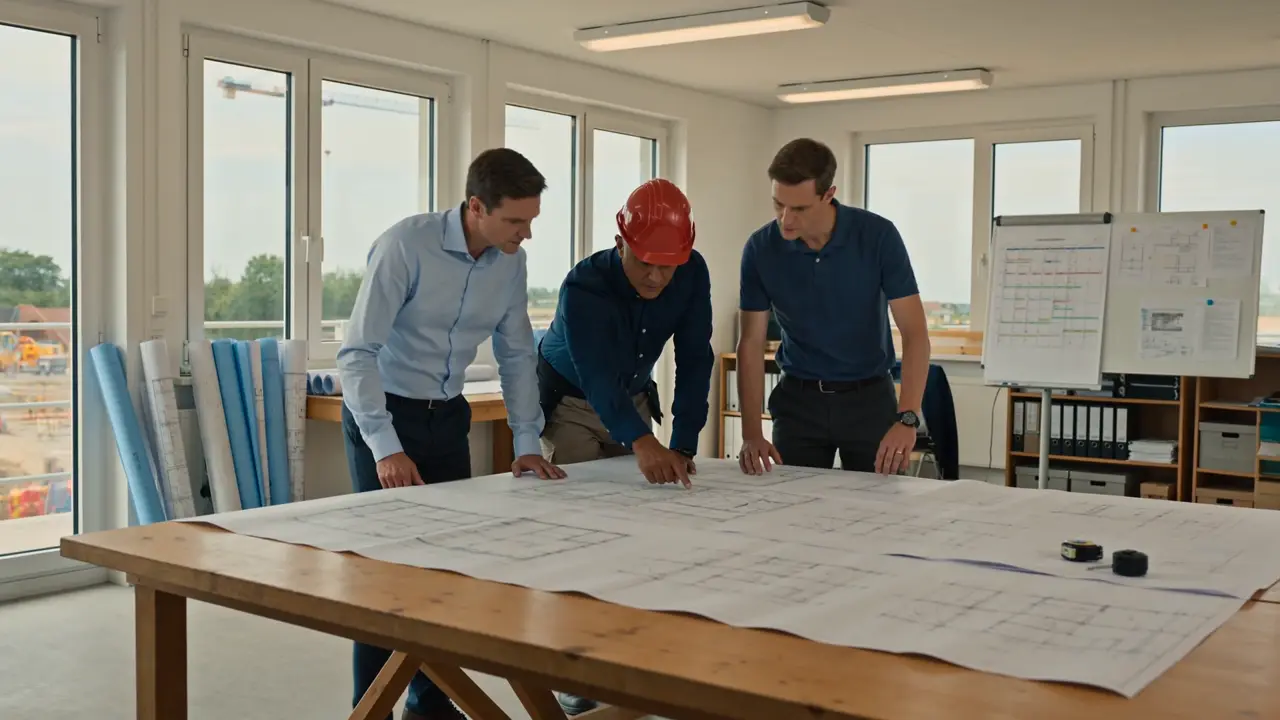
That distinction is particularly important here. Gewerkton is in beta, with public beta planned for fall 2026. The appropriate story is therefore one of active construction, current boundaries and visible status. A beta badge is not a weakness to hide. It is information that founders, operators and prospective users need in order to judge the product accurately.
The same standard appears in the marketing architecture. The site has 27 languages, zero trackers, no cookie banner and a fully egress-free architecture. Its media bank contains more than 51 self-produced clips and posters. These are concrete statements about what has been produced and how the site operates, rather than borrowed claims about future market leadership.
There is a broader operating principle here. A roadmap should reduce ambiguity, not manufacture excitement. “In planning” means the team has identified an intended direction. “Beta” means the product is being tested in its present stage. “Rejected” means the idea has been considered and placed outside the boundary. Each label supports better decisions because each describes a different level of commitment.
More building capacity requires more restraint
The image of a solo founder directing coding agents will attract attention because it represents a different production model. Shipping 21 verified software packages in one night suggests how much implementation work a coordinated agent fleet can perform. Yet this is not a story about replacing judgement with volume.
If anything, the opposite is true. More building capacity increases the number of plausible directions that can be pursued. Without a strong product boundary, speed can produce fragmentation: more domains, more product identities and more adjacent categories competing for priority.
Gewerkton’s choices provide a compact counterexample. Ten domains became one. Three product lines remain under one brand. A CAD clone and a payment product stayed outside the boundary. Planned work is labelled as planned, while the current product is labelled beta. The company’s global scope is supported by specified languages, providers and infrastructure choices rather than a vague claim of universality.
For founders and operators, that is the practical value of building in public. The goal is not simply to make progress visible. It is to make judgement inspectable.
A useful public record should answer four questions. What is the product now? What is being planned? What has been deliberately rejected? What principle connects those decisions? When those answers are clear, the roadmap becomes more than a sales surface. It becomes an operating document.
Gewerkton’s answer centres on proof generated at the site and carried into the wider project system. Field captures it. Studio provides the browser workspace for plans and models. Cloud coordinates operations and data. Everything else must justify its place against that structure.
That is the founder skill underneath the release notes: not merely finding more things that can be built, but preserving a coherent reason for building them.
Halloween Picks
halloween
As an affiliate, we earn on qualifying purchases.