
📊 Full opportunity report: 2026 AI Mini PCs: The Top 10 For Tech Enthusiasts on ThorstenMeyerAI.com — validation score, market gap, and execution plan.
TL;DR
In 2026, the market for AI mini PCs offers a range of models with high-performance CPUs, GPUs, and expandability. The top 10 picks cater to different budgets and needs, emphasizing processing power and future-proof features.
Several new AI mini PCs released in 2026 are now available, offering advanced processing power, expandability, and connectivity options tailored for AI enthusiasts and professionals. For a detailed overview, see the original analysis. These models represent the latest in compact AI computing technology, with notable devices like the MINISFORUM AI X1 Pro, GEEKOM A9 Max, and others making the list. Their release underscores a trend toward high-performance, small-form-factor AI hardware that balances power and size, making AI development and deployment more accessible.
The top 10 AI mini PCs of 2026 feature processors such as AMD Ryzen AI 9 HX370 and Intel Ultra series, delivering significant computational capabilities in a compact form. Learn more about the latest AI innovations in this overview. Many models include DDR5 RAM slots, PCIe SSD support, and modern connectivity options like WiFi 7, USB4, and Thunderbolt 4, enabling fast data transfer and multi-display setups. Price points vary widely, with premium options offering extensive expandability and raw power, while budget models focus on core AI functionalities suitable for lighter workloads.
Among the standout models, the MINISFORUM AI X1 Pro is praised for its robust AMD Ryzen AI 9 HX370 and Radeon 890M GPU, making it ideal for intensive AI tasks. The GEEKOM A9 Max emphasizes DDR5 memory and upgradeability, appealing to those with demanding AI workloads. Meanwhile, the GEEKOM IT15 offers a balanced mix of performance and connectivity, suited for versatile AI applications. These devices highlight a trend toward integrating high-end CPUs and GPUs into small, energy-efficient systems, reflecting growing demand for AI-capable mini PCs.
Why AI Mini PCs Are Reshaping Computing in 2026
The emergence of high-performance AI mini PCs in 2026 marks a significant shift in how AI workloads are handled. Their compact size combined with powerful processors and expandability options enables AI developers, researchers, and enthusiasts to deploy advanced models in smaller, more energy-efficient setups. This trend enhances accessibility, reduces costs, and broadens AI’s reach beyond traditional server or desktop environments. As AI tasks grow more demanding, these mini PCs provide a practical, scalable solution for a variety of applications, from machine learning to real-time data processing.
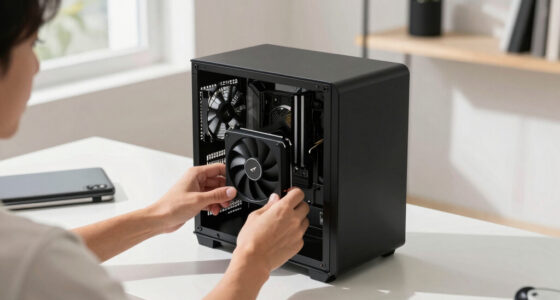
AI mini PC with AMD Ryzen AI 9 HX370
As an affiliate, we earn on qualifying purchases.
As an affiliate, we earn on qualifying purchases.
2026 Market Trends in AI Mini Computing
The AI mini PC market has rapidly evolved over recent years, driven by advancements in CPU and GPU technology, miniaturization, and increasing AI workloads. Leading brands like AMD, Intel, and GEEKOM have launched models with high-end processors specifically optimized for AI tasks. Previous years saw a focus on basic performance, but 2026’s releases emphasize expandability, connectivity, and energy efficiency, reflecting the needs of AI professionals and hobbyists alike. The trend aligns with broader developments in edge computing and embedded AI systems, making high-performance computing more accessible in small form factors.
“Our A9 Max model is designed to meet the needs of AI developers who require both power and flexibility in a compact form.”
— GEEKOM spokesperson
high performance compact AI mini PC
As an affiliate, we earn on qualifying purchases.
As an affiliate, we earn on qualifying purchases.
Unanswered Questions About 2026 AI Mini PC Performance
While many models have been announced with impressive specifications, detailed performance benchmarks, long-term reliability, and real-world AI workload testing are still emerging. It is not yet clear how these devices will perform under sustained, intensive AI tasks or how future upgrades will integrate with current hardware. Additionally, the actual pricing and availability of some premium models remain uncertain, as supply chain issues could impact release timelines.
expandable mini PC for AI workloads
As an affiliate, we earn on qualifying purchases.
As an affiliate, we earn on qualifying purchases.
Upcoming Launches and Performance Benchmarks to Watch
Industry experts expect further model releases throughout 2026, with benchmarks and real-world performance tests providing clearer insights into their capabilities. Consumers and professionals should monitor upcoming reviews, firmware updates, and software support developments. Additionally, advancements in cooling technology and power management may influence future designs, further enhancing the performance and usability of AI mini PCs.
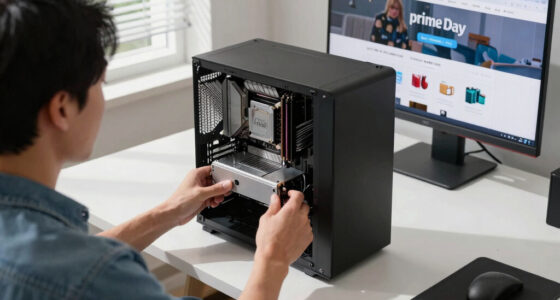
AI mini PC with WiFi 7 and Thunderbolt 4
As an affiliate, we earn on qualifying purchases.
As an affiliate, we earn on qualifying purchases.
Key Questions
Can I run advanced AI models on these mini PCs?
Yes, models equipped with high-end CPUs and dedicated GPUs, like the AMD Ryzen AI 9 HX370 and Radeon 890M, are capable of handling complex AI workloads, including machine learning and deep learning tasks.
Are these mini PCs suitable for future AI projects?
Many of these models offer expandability options such as additional RAM and SSD slots, making them suitable for future AI projects that require more processing power and storage.
How do these models compare in price?
Premium models with top-tier processors and expandability features tend to be more expensive, while budget options focus on essential AI functionalities. Price varies based on specifications and brand.
Will these mini PCs support multi-monitor setups?
Most top-tier models support multiple high-resolution displays, including 4K and 8K outputs, thanks to HDMI 2.1, DisplayPort, and Thunderbolt connectivity options.
What are the main factors to consider when choosing an AI mini PC?
Key factors include processor and GPU power, expandability, connectivity options, size, noise levels, and budget. Matching these to your specific AI workload is essential for optimal performance.
Source: ThorstenMeyerAI.com