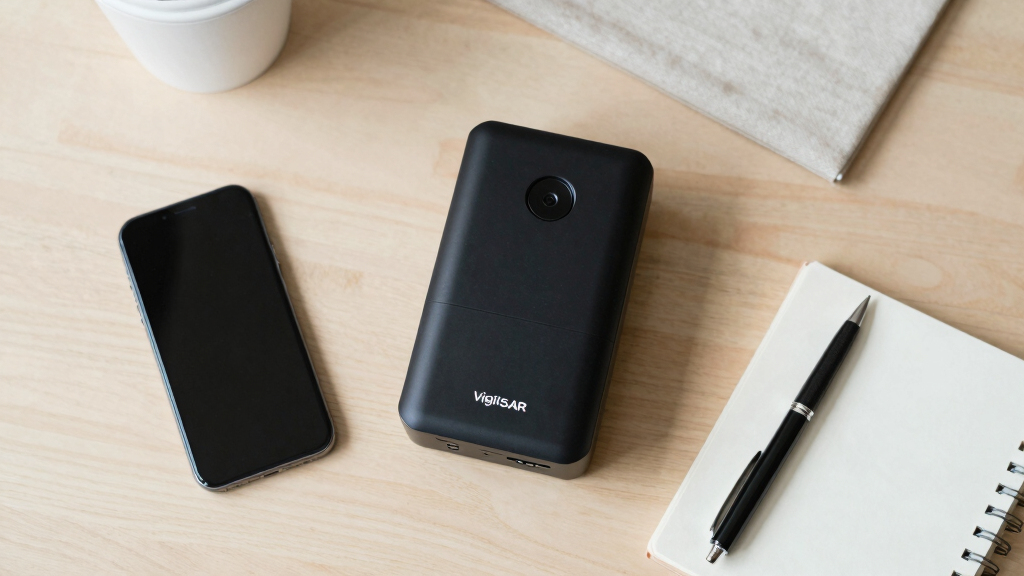

📊 Full opportunity report: VigilSAR: The Object That Isn’t Transmitting on ThorstenMeyerAI.com — validation score, market gap, and execution plan.

Get business pricing on office and shipping supplies
- Business-only prices and quantity discounts
- Tax-exempt purchasing
- Multiple users, one account, clear invoices
TL;DR
VigilSAR is a radar-based platform that identifies objects, such as vessels, that are visible on radar but not broadcasting transponder signals. It aims to improve maritime situational awareness regardless of weather or darkness.
VigilSAR, a radar-based intelligence platform, has confirmed its ability to detect objects such as ships that are visible on synthetic-aperture radar (SAR) but are not transmitting transponder signals, a capability that enhances maritime domain awareness in all weather and lighting conditions. This development is significant for defense, coast guard, and maritime safety operations, where identifying ‘dark’ vessels is critical.
The core capability of VigilSAR is built on analyzing SAR data, primarily from the European Space Agency’s Sentinel-1 satellites, which provide free, publicly accessible imagery. The platform detects anomalous radar returns, such as ships, and then pairs these detections with signals like AIS and ADS-B transponders. When a radar detection has no corresponding transponder signal, it flags the object as potentially suspicious or of interest.
VigilSAR’s fusion technology combines detection with open-source signals and other intelligence data to build a comprehensive picture of maritime activity. Its primary focus is on vessels that go “dark”—those that turn off transponders to evade detection—often linked to illegal activities like fishing, smuggling, or sanctions evasion. The platform’s approach pairs classical detection algorithms with neural classifiers for object identification, leveraging established remote sensing techniques.
While the core detection and fusion capabilities are demonstrated using Sentinel-1 data, the platform’s broader deployment plans include integrating commercial SAR constellations and expanding its operational scope. Pricing details remain undisclosed, as VigilSAR is marketed through confidential briefing processes typical for defense products.
VigilSAR — the object that isn’t transmitting
Radar sees through cloud and darkness, when cameras can’t. Fuse it with transponder data and the signal is the one detection no transponder explains.
Independent commentary on public positioning, produced with AI assistance under human editorial oversight. The views are the author’s own and may change. This does not verify or endorse VigilSAR’s capabilities, contracts, or performance. Capabilities on Sentinel-1 / Copernicus reflect a free, public data foundation; commercial-constellation and air-gapped-deployment references reflect stated positioning, not independently demonstrated fact. ISR and related technologies may be subject to export controls and dual-use regulations — lawful, ethical use is solely the operator’s responsibility. Nothing here is an offer, pricing, or operational/safety/legal advice. AI detection and classification can err and require human verification. Product and company names are trademarks of their respective owners; mention does not imply endorsement.
Why VigilSAR’s Dark-Object Detection Matters
VigilSAR addresses a critical gap in maritime surveillance: the ability to identify vessels that are intentionally hiding their transponder signals. This capability enhances security, law enforcement, and safety by enabling authorities to detect illegal activities, such as unreported fishing, smuggling, or vessels in distress, regardless of weather or night conditions. Its broad applicability to civilian and military sectors underscores its potential to reshape maritime situational awareness.
As an affiliate, we earn on qualifying purchases.
Background on SAR and Maritime Surveillance Challenges
Traditional optical satellite imagery is limited by weather, darkness, and smoke, making it unreliable for continuous maritime monitoring. Synthetic-aperture radar (SAR) overcomes these limitations by providing all-weather, day-and-night imaging capabilities. However, interpreting SAR data requires sophisticated AI and fusion techniques to distinguish objects like ships from background clutter.
The development of VigilSAR builds on these remote sensing advances, focusing on detecting anomalies—objects seen on radar but not explained by transponder signals. This approach is increasingly relevant as maritime actors adopt “dark” tactics to evade detection, necessitating more advanced surveillance tools.
“Using Sentinel-1 data, VigilSAR demonstrates a practical foundation for all-weather, day-and-night maritime monitoring.”
— ESA Sentinel-1 team spokesperson
As an affiliate, we earn on qualifying purchases.
Capabilities and Deployment Status Still Evolving
While VigilSAR has demonstrated its core detection and fusion capabilities using Sentinel-1 data, details about its commercial deployment, integration with other satellite constellations, and operational effectiveness in real-world scenarios remain undisclosed. Pricing and specific client engagements are also not publicly available, and the full scope of its civilian and military applications is still being developed.
As an affiliate, we earn on qualifying purchases.
Next Steps in Validation and Broader Deployment
VigilSAR plans to expand its deployment through additional commercial SAR data sources and conduct field trials with defense and maritime agencies. Further validation of its detection accuracy, false alarm rates, and operational integration is expected over the coming months. The platform’s developers also aim to clarify pricing and market positioning through targeted briefings with potential clients.
As an affiliate, we earn on qualifying purchases.
Key Questions
How does VigilSAR detect objects without transponder signals?
It analyzes radar returns from SAR imagery to identify anomalous objects, then fuses these detections with signals like AIS and ADS-B. When no transponder signal matches a radar detection, it flags the object as potentially suspicious.
What types of vessels can VigilSAR identify?
VigilSAR is designed to detect large, radar-visible vessels, especially those that turn off transponders to hide their identity or activity. It does not classify specific vessel types but identifies anomalies for further investigation.
Is VigilSAR available for civilian use?
Currently, VigilSAR is positioned as a defense and intelligence product, with deployment plans involving government agencies and maritime authorities. Public civilian use details have not been disclosed.
What are the limitations of VigilSAR?
Its effectiveness depends on radar detection, which can be affected by environmental factors or vessel size. Also, the platform’s operational capabilities beyond demonstration are still being validated.
When will VigilSAR be fully operational?
Specific timelines are not publicly confirmed, but further field trials and deployments are expected in the coming months, with broader availability likely within a year.
Source: ThorstenMeyerAI.com
Halloween Picks
halloween
As an affiliate, we earn on qualifying purchases.