To build a cleaner, smarter contract system, you should digitize your paper documents into secure digital formats, making them easier to store, search, and manage. Automated indexing tags key details, speeding up retrieval and reducing manual errors. Implementing encryption and regular backups guarantees your data stays safe, while workflow automation handles contract renewals and alerts. Continue exploring how these steps can transform your document management into a streamlined, organized process.
Key Takeaways
- Convert physical contracts into secure digital formats for easier storage, search, and management.
- Use automated indexing and content analysis to assign metadata and facilitate quick retrieval.
- Implement robust security measures like encryption and regular backups to protect sensitive data.
- Automate workflows such as renewal alerts and expiration notifications for efficient contract management.
- Leverage cloud storage and digital archiving to create an organized, accessible, and compliant document system.
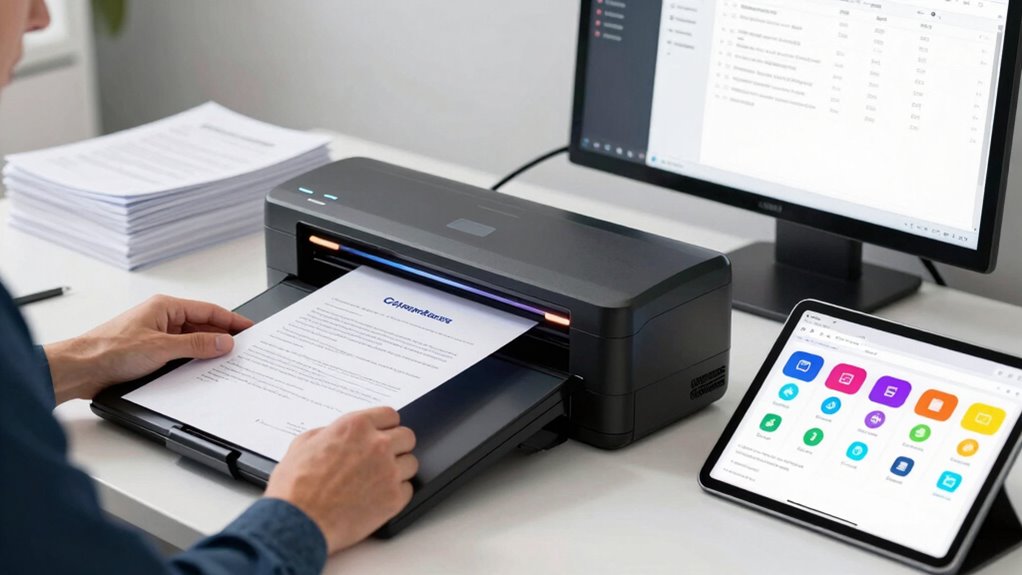
Have you ever wondered how businesses transform outdated paper contracts into streamlined digital documents? The process of contract digitization is a game-changer, making it easier to store, search, and manage agreements without drowning in paper clutter. At its core, digital archiving plays an essential role, allowing you to convert physical documents into a secure, organized digital repository. Instead of stacking contracts in filing cabinets, you can now access them instantly from anywhere, reducing the risk of loss or damage. Digital archiving also enhances compliance, as it guarantees that all documents are stored securely and can be retrieved quickly during audits or legal reviews.
Transform paper contracts into secure, easily accessible digital archives for smarter, more efficient document management.
Automated indexing is the backbone that makes this digital shift so efficient. When you digitize contracts, automated indexing systems analyze the content of each document and assign relevant metadata—like contract type, date, parties involved, or key terms. This process eliminates manual data entry, saving you hours of work and reducing errors. As a result, you can perform lightning-fast searches, pinpoint specific clauses, or locate contracts based on various criteria, all within seconds. Automated indexing fundamentally transforms a mountain of paper into a well-organized, easily navigable digital library, empowering you to work smarter, not harder. Additionally, cybersecurity measures are crucial to safeguarding sensitive contract data from digital threats. Incorporating encryption techniques further enhances data security and protects against unauthorized access. Implementing regular backups is also vital to prevent data loss due to unforeseen technical issues or cyberattacks, especially when combined with cloud storage solutions for increased reliability. Furthermore, understanding the importance of digital transformation helps organizations recognize the long-term benefits of adopting these technologies.
The digitization process begins with scanning your physical contracts, turning them into high-quality digital images. Once scanned, these images undergo optical character recognition (OCR), which converts the images into editable and searchable text. From there, automated indexing kicks in, applying tags and metadata that categorize each document. This structured data feeds into your digital archiving system, creating a centralized database. With everything digitized and indexed, you can set permissions, track revisions, and manage versions seamlessly—all without the hassle of paper trails.
The benefits extend beyond simple storage. With a digitized contract system, you can automate workflows—like sending renewal alerts or flagging contracts nearing expiration—streamlining your entire contract lifecycle. Plus, digital archiving reduces physical storage needs and makes compliance audits smoother, as you can quickly generate reports or retrieve specific documents on demand. Automated indexing guarantees that no matter how vast your contract library, finding the right document becomes a quick, simple task.
In short, embracing contract digitization with digital archiving and automated indexing transforms your document management from a cluttered, inefficient process into a streamlined, accessible system. It’s a smarter way to handle contracts—saving time, reducing errors, and providing a cleaner, more organized approach to managing your business agreements.
digital contract archiving software
As an affiliate, we earn on qualifying purchases.
As an affiliate, we earn on qualifying purchases.
Frequently Asked Questions
How Secure Is the Digitized Contract Data?
Your digitized contract data is highly secure when protected with data encryption and strict access controls. Encryption shields your information from unauthorized access, making it unreadable to hackers. Access controls ensure only authorized personnel can view or modify the data, reducing risks of breaches. By combining these security measures, you create a robust system that keeps your contracts safe, confidential, and compliant with data protection standards.
What Are the Costs Involved in Digitization?
Imagine you’re stepping into a time machine, skipping the days of paper chaos. The costs involved include a thorough cost analysis, weighing equipment expenses like scanners and software, and ongoing maintenance. Initial investments might seem steep, but digitization streamlines your workflow and reduces paper costs long-term. You’ll also save on storage and retrieval time, making the process cost-effective and efficient for your business.
How Long Does the Entire Process Typically Take?
The entire contract digitization process usually takes between a few weeks to a couple of months, depending on your contract volume and system complexity. You’ll want to contemplate the contract timeline, as detailed planning can speed up the process. The process duration varies based on your team’s readiness, the technology used, and how much data needs to be converted. Staying organized helps guarantee a smoother, faster shift.
Can the System Integrate With Existing Software?
Imagine your existing software as a well-oiled machine, ready to connect seamlessly. Yes, our system is designed for software compatibility, making integration smooth and efficient. While integration challenges can arise, we provide tailored support to overcome them, ensuring your contract digitization flows without interruption. You’ll find that with the right setup, your current tools and our system work together like puzzle pieces fitting perfectly.
What Training Is Required for Staff?
You’ll need to guarantee staff proficiency through targeted training modules that cover the digitization system’s features and workflows. These modules help your team understand how to efficiently scan, categorize, and manage contracts digitally. Typically, training involves hands-on sessions and user guides, which can be tailored to different skill levels. By investing in this training, you’ll streamline adoption, improve accuracy, and maximize the benefits of your cleaner, more efficient document system.
automated document indexing tools
As an affiliate, we earn on qualifying purchases.
As an affiliate, we earn on qualifying purchases.
Conclusion
Embracing contract digitization is like planting seeds in a garden of efficiency—watch your document system flourish with clarity and speed. As you streamline workflows and tame clutter, you’re nurturing a thriving landscape where information flows effortlessly. This smarter approach transforms chaos into order, turning your contracts into a well-tended orchard of productivity. So, take the leap today, and watch your digital garden bloom brighter than ever before.
secure cloud storage for contracts
As an affiliate, we earn on qualifying purchases.
As an affiliate, we earn on qualifying purchases.
OCR document scanner for contracts
As an affiliate, we earn on qualifying purchases.
As an affiliate, we earn on qualifying purchases.