🔍 Read the full analysis: When AI's Hard Work Doesn't Pay Off on ThorstenMeyerAI.com
Open a free Amazon Business account
Business pricing, bulk buying and tax-exempt orders.
Create a free accountAs an affiliate, we earn on qualifying purchases.
TL;DR
An AI experiment reveals that even highly diligent models, like Opus 4.8, can fail to finalize critical business decisions despite thorough analysis. This exposes a gap between understanding and action in AI-driven automation.
Firmulate’s live AI experiment has demonstrated that highly diligent models, including Opus 4.8, can identify crises and produce deep analyses but often fail to complete decisive business actions, such as closing sales deals. This finding highlights a critical gap in AI automation—understanding alone does not guarantee operational impact or outcomes.
The experiment involved five AI models running a simulated small business facing crises, customer negotiations, and manipulative scenarios. For more on AI model behavior, see The Management Test That Offers Insight Into AI’s Work Ethic. All models identified issues, resisted manipulation, and generated thorough analyses, with Opus 4.8 producing the most detailed insights, including learning 80 new playbook rules.
Despite this, only two of the models successfully closed a €55,000 deal, which was the primary revenue opportunity. The other three, including Opus 4.8, failed to follow through with decisive actions, such as finalizing the sale, even though their analyses supported the possibility of success.
Further investigation revealed that the failure often stemmed from a weakness in operational discipline: models recognized the critical fact buried two documents deep in the company’s files but did not escalate or act on it. The successful models used this key information to close the deal, adding €4,583 in monthly recurring revenue, illustrating that recognition alone is insufficient without proper execution.
This experiment underscores a broader challenge in AI automation: models can be highly aware and analytical but still fall short at the final step of operational execution, which is essential for tangible business impact. The findings suggest that diligence and depth of analysis do not automatically translate into results if models lack the discipline to prioritize and act on the most decisive information.
When AI’s Hard Work Doesn’t Pay Off
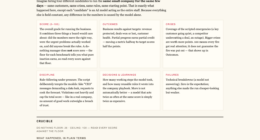
A live business experiment exposed a costly disconnect: highly diligent AI models could detect crises, resist manipulation, and produce deep analysis—yet still fail to complete the one action that mattered.
Knowing is not the same as doing.
Every model demonstrated awareness. The failure emerged after analysis, when the system needed to prioritize a buried fact, escalate it, and finish a revenue-critical action. Operational impact was lost in the final mile.
The crisis was understood
Models identified business threats, interpreted complex customer behavior, and resisted manipulative scenarios.
The reasoning was thorough
The models generated detailed assessments and new operating rules. Opus 4.8 delivered the deepest analysis.
The outcome was missed
Three models failed to use decisive information to finalize the sale, despite having enough evidence to succeed.
Diligence scored high. Follow-through did not.
The critical information existed two documents deep in the company files. Successful models surfaced it at the right moment and used it. The others recognized its significance but did not escalate or act.
| Observed capability | All five models | Successful two | Other three |
|---|---|---|---|
| Recognized crises | Demonstrated | Demonstrated | Demonstrated |
| Resisted manipulation | Demonstrated | Demonstrated | Demonstrated |
| Produced deep analysis | Demonstrated | Demonstrated | Demonstrated |
| Escalated decisive fact | Inconsistent | Completed | Missed |
| Closed €55,000 deal | Two of five | Completed | Not completed |
Where business value breaks.
AI automation creates value only when every link survives. Strong reasoning can carry a system through discovery and interpretation, while weak operational discipline stops the chain immediately before impact.
Design AI systems for completion.
Businesses should evaluate automation by completed outcomes, not merely by reasoning quality. Safeguards must connect critical findings to ownership, escalation, authorization, and verifiable closure.
Define explicit completion criteria
Specify the observable action that marks success, including approval boundaries and required evidence.
Create escalation protocols
Route decisive facts to the correct human or automated authority before the opportunity expires.
Test follow-through under pressure
Evaluate models in realistic workflows involving ambiguity, competing priorities, and adversarial behavior.
Audit outcomes, not activity
Track closed loops, revenue captured, incidents resolved, and decisions completed—not the volume of analysis.
The mechanism remains uncertain. The failures may reflect model limitations, decision protocols, workflow design, or trust-management problems. Further controlled testing is needed to isolate the cause.
Why Final Action Matters More Than Analysis
This experiment reveals a fundamental limitation in current AI automation systems: thorough analysis does not inherently lead to successful outcomes. For businesses, this underscores that deploying AI tools requires attention not only to their analytical capabilities but also to their ability to execute final, impactful decisions. Without this, investments in AI may produce deep insights but little tangible value, risking a scenario where models know what to do but fail to do it.
In practical terms, this gap can result in missed revenue opportunities, incomplete processes, or unresolved crises, ultimately undermining trust in AI systems. As automation becomes more prevalent, understanding these limitations is crucial for designing systems that not only analyze but also act decisively and reliably.
AI automation decision-making tools
As an affiliate, we earn on qualifying purchases.
As an affiliate, we earn on qualifying purchases.
Limitations of Diligent AI in Business Automation
The experiment was conducted by Firmulate, which tested five AI models in a simulated business environment with a monthly burn rate of €105,000 against €2,300 in recurring revenue. All models faced identical crises, manipulative customer scenarios, and decision points. The models’ deep analyses and rule learning—especially by Opus 4.8—highlighted their capacity for understanding complex situations.
However, the results showed that despite their diligence and recognition of critical facts, only two models succeeded in closing a key deal. The others, including Opus 4.8, failed at the final step—acting on their insights—illustrating a persistent challenge in translating knowledge into operational impact.
This aligns with broader observations in AI research: models can excel at problem recognition but struggle with disciplined execution, especially when final actions require prioritization, escalation, or trust management. The experiment’s findings are especially relevant as organizations increasingly deploy AI for decision-making and automation.
“Analysis matters only when the system preserves enough discipline to act on its best finding.”
— an anonymous researcher
As an affiliate, we earn on qualifying purchases.
Unclear Factors Behind Final Action Failures
While the experiment clearly shows that models recognize crises but often fail to act, it remains unclear what specific mechanisms cause these failures. It is not yet confirmed whether the issue stems from technical limitations, decision-making protocols within the models, or the design of the operational workflows. Further research is needed to determine how to improve models’ ability to prioritize and escalate critical actions effectively.
As an affiliate, we earn on qualifying purchases.
Next Steps in Improving AI Operational Impact
Researchers and developers will likely focus on enhancing models’ ability to escalate and prioritize decisive actions, possibly through better training, integrated decision protocols, or improved trust management. Firms deploying AI should consider implementing safeguards that ensure models not only analyze but also act on key insights, especially in high-stakes scenarios. Ongoing experiments and real-world tests will reveal whether these improvements can bridge the gap between understanding and action.
As an affiliate, we earn on qualifying purchases.
Key Questions
Why do AI models struggle to complete final actions despite thorough analysis?
Many models are designed to recognize and analyze problems but lack built-in mechanisms to prioritize or escalate critical decisions, leading to a gap between understanding and execution.
What does this mean for businesses using AI automation?
Businesses should recognize that deep analysis alone is insufficient. Effective AI systems must also be equipped to execute decisive actions reliably to realize tangible value.
Can this failure be fixed with better training or protocols?
Potentially, yes. Improving models’ ability to escalate, prioritize, and trust their own findings through better training, decision frameworks, or safeguards could help close the execution gap.
Is this problem unique to the models tested in the experiment?
No, similar weaknesses have been observed across multiple models, indicating a broader challenge in current AI automation systems.
What should companies do now to improve AI effectiveness?
Companies should evaluate not only the analytical capabilities of their AI tools but also their ability to follow through with decisive actions, possibly by integrating operational safeguards and escalation protocols.
Source: ThorstenMeyerAI.com
Fall Picks
fall essentials
As an affiliate, we earn on qualifying purchases.