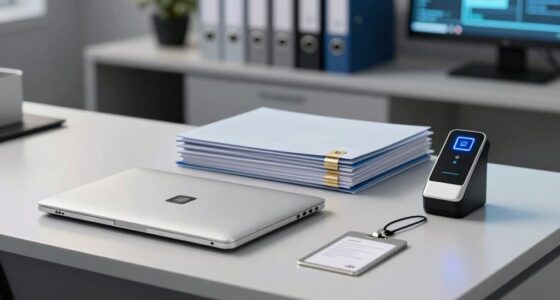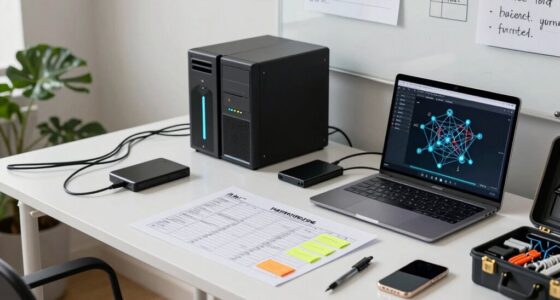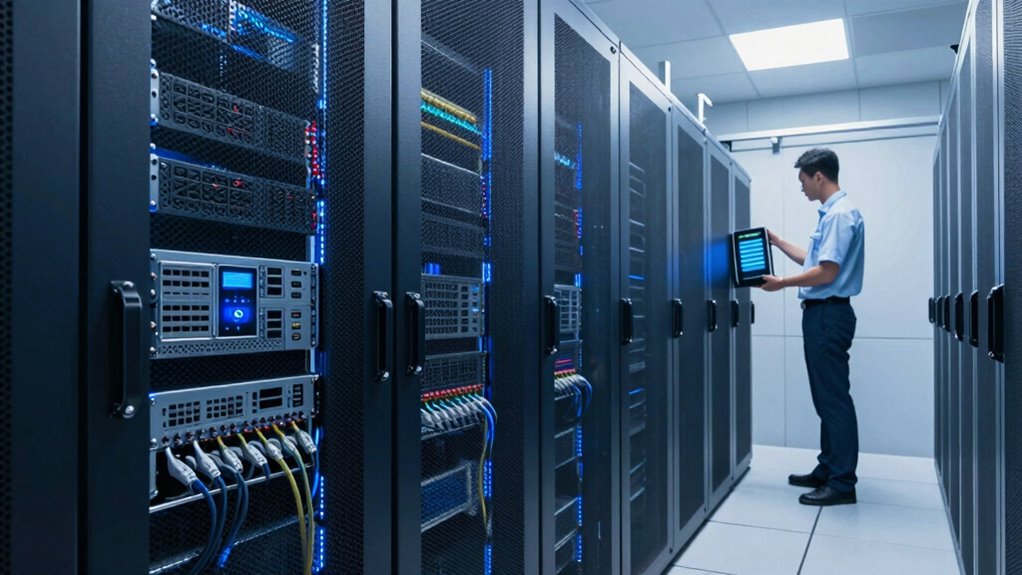

Your continuity plan for secure record storage relies heavily on choosing reliable hardware. High-quality servers, backup systems, and hard drives prevent data loss during failures or disasters. Proper maintenance, secure configurations, and hardware security modules protect against vulnerabilities and tampering. You also need off-site backups to guarantee access after incidents. Understanding how hardware impacts security and resilience is key; keep exploring to discover how to build a truly robust infrastructure.

Get business pricing on office and shipping supplies
- Business-only prices and quantity discounts
- Tax-exempt purchasing
- Multiple users, one account, clear invoices
Key Takeaways
- Hardware reliability and redundancy are essential for maintaining continuous access to stored records during failures or disasters.
- Off-site backups and disaster recovery systems depend on secure, resilient hardware to ensure data availability.
- Proper hardware maintenance and secure configurations prevent vulnerabilities that could compromise data continuity.
- Hardware security modules (HSMs) protect encryption keys, ensuring data remains secure and accessible only to authorized users.
- Designing storage infrastructure with hardware failure points in mind enhances overall resilience and minimizes downtime risks.

In today’s digital age, keeping your records secure is more important than ever. As you navigate the complexities of data storage, understanding the basics of secure record storage helps protect your information from threats and ensures business continuity. A key component is cloud encryption, which transforms your data into an unreadable format when stored or transmitted over the internet. This means even if someone intercepts your data, they can’t make sense of it without the decryption keys. Combining cloud encryption with robust access management creates a layered defense, giving you control over who can view or modify your records. Access management allows you to set specific permissions, ensuring that only authorized individuals can access sensitive information. This not only minimizes the risk of data breaches but also helps you comply with privacy regulations. Ensuring your hardware is reliable and properly maintained is essential to prevent hardware failures that could compromise your data security. Your hardware choices play a vital role in overall data security. Even with the best encryption and access controls, if your hardware isn’t reliable, your records may still be at risk. Investing in high-quality servers, storage devices, and backup systems ensures that your data remains safe and accessible during hardware failures or disasters. Hardware security modules (HSMs), for example, provide an extra layer of protection for your encryption keys, physically safeguarding them from theft or tampering. Regular maintenance, updates, and secure configurations are essential to prevent vulnerabilities that could be exploited by cybercriminals. Remember, hardware isn’t just about capacity or speed; it’s about creating a resilient infrastructure that supports your security measures. Incorporating hardware security into your security strategy enhances your overall defense against threats. A comprehensive continuity plan** should include off-site backups, disaster recovery solutions, and redundant systems that kick in if your primary hardware fails. When you incorporate hardware considerations into your continuity plan, you’re ensuring that your records remain intact and accessible no matter what happens. This means you can restore operations quickly after an incident, minimizing downtime and potential losses. Properly managing hardware vulnerabilities can significantly reduce the chances of data loss or breach. Additionally, understanding and addressing potential hardware failure points** helps in designing a more robust and reliable storage environment, further strengthening your overall security posture.
enterprise hardware security modules
As an affiliate, we earn on qualifying purchases.
As an affiliate, we earn on qualifying purchases.
Frequently Asked Questions
How Do Hardware Failures Impact Record Security?
Hardware failures can seriously threaten your record security by risking data loss and downtime. When hardware fails, you might struggle with data recovery, causing delays and potential breaches. Environmental safeguards, like temperature control and fire suppression, protect hardware from damage, reducing failure chances. Ensuring robust hardware and safeguards keeps your records secure, allowing quick recovery and continuity even when issues occur. Proper planning minimizes risks and maintains data integrity.
What Are the Best Practices for Hardware Redundancy?
Prioritize proactive planning with robust redundancy routines to prevent data loss. Implement hardware backups, mirror servers, and hot spares to guarantee seamless service, even during failures. Integrate cloud capabilities for quick disaster recovery, providing a reliable refuge for your records. Regularly test and tune your systems to stay synchronized, securing your storage space from surprises. This way, your data stays safe, secure, and swiftly accessible, no matter what hardware hurdles arise.
How Often Should Hardware Be Upgraded for Security?
You should upgrade your hardware regularly, ideally every 3-5 years, to stay ahead of security threats. This guarantees your system supports cloud integration effectively and maintains secure user access. Regular upgrades help prevent vulnerabilities, improve performance, and adapt to new security protocols. Keeping hardware current also ensures compatibility with evolving technology standards, reducing risks and enhancing your overall data protection strategy.
What Role Does Encryption Play in Hardware Storage?
Encryption acts as a digital lock for your data, ensuring that even if hardware is compromised, your information remains protected. Data encryption is vital for hardware protection, transforming sensitive data into unreadable code. This juxtaposition emphasizes that while hardware provides a physical barrier, encryption adds an essential layer of security, safeguarding your records from unauthorized access and maintaining confidentiality, even in the event of physical theft or hardware failure.
How Can I Verify Hardware Integrity Over Time?
You can verify hardware integrity over time by regularly conducting digital forensics checks and monitoring the hardware lifecycle. Digital forensics helps identify signs of tampering or failure, while tracking the hardware lifecycle guarantees you’re aware of when components need upgrades or replacement. Consistent testing, documentation, and maintenance allow you to catch issues early, maintaining data security and system reliability over the long term.
high reliability data backup server
As an affiliate, we earn on qualifying purchases.
As an affiliate, we earn on qualifying purchases.
Conclusion
Remember, a chain is only as strong as its weakest link—especially when it comes to record storage. By understanding the basics and prioritizing continuity planning, you’re not just protecting data; you’re safeguarding your organization’s future. Don’t wait for a crisis to reveal vulnerabilities. Stay proactive and guarantee your hardware and plans are aligned. As the saying goes, “An ounce of prevention is worth a pound of cure”—so invest in secure storage today for peace of mind tomorrow.
As an affiliate, we earn on qualifying purchases.
disaster recovery storage system
As an affiliate, we earn on qualifying purchases.
As an affiliate, we earn on qualifying purchases.
Halloween Picks
halloween
As an affiliate, we earn on qualifying purchases.